
Strumigenys sulcata
- Sci. Name
- Strumigenys sulcata
- Tribe
- Attini
- Subfamily
- Myrmicinae
- Author
- Bolton, 2000
- Distribution
- Found in 2 countries
Introduction
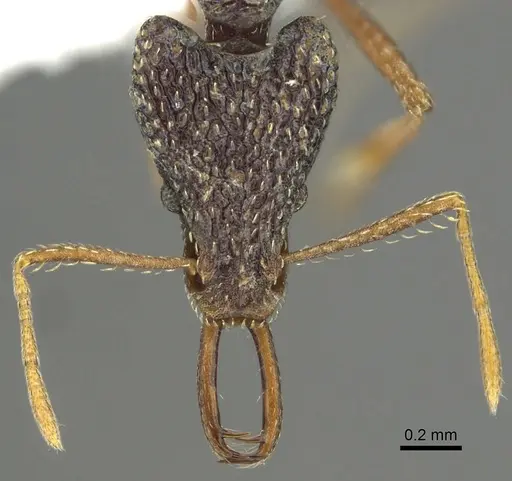
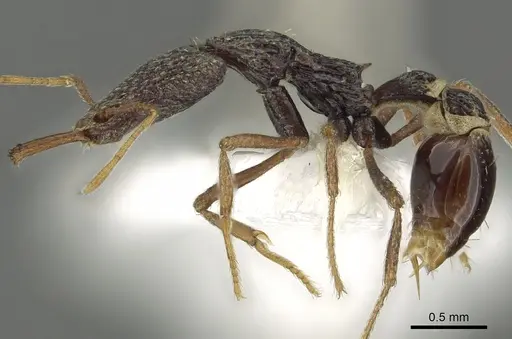
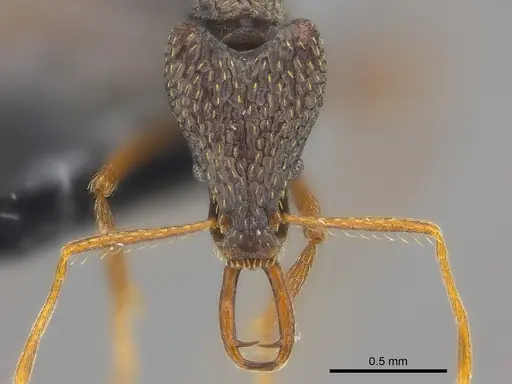
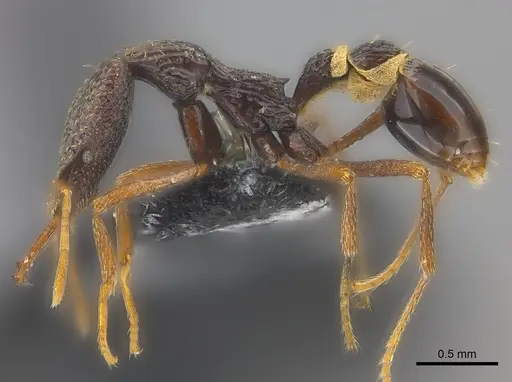
Strumigenys sulcata is a relatively large trap-jaw ant endemic to Fiji, measuring 3.6-3.8 mm in total length with a dark reddish-brown body . It belongs to the signeae complex of the Strumigenys godeffroyi group and is easily recognized by its deeply sulcate (grooved) sculpture on the dorsal mesosoma and postpetiole, looking like a ploughed field . The head and sides of the mesosoma have coarse, mainly longitudinal rugae that are less regular and more reticulated . Unlike many Strumigenys, this ant lacks projecting apicoscrobal hairs, pronotal humeral hairs, and propodeal lamellae . The petiole does not have a distinct node - instead the peduncle arches smoothly into the posterior margin . This is one of the larger Strumigenys in Fiji and is specialized to live in wet, decaying logs in high-elevation forests . As a trap-jaw ant, it has specialized mandibles that snap shut rapidly to capture prey. Being endemic to Fiji makes it a rare species for antkeepers interested in unusual tropical ants.
Quick Summary
- Difficulty: Hard
- Origin & Habitat: Endemic to Fiji, recorded from Viti Levu, Vanua Levu, and most major islands of the archipelago [5][6]. Nests are found in wet, decaying logs in forested areas [1][2]. This is a high-elevation forest species [4].
- Colony Type: Colony structure is unconfirmed from scientific literature. Based on typical Strumigenys patterns, colonies likely have a single queen (monogyne), but ergatoid (wingless) queens have been observed in some specimens, suggesting replacement reproductives may occur [2].
- Size & Growth:
- Queen: ~4-5 mm, inferred from Strumigenys genus
- Worker: 3.6-3.8 mm total length [1][2]
- Colony: Unknown from direct studies, related Fijian Strumigenys species have small colonies (up to a few hundred workers)
- Growth: Slow
- Development: Not directly documented, estimated 8-12 weeks at optimal temperature based on genus patterns (Development timeline is inferred, Strumigenys generally develop slowly.)
- Antkeeping:
- Temperature: Maintain at 24-28°C, reflecting their tropical Fijian origin [4]. Avoid prolonged drops below 22°C. Stable warmth supports activity and brood development.
- Humidity: High humidity is essential, these ants nest in wet, decaying logs in humid forests [1][2]. Keep the nest substrate consistently moist but not waterlogged, with visible condensation.
- Diapause: No, as a tropical species from Fiji, they do not require hibernation. Keep warm year-round.
- Nesting: Natural nesting occurs in wet, decaying logs [1][2]. In captivity, use a naturalistic setup: a moist soil/peat substrate with pieces of rotting wood or cork bark. A plaster or Y-tong (AAC) nest with a water reservoir can also work. Avoid acrylic nests.
- Behavior: These ants are shy and non‑aggressive, preferring to escape rather than fight. They have a functional stinger (like most Myrmicinae) but it is weak and not medically significant to humans. Workers forage individually near the nest, using their trap‑jaw mandibles to capture small prey, the mandibles snap shut in milliseconds. They are small (under 4 mm), so escape prevention is critical: use fine mesh and secure all connections. They pose no threat to keepers.
- Common Issues: specialized diet, they need live springtails or other tiny live prey, which can be hard to source consistently, humidity control is critical, too dry and colonies fail, too wet invites mold, slow growth, can frustrate keepers who overfeed or disturb the colony, escape prevention, their small size lets them squeeze through tiny gaps, tropical requirements, year‑round warmth is needed, room temperature may be too cool in colder climates
Housing and Nest Setup
Strumigenys sulcata needs a humid, naturalistic setup that copies their wet‑log habitat. A naturalistic terrarium‑style formicarium works best, use a mix of soil and peat kept consistently moist. Add pieces of rotting wood, cork bark, or leaf litter to provide foraging surfaces and potential nest sites [1][2]. A plaster or Y‑tong (AAC) nest with a water reservoir can also maintain high humidity, but include natural materials. Because they are small (3.6-3.8 mm), even tiny gaps lead to escapes, use fine mesh on all vents and seal connections thoroughly.
Feeding and Diet
This is a specialized predator that mainly hunts tiny arthropods. Their main food in captivity should be live springtails (Collembola), which are small, nutritious, and easy to culture. Other accepted prey may include tiny isopods, booklice (psocids), and other micro‑arthropods. Some keepers report success with small fruit fly larvae or tiny cricket nymphs, but these should be offered sparingly and only if springtails are unavailable. Strumigenys are not attracted to sugar sources or honey, they are obligate predators. Feed every 2-3 days, offering only what the colony can eat in a day to prevent mold. Always provide a clean water source. [1]
Temperature and Seasonal Care
As a tropical species from Fiji, Strumigenys sulcata needs warm temperatures year‑round. Keep the nest area at 24-28°C using a heating cable or mat if needed [4]. Avoid stays below 22°C, especially for extended periods. Since they live in high‑elevation forests [4], they may handle slightly cooler conditions than full lowland species, but warmth promotes activity and growth. No hibernation or diapause is needed, keep them warm all year. Monitor humidity closely because heating elements can dry out the nest quickly. A thermostat controller helps maintain stable temperatures.
Behavior and Colony Dynamics
Strumigenys sulcata is shy and non‑aggressive, workers avoid confrontation. They forage individually near the nest, using their trap‑jaw mandibles to snap up small prey in milliseconds. Colonies are likely small (up to a few hundred workers based on related species). The type series includes ergatoid (wingless) queens, suggesting that if the primary queen dies, a replacement may appear [2]. Workers have long mandibles used specifically for hunting small arthropods. They possess a functional stinger, but it is weak and not dangerous to humans.
Acquiring and Legal Considerations
Strumigenys sulcata is endemic to Fiji and is rarely available in the hobby. If you acquire a colony, make sure it was legally collected and exported. Never release this ant outside its native range, it is an island endemic and could harm local ecosystems if introduced. In Fiji itself it is protected as a unique endemic species [5][6]. Keep secure containment at all times.
Frequently Asked Questions
How long does it take for Strumigenys sulcata to produce first workers?
The exact timeline is not documented for this species. Based on typical Strumigenys patterns, expect about 8-12 weeks at 24-28°C, but this is an estimate. Growth is generally slow, and founding colonies may take several months to produce their first nanitic workers.
What do Strumigenys sulcata ants eat?
They are specialized predators that need live springtails or other tiny micro‑arthropods. They are not attracted to sugar water or honey. Some keepers offer tiny fruit flies, but springtail cultures are the most reliable food source.
Can I keep Strumigenys sulcata in a test tube setup?
A test tube alone is not ideal. These ants naturally nest in wet, decaying logs and need high humidity that a simple test tube cannot provide long‑term. A naturalistic setup with moist substrate or a humidified plaster/Y‑tong nest works much better.
Are Strumigenys sulcata good for beginners?
No, this species is not recommended for beginners. They have very specialized dietary needs (live springtails), require high humidity, need year‑round warmth, and are slow‑growing. These challenges make them better suited for experienced antkeepers.
How big do Strumigenys sulcata colonies get?
Colony size is not directly documented. Based on related Fijian Strumigenys, colonies probably reach up to a few hundred workers at maturity. They are not large colony formers.
Do Strumigenys sulcata need hibernation?
No. As a tropical species from Fiji, they do not require hibernation. Keep temperatures between 24-28°C all year round.
Why are my Strumigenys sulcata dying?
Common causes: too dry (needs moist substrate), lack of appropriate live prey (springtails), temperatures below 22°C, or mold from overwatering. Check humidity, food quality and temperature.
Where is Strumigenys sulcata found naturally?
This species is endemic to Fiji, recorded from Viti Levu, Vanua Levu, and most major islands. They live in wet, decaying logs in high‑elevation forests [5][6][1][2].
When will Strumigenys sulcata alates (reproductives) appear?
Nuptial flight timing is unknown for this species. As a tropical island endemic, reproduction may occur year‑round or during warm, humid seasons. Established colonies may take years to produce alates.
Report an Issue
The current care sheet is based fully on literature. See inconsistencies, or something that's incorrect? Please , it will be resolved after review from an admin. Contributing to the blogs tab also helps providing information, to make us be able to further improve the caresheets. Thank you for your support!
References

This caresheet is licensed under CC BY-SA 4.0 .
Community Blogs
CASENT0013152
View on AntWeb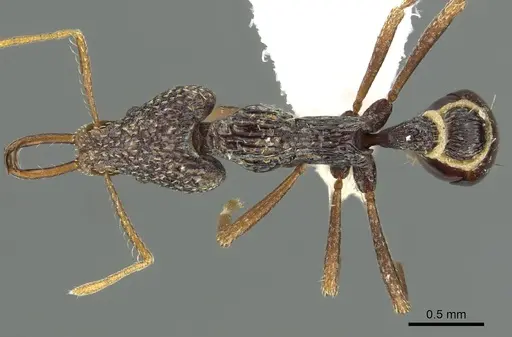
CASENT0185962
View on AntWeb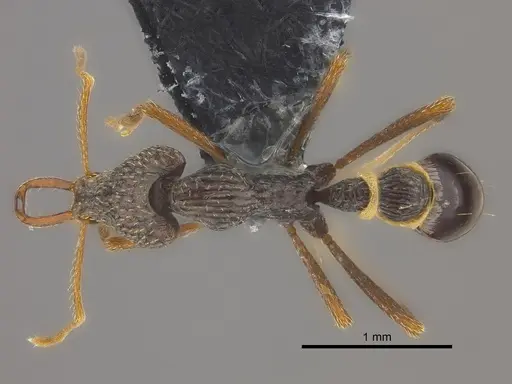
Literature
Loading distribution map...Loading products...