
Strumigenys spathoda
- Sci. Name
- Strumigenys spathoda
- Tribe
- Attini
- Subfamily
- Myrmicinae
- Author
- Bolton, 1983
- Distribution
- Found in 1 countries
Introduction
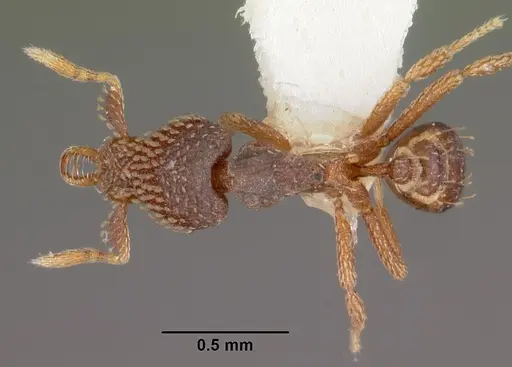
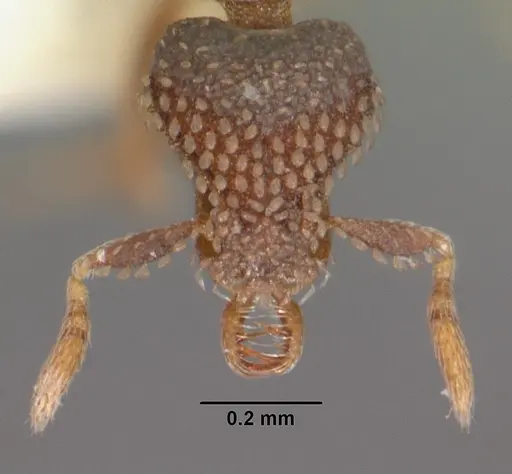
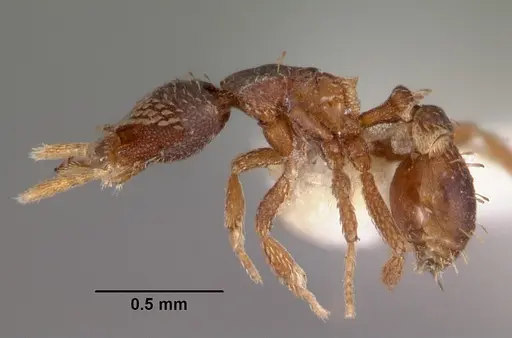
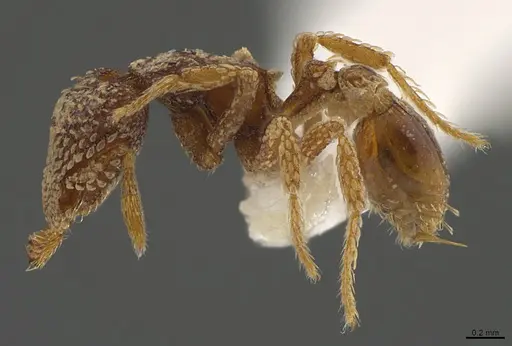
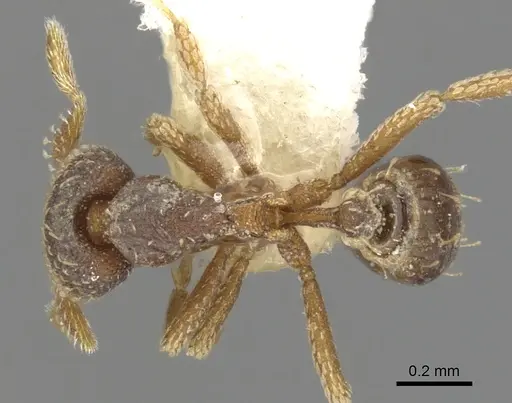
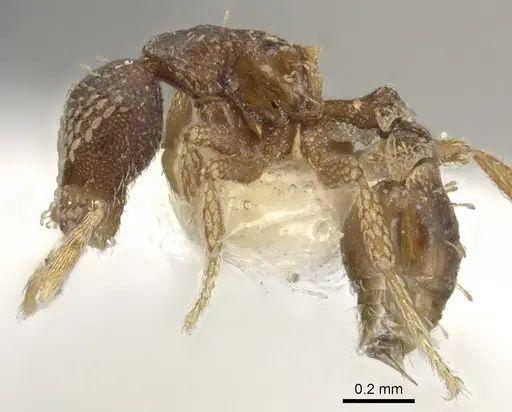
Strumigenys spathoda is a tiny predatory ant native to West African rainforests. Workers measure 2.0-2.1 mm, making them one of the smallest ant species you can keep . They have a distinctive appearance with very short, powerful mandibles - the shortest recorded for any Strumigenys in the Afrotropical region - and a medium brown color . Their flattened antennal scapes have a row of large spoon-shaped hairs that give them a fuzzy look under magnification . This species belongs to the Dacetini tribe, a group of specialized predators that hunt tiny soil invertebrates. They have a functional stinger, but it's not medically significant to humans (Myrmicinae subfamily trait).
Quick Summary
- Difficulty: Hard
- Origin & Habitat: West African rainforests, found in Cameroun, Gabon, Ghana, Ivory Coast, and Togo. They live in leaf litter in humid rainforest environments at elevations around 375 m [2][1].
- Colony Type: Unknown. No data on colony structure or queen number exists in available literature.
- Size & Growth:
- Queen: Unconfirmed, the queen has not been described in available literature
- Worker: 2.0-2.1 mm [1]
- Colony: Unknown. No published data on colony size.
- Growth: Unknown. No published data on growth rate.
- Development: Unknown. No development data is available. (All development data is currently unknown for this species.)
- Antkeeping:
- Temperature: Likely warm and stable, roughly 24-26 °C, based on their tropical rainforest origin [2]. Avoid drops below 22 °C.
- Humidity: High humidity, keep the nest substrate consistently moist but not waterlogged, matching the leaf-litter habitat [1].
- Diapause: Not required. Being from tropical West Africa, they need consistent warmth year-round.
- Nesting: Provide tight, narrow chambers scaled to their tiny 2 mm body. Y-tong (AAC) or plaster nests with small cells work well. The preferred nest type in the wild is unconfirmed.
- Behavior: Shy and slow-moving. They use their short but powerful mandibles to capture tiny prey. They have a functional stinger (typical for Myrmicinae) but it's too small to be a problem for humans. Escape prevention is critical, at 2 mm they can slip through tiny gaps. Use fine mesh (below 0.5 mm) and seal all connections.
Housing and Escape Prevention
Because Strumigenys spathoda workers are only 2 mm long, escape prevention is your biggest challenge. These tiny ants can squeeze through gaps that seem impossible. Use fine mesh (at most 0.5 mm) on any ventilation holes, and check all connections between the nest and outworld. Test tube setups work but need tight-fitting cotton or rubber stoppers, standard cotton batting may be too loose. A Y-tong (AAC) nest with narrow, low chambers scaled to their size is ideal. The foraging area should be shallow since these small ants struggle to navigate tall spaces. Apply fluon or similar barrier around the outworld edges to prevent escapes [1].
Feeding and Diet
Strumigenys ants are specialized predators of tiny soil invertebrates. In the wild, they likely hunt springtails, mites, and other micro-arthropods. In captivity, offer small live prey such as springtails, fruit flies, and tiny crickets. Protein is essential for brood development. Sugar acceptance is unknown, you can offer a drop of honey or sugar water occasionally, but don't rely on it as a primary food. Feed small amounts 2-3 times per week, removing uneaten prey after 24 hours to prevent mold. The key is providing prey small enough for their tiny 2 mm workers to handle [1].
Temperature and Humidity
Being from West African rainforests, these ants need warm, humid conditions. Keep the nest at 24-26 °C consistently, avoid temperatures below 22 °C or above 30 °C. Use a heating cable on one side of the nest to create a gentle gradient if your room temperature is lower. Humidity should stay high. The substrate should feel damp to the touch, with occasional condensation on the nest walls. However, avoid standing water, they are from leaf litter, not waterlogged soil. Provide a moisture gradient with damp areas on one side so the ants can choose their preferred spot. Mist the outworld occasionally but avoid direct spraying on the nest [2][1].
Colony Development
Very little is known about colony development in this species. The queen has not been described, and founding behavior is unconfirmed. No data on egg-to-worker timing, colony size, or growth rate exists in available literature. If you keep this species, be prepared for a slow and uncertain process. Avoid disturbing the nest during the initial stage and provide stable conditions. Once workers appear (if they do), you can begin offering live prey. Because so much is unknown, this species is recommended only for experienced keepers who can adapt to unexpected outcomes. [1]
Frequently Asked Questions
How long does it take for Strumigenys spathoda to get their first workers?
Unknown. No development data is available. The queen has not been described, so we can't even estimate the founding period. Be patient and expect a slow process.
Can I keep Strumigenys spathoda in a test tube setup?
Yes, but with extreme care for escape. Their tiny 2 mm size means standard test tube cotton may have gaps. Use tight rubber stoppers or extra-fine cotton. A test tube with a water reservoir works, but a Y-tong nest with narrow chambers is safer.
What do Strumigenys spathoda ants eat?
They are predators that need live small prey. Offer springtails, fruit flies, and tiny crickets. Protein is essential for brood. They may also accept honey or sugar water, but don't rely on it as a primary food.
How big do Strumigenys spathoda colonies get?
Unknown. There is no published data on colony size for this species. Based on the tiny worker size, colonies are likely small, but this is speculation.
Do Strumigenys spathoda need hibernation?
No. Being from tropical West Africa, they don't require a winter rest period. Keep them warm and humid year-round at 24-26 °C. Extended temperatures below 20 °C could be harmful.
Why are my Strumigenys spathoda escaping?
At 2 mm, they are among the smallest ants you can keep. They can slip through tiny gaps in standard ant keeping equipment. Use fine mesh (0.5 mm or tighter), apply fluon barriers, and check all connections. Even a hairline crack can be an escape route.
Are Strumigenys spathoda good for beginners?
No. This species is recommended for experienced keepers only. The main challenges are extreme escape risk (due to tiny size), the need for live micro-prey, and the lack of published care data. Beginners should start with better-studied species.
What temperature should I keep Strumigenys spathoda at?
Keep them at 24-26 °C consistently, based on their tropical rainforest origin. Use a heating cable if needed, but create a gradient so they can choose between warmer and cooler areas.
When should I move Strumigenys spathoda to a formicarium?
Unknown. Since colony growth is unstudied, there are no guidelines. In general, wait until you see several workers actively foraging, then move to a formicarium with chambers scaled to their tiny size.
Report an Issue
The current care sheet is based fully on literature. See inconsistencies, or something that's incorrect? Please , it will be resolved after review from an admin. Contributing to the blogs tab also helps providing information, to make us be able to further improve the caresheets. Thank you for your support!
References

This caresheet is licensed under CC BY-SA 4.0 .
Community Blogs

Literature
Loading distribution map...Loading products...