
Strumigenys solifontis
- Sci. Name
- Strumigenys solifontis
- Tribe
- Attini
- Subfamily
- Myrmicinae
- Author
- Brown, 1949
- Distribution
- Found in 3 countries
Introduction
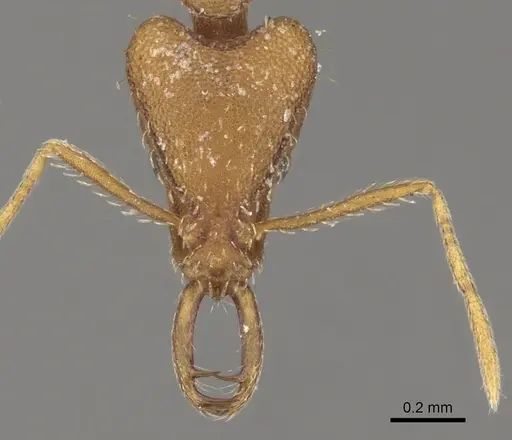
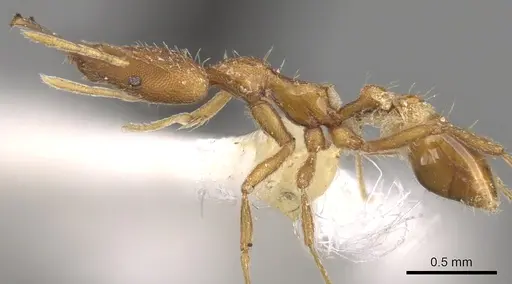
Strumigenys solifontis is a tiny predatory ant native to East Asia, found in Japan, Taiwan, and South Korea . Workers measure 2.9–3.2 mm with an orange to yellow body, a slender shape, long linear mandibles, and six‑segmented antennae . They nest under stones or in cavities of stones along woodland margins . One of the most unusual traits of this species is that it reproduces through thelytokous parthenogenesis – queens can produce workers and new queens from unfertilized eggs without ever mating . This means a colony can grow without any males being present.
Quick Summary
- Difficulty: Medium
- Origin & Habitat: Woodland margins in East Asia – found in Japan (Honshu, Shikoku, Kyushu, Okinawa), Taiwan, and South Korea at elevations of 450–1200 m [4][1][2]. Nests are placed under stones or in stone cavities [4].
- Colony Type: Polygynous – multiple queens cooperate in colonies that typically exceed 200 workers [4]. The species also reproduces by thelytokous parthenogenesis, so virgin queens can produce offspring without mating [5].
- Size & Growth:
- Queen: 3.56 mm [6]
- Worker: 2.9–3.2 mm [3][2]
- Colony: Over 200 workers in established colonies [4]
- Growth: Moderate – estimated based on typical Strumigenys development
- Development: 6–10 weeks – estimated from related Strumigenys species, specific timing for this species is not documented (Development time is inferred, no species‑specific data are available. Temperature likely influences speed.)
- Antkeeping:
- Temperature: Keep at room temperature (20–24 °C) – these are temperate woodland ants that prefer moderate conditions. Avoid extremes above 28 °C or below 15 °C during the active season.
- Humidity: Moderate to high. They naturally live under stones in damp woodland, so keep the nest substrate slightly moist but not waterlogged [4].
- Diapause: Yes – based on their distribution in temperate Japan, Korea, and Taiwan, a winter rest is likely needed. Reduce temperature to 10–15 °C for 3–4 months (November–February). Do not force diapause on very small colonies (under 10 workers).
- Nesting: Start in a test tube with a water reservoir and cotton barrier. For larger colonies, use a Y‑tong (AAC) or plaster nest with narrow chambers that mimic tight spaces under stones. Acrylic nests are not recommended. Keep the nest area dark [4].
- Behavior: These ants are active hunters that stalk small arthropods using their long mandibles [6]. They forage individually and are not aggressive, they prefer to flee and their sting is very mild (general Myrmicinae sting, not medically significant). Their small size (under 3.2 mm) means they can escape through ordinary mesh – use fine mesh or glass barriers. They are cryptic, spending most of their time hidden under cover.
- Common Issues: lack of live prey – these are obligate predators that need a constant supply of tiny insects such as springtails and fruit flies, mold from uneaten prey – remove leftovers within 24 h to prevent fungal growth in the humid nest, test tube flooding – use a small water reservoir and avoid overfilling, check the cotton barrier regularly, escape through small gaps – their size demands very fine ventilation mesh or tight seals, parasites from wild‑caught colonies – quarantine new colonies and observe for signs of collapse, parthenogenesis means even a single virgin queen can start a colony, but she will be alone until the first workers emerge
Housing and Nest Setup
For Strumigenys solifontis, start with a simple test tube setup. These ants are tiny (workers 2.9–3.2 mm) and need tight, humid chambers similar to their natural home under stones [3][4]. A standard test tube with a water reservoir sealed by a cotton plug works well for founding colonies. Keep the tube horizontal so the ants can walk on dry areas. Once the colony has around 30–50 workers, upgrade to a Y‑tong or plaster nest with chambers scaled to their small size. Avoid large open spaces – these ants feel secure in compact, dark quarters. Cover the nest or keep it in a dark drawer [4].
Feeding and Diet
Feeding is the most critical part of keeping this species. Strumigenys solifontis is an obligate predator that hunts tiny live arthropods [6]. Offer small prey such as springtails, fruit flies, booklice, and tiny mites. Springtail cultures are ideal as a staple food. Feed every 2–3 days, adjusting the amount based on colony size and how quickly they eat. Remove any uneaten prey after 24 hours to prevent mold. While they might occasionally take honey or sugar water, live protein is essential for growth and reproduction. Because queens can reproduce by parthenogenesis, a single unmated queen can raise the first brood if supplied with prey [5].
Temperature and Seasonal Care
These ants come from temperate East Asia, so they need a distinct seasonal cycle [1][2]. Keep the colony at 20–24 °C during spring through fall. In winter, lower the temperature to 10–15 °C for about 3–4 months to mimic their natural diapause. This rest period supports colony health and may encourage reproductive activity in spring. Avoid sudden temperature drops or sustained heat above 28 °C. A room‑temperature environment (20–22 °C) works well for most of the year.
Reproduction and Colony Growth
A unique feature of Strumigenys solifontis is its ability to reproduce through thelytokous parthenogenesis. Queens can produce both workers and new queens from unfertilized eggs without mating [5]. In laboratory colonies, unmated queens produced 153 workers and 7 queens over several months, with no males at all [5]. Males appear only rarely (2 males in 10 years of observation) [5]. Colonies are naturally polygynous, so multiple queens can coexist and contribute to colony growth. This means you can start with a single virgin queen and still build a thriving colony.
Behavior and Defense
Strumigenys solifontis is a specialized predator. Workers hunt individually, using their long, linear mandibles to capture small arthropods like springtails [6]. When threatened, they either flee or deliver a mild sting. Their venom has been chemically studied, but it is not considered medically significant for humans [6]. The ants are not aggressive and rarely sting unless handled. Because of their small size (under 3.2 mm), they can escape through standard mesh – always use very fine ventilation screens or sealant. They are cryptic by nature, spending most of their time hidden under stones or in dark corners of the nest.
Frequently Asked Questions
How long does it take for Strumigenys solifontis to produce first workers?
Expect 6–10 weeks from egg to first worker at around 22 °C. This is an estimate based on related Strumigenys species, specific development time for this species has not been published. The queen raises the first brood alone using stored reserves.
Can I keep Strumigenys solifontis in a test tube?
Yes, a test tube is ideal for founding. Use a standard tube with a water reservoir sealed by cotton. Keep it horizontal so the ants can walk on the dry cotton area. This setup works well for colonies up to 30–50 workers [4].
What do Strumigenys solifontis eat?
They are obligate predators that must be fed live, tiny arthropods. Good choices include springtails, fruit flies, booklice, and tiny mites. Springtail cultures are the best staple food. They will not survive on sugar water or honey alone – live protein is essential [6].
Are Strumigenys solifontis good for beginners?
This species is rated as medium difficulty. The main challenge is the need for a constant supply of live small prey. If you are comfortable culturing springtails or sourcing tiny insects regularly, they can be rewarding. Their parthenogenetic reproduction and polygynous colonies make them interesting to observe [5].
Do Strumigenys solifontis need hibernation?
Yes, they benefit from a winter rest. Reduce temperature to 10–15 °C for 3–4 months (roughly November–February). This matches their natural cycle in temperate Japan, Korea, and Taiwan. Do not force hibernation if the colony is very small (under 10 workers) – wait until it is established [1][2].
How big do Strumigenys solifontis colonies get?
Natural colonies can exceed 200 workers [4]. In captivity, with good care, you can expect 100–300+ workers over several years. Because they are polygynous, multiple queens help the colony grow faster.
Why are my Strumigenys solifontis dying?
The most common causes are: lack of live prey (they are obligate predators), improper humidity (too dry or too wet), temperature stress (above 28 °C or below 15 °C during active season), and escape (they are small enough to slip through standard barriers). Wild‑caught colonies may also carry parasites. Check these parameters first.
Can I keep multiple queens together?
Yes, this is natural for the species. Strumigenys solifontis is polygynous, so multiple queens can coexist peacefully. Multiple queens help the colony grow faster and are not aggressive toward each other [4].
When should I move my colony to a formicarium?
Move to a larger nest when the test tube becomes crowded (typically when the colony reaches 30–50 workers) or when the water reservoir runs low frequently. A small Y‑tong or plaster nest with appropriately sized chambers works well. Do not upgrade too early – too much space can stress small colonies.
Report an Issue
The current care sheet is based fully on literature. See inconsistencies, or something that's incorrect? Please , it will be resolved after review from an admin. Contributing to the blogs tab also helps providing information, to make us be able to further improve the caresheets. Thank you for your support!
References

This caresheet is licensed under CC BY-SA 4.0 .
Community Blogs
CASENT0280743
View on AntWeb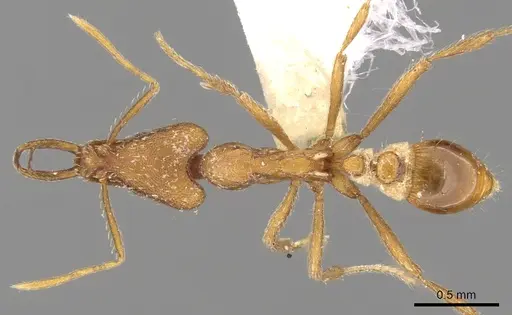
Literature
Loading distribution map...Loading products...