
Strumigenys scotti
- Sci. Name
- Strumigenys scotti
- Tribe
- Attini
- Subfamily
- Myrmicinae
- Author
- Forel, 1912
- Distribution
- Found in 3 countries
Introduction
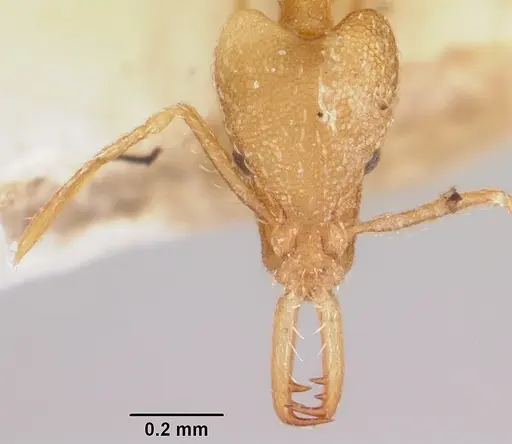
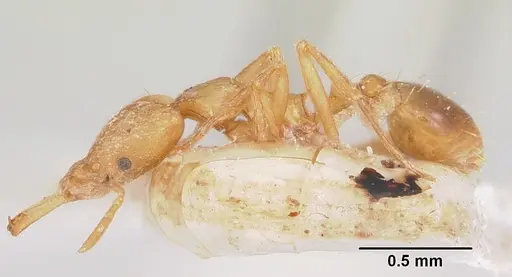
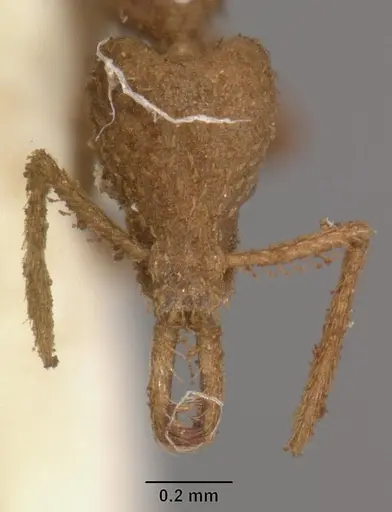
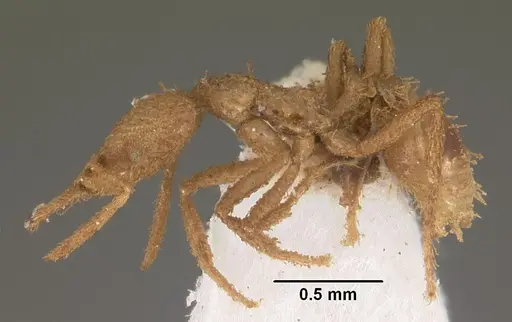
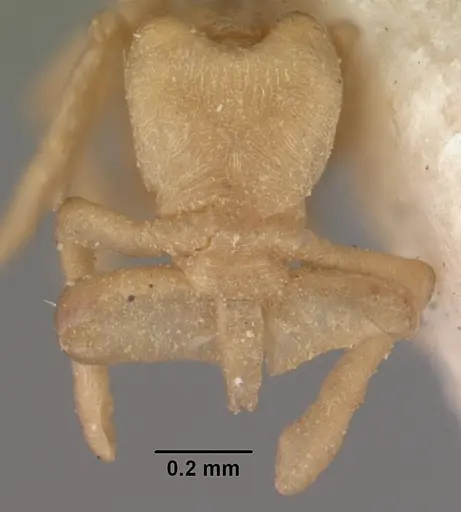
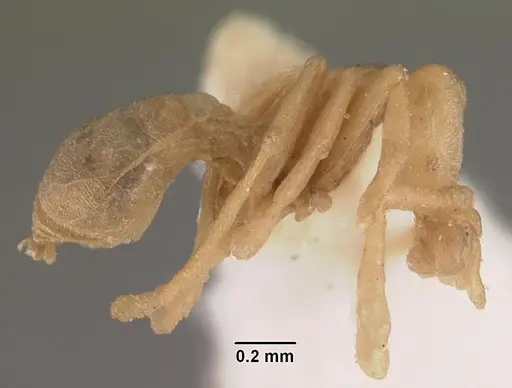
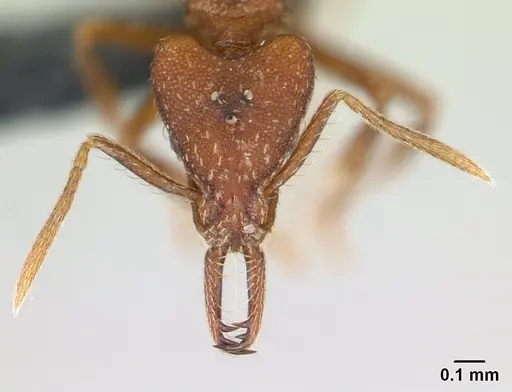
Strumigenys scotti is a tiny predatory ant with workers measuring 2.4-2.6 mm in total length, colored yellowish-brown to medium brown . It belongs to the tribe Attini (subfamily Myrmicinae) and has a functional stinger, though it is not medically significant to humans. This species is found on islands and coastal areas of the Indian Ocean, including the Seychelles, Madagascar, Comoros, Nigeria, and Sao Tome & Principe . It was originally described from specimens collected on Silhouette Island in the Seychelles . Strumigenys scotti lives in leaf litter on the forest floor, where it hunts tiny arthropods using fast-moving mandibles. It was collected at an elevation of 1240 m in Madagascar . Like other members of the genus, it is a specialist predator, but details of its natural history are poorly documented.
Quick Summary
- Difficulty: Hard
- Origin & Habitat: Seychelles, Madagascar, Comoros, Nigeria, and Sao Tome & Principe. Found in leaf litter at elevations up to 1240 m in Madagascar [3][1]. Inhabits tropical forests and island coastal vegetation.
- Colony Type: Unknown
- Size & Growth:
- Antkeeping:
- Temperature: Provide warm tropical conditions, roughly 24-26°C is a reasonable starting guess for this tropical species. Avoid temperatures below 20°C for extended periods.
- Humidity: Keep the nest substrate consistently moist, like a squeezed sponge. High moisture is essential, these ants live in humid leaf litter.
- Diapause: No, as a tropical species, it does not require a winter diapause.
- Nesting: Prefers small, humid spaces. Test tubes with a water reservoir work well for small colonies. For larger groups, a naturalistic setup with moist soil or leaf litter and a separate water source is ideal.
- Behavior: Workers are docile and non‑aggressive toward humans, but they can sting tiny prey. Their small size (2.4 mm) makes escape prevention critical, they can slip through standard mesh. Forage individually in leaf litter, hunting micro‑arthropods.
- Common Issues: escape prevention is critical, at 2.4 mm, workers can escape through tiny gaps, use 0.5 mm mesh or fluon barriers., specialized diet, they require live micro-arthropods, springtails are a common feeder, but specific dietary needs are not published., high humidity requirements can cause mold if ventilation is poor, balance moisture with airflow., slow or uncertain growth, development timeline is unknown, patience is needed.
Housing and Nest Setup
Because Strumigenys scotti workers are only 2.4 mm long, escape prevention is top priority. Start colonies in a test tube with a cotton water plug, a 15 mm diameter tube works well. Cover the tube with a dark sleeve to mimic the dark leaf‑litter environment. Use fluon or very fine mesh (0.5 mm openings) on any openings. For larger groups, a small plastic box with moist substrate (coconut coir or peat) and a water source works better than tall formicaria. These ants stay near the ground surface where humidity is highest. [3][1]
Feeding and Diet
Feeding is the most challenging part of keeping this species. Strumigenys scotti is a specialist predator that requires live, moving micro‑arthropods. There are no published studies on its exact prey, but related dacetine species feed on springtails (Collembola) and other small soil invertebrates. You should culture live springtails as a staple food, tiny isopods or booklice may also be accepted. Offer food every 2-3 days and remove leftovers after 24 hours to prevent mold. Sugar water or dead insects will likely be ignored. [1]
Temperature and Humidity
These ants come from tropical habitats, so they need warmth and moisture year‑round. Keep the colony at roughly 24-26°C, a small heating cable can create a gentle temperature gradient. Humidity must be high, keep the substrate moist (like a squeezed sponge) but not waterlogged. A moisture gradient (dryer edges, wetter center) gives the ants options. Use a hygrometer and mist occasionally if the air drops below 60% relative humidity. Avoid placing the setup near air conditioning or drafts. [3]
Behavior and Temperament
Workers move slowly and are not aggressive. They possess a functional sting, but it is used only to subdue tiny prey and is harmless to humans. The most important behavioral trait for keepers is their tiny size, workers can escape through impossibly small gaps. Use tight‑fitting lids and fine mesh. They forage individually, searching leaf litter for prey. Do not expect rapid colony expansion, growth is likely very slow. [1]
Colony Development
No detailed information is available on colony founding or development for Strumigenys scotti. The queen’s mode of founding (claustral, semi‑claustral, or parasitic) is unconfirmed from the literature. Development time from egg to worker is unknown. Keepers should be patient and avoid interfering with the colony. Because so little is published, share your observations with the ant‑keeping community to help fill these gaps. [1]
Frequently Asked Questions
Can I keep Strumigenys scotti in a test tube?
Yes, test tubes are recommended for starting colonies. Use a small tube (15 mm or less) with a cotton water plug. Keep the tube horizontal or slightly tilted so the queen can access the water. Cover it with a dark sleeve to reduce stress. This setup maintains high humidity and is easy to monitor.
What do Strumigenys scotti ants eat?
They are specialist predators requiring live micro‑arthropods. Springtails (Collembola) are a common feeder prey for related species, but the exact diet of Strumigenys scotti is not documented. You will need to culture live springtails or collect tiny soil invertebrates. Dead insects, sugar water, or honey are not accepted.
How long does it take for Strumigenys scotti to produce first workers?
This is unknown, no published data exist for this species. Keepers of related dacetine ants report times of 8-12 weeks in warm conditions, but that can only be a rough guess. Expect a long wait and do not disturb the founding queen.
Are Strumigenys scotti ants dangerous?
No, they are not dangerous to humans. They can sting tiny prey, but the sting is too weak to penetrate human skin. Their mandibles are designed for capturing tiny arthropods and cannot harm people.
How big do Strumigenys scotti colonies get?
The maximum colony size is unknown. Related Strumigenys species often have fewer than 100 workers, but this has not been confirmed for scotti. Expect a small colony.
Do Strumigenys scotti ants need hibernation?
No, as a tropical species from islands near the equator, it requires warm temperatures year‑round. Do not attempt to induce diapause. Keep them at 24-26°C throughout the year.
Why are my Strumigenys scotti dying?
Common causes include: escape (their tiny size allows them to slip through standard barriers), starvation (they need live prey, not dead food), low humidity (keep substrate moist), and mold from overfeeding. Also watch for mites or other parasites in wild‑caught colonies. Use 0.5 mm mesh on all openings and maintain a steady supply of live springtails.
Can I keep multiple Strumigenys scotti queens together?
This is not recommended. The social structure of this species is unconfirmed, but most Strumigenys are monogyne. Combining queens will likely lead to fighting. Start with a single queen.
When should I move Strumigenys scotti to a formicarium?
You may not need a traditional formicarium at all. These ants thrive in naturalistic setups (plastic box with moist substrate). Move them when the test tube becomes crowded (roughly 30+ workers) by connecting a larger container via tubing. Keep the new space small and humid.
Are Strumigenys scotti good for beginners?
No. Their specialized diet, tiny size, high humidity needs, and unknown founding biology make them best left to experienced keepers. Start with an easier species like Lasius niger or Tetramorium caespitum first.
Report an Issue
The current care sheet is based fully on literature. See inconsistencies, or something that's incorrect? Please , it will be resolved after review from an admin. Contributing to the blogs tab also helps providing information, to make us be able to further improve the caresheets. Thank you for your support!
References

This caresheet is licensed under CC BY-SA 4.0 .
Community Blogs
CASENT0101222
View on AntWeb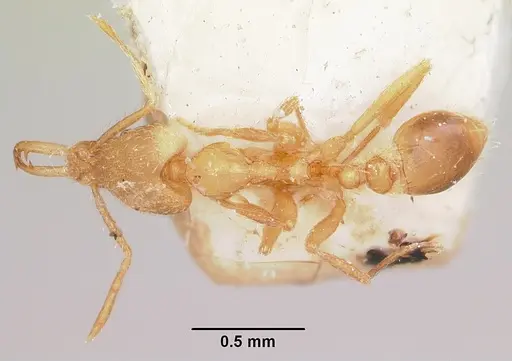
CASENT0101223
View on AntWeb
CASENT0102290
View on AntWeb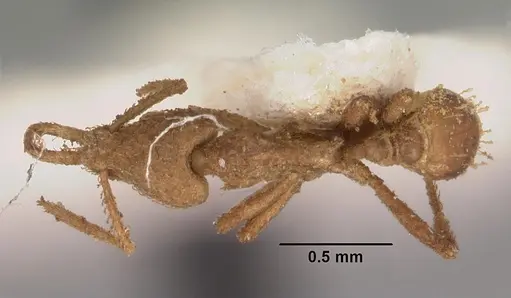
CASENT0102291
View on AntWeb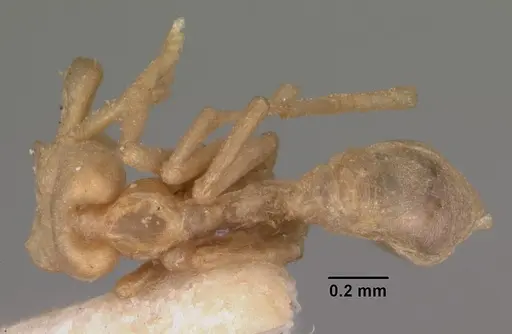
CASENT0137237
View on AntWeb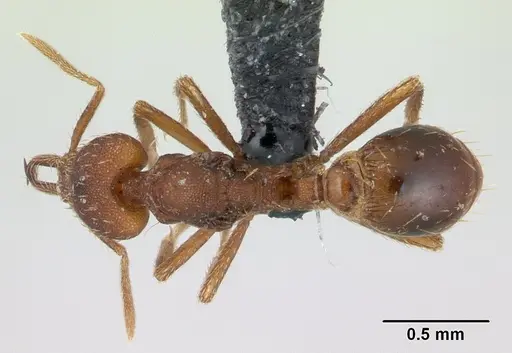
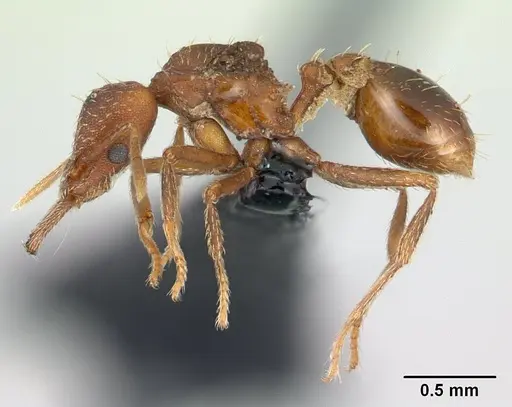
CASENT0137525
View on AntWeb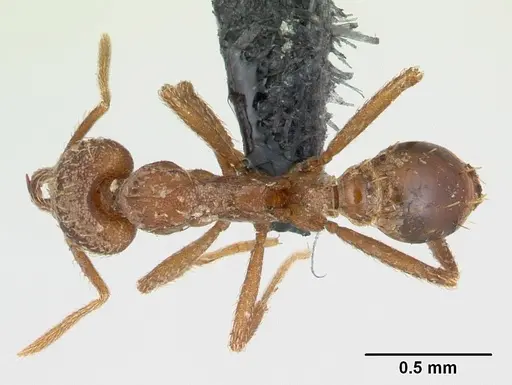
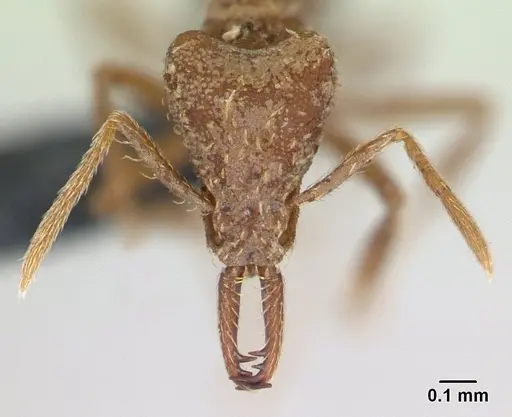
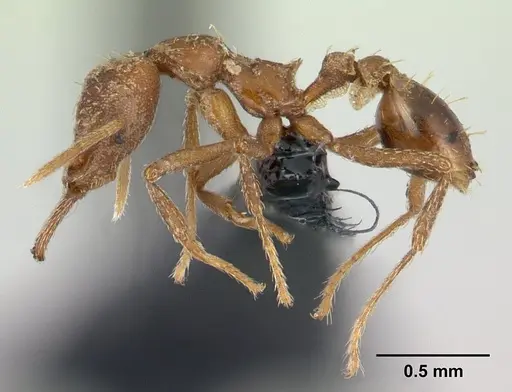
CASENT0137546
View on AntWeb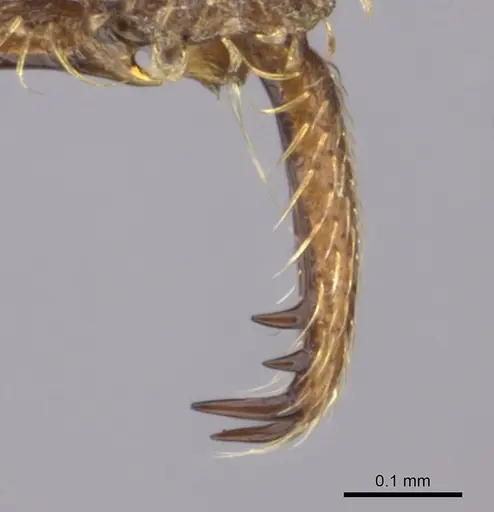
Literature
Loading distribution map...Loading products...