
Strumigenys rotogenys
- Sci. Name
- Strumigenys rotogenys
- Tribe
- Attini
- Subfamily
- Myrmicinae
- Author
- Bolton, 2000
- Distribution
- Found in 3 countries
Introduction
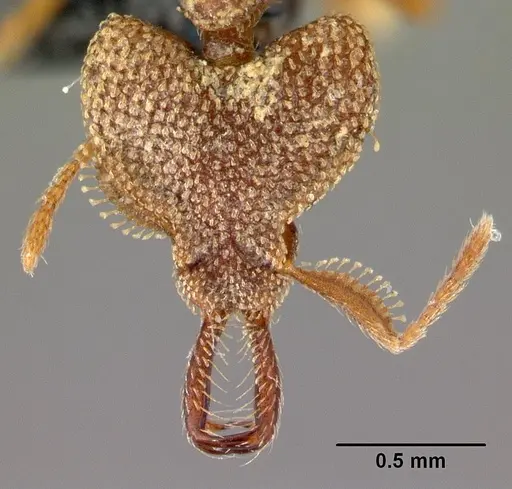
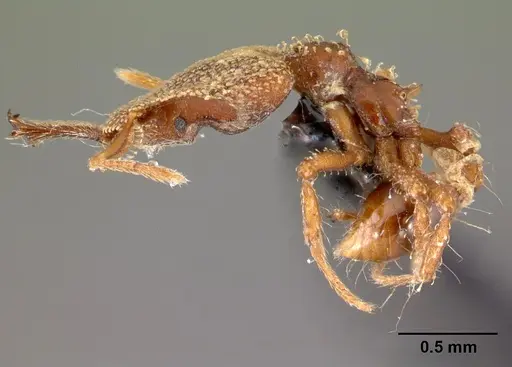
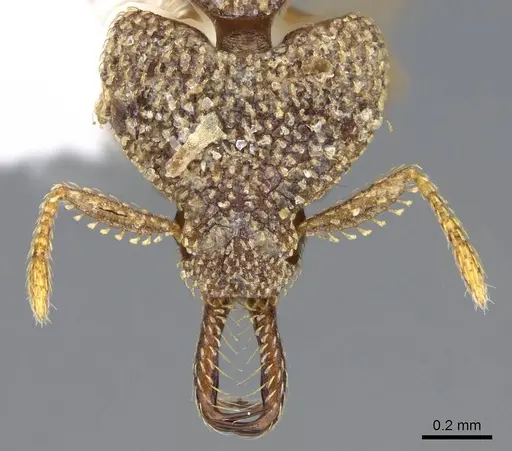
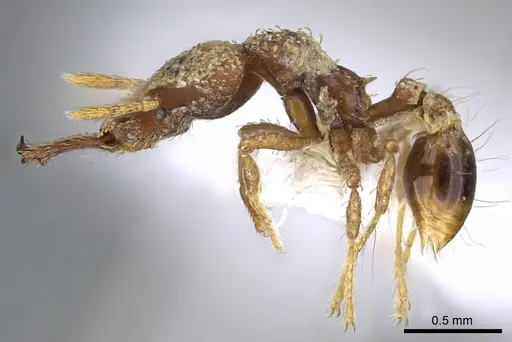
Strumigenys rotogenys is a small dacetine ant from Southeast Asia, found across Borneo, Sumatra, Malaysia, and Thailand . Workers measure just 3.0-3.6mm with a very broad, flattened head and distinctive large mandibles used to catch prey . Most specimens are covered in a dense coat of fine soil or mud particles held in place by curved hairs - this camouflage helps them blend into leaf litter where they hunt . This species belongs to the Strumigenys chapmani group and is closely related to Strumigenys gyrogenys, sharing the rare trait of flagellate hairs on the first gastral segment . They are slow-moving and non-aggressive , with colonies typically containing only 8-80 workers .
Quick Summary
- Difficulty: Medium
- Origin & Habitat: Native to Southeast Asian rainforests, Borneo, Sumatra, Malaysia, Thailand, found in lowland rainforest leaf litter and nests attached to small saplings 5-10cm above ground [4][1].
- Colony Type: Single-queen colonies (monogyne) with 8-80 workers per nest [4]. Each nest contains one dealate queen, though they can form facultative mixed colonies with Strumigenys mitis [4].
- Size & Growth:
- Queen: Not formally measured, likely similar to workers (3.0-3.6mm) based on genus patterns. Note: queen size data is unavailable.
- Worker: 3.0-3.6mm [1]
- Colony: 8-80 workers per nest, average 36 workers [4]
- Growth: Slow
- Development: Unknown, no direct development data exists. Based on related dacetines and tropical species, estimate 6-10 weeks at optimal temperature. (No species-specific development timeline has been documented.)
- Antkeeping:
- Temperature: Keep at 24-28°C, these are tropical rainforest ants requiring warm, stable conditions. A gentle gradient allows them to regulate temperature.
- Humidity: Keep the nest substrate consistently moist but not waterlogged. They come from damp rainforest leaf litter [2].
- Diapause: No, as a tropical species, they do not require hibernation. Maintain warm conditions year-round.
- Nesting: They naturally nest in soil attached to small saplings and climbing plants,5-10cm above ground [4]. In captivity, a small naturalistic setup with moist substrate or a small plaster/soil-based nest works well. Their small colony size means they need only a tiny nest space.
- Behavior: These ants are slow-moving and non-aggressive leaf-litter predators [4][3]. They hunt springtails (collembolans) using their large mandibles and are active primarily during afternoon hours (13:00-19:00) [4]. They show no aggressive behavior toward other ant species and are not defensive [4]. Escape risk is high due to their small size (under 4mm), use fluon or ptfe barriers. They are predatory and require live small prey items.
- Common Issues: slow colony growth may frustrate impatient keepers, small colony sizes are normal for this species., requires a constant supply of live prey, cannot survive on sugar or dead insects alone., high humidity needs can lead to mold if ventilation is poor., small size makes them easily lost during tank maintenance, check thoroughly., sensitive to vibration and disturbance, give them a quiet, stable spot.
Housing and Nest Setup
Strumigenys rotogenys naturally nests in small soil pockets attached to the roots of climbing plants and epiphytes on small saplings, typically 5-10cm above ground level [4]. For captivity, use a small plaster or soil-based nest with a moist substrate. Because colonies max out around 80 workers, they never need large spaces. Keep the nest humid but provide some ventilation to prevent mold. A small water reservoir connected to the nest helps maintain moisture. Place the setup in a warm area away from direct sunlight.
Feeding and Diet
These are specialized predators that hunt springtails (collembolans) in nature [3]. Their large mandibles are designed for catching small, soft-bodied arthropods. In captivity, you must provide live prey, they will not accept dead food readily. Small fruit flies, pinhead crickets, and other tiny insects can be offered, but springtails are the ideal food if you can culture them. They are unlikely to accept sugar water or honey as a primary food source, though you can offer it occasionally. Feed small prey items every few days, adjusting based on how quickly the colony consumes them. Remove uneaten prey to prevent mold issues.
Temperature and Care
As a tropical rainforest species, Strumigenys rotogenys needs warm, stable conditions year-round. Keep temperatures at 24-28°C. They do not tolerate cold. No winter diapause is needed. Provide high humidity by keeping the nest substrate damp, but ensure adequate airflow. These ants are active during afternoon hours in the wild (13:00-19:00) [4], so you may notice more activity during these times in captivity. They are slow-moving and not escape artists, but their small size means standard barrier methods (fluon, ptfe) are essential.
Behavior and Colony Dynamics
Colonies stay small, 8 to 80 workers with a single queen [4]. They are notably non-aggressive, researchers observed no aggressive behavior when Strumigenys rotogenys encountered other ant species [4]. They are slow walkers compared to other dacetines (4.3mm/s) [3] and spend most of their time in the leaf litter layer hunting prey. One unique trait is their facultative association with Strumigenys mitis, these two species can share nests, with both species caring for mixed brood [4]. This parabiotic relationship appears to benefit both species rather than being parasitic. In captivity, you may keep them alone or potentially with Pyramica if you want to observe this behavior.
Growth and Development
Colony growth is slow, don't expect rapid expansion. A mature colony takes many months to reach 50-80 workers. Development timeline is not precisely known, based on related dacetines, estimate 6-10 weeks from egg to worker at optimal temperature (24-28°C). Because colonies remain small, avoid disturbing them frequently, they are sensitive to vibration and disturbance. [4]
Frequently Asked Questions
How long does it take for Strumigenys rotogenys to produce first workers?
The exact timeline is unconfirmed, but based on related dacetine species, expect 6-10 weeks from egg to first worker at optimal temperature (24-28°C). Growth is slow, and colonies remain small even when established.
Can I keep Strumigenys rotogenys in a test tube?
A test tube can work for a founding colony, but they prefer a small naturalistic setup with moist substrate. If using a test tube, ensure it stays humid and provide a small prey item regularly. A small plaster or soil-based nest is a better long-term option.
What do Strumigenys rotogenys eat?
They are predatory ants that need live prey. Their primary food in the wild is springtails (collembolans) [3]. In captivity, offer small live insects like fruit flies, tiny crickets, or cultured springtails. They are unlikely to accept sugar water as a primary food source.
How big do colonies get?
Colonies are small, typically 8-80 workers with an average of 36 workers per nest [4]. They never form large colonies like many common ant species. This is normal for this species.
Are Strumigenys rotogenys good for beginners?
They are considered medium difficulty. While their small colony size makes them less overwhelming, their predatory diet and high humidity needs require more attention than species that accept standard ant foods. They are best suited for keepers willing to culture live prey.
Do they need hibernation?
No, as tropical ants from Southeast Asian rainforests, they do not require any cooling period. Keep them warm (24-28°C) year-round.
Can I keep multiple queens together?
In the wild, each nest contains exactly one dealate queen [4]. While they can form mixed colonies with Strumigenys mitis, combining unrelated Strumigenys rotogenys queens has not been documented and is not recommended.
Why are my Strumigenys rotogenys dying?
Common causes include: low humidity, temperatures below 24°C, lack of live prey, mold from overwatering with poor ventilation, or disturbance/vibration stress. Check these parameters first.
When should I move them to a formicarium?
Move them when the test tube or founding setup becomes crowded or dries out too quickly. Because colonies stay small, a small naturalistic setup or tiny plaster/soil-based nest is sufficient. They do better in smaller, more confined spaces.
Report an Issue
The current care sheet is based fully on literature. See inconsistencies, or something that's incorrect? Please , it will be resolved after review from an admin. Contributing to the blogs tab also helps providing information, to make us be able to further improve the caresheets. Thank you for your support!
References

This caresheet is licensed under CC BY-SA 4.0 .
Community Blogs
CASENT0179672
View on AntWeb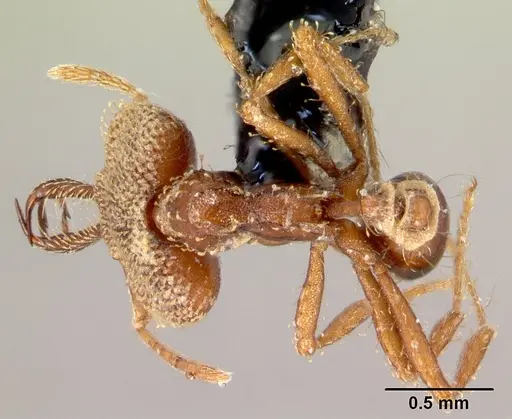
CASENT0387662
View on AntWeb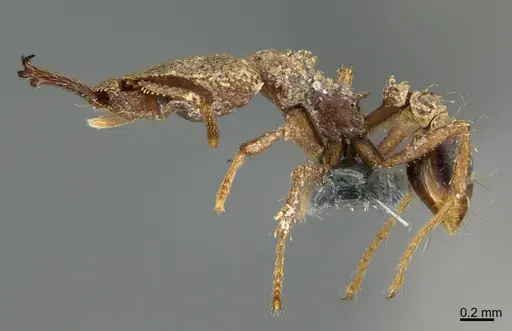
CASENT0900753
View on AntWeb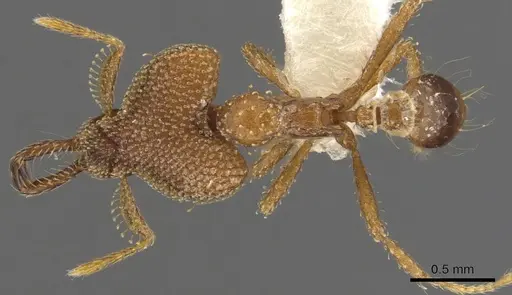
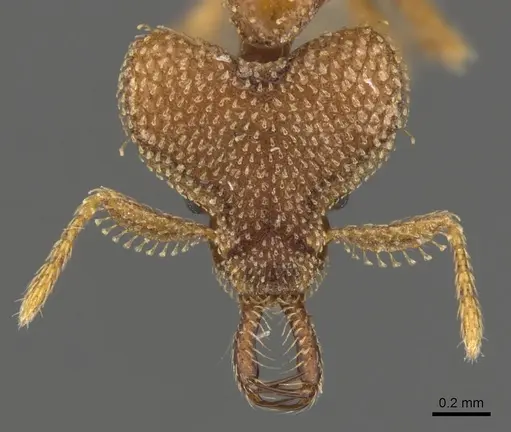
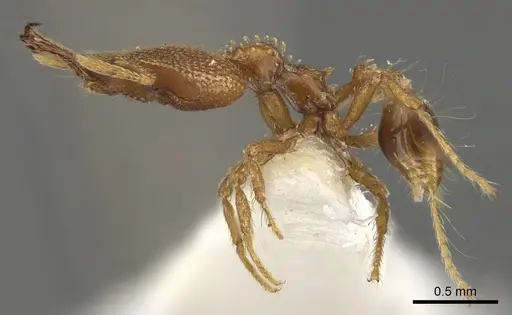
CASENT0914868
View on AntWeb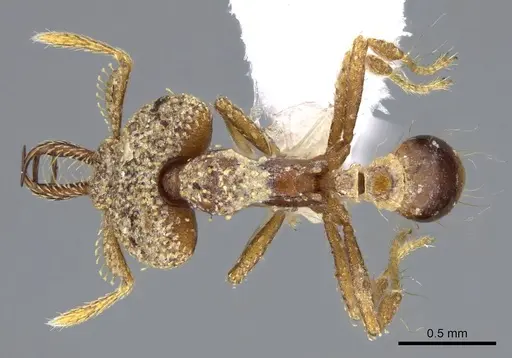
Literature
Loading distribution map...Loading products...