
Strumigenys rostrataeformis
- Sci. Name
- Strumigenys rostrataeformis
- Tribe
- Attini
- Subfamily
- Myrmicinae
- Author
- Brown, 1949
- Distribution
- Found in 1 countries
Introduction
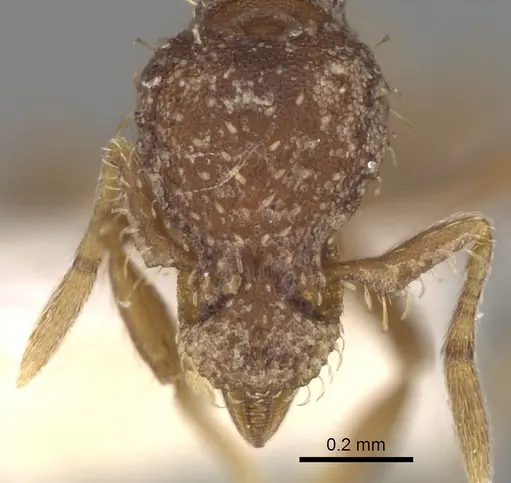
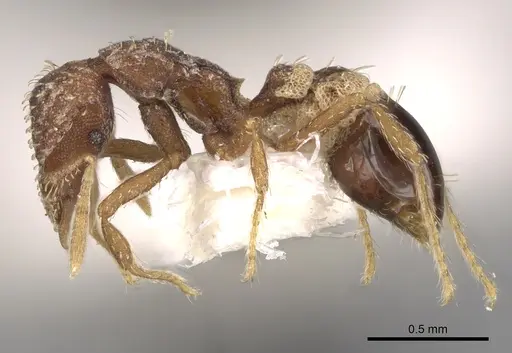
Strumigenys rostrataeformis is a tiny predatory ant native to Japan and the Korean Peninsula. Workers measure 2.35-2.37 mm and have a rusty brown color . They belong to the *Strumigenys rostrata* group and can be told apart from similar species by their straight front edge of the clypeus and a pair of short, thick hairs on the back of the pronotum . This species is rare in its native Japan, where it has been found in damp, decaying wood and at the base of tree roots, from Shikoku north to Miyagi Prefecture . What makes *Strumigenys rostrataeformis* unusual among its relatives is its foraging behavior. While most *Strumigenys* stick to leaf litter, workers of this species have been seen hunting actively on open surfaces, making them easier to spot . They are specialized predators that chase down tiny springtails, using their short, trap-like mandibles to grab prey .
Quick Summary
- Difficulty: Hard
- Origin & Habitat: Native to Japan (Shikoku, Kyushu, Honshu north to Miyagi Prefecture) and South Korea. Found in damp decaying tree stumps, flaky parts at the base of tree roots, and forest floor litter. Considered rare in Japan [3][4][2][1].
- Colony Type: Likely monogyne (single queen) based on typical Strumigenys patterns. Colony size is small, probably under 100 workers [4].
- Size & Growth:
- Queen: Unconfirmed, queen has not been described in scientific literature.
- Worker: 2.35-2.37 mm (total length) [1]
- Colony: Likely under 100 workers, based on collection records and small worker size [4].
- Growth: Slow
- Development: Estimated 8-12 weeks at warm temperatures (based on genus-level data, no species-specific studies). (Development time is estimated from related dacetine ants. Actual times may vary.)
- Antkeeping:
- Temperature: Keep at 20-24°C, based on the temperate origin. Avoid sustained temperatures above 26°C. No specific studies are available, so watch how the colony responds.
- Humidity: High humidity is required, these ants naturally live in damp, decaying wood. Keep the nest substrate consistently moist but not waterlogged. Provide a humidity gradient so the ants can choose their preferred zone.
- Diapause: Yes, this species comes from a temperate climate and needs a winter rest period. The exact duration is unknown, but for temperate Japanese ants,3-4 months at 5-15°C is typical. Reduce temperature during winter.
- Nesting: Best kept in a naturalistic setup with damp soil or wood. They naturally nest in decaying tree stumps and under loose bark. Y‑tong (AAC) or plaster nests with a water reservoir and high humidity work well. Provide plenty of small spaces and leaf litter for hunting.
- Behavior: These ants are specialized predators of springtails [2]. Workers forage actively on open surfaces, which is unusual for Strumigenys [2]. They have a functional stinger, but it is far too small to cause pain to humans. Escape prevention is critical because of their tiny size (2.4 mm), they can slip through standard mesh. Handle with care, as they are fragile.
- Common Issues: tiny size means escapes are likely without fine mesh barriers., specialized diet of live springtails makes feeding challenging, you need a constant supply., slow colony growth can lead to overfeeding or impatience., incorrect humidity (too dry) quickly causes colony failure., skipping winter diapause weakens the colony over time., wild stock is rare, so captive colonies are hard to replace.
Housing and Nest Setup
These ants need a humid environment that mimics a damp, decaying stump [1]. A naturalistic setup works best: fill a container with a moist soil/peat mix and add pieces of rotting wood or bark for them to nest under. Alternatively, you can use a Y‑tong (AAC) nest with a built‑in water reservoir, just make sure the chambers stay damp. For a founding colony, a test tube with a cotton plug and a water reservoir is simple and effective. Because they are so tiny (2.4 mm), use extremely fine mesh (0.5 mm or smaller) or a thin layer of fluon on the container walls to prevent escapes [2][1].
Feeding and Diet
This species is a specialized predator that hunts springtails in the wild [2]. You must provide a constant supply of live, tiny prey. Symphypleona and Entomobryomorpha springtails are their natural food and work best [2]. Other small live prey, such as fruit flies (Drosophila), booklice, or micro‑arthropods, may be accepted on a trial basis, but springtails are the staple. They do not take honey or sugar water. Feed small amounts every 2-3 days and remove leftovers to prevent mold. If the colony is well fed, you will see workers actively hunting, a hungry colony may seem sluggish [2].
Temperature and Seasonal Care
Keep the colony at 20-24°C, which matches the temperate climate of Japan and Korea. They can tolerate short dips to 18°C, but avoid sustained highs above 26°C. During winter, provide a diapause (hibernation) period. Lower the temperature to 5-15°C for about 3-4 months, starting in late autumn. A cool basement or unheated garage works well. Do not feed during diapause, but keep the substrate slightly moist. Skipping the rest period will gradually weaken the colony and may prevent normal seasonal reproduction. Because no species‑specific timing is known, watch for signs of activity slowing down in autumn as a cue.
Colony Founding and Growth
Queen founding behavior has not been documented for this species. Keepers should assume the queen raises the first workers alone in a humid, undisturbed chamber. Use a test tube setup with a water plug and keep it dark. Colony growth is slow, dacetine ants develop slowly compared to many common species. The first workers (nanitics) will be very small. A mature colony likely stays under 100 workers, which is normal for this rare species [4]. Do not expect rapid expansion, a founding colony may take 6-12 months to produce its first workers, and several years to reach a moderate size. Be patient and avoid disturbing the nest during the early stages.
Handling and Observation
These ants are extremely small and fragile. Minimize disturbance, especially during founding. When you need to move or observe them, use soft tools (like a fine paintbrush) and avoid shaking the nest. A magnifying glass or stereo microscope helps you see their unique hunting behavior, they snatch springtails with remarkable speed. Workers are not aggressive and will try to flee rather than fight [2]. Because they are so small, take care not to crush them during maintenance.
Frequently Asked Questions
Can I keep Strumigenys rostrataeformis in a test tube?
Yes, test tubes work well for founding colonies. Use a small test tube with a cotton plug and a water reservoir. Keep it humid but not wet, some condensation is fine, but avoid pooling water. Once the colony grows to about 10-20 workers, transfer them to a more spacious setup with damp substrate and hunting space.
What do Strumigenys rostrataeformis eat?
They are dedicated springtail hunters. In the wild they catch Symphypleona and Entomobryomorpha springtails [2]. In captivity, provide a steady supply of live springtails as their main food. Fruit flies or other tiny live insects may be accepted, but springtails work best. They do not eat sugar or honey, so stick to live prey.
How long does it take for first workers to appear?
An estimate is 8-12 weeks from egg to worker at around 22°C. This is based on data from other dacetine ants, no species‑specific study exists for S. rostrataeformis. Be patient, as growth is slow.
Are Strumigenys rostrataeformis good for beginners?
No. This species is difficult because it requires a constant supply of live springtails, very high humidity, a winter dormancy period, and extremely secure escape prevention due to its tiny size. We recommend starting with easier species like Lasius niger or Tetramorium caespitum before attempting Strumigenys.
Do they need hibernation?
Yes. They are from a temperate climate and need a winter rest period of about 3-4 months at 5-15°C. Skipping hibernation will weaken the colony over time.
How big do colonies get?
Colonies stay small, probably under 100 workers even when fully mature. This is normal for a rare, cryptic predator. Don't expect large colonies [4].
Why are my Strumigenys rostrataeformis dying?
Common causes include: not enough live springtails (they cannot survive on protein mixes), humidity that is too low, temperatures above 26°C, or accidental escape and dehydration due to their tiny size. Also, avoid disturbing the founding colony too often. Check these factors first.
When should I move them to a formicarium?
Move from a test tube to a naturalistic or Y‑tong setup once the colony reaches 10-20 workers. The new setup must have damp substrate and space for hunting live prey. Do not move a founding colony too early, wait until it is well established.
Can I keep multiple queens together?
Not recommended. Polygyny has not been documented for this species, and combining unrelated queens will likely lead to fighting. Keep one queen per colony unless you have reliable information from experienced keepers.
Report an Issue
The current care sheet is based fully on literature. See inconsistencies, or something that's incorrect? Please , it will be resolved after review from an admin. Contributing to the blogs tab also helps providing information, to make us be able to further improve the caresheets. Thank you for your support!
References

This caresheet is licensed under CC BY-SA 4.0 .
Community Blogs
CASENT0280714
View on AntWeb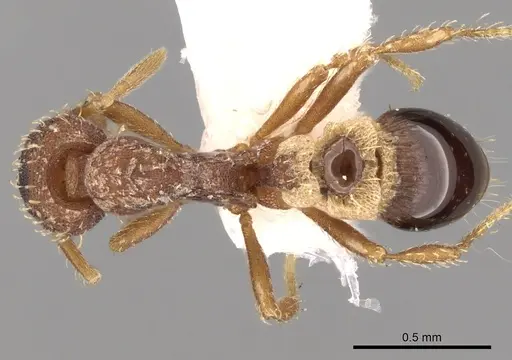
Literature
Loading distribution map...Loading products...