
Strumigenys roomi
- Sci. Name
- Strumigenys roomi
- Tribe
- Attini
- Subfamily
- Myrmicinae
- Author
- Bolton, 1972
- Distribution
- Found in 1 countries
Introduction
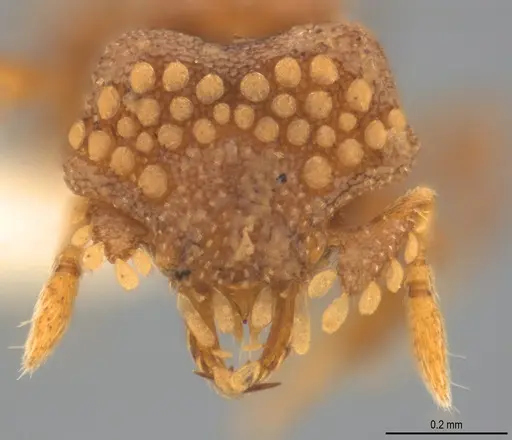
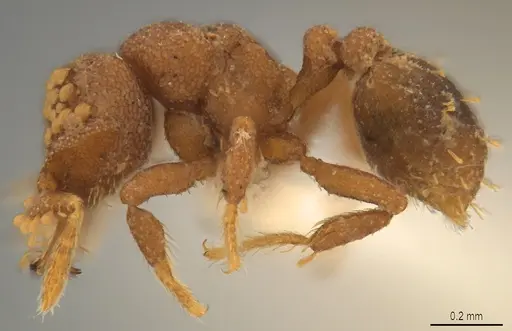
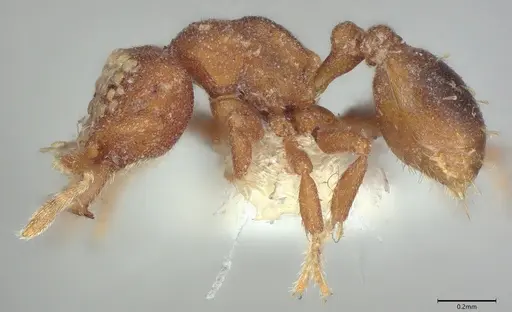
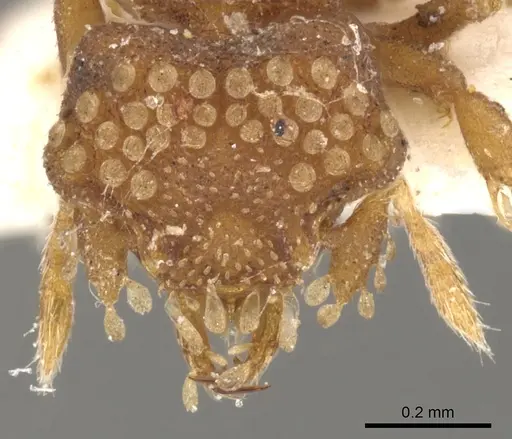
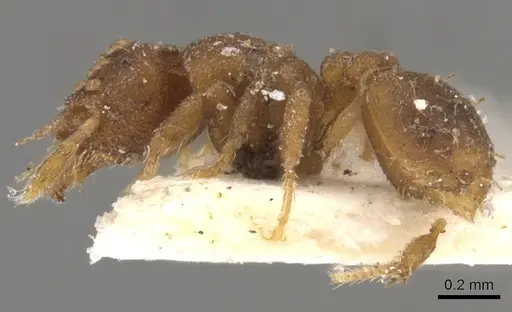
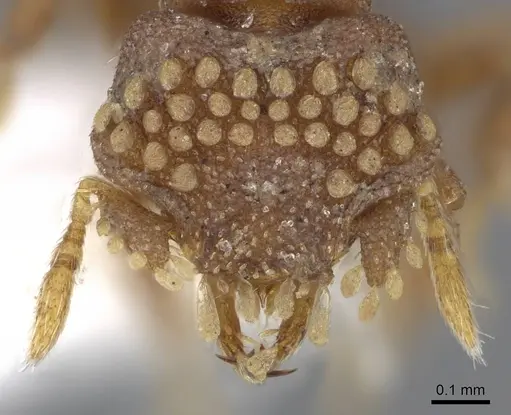
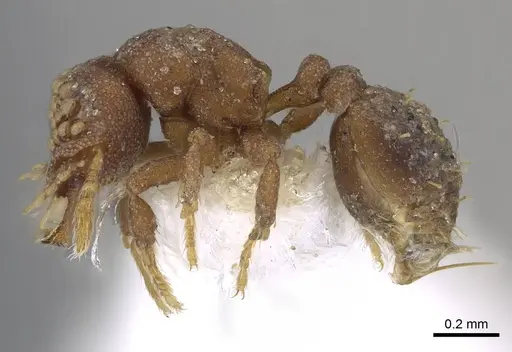
Strumigenys roomi is a tiny predatory ant from West and Central Africa. Workers are just 1.8-2.1 mm long, making them one of the smallest ant species kept in captivity . They are medium brown with 6‑segmented antennae, and their mandibles end in very long, spiniform teeth that cross over each other when closed. The head bears round (orbicular) hairs, especially behind the clypeus. This species lives in rainforest, cocoa farms, and secondary bush, always in soil and leaf litter . Despite being in the tribe Attini (which includes fungus‑growers), Strumigenys roomi is a specialized predator. It hunts springtails and other tiny arthropods using a trap‑jaw mechanism - its mandibles snap shut in milliseconds when triggered. Their small size, specialized diet, and need for high humidity make them a challenge for even experienced antkeepers .
Quick Summary
- Difficulty: Expert
- Origin & Habitat: West and Central Africa, recorded from Ghana, Ivory Coast, Cameroon, Democratic Republic of Congo, and Gabon. Found in rainforest, cocoa farms, and secondary bush, living in soil and ground litter [1][2].
- Colony Type: Likely monogyne (single queen), based on genus patterns. No literature confirms this directly [1].
- Size & Growth:
- Queen: Unknown, only workers have been measured in the literature [1]
- Worker: 1.8-2.1 mm (total length) [1]
- Colony: Unknown, colony size is not documented for this species [1]
- Growth: Slow, inferred from related Strumigenys species
- Development: Unknown, no data available, from related species, expect several weeks to months (Development speed is unknown, keep warm and well‑fed to support growth)
- Antkeeping:
- Temperature: Warm, typical of tropical forest floor, aim for 24-28°C and avoid long drops below 22°C. Provide a gentle gradient so workers can self‑regulate [1].
- Humidity: High, the nest substrate should be consistently damp but not waterlogged. Their natural habitat stays moist, so keep humidity around 70-85% with good ventilation to prevent mold [1].
- Diapause: No true diapause, being tropical, they need year‑round warmth. Reduce feeding slightly during cooler periods but do not hibernate [1].
- Nesting: Use a fine, moisture‑retaining substrate like coco fiber or peat moss in a shallow container. Chambers must be tiny (scaled to 2 mm workers). A naturalistic setup with a water reservoir works well [1].
- Behavior: These ants are specialized predators of micro‑arthropods. They move slowly and deliberately, scanning for prey. Workers possess a functional stinger (typical of Myrmicinae Attini), but it is weak and not medically significant. Escape prevention is critical due to their 2 mm size, they squeeze through standard mesh.
- Common Issues: escape is the biggest risk, their tiny size means they can slip through 0.5 mm gaps, use fluon barriers or water moats, specialized diet requires a steady supply of live springtails or similar tiny prey, dead food is ignored, slow colony growth can be frustrating, they may take years to reach double‑digit worker numbers, high humidity must be balanced with ventilation to avoid mold and fungal outbreaks, wild‑caught colonies may carry mites or pathogens that are difficult to treat in such small ants
Housing and Setup
Because of their 2 mm size, Strumigenys roomi needs a very fine‑grained setup. Use a shallow container (2-3 cm deep) with damp coco fiber, peat moss, or a similar mix. The substrate should hold moisture but not be waterlogged. If you use a small acrylic nest, make sure the chambers and passages are narrow enough that workers can touch both walls, otherwise they can't feed properly [1].
Escape prevention is essential. Standard insect mesh is too wide, use 0.5 mm mesh, fluon barriers, or a water moat. Even tiny gaps in lid seals will lead to escapes. A shallow outworld with a thin layer of substrate makes feeding and observation easier [1].
Feeding and Diet
The hardest part of keeping Strumigenys roomi is providing live prey. They are obligate predators of micro‑arthropods, springtails (e.g., Folsomia candida) are ideal. Culture them separately in damp containers with charcoal or decaying wood [1].
Other possible prey include tiny soil mites, booklice, and freshly hatched fruit flies. They will not accept dead insects, freeze‑dried food, or sugar. The hunting instinct is triggered by movement, so prey must be alive. Offer a few springtails every 2-3 days, adjusting based on how many the colony eats. A well‑fed colony will have workers actively patrolling the substrate [1].
Temperature and Humidity
As a tropical species, Strumigenys roomi needs steady warmth. Keep the nest at 24-28°C, use a small heating mat on one side to create a gradient. Avoid temperatures below 22°C for long periods, as this can slow metabolism and harm the colony [1].
Humidity should be high, similar to the damp forest floor. The substrate should feel moist to the touch. Use a water reservoir in the nest or mist regularly, but ensure good ventilation to stop mold. A hygrometer helps, but don't place it directly on wet substrate [1].
Colony Development
Very little is known about the colony cycle of Strumigenys roomi. A newly mated queen likely founds her colony alone, the founding method is unconfirmed. Development is probably slow, from related Strumigenys, the first workers may take 8-12 weeks at warm temperatures, but this is not confirmed for this species [1].
Colony size is not documented, but related species rarely exceed a few hundred workers. Growth will be very slow. The key to success is a constant supply of live springtails. Without them, the colony will stall or die. Be patient, a healthy colony can live for many years once established [1].
Behavior and Observation
Strumigenys roomi workers move slowly and methodically, constantly scanning the ground with their large eyes and sensitive hairs. They use a trap‑jaw mechanism to catch prey, a lightning‑fast snap once sensory hairs are triggered [1].
They have a functional stinger (typical of the Attini tribe) but it is weak and barely noticeable to humans. Workers are not aggressive toward people. When hunting, they may ignore new prey at first. Once they learn that springtails are food, they become more active during feeding times. Observation is best done with a magnifying glass or macro lens [1].
Frequently Asked Questions
Can I keep Strumigenys roomi in a test tube?
Test tubes are not ideal because their 2 mm size and need for live prey make feeding and humidity control difficult. A shallow naturalistic container with damp substrate allows you to culture springtails inside and observe hunting more easily [1].
How long does it take for the first workers to emerge?
The development time is unknown for this species. Based on related Strumigenys, expect at least 8-12 weeks at warm temperatures, but this is an estimate. Do not disturb the queen during founding [1].
What do Strumigenys roomi eat?
Only live, tiny arthropods. Their main food is springtails (Folsomia candida or similar). They ignore dead prey, freeze‑dried insects, honey, or sugar water. The hunting response is triggered by movement, so prey must be alive. Tiny mites and booklice may also be accepted [1].
Are Strumigenys roomi good for beginners?
No. Their tiny size requires excellent escape prevention, they need a constant supply of live springtails (which must be cultured separately), and their slow growth can be frustrating. Only experienced antkeepers should attempt this species. Start with easier genera like Lasius or Camponotus [1].
How big do Strumigenys roomi colonies get?
Colony size is not documented. Related Strumigenys species rarely exceed 200-300 workers, but this is a guess. Growth is very slow, and a colony may take years to reach even 50 workers [1].
Do Strumigenys roomi need hibernation?
No. They are tropical and need year‑round warmth (24-28°C). A drop below 22°C for long periods can harm them. Keep them warm and reduce feeding only slightly during cooler months [1].
Why are my Strumigenys roomi dying?
Common causes: lack of live prey (they starve on dead food), escape through tiny gaps, low humidity (they desiccate fast), temperatures below 22°C, or parasites from wild‑caught colonies. Make sure you have a robust springtail culture and sealed escape‑proof setup [1].
Can I keep multiple queens together?
There is no data for Strumigenys roomi. Most Strumigenys are monogyne (single queen), so keeping unrelated queens together is not recommended. They would likely fight. Always keep one queen per colony unless you observe otherwise [1].
When should I move them to a formicarium?
Because of their tiny size, a naturalistic container with damp substrate is often better than a traditional formicarium. If you do use one, wait until the colony has at least 20-30 workers and the chamber passages are narrow enough (2 mm diameter). Many keepers keep them permanently in a simple plastic container with substrate [1].
Report an Issue
The current care sheet is based fully on literature. See inconsistencies, or something that's incorrect? Please , it will be resolved after review from an admin. Contributing to the blogs tab also helps providing information, to make us be able to further improve the caresheets. Thank you for your support!
References

This caresheet is licensed under CC BY-SA 4.0 .
Community Blogs
CASENT0425584
View on AntWeb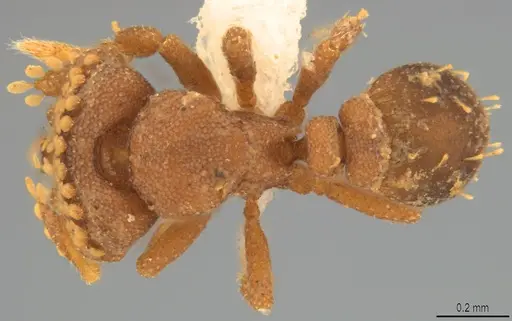
CASENT0810388
View on AntWeb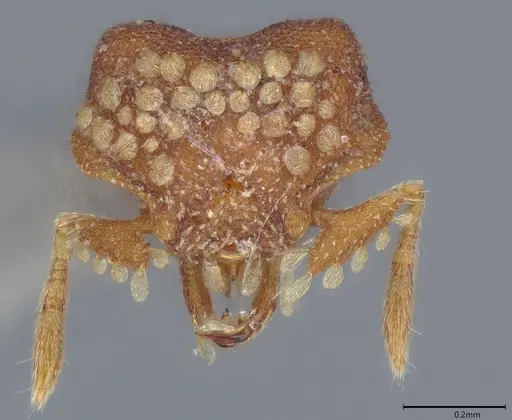
CASENT0900044
View on AntWeb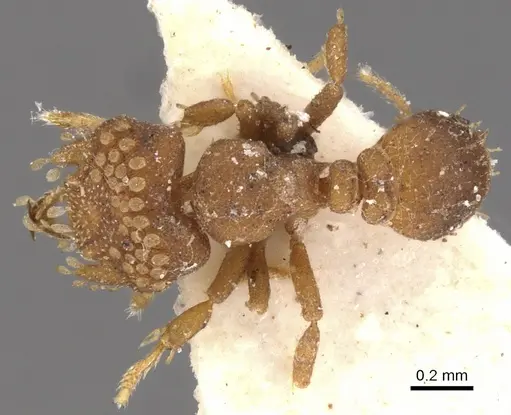
CASENT0914713
View on AntWeb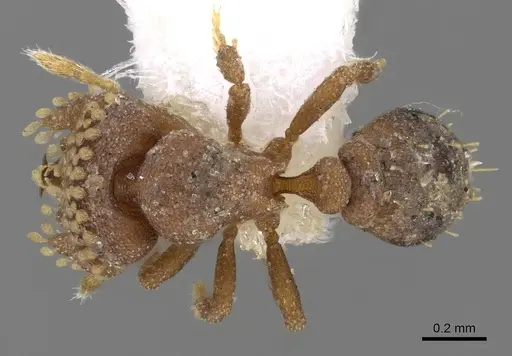
Literature
Loading distribution map...Loading products...