
Strumigenys rofocala
- Sci. Name
- Strumigenys rofocala
- Tribe
- Attini
- Subfamily
- Myrmicinae
- Author
- Bolton, 2000
- Distribution
- Found in 3 countries
Introduction
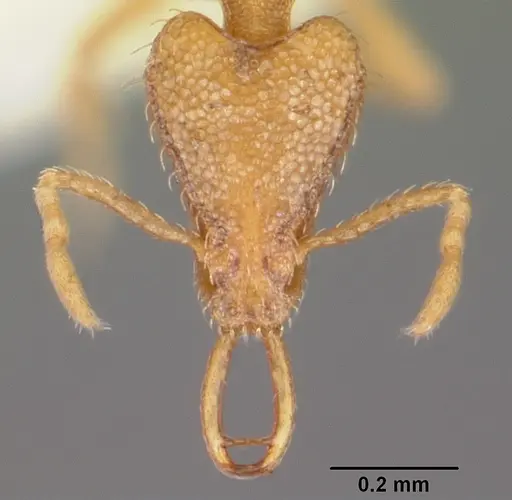
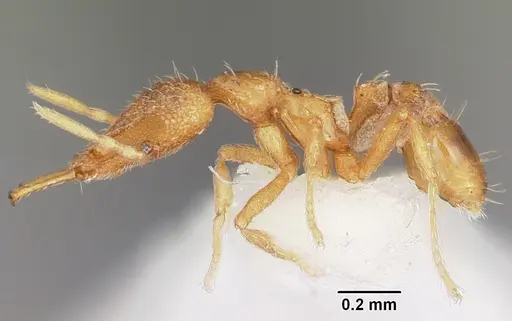
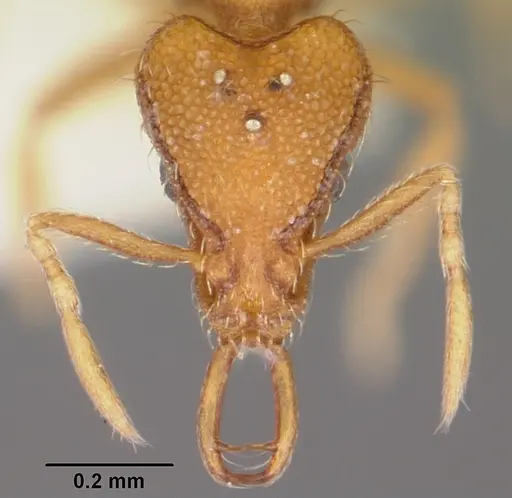
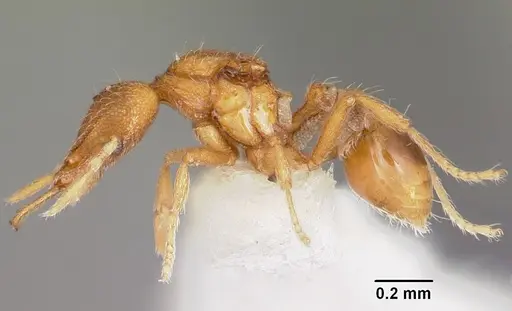
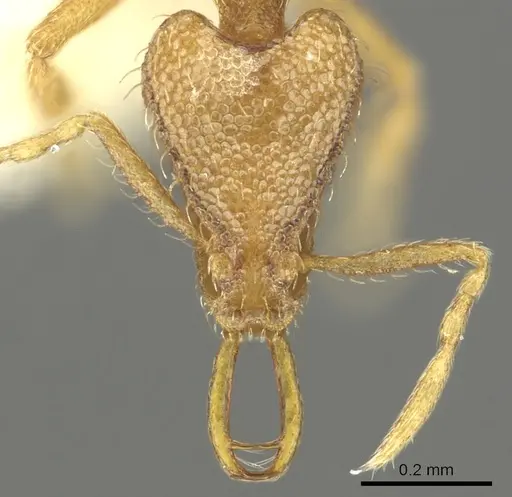
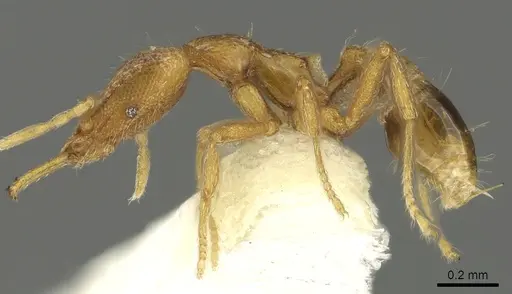
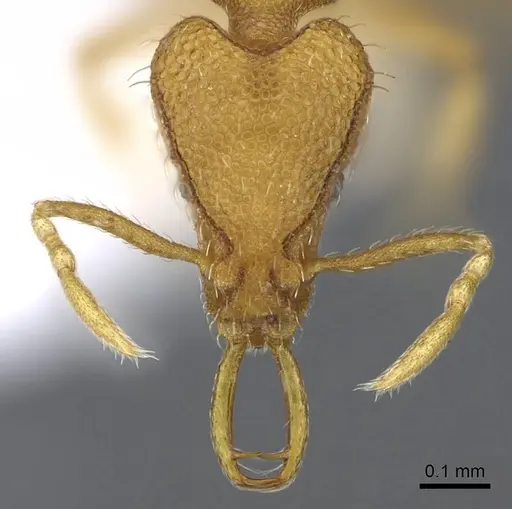
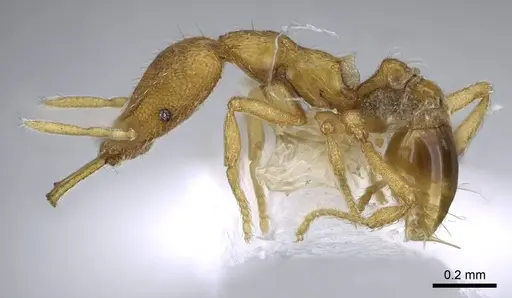
Strumigenys rofocala is a minute predatory ant measuring just 1.8-1.9mm in total length, belonging to the Myrmicinae subfamily and Attini tribe . Workers have a narrow head and small elongated mandibles adapted for hunting tiny prey. They have a transverse row of stiff erect hairs at the back of the head that are the longest hairs on the head . The species is part of the Strumigenys godeffroyi group and is closely related to a few other tiny leaf-litter species . Native to Borneo, Indonesia, and Malaysia, it lives in rainforest leaf-litter, especially in alluvial and dipterocarp forests . What makes S. rofocala stand out is that it was the most common Strumigenys species in Bornean rain forest surveys, with 76 occurrences across all forest types . These ants are exceptionally fast for their size, moving at 8.8mm per second, and they forage almost twice as often in leaf litter as in topsoil . Their high nitrogen isotope values (δ15Ncor = 7.38) confirm they are specialized predators of tiny soil arthropods .
Quick Summary
- Difficulty: Expert
- Origin & Habitat: Borneo, Indonesia, and Malaysia (Indomalaya region). Inhabits lowland rainforest leaf-litter, particularly in alluvial and dipterocarp forests [1][2].
- Colony Type: Colony structure is unconfirmed. Only two field nests have been documented, with 11 and 13 workers [4]. Queens have been collected together with workers in leaf-litter samples, but details on queen number in natural colonies are unknown.
- Size & Growth:
- Queen: Undescribed in detail, only fragmentary queen measurements available, but likely similar to workers in TL range [1].
- Worker: 1.8-1.9mm total length [1].
- Colony: Small, up to 13 workers documented in field nests [4].
- Growth: Unknown, no development data available for this species.
- Development: Unknown, no direct measurements for Strumigenys rofocala. Related tropical Strumigenys typically take 6-10 weeks at warm temperatures. (Development timeline is estimated based on related species. No published data for this species.)
- Antkeeping:
- Temperature: Tropical species, keep at 24-28°C. This ant lives in lowland Bornean rainforest where temperatures are warm year-round. Provide a gentle temperature gradient in the setup [1].
- Humidity: High humidity required. The nest substrate should be consistently moist but not waterlogged. The foraging area should stay humid, with a small drier patch to avoid mold. Leaf-litter in the setup helps retain moisture [4].
- Diapause: No, as a tropical species from Borneo, Strumigenys rofocala does not need hibernation. Keep warm conditions year-round.
- Nesting: Natural nests are built in soil attached to small saplings about 10cm above the ground [4]. In captivity, a naturalistic terrarium with moist soil, leaf litter, and vertical substrate (like cork or small branches) works well. They prefer tight, humid spaces. Avoid standard test tubes.
- Behavior: Active, fast-moving predator (8.8mm/s) [4]. Workers forage individually through leaf litter, using their small mandibles to catch tiny prey like springtails and other micro-arthropods. They are not aggressive toward keepers but can sting (though it is not medically significant). Escape prevention is critical, at only 1.8mm, they can squeeze through standard mesh and tiny gaps.
- Common Issues: escape prevention must be airtight, workers slip through standard mesh and any gap larger than 0.5mm., small colony size (up to 13 workers) means the colony is fragile and grows slowly, beginners may find this discouraging., specialized predatory diet requires a steady supply of live springtails or similar micro-prey, feeding is more demanding than for generalist ants., high humidity creates mold risk in enclosed nests, good ventilation and a moisture gradient are essential., tropical species cannot handle cold, any temperature drop below 22°C can be fatal.
Housing and Nest Setup
To keep Strumigenys rofocala, you need a setup that mimics their natural leaf-litter environment. A shallow terrarium or mixing bowl with a tight-fitting lid works well. Fill it with moist, decomposing leaf litter and soil. Add pieces of cork bark or small branches placed vertically, their natural nests are in soil attached to saplings about 10cm above the ground [4]. The substrate should stay consistently moist but not waterlogged. Use fine mesh (0.5mm or smaller) on any ventilation holes, and seal all lid seams, these ants can escape through tiny gaps. Avoid test tubes because they need more vertical space to hunt.
Feeding and Diet
Strumigenys rofocala is a specialized predator of tiny soil micro-arthropods. Their high nitrogen isotope values (δ15Ncor = 7.38) confirm a protein-rich diet [5]. The ideal staple food is live springtails, they match the size of the ants' mandibles. Other acceptable live prey include pot worms (enchytraeids) and newly hatched pinhead crickets. Do not offer sugar water or honey, these ants rarely accept it. Feed small amounts every few days. It's best to maintain a continuous culture of springtails to ensure a steady food supply. Remove any dead prey to prevent mold.
Temperature and Care
This tropical species needs warm, stable temperatures between 24-28°C. They live in lowland Bornean rainforest, so they cannot handle cold, avoid anything below 22°C [1]. Use a gentle heat cable on one side of the enclosure to create a gradient. Room temperature within this range is fine, but keep them away from drafts or air conditioners. Do not hibernate them, they need warmth all year. Stability is more important than hitting an exact number, but avoid big swings.
Behavior and Activity
These ants are incredibly fast for their size, walking at 8.8mm per second, faster than most other leaf-litter ant species [4]. They forage alone, hunting small prey with their specialized mandibles. They are much more active in leaf litter than in topsoil (537 vs 268 individuals out of 805 total) [4]. The colony will be constantly on the move. They can sting, but it's not medically important, they are docile toward humans. Their speed and small size make them fascinating to watch but a challenge to keep contained.
Colony Establishment
Starting a colony of Strumigenys rofocala is difficult. Field nests are small (11-13 workers) [4], so even a healthy colony is fragile. If you get a queen, keep her in a small, humid chamber with a steady supply of live micro-prey. Founding behavior is unconfirmed, do not assume she seals herself in. Expect slow growth, first workers may take 6-10 weeks at optimal temperature. Do not disturb the founding area. Once workers appear, they will hunt for prey. Be patient and avoid overfeeding, mold is a real risk in the humid enclosure. Monitor moisture closely.
Frequently Asked Questions
How long does it take for Strumigenys rofocala to develop from egg to worker?
The exact development time is unconfirmed for this species. Based on related tropical Strumigenys, estimate 6-10 weeks at around 26°C.
Can I keep Strumigenys rofocala in a test tube setup?
No, a test tube is not recommended. They need a naturalistic setup with leaf litter and vertical surfaces to hunt. Test tubes don't provide enough foraging space or proper humidity control.
What do Strumigenys rofocala ants eat?
They are specialized predators of tiny soil micro-arthropods. Their primary food is live springtails. They may also take pot worms and micro-arthropods. They do not accept sugar sources or dead protein [5][4].
Are Strumigenys rofocala ants good for beginners?
No, this species is not for beginners. They need live prey cultures, high humidity, tropical temperatures, and airtight escape prevention. Their small colony size and specific diet make them challenging even for experienced keepers.
How big do Strumigenys rofocala colonies get?
Colony size is unclear. The largest documented field nests had only 11-13 workers [4]. There is no evidence they grow larger. Mature colonies probably remain small.
Do Strumigenys rofocala need hibernation?
No, they do not. As a tropical species from Borneo, they require warm conditions year-round. Keep temperatures at 24-28°C constantly.
Why are my Strumigenys rofocala escaping?
Escape prevention is critical. At only 1.8mm, workers can slip through standard mesh and tiny gaps. Use mesh with holes 0.5mm or smaller, seal all lid edges, and check for gaps around cables or ventilation.
Can I keep multiple queens together?
Combining unrelated queens has not been documented for this species and is not recommended. Field data shows only single-queen colonies, so introducing multiple likely leads to fighting.
What temperature is ideal for Strumigenys rofocala?
Keep them at 24-28°C. Avoid temperatures below 22°C as they cannot tolerate cold. A gentle gradient with a heat cable works best.
Report an Issue
The current care sheet is based fully on literature. See inconsistencies, or something that's incorrect? Please , it will be resolved after review from an admin. Contributing to the blogs tab also helps providing information, to make us be able to further improve the caresheets. Thank you for your support!
References

This caresheet is licensed under CC BY-SA 4.0 .
Community Blogs
CASENT0102622
View on AntWeb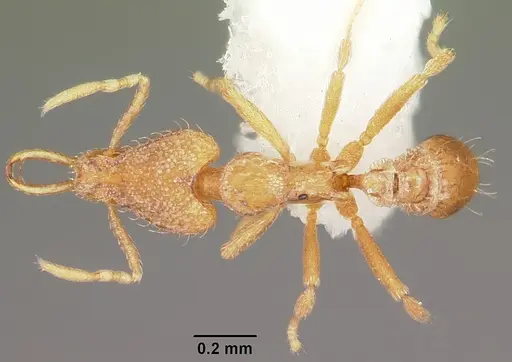
CASENT0104944
View on AntWeb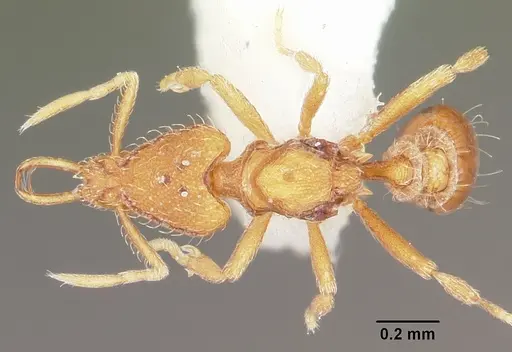
CASENT0900828
View on AntWeb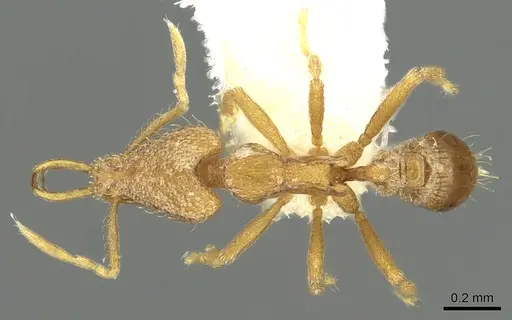
CASENT0914864
View on AntWeb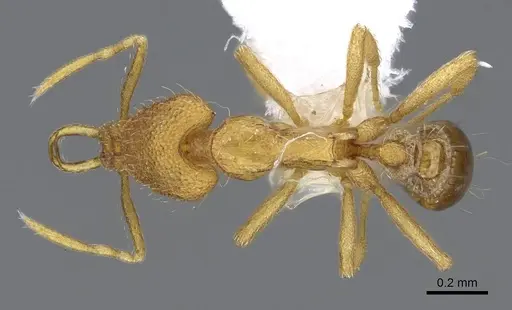
Literature
Loading distribution map...Loading products...