
Strumigenys opaca
- Sci. Name
- Strumigenys opaca
- Tribe
- Attini
- Subfamily
- Myrmicinae
- Author
- Brown, 1954
- Distribution
- Found in 1 countries
Introduction
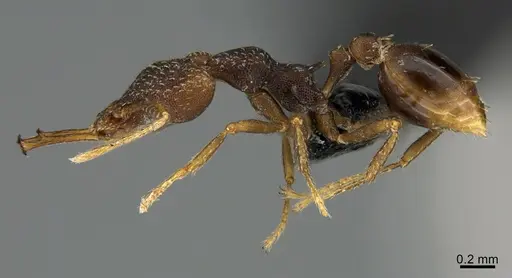
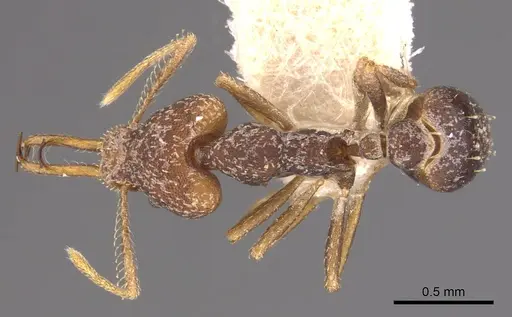
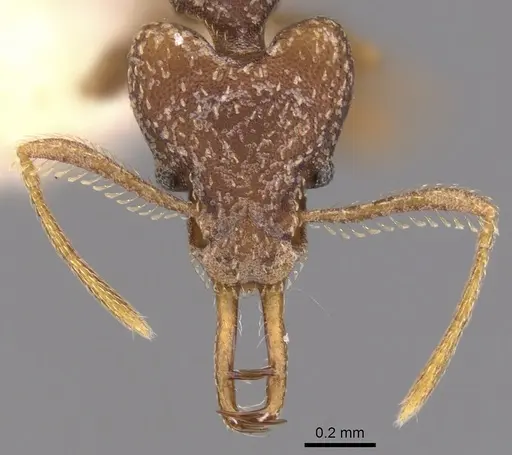
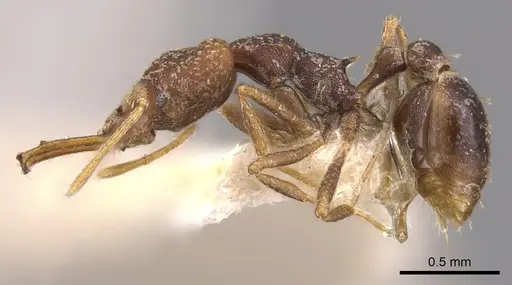
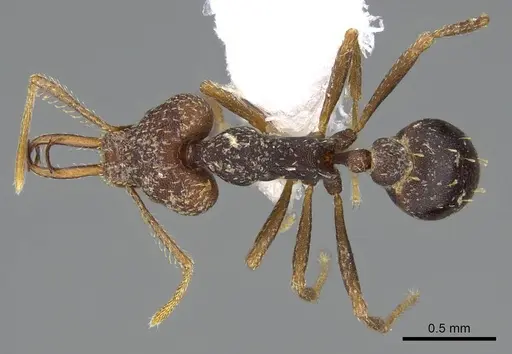
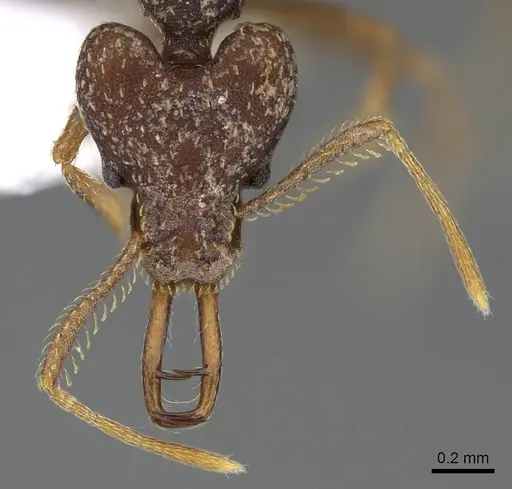
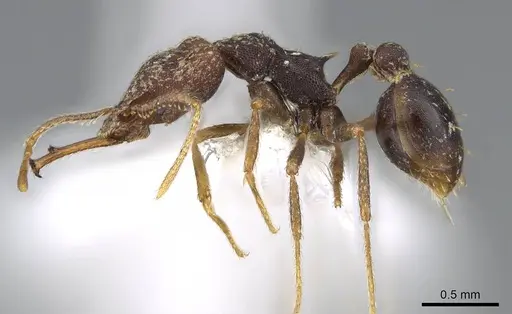
Strumigenys opaca is a tiny ant native to the rainforests of Cape York Peninsula in Queensland, Australia . Workers measure 2.6-3.4 mm in total length and have large, convex eyes set on low protuberances, long slender mandibles, and a deep brownish-red body with lighter legs and antennae . They belong to the Strumigenys wallacei group and are closely related to the Malesian Strumigenys wallacei, but can be distinguished by their evenly rounded mesonotum (instead of a high hump) and longer mandibles . Like other Strumigenys, these ants are specialized predators that hunt small soil arthropods, especially springtails, using their snap‑jaw mandibles . They live in rainforest leaf litter and form small colonies. Their specific care requirements (live prey, high humidity, stable warmth) make them a challenging species best left to experienced keepers.
Quick Summary
- Difficulty: Expert
- Origin & Habitat: Cape York Peninsula, Queensland, Australia. Found in rainforest leaf litter samples from the McIlwraith Range near Coen [1][2].
- Colony Type: Likely monogyne (single queen) based on typical Strumigenys structure, but unconfirmed.
- Size & Growth:
- Queen: Unknown, no queen has been described for this species.
- Worker: 2.6-3.4 mm [2]
- Colony: Unknown, estimated under 200 workers based on related Strumigenys species.
- Growth: Slow
- Development: Unknown, estimated 8-12 weeks based on related Strumigenys species. (No specific data exist, development is likely slower than in typical myrmicines.)
- Antkeeping:
- Temperature: Warm conditions required, estimate 22-26°C based on tropical rainforest habitat. Avoid below 20°C or above 28°C.
- Humidity: High humidity, keep the nest substrate consistently moist (not waterlogged). This species lives in rainforest litter where humidity is always high.
- Diapause: No, tropical species from northern Queensland do not need hibernation. Maintain warmth year‑round.
- Nesting: Small, dark, humid chambers. Test tubes with water reservoir and cotton work for founding. For established colonies, use a small plaster or soil nest that holds moisture. Provide a tiny outworld with leaf litter for foraging. Because the ants are so small, use fine mesh (≤0.5 mm) on ventilation holes.
- Behavior: Workers are calm, methodical foragers that hunt individually. They possess a functional sting (subfamily/tribe trait) but it is mild and rarely used against humans. They are not aggressive toward the keeper. Escape risk is high due to their tiny size, they can squeeze through standard barriers. Maintain fluon or PTFE barriers and use fine mesh.
- Common Issues: tiny size leads to escapes unless all openings are sealed with fine mesh and barriers, specialized diet requires a reliable culture of live springtails or other micro‑prey, starvation is the #1 killer, high humidity needs can cause mold if ventilation is inadequate, slow colony growth and small size may disappoint keepers expecting rapid expansion, wild‑caught colonies may carry parasites (mites, nematodes) that can kill the colony in captivity
Housing and Setup
Strumigenys opaca needs a small, humid setup that mimics rainforest leaf litter. A test tube with a water reservoir and tight cotton plug works for founding. For larger colonies, use a small plaster or soil nest with chambers that hold moisture, tiny spaces are important. Add a small outworld (e.g., a plastic box) with a thin layer of moist leaf litter. Because the ants are only 2.6-3.4 mm, use fine mesh (≤0.5 mm) on any ventilation and apply fluon or PTFE around openings. Keep the entire setup warm (22-26°C) and stable. A heating cable on one side can help if room temperature is too low. [1][2]
Feeding and Diet
This is the most critical aspect, they are specialized predators that need live micro‑prey. Cultured springtails (Collembola) should make up the bulk of their diet. They may also accept fruit flies, but springtails are the natural prey from rainforest litter [2]. Offer small prey every 2-3 days, removing uneaten items after 24 hours to prevent mold. Do not rely on sugar water or commercial ant foods, these will not sustain them. Based on related Strumigenys species, they cannot digest carbohydrates and require protein from live prey.
Temperature and Seasonal Care
As a tropical rainforest ant from northern Queensland, Strumigenys opaca requires warm, stable temperatures year‑round. Estimated ideal range is 22-26°C, avoid prolonged temperatures below 20°C or above 28°C [1]. No diapause is needed, maintain warmth throughout the year. If your room is cool, use a heat mat or cable on top of the nest (not underneath) to avoid drying the substrate. Monitor with a small thermometer near the nest.
Behavior and Foraging
Workers are calm and deliberate foragers. They hunt individually in leaf litter, using their long mandibles to capture small arthropods [2]. They possess a functional sting (subfamily/tribe trait) but are not aggressive toward humans. Colonies are small and quiet, you may see only a few workers at a time. Activity may be nocturnal or crepuscular. They do not produce large swarms of reproductives, and nuptial flights have not been documented for this species.
Colony Founding
The founding behavior of Strumigenys opaca is not documented. Based on related Strumigenys, queens may found claustrally, but this is unconfirmed. If you obtain a queen, place her in a small test tube (dark, humid) and disturb as little as possible. Do not offer food during founding, the queen likely relies on stored reserves. First workers may appear after several months. Once nanitics emerge, begin offering live springtails.
Common Problems
The main challenges are diet and humidity. Without live springtails the colony starves, never rely on sugar water. Escape prevention is essential: use fine mesh and barriers. High humidity can promote mold, balance by providing ventilation and cleaning leftovers. Wild‑caught colonies may bring parasites (e.g., mites), quarantine new colonies. Lastly, growth is very slow, a mature colony may only contain about 100 workers, so patience is required.
Frequently Asked Questions
Can I keep Strumigenys opaca in a test tube?
Yes, test tubes work well, especially for founding colonies. Use a small tube with a water reservoir and tight cotton plug. However, because they are so tiny, pack the cotton well and consider fluon around the rim. For older colonies, a small plaster or soil nest is easier to maintain humidity [2].
What do Strumigenys opaca eat?
They are specialist predators that need live micro‑prey. The best food is cultured springtails (Collembola). They may also accept small fruit flies. They do NOT eat sugar water, honey, or commercial ant foods, these cannot sustain them [2].
How long does it take for the first workers to emerge?
This is not documented for S. opaca. Based on related Strumigenys, the estimated time is 8-12 weeks from egg to worker at optimal temperatures (~24°C). The queen remains sealed until the first nanitics appear.
Are Strumigenys opaca good for beginners?
No, this species is for advanced keepers. Their need for live springtail cultures, high humidity, tiny size (escape risk), and slow growth make them challenging. Beginners should start with easier species.
How big do Strumigenys opaca colonies get?
Exact colony size is unknown, but Strumigenys species typically remain under a few hundred workers. Based on related species, likely under 200 workers at maturity.
Do Strumigenys opaca need hibernation?
No, they are tropical ants from northern Queensland and require warm conditions year‑round. Maintain temperatures around 22-26°C without a winter cooling period [1].
Why are my Strumigenys opaca dying?
Most common causes: starvation (lack of live springtails), escape (too small for standard barriers), low humidity (below 70%), temperatures below 20°C, or parasites from wild colonies. Check each factor.
When should I move them to a formicarium?
For this species, a test tube or small plaster nest works indefinitely because colonies stay small. There is no need to upgrade to a large formicarium. Move only if the current space becomes too crowded.
Can I keep multiple queens together?
Not documented for this species. Based on likely monogyne colony structure, combining unrelated queens could lead to aggression. It is not recommended.
What temperature range is ideal for Strumigenys opaca?
Estimated 22-26°C, based on their tropical rainforest habitat. Temperatures below 20°C or above 28°C should be avoided [1].
How often should I feed Strumigenys opaca?
Offer live springtails every 2-3 days, adjusting to how quickly they are consumed. Remove leftovers after 24 hours to prevent mold. They do not need constant access to sugar sources.
Report an Issue
The current care sheet is based fully on literature. See inconsistencies, or something that's incorrect? Please , it will be resolved after review from an admin. Contributing to the blogs tab also helps providing information, to make us be able to further improve the caresheets. Thank you for your support!
References

This caresheet is licensed under CC BY-SA 4.0 .
Community Blogs
Literature
Loading distribution map...Loading products...