
Strumigenys ogloblini
- Sci. Name
- Strumigenys ogloblini
- Tribe
- Attini
- Subfamily
- Myrmicinae
- Author
- Santschi, 1936
- Distribution
- Found in 2 countries
Introduction
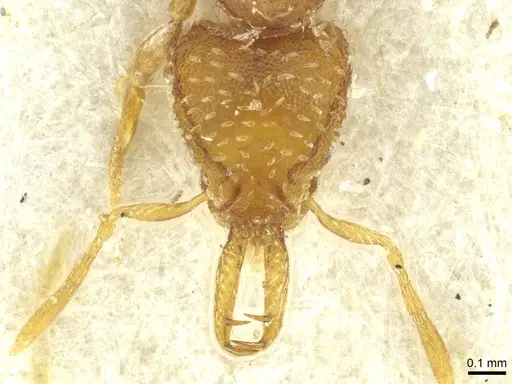
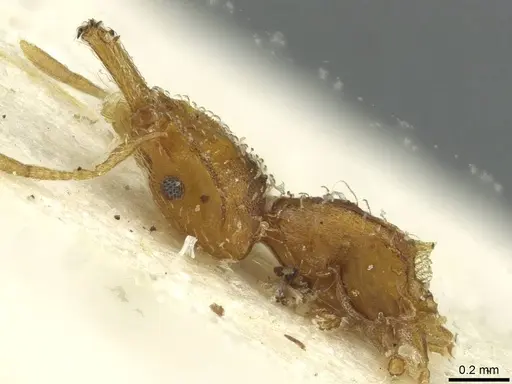
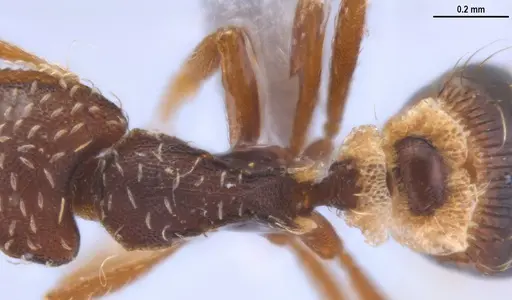
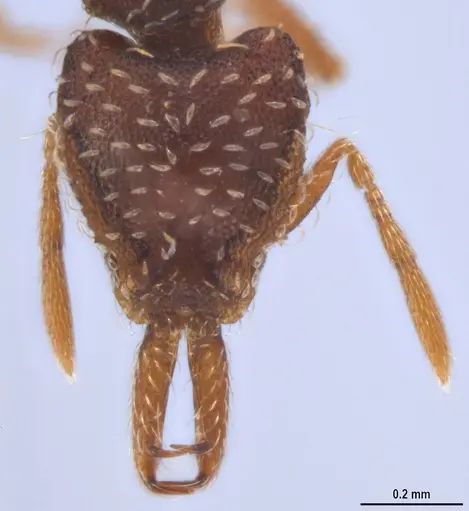
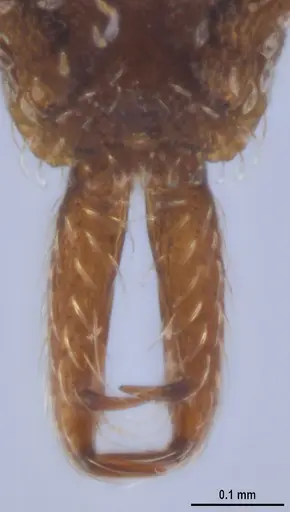
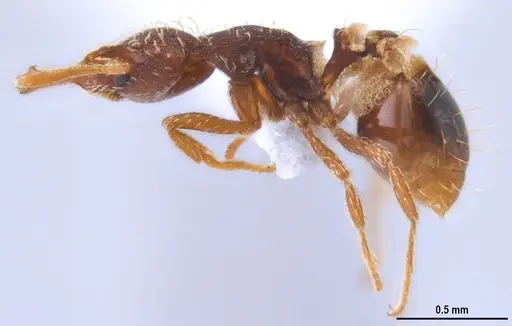
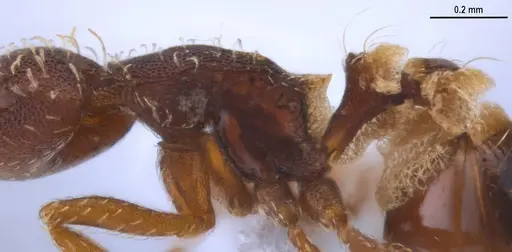
Strumigenys ogloblini is a tiny predatory ant native to South America, found in Argentina, Brazil, and Paraguay . Workers are only 2.3-2.5 mm, queens 2.6-2.7 mm, making them one of the smallest ants kept in captivity . They have a distinctive rusty ferruginous color and can be identified by their strongly convex head, broad translucent margins along the scrobe borders, and unique mandibular structure with a single preapical tooth and one intercalary denticle . This species is the only member of the Strumigenys ogloblini group . The collector of the type noted "Nido en la tierra" (nest in ground) on the label .
Quick Summary
- Difficulty: Hard
- Origin & Habitat: Neotropical region (Argentina, Brazil, Paraguay) [1][2]. Found in leaf litter and nests in the ground, particularly in Misiones province, Argentina [3][1].
- Colony Type: Unknown, no data for this species. Based on related Strumigenys, likely single-queen colonies.
- Size & Growth:
- Queen: 2.6-2.7 mm [1]
- Worker: 2.3-2.5 mm [1]
- Colony: Unknown, no data available. Likely up to a few hundred workers based on related species.
- Growth: Slow
- Development: Unknown, no data for this species. Based on related Strumigenys, estimated 8-12 weeks at warm temperatures. (Development depends on temperature. Slow growth is typical for Strumigenys.)
- Antkeeping:
- Temperature: Unknown for this species. Based on tropical origin, keep warm (24-26°C) with a gradient.
- Humidity: Unknown. Likely high humidity similar to neotropical leaf litter (70-85%). Keep substrate consistently moist but not waterlogged.
- Diapause: No, tropical species, no hibernation needed.
- Nesting: Ground-nesting. Use soil or plaster nest with tight, narrow chambers. A founding queen likely seals herself in a claustral chamber.
- Behavior: Cryptic foragers that hunt tiny arthropods in leaf litter. Based on the genus, they are specialized predators of springtails (Collembola). Not aggressive toward keepers, but they do have a functional stinger (mild venom). Their tiny size means fine mesh barriers are essential to prevent escapes.
- Common Issues: tiny size makes escapes likely without fine mesh barriers., specialized diet (live springtails) is hard to provide, need a springtail culture., slow growth may frustrate keepers expecting fast colony development., high humidity requirements can cause mold if ventilation is poor., excess prey feeding can also lead to mold in humid conditions.
Housing and Nest Setup
Because workers are only 2.3-2.5 mm [1], they can escape through standard mesh. Use fine mesh (0.3mm or smaller) or fluon barriers. Strumigenys ogloblini are ground-nesters, so provide a naturalistic setup with moist soil or a plaster nest with narrow chambers. The outworld should have low vertical space and a substrate of leaf litter. A water reservoir connected to the nest helps maintain high humidity without flooding.
Feeding and Diet
This is the hardest part. Based on the genus, Strumigenys are specialized predators of springtails (Collembola). You need to establish a springtail culture before getting this species. They may also accept other tiny prey like booklice (psocids) and fruit fly larvae, but springtails should be the main food. They do not feed on sugar or honey. Feed small amounts of live prey every few days and remove uneaten prey to prevent mold.
Temperature and Humidity
As a tropical species, Strumigenys ogloblini likely needs warm, humid conditions. Keep the nest at 24-26°C year-round with a gentle gradient from a heating cable or mat. Humidity should be high, the substrate should feel damp but not waterlogged. Mist the nest occasionally, but rely on a water reservoir for steady moisture. Ensure good ventilation to prevent mold, but avoid drafty airflow that dries the nest. These ants are sensitive to drying out.
Colony Development
Colony growth is slow. The queen likely starts the colony claustrally, sealing herself in a chamber and raising the first workers on stored reserves. Exact timing is unknown, but based on related species, first workers (nanitics) may appear after 8-12 weeks. The colony grows gradually, and maximum colony size is unknown but probably only a few hundred workers. Slow growth is partly due to the specialized diet, each prey item feeds only a few ants. Be patient and avoid overfeeding, as excess prey can cause mold problems in the humid nest.
Behavior and Temperament
Workers are cryptic foragers that hunt tiny arthropods in leaf litter. They are not aggressive toward keepers. Despite common misconceptions, they do have a functional stinger (like other Attini), but it is too small to be medically significant. Workers use their specialized mandibles to snap-capture prey. Their small size means the main risk is escape, use fine mesh or fluon barriers. They are not strong climbers, so a simple outworld with low walls works well.
Frequently Asked Questions
How long does it take for Strumigenys ogloblini to produce first workers?
There are no specific studies for this species. Based on related Strumigenys, first workers may appear 8-12 weeks after the queen lays eggs, depending on temperature.
What do Strumigenys ogloblini ants eat?
They appear to be specialized predators of springtails (Collembola). You'll need a steady culture of live springtails. They may occasionally accept other tiny prey like booklice or fruit fly larvae, but springtails should be the staple. They do not eat sugar or honey.
Are Strumigenys ogloblini good for beginners?
No. This is a difficult species due to their tiny size (escape risk), specialized springtail diet, need for high humidity and warm temperatures, and slow colony growth. Only experienced keepers should attempt this species.
How big do Strumigenys ogloblini colonies get?
No data is available for this species. Based on related Strumigenys, colonies probably stay small, perhaps up to a few hundred workers. Growth is very slow.
Do Strumigenys ogloblini need hibernation?
No. They are native to tropical South America and do not require diapause. Keep them warm (24-26°C) year-round. Cool temperatures can kill them.
Can I keep Strumigenys ogloblini in a test tube?
A test tube setup with a water reservoir can work for founding if the cotton plug is tight or replaced with fine mesh to prevent escape. However, a small plaster or soil nest with tight chambers is better for long-term care.
Why are my Strumigenys ogloblini dying?
Common causes include: drying out (low humidity), cool temperatures (below 22°C), lack of live springtails, escapes (tiny size), and mold from overwatering or excess prey. Check each factor if your colony is declining.
Where is Strumigenys ogloblini found in the wild?
Native to Argentina, Brazil, and Paraguay. In Argentina it has been recorded in Misiones province [1][2][3].
What makes Strumigenys ogloblini unique?
It is the only species in the Strumigenys ogloblini group [1]. Its identification features include a single preapical tooth on each mandible, strongly convex head, and unique spongiform structures on the petiole and postpetiole [1].
Report an Issue
The current care sheet is based fully on literature. See inconsistencies, or something that's incorrect? Please , it will be resolved after review from an admin. Contributing to the blogs tab also helps providing information, to make us be able to further improve the caresheets. Thank you for your support!
References

This caresheet is licensed under CC BY-SA 4.0 .
Community Blogs
CASENT0912861
View on AntWeb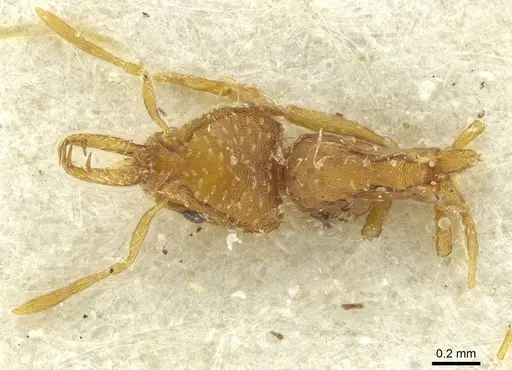
DZUP556814
View on AntWeb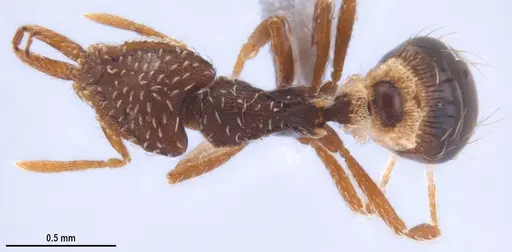
Literature
Loading distribution map...Loading products...