
Strumigenys manis
- Sci. Name
- Strumigenys manis
- Tribe
- Attini
- Subfamily
- Myrmicinae
- Author
- Bolton, 2000
- Distribution
- Found in 1 countries
Introduction
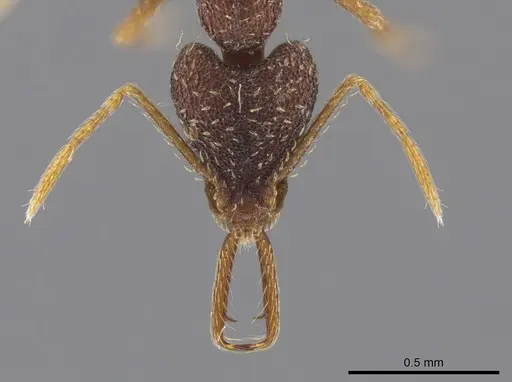
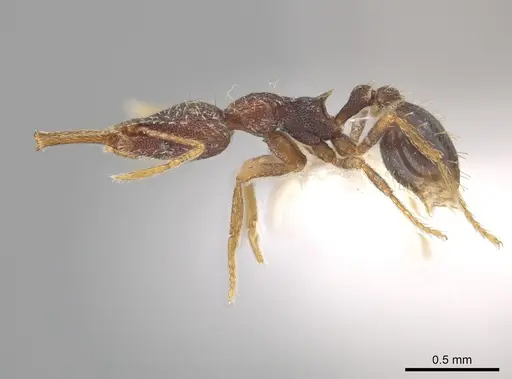
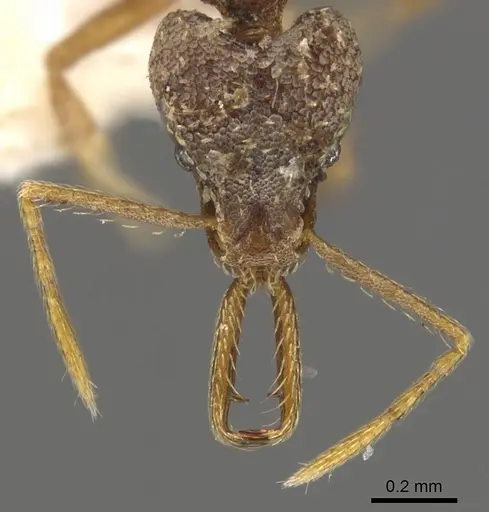
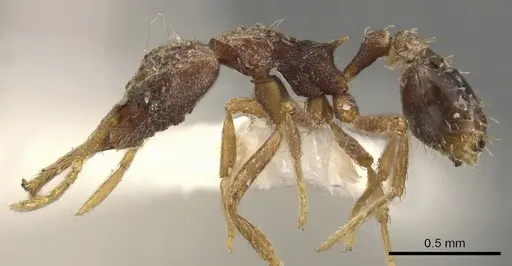
Strumigenys manis is a tiny predatory ant measuring just 2.5mm in total length, making it the smallest species in the Strumigenys marginiventris group . Workers have distinctive linear mandibles with a unique combination of a preapical tooth and a minute denticle positioned just before midlength - this dental arrangement helps distinguish them from related species . Their entire body is densely reticulate-punctate (covered in a fine network of pits), and they completely lack the spongiform tissue typically found on the ventral side of the petiole in most Strumigenys species . The propodeal spines are long and narrowly triangular, supported by a narrow carina down the declivity . This rainforest species was originally described from Mexico and has since been discovered in Colombia, representing one of the few Strumigenys species found across both Central and South America . Like most Strumigenys, they are specialized predators that use their fast-moving mandibles to capture tiny prey, primarily springtails (Collembola) . However, specific hunting behavior for S. manis has not been directly studied.
Quick Summary
- Difficulty: Hard
- Origin & Habitat: Rainforest ant from the Neotropical region, found in Mexico (Vera Cruz) and Colombia (Putumayo, Vaupés) at elevations of 200-320m. Collected from leaf litter samples in primary rainforest remnants, often from sifted leaf mold and rotten wood [2][4][3].
- Colony Type: Colony structure is unconfirmed. Based on typical Strumigenys patterns, likely single-queen colonies with small colony sizes [3].
- Size & Growth:
- Queen: Unconfirmed, workers are 2.5mm TL [1]
- Worker: 2.5mm total length [1]
- Colony: Likely small, Strumigenys colonies typically reach only dozens to a few hundred workers [3]
- Growth: Slow, small colonies develop gradually [3]
- Development: Unknown, likely 6-10 weeks based on typical Strumigenys development patterns (Development timeline unconfirmed for this specific species. Strumigenys are slow-growing ants that invest heavily in each individual larva.)
- Antkeeping:
- Temperature: Keep at 22-26°C, they prefer warm, humid rainforest conditions. Use a heating cable on one side of the nest to create a gentle gradient [3].
- Humidity: High humidity is essential, aim for 70-85%. These leaf litter ants need consistently moist substrate. Keep the nest area humid but not waterlogged [3].
- Diapause: Unconfirmed, tropical species may not require formal hibernation but may slow down during cooler periods [3].
- Nesting: Use a naturalistic setup with moist substrate or a Y-tong/plaster nest. They do well in tight chambers scaled to their tiny size. Provide multiple chambers and keep the substrate consistently damp [3].
- Behavior: Strumigenys are specialized predators with extremely fast mandibles used to capture springtails and other tiny arthropods [3]. They possess a functional sting (typical of the subfamily Myrmicinae), but it is not medically significant to humans. Their primary defense is flight. Workers are tiny (2.5mm) and can slip through small gaps, so escape prevention with fine mesh is critical. They are slow-moving and spend most of their time hunting through leaf litter. Colonies are typically peaceful and non-territorial outside their hunting grounds [3].
- Common Issues: tiny size makes escape likely without fine mesh barriers, specialized diet can be challenging, they need live springtails or other micro-prey, slow growth may cause keepers to lose patience or overfeed, high humidity requirements can lead to mold problems if ventilation is poor, wild-caught colonies may carry parasites that can devastate captive colonies
Housing and Nest Setup
Strumigenys manis requires a setup that mimics their natural leaf litter habitat. A naturalistic terrarium with moist substrate works well, use a mix of soil and rotting leaf material to create a damp, forest-floor environment. Alternatively, a Y-tong (aerated concrete) or plaster nest with tight chambers scaled to their tiny 2.5mm size provides good visibility and humidity control [3].
Because they are so small, escape prevention is critical. Use fine mesh (e.g.,0.1mm) on any openings, these ants can squeeze through gaps that seem impossibly small. A humidity reservoir or regular misting maintains the moisture levels they need. Provide a shallow water dish for drinking, though they get most moisture from prey and substrate [3].
Feeding and Diet
Strumigenys manis is a specialized predator that requires live prey. Their primary food source in the wild is springtails (Collembola), which they capture using their fast-moving mandibles [3]. In captivity, you should culture live springtails specifically for feeding, these are readily available from pet stores or online suppliers.
Other tiny live prey such as booklice (psocids), grain mites, and fruit flies can be offered as supplements. Do not rely on sugar water or honey, these ants are strict predators and rarely accept carbohydrate sources [3]. Feed small prey items every 2-3 days, adjusting based on colony consumption. Remove uneaten prey to prevent mold issues.
Temperature and Humidity
As a tropical rainforest species, Strumigenys manis needs warm and humid conditions. Maintain temperatures between 22-26°C, this range supports normal activity and brood development. A heating cable placed on one side of the nest creates a temperature gradient that allows ants to regulate their own exposure to warmth [3].
Humidity should remain high, around 70-85%. The substrate should feel consistently moist but never waterlogged. These ants come from rainforest leaf litter where humidity is constantly high. Mist the enclosure regularly and consider using a moisture reservoir in the nest setup. Poor humidity leads to mortality and failed broods [3].
Behavior and Colony Dynamics
Strumigenys ants are fascinating to watch due to their unique hunting strategy. Workers patrol slowly through the nest and foraging areas, using their trap-jaw mandibles to snap shut on any springtail or tiny arthropod that crosses their path. Their strike is among the fastest in the animal kingdom [3].
Colonies remain small compared to many common ant species, expect dozens to perhaps 100-200 workers at maturity. They are not aggressive and will flee rather than fight when threatened. Workers have a functional sting, but it is weak and not dangerous to humans [3]. The slow growth rate means patience is essential, Strumigenys colonies take months to establish significant numbers [3].
Frequently Asked Questions
What do Strumigenys manis ants eat?
Strumigenys manis is a specialized predator that feeds almost exclusively on live springtails and other tiny arthropods. Culture your own springtails for a reliable food source. They may also accept tiny fruit flies, booklice, and grain mites as occasional supplements. Sugar water is generally not accepted [3].
How long does it take for Strumigenys manis to raise first workers?
The exact development timeline is unconfirmed for this species, but based on typical Strumigenys patterns, expect 6-10 weeks from egg to first worker at optimal temperature (24-26°C). Growth is slow, these tiny ants invest significant resources into each individual larva [3].
Can I keep Strumigenys manis in a test tube setup?
Test tubes can work for founding colonies, but these ants need high humidity and a naturalistic hunting environment to thrive long-term. A small naturalistic setup with moist substrate or a Y-tong nest with tight chambers is more suitable. The key is maintaining humidity while providing space for hunting tiny prey [3].
Are Strumigenys manis good for beginners?
No, this species is not recommended for beginners. Their specialized diet (live springtails required), high humidity needs, slow growth, and tiny size make them challenging. They are best suited for experienced antkeepers who can provide consistent conditions and proper food [3].
How big do Strumigenys manis colonies get?
Strumigenys colonies remain relatively small. Based on typical genus patterns, colonies likely reach only dozens to a few hundred workers at maximum. This is a small, litter-dwelling ant that does not form massive colonies [3].
Do Strumigenys manis need hibernation?
As a tropical species from Mexico and Colombia, formal hibernation is not required. However, they may slow down during cooler periods. Simply maintain stable temperatures in the 22-26°C range year-round for best results [3].
Why are my Strumigenys manis dying?
Common causes include: improper humidity (too dry), lack of live prey (they need springtails), stress from excessive disturbance, and parasites from wild-caught colonies. Ensure humidity stays high, provide fresh springtails regularly, and minimize nest inspections during the founding stage [3].
When should I move Strumigenys manis to a formicarium?
Move them when the colony reaches 20-30 workers and the test tube setup becomes cramped. A small naturalistic setup or Y-tong nest works well. Always transition gradually and keep the new setup humid, sudden changes in environment can stress the colony [3].
What temperature is best for Strumigenys manis?
Keep Strumigenys manis at 22-26°C. This tropical rainforest species prefers warm, stable conditions. A heating cable on one side of the nest creates a gradient that lets ants choose their preferred temperature. Avoid temperatures below 20°C or above 30°C [3].
Report an Issue
The current care sheet is based fully on literature. See inconsistencies, or something that's incorrect? Please , it will be resolved after review from an admin. Contributing to the blogs tab also helps providing information, to make us be able to further improve the caresheets. Thank you for your support!
References

This caresheet is licensed under CC BY-SA 4.0 .
Community Blogs
CASENT0640238
View on AntWeb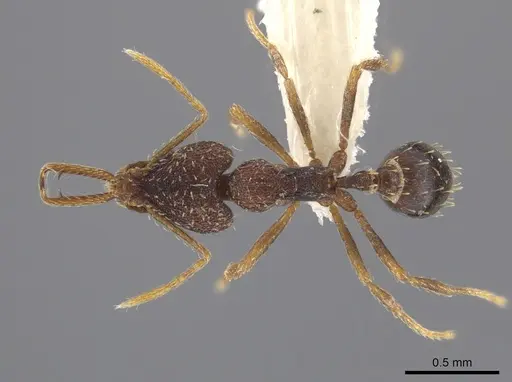
CASENT0900438
View on AntWeb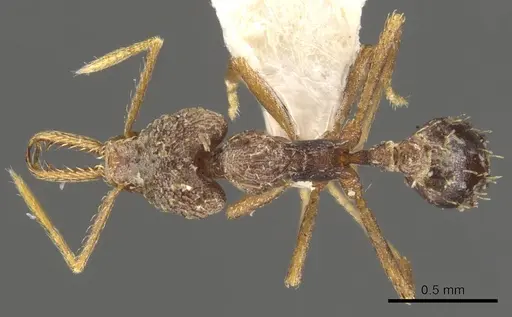
Literature
Loading distribution map...Loading products...