
Strumigenys lopotyle
- Sci. Name
- Strumigenys lopotyle
- Tribe
- Attini
- Subfamily
- Myrmicinae
- Author
- Brown, 1969
- Distribution
- Found in 1 countries
Introduction
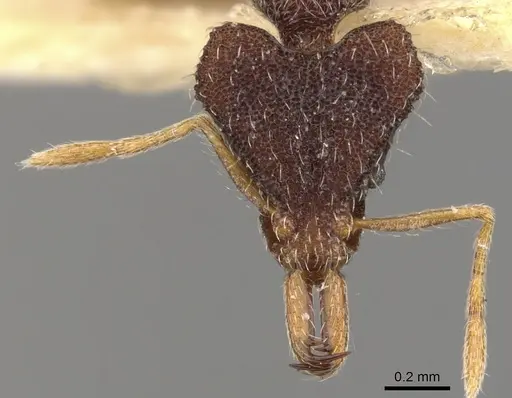
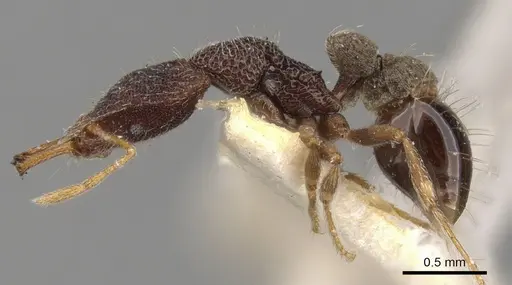
Strumigenys lopotyle is a tiny ant species known only from primary tropical forest in Xishuangbanna, Yunnan Province, China . Like other Strumigenys, workers are likely about 2-3 mm long with specialized trap-jaw mandibles for capturing small prey. The species is a habitat specialist restricted to stable, old-growth forest environments . Because it hasn't been studied in detail, most care information is inferred from related species and its natural habitat.
Quick Summary
- Difficulty: Hard
- Origin & Habitat: Xishuangbanna, Yunnan Province, China, primary tropical forest specialist [1]
- Colony Type: Unconfirmed. Likely monogyne (single queen) based on typical Strumigenys patterns, but no data confirms this.
- Size & Growth:
- Queen: ~3-4 mm (inferred from genus size)
- Worker: ~2-3 mm (inferred from genus size)
- Colony: Likely under 100 workers (inferred from typical Strumigenys colony sizes)
- Growth: Slow
- Development: Estimated 8-12 weeks based on related Dacetini species at warm temperatures (Development time is estimated from genus-level data, no species-specific studies exist.)
- Antkeeping:
- Temperature: Unknown, based on tropical forest habitat, likely needs warm stable temperatures around 22-26°C. Provide a gradient using a heating cable.
- Humidity: High, based on primary forest leaf litter habitat. Keep substrate moist but not waterlogged.
- Diapause: Unknown, likely not required (tropical species), but no data confirms.
- Nesting: Likely requires a humid, naturalistic setup with deep substrate (soil, rotting wood). Avoid open formicariums, provide tight, enclosed spaces.
- Behavior: Unknown, based on Strumigenys genus, likely docile and cryptic. Tiny size makes escape prevention critical. Functional sting present (general subfamily trait) but rarely used.
- Common Issues: escape prevention is critical due to tiny size, use fine mesh and tight seals, specialized diet: likely requires live small arthropods (springtails), not confirmed for this species, high humidity needs may lead to mold if ventilation is poor, slow growth rate may discourage beginners, wild-caught colonies may carry mites or parasites
Housing and Nest Setup
Since no captive care data exists for this species, setup recommendations are based on its natural habitat: primary forest leaf litter [1]. A naturalistic terrarium with 5-8 cm of moist, loose substrate (soil mixed with rotting wood and leaf litter) likely works best. The nest should be kept humid but well-ventilated. Avoid test tubes, the ants need space to hunt and cannot easily access prey in a tube. Provide plenty of hiding spots under bark or in small cavities. Use fine mesh to prevent escape (workers are tiny).
Feeding and Diet
Based on typical Strumigenys feeding habits, this species likely preys on small springtails and other micro-arthropods. No studies confirm the diet of Strumigenys lopotyle. You should culture springtails and offer them regularly. Other tiny prey like fruit flies may be accepted. Sugar water or dead insects will be ignored. If the colony refuses springtails, try other small live prey such as booklice or mites. Observe and adjust.
Temperature and Humidity
As a tropical forest specialist [1], Strumigenys lopotyle likely needs warm (22-26°C) and very humid conditions. Use a heating cable under one side of the nest to create a gradient. Substrate should be kept damp but not wet, aim for a moisture level similar to squeezed-out sponge. Mist if needed, but rely on a water source like a hydration tube. Poor humidity will kill the colony quickly.
Colony Development
Colony growth is presumed slow, as is typical for small Strumigenys. The founding phase is unconfirmed, queens may be claustral or semi-claustral. The first workers (nanitics) will be even smaller than normal workers. Even a mature colony probably has fewer than 100 workers. Be patient and avoid frequent disturbance. Do not expect large swarms, this is a cryptic species best watched under magnification.
Behavior and Observation
Little is known about the behavior of Strumigenys lopotyle. Based on congeneric species, they are slow-moving hunters that search leaf litter for tiny prey. They have functional stingers (subfamily trait) but are not aggressive toward humans. Their best defense is their small size and cryptic coloration. Watching them hunt springtails under a magnifying glass is the main reward. They do not raid or display aggressive swarming.
Frequently Asked Questions
Can I keep Strumigenys lopotyle in a test tube?
Probably not ideal. They likely need space to hunt live prey and high humidity, both are hard to maintain in a simple test tube. A naturalistic terrarium is recommended.
What do Strumigenys lopotyle ants eat?
Not confirmed, but like other Strumigenys they probably eat small live arthropods such as springtails. You will need to culture springtails or buy them regularly.
How long does it take for Strumigenys lopotyle to get first workers?
Unknown for this species. Estimated 8-12 weeks at warm temperatures based on related Dacetini ants.
Are Strumigenys lopotyle good for beginners?
No, this species is for experienced keepers. Its specialized diet and unknown requirements make it challenging. A beginner should start with a more robust species.
How big do Strumigenys lopotyle colonies get?
Probably under 100 workers, based on typical Strumigenys. Do not expect large colonies.
Do Strumigenys lopotyle need hibernation?
No evidence needed for diapause. As a tropical ant, it can be kept warm year-round.
Why are my Strumigenys lopotyle dying?
Most likely causes: low humidity, lack of live prey, mold from overwatering, or temperature extremes. Check these first.
Can I keep multiple Strumigenys lopotyle queens together?
Not studied. Single-queen colonies are typical for Strumigenys. Do not combine unrelated queens.
When should I move Strumigenys lopotyle to a formicarium?
Wait until the colony has at least 20-30 workers and is foraging actively. A naturalistic soil setup is better than a traditional formicarium for humidity control.
Report an Issue
The current care sheet is based fully on literature. See inconsistencies, or something that's incorrect? Please , it will be resolved after review from an admin. Contributing to the blogs tab also helps providing information, to make us be able to further improve the caresheets. Thank you for your support!
References

This caresheet is licensed under CC BY-SA 4.0 .
Community Blogs
CASENT0900801
View on AntWeb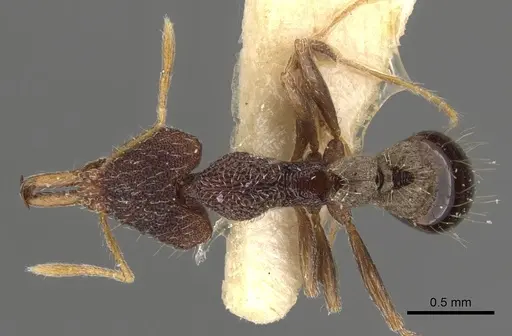
Literature
Loading distribution map...Loading products...