
Strumigenys longinoi
- Sci. Name
- Strumigenys longinoi
- Tribe
- Attini
- Subfamily
- Myrmicinae
- Author
- Bolton, 2000
- Distribution
- Found in 1 countries
Introduction
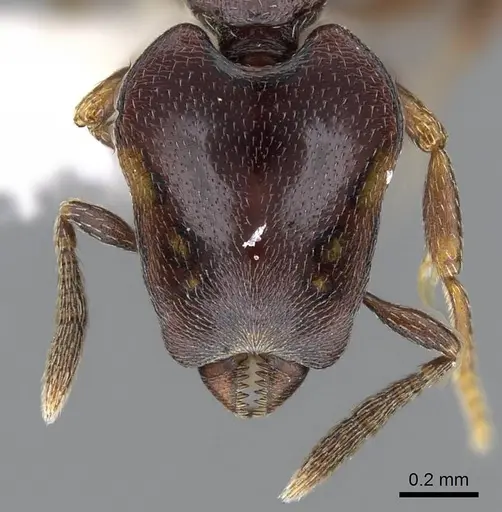
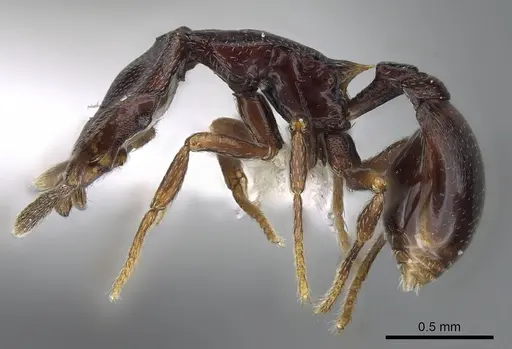
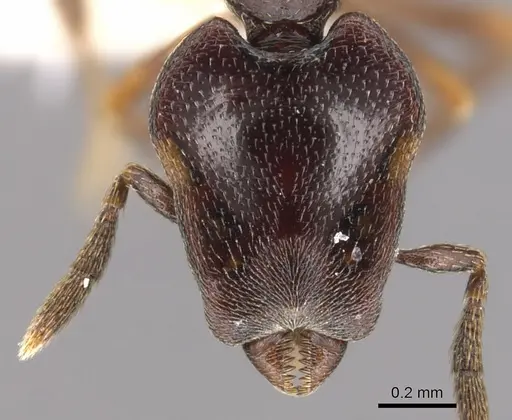
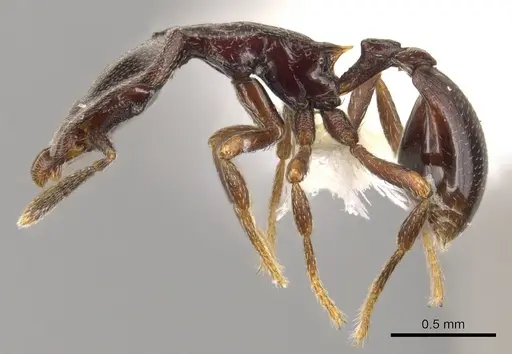
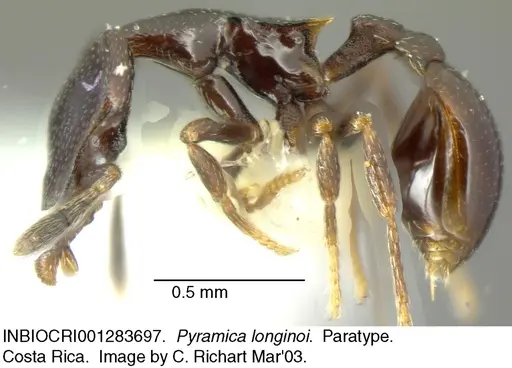
Strumigenys longinoi is a tiny ant native to the wet forests of Costa Rica . Workers measure 2.5-3.0 mm total length, making them one of the smallest ants you'll keep . They are the largest species in the longinoi-complex within the excisa group, with an extremely flattened head and no standing hairs on the body - only tiny, flattened hairs . Their mandibles are short and curve downward, and they lack erect hairs on the face, pronotum, and upper scrobe margins . These ants live in leaf litter on the forest floor, hunting tiny arthropods . Like other Strumigenys, they are trap-jaw hunters that snap their mandibles to capture prey. Their small size, need for high humidity, and reliance on live micro-prey make them a specialized species best suited for experienced keepers.
Quick Summary
- Difficulty: Hard
- Origin & Habitat: Costa Rica (Neotropical region). They occur in wet forest habitats, living in leaf litter on the forest floor at elevations around 500-800 m [1][2].
- Colony Type: Likely monogyne (single queen) based on typical Strumigenys patterns, but colony structure has not been directly studied for this species. A dealate queen has been collected, confirming established colonies exist [2].
- Size & Growth:
- Queen: Size data unavailable [2]
- Worker: 2.5-3.0 mm total length [1]
- Colony: Up to 500 workers (inferred from related Strumigenys species) [2]
- Growth: Unknown, likely slow to moderate based on typical small Myrmicinae patterns
- Development: Unconfirmed, estimated 6-10 weeks based on related species at warm temperatures (No direct development data exists for this species. Related Strumigenys typically take 6-10 weeks from egg to worker at tropical temperatures.)
- Antkeeping:
- Temperature: Keep around 22-26°C, they come from warm wet forests in Costa Rica. A gentle gradient with the nest area at the warmer end is ideal [1]
- Humidity: High humidity is critical, think damp forest floor. Keep the nest substrate consistently moist but not waterlogged, with some drier areas for the ants to regulate [1]
- Diapause: No, being a tropical species from Costa Rica, they do not require hibernation. Keep them at stable warm temperatures year-round [1]
- Nesting: They naturally live in leaf litter, so a naturalistic setup with damp leaf litter and tight chambers works well. Avoid acrylic nests, use Y-tong (AAC), plaster, or 3D-printed nests with chambers scaled to their tiny size. Fine mesh barriers (0.5 mm or smaller) are essential for escape prevention [1][2]
- Behavior: These ants are specialized predators that use their trap-jaw mechanism to capture tiny prey. They are not aggressive toward humans, and their small size means their snap is unlikely to break skin. They are ground-dwelling and forage through leaf litter for micro-arthropods. Escape prevention is critical due to their very small size, they can squeeze through gaps that larger ants cannot [1][2].
- Common Issues: escape prevention is critical, they are tiny and can slip through standard barriers., high humidity needs make mold a constant risk without proper ventilation., slow colony growth can lead to overfeeding and mold problems in the nest., wild-caught colonies may have parasites that can decimate the colony., they need tiny live prey, feeding larger insects will likely be rejected.
Housing and Escape Prevention
Strumigenys longinoi are among the smallest ants you'll keep, which creates unique housing challenges. Their tiny 2.5-3 mm workers can squeeze through gaps that seem impossible, even standard test tube cotton barriers may not stop them. Use fine mesh barriers (0.5 mm or smaller) on any outworld connections. Many keepers use plaster or 3D-printed nests with very tight chambers and passages scaled to their size. A naturalistic setup with damp leaf litter works well since that's their natural habitat, but you'll need excellent escape prevention on any opening. Consider using fluon or similar barriers on the edges of any formicarium. The nest should have a water reservoir to maintain humidity without flooding, these ants need constant access to moisture [1][2].
Feeding and Diet
As specialized predators, Strumigenys longinoi rely on hunting small live prey. Their trap-jaw mandibles are designed to capture tiny arthropods, springtails, mites, and other micro-fauna found in forest floor leaf litter. In captivity, offer small live prey like springtails, fruit flies, and other tiny insects. They are unlikely to accept larger prey items or sugar sources, their hunting strategy targets live, small prey. Feed small amounts every few days, removing any uneaten prey to prevent mold. A well-fed colony will have workers actively hunting and patrolling their foraging area. Do not overfeed, excess prey decays quickly in the humid conditions these ants require [1][2].
Temperature and Humidity
Being from the wet forests of Costa Rica, these ants need warm, humid conditions. Aim for temperatures in the 22-26°C range, stable warmth without major fluctuations. A heating cable on one side of the nest can create a gradient, but avoid direct heat that could dry them out. Humidity is perhaps more critical than temperature, they need consistently damp substrate. The nest material should feel moist to the touch but never have standing water. Use a water reservoir or moisture gradient so ants can choose their preferred humidity zone. Poor humidity will quickly cause colony decline, these forest floor species evolved in constantly humid leaf litter [1].
Trap-Jaw Mechanism
Strumigenys ants are famous for their trap-jaw mechanism, one of the fastest animal movements known. Their mandibles can snap shut in milliseconds to capture prey. While fascinating to observe, this also means you may see them rapidly snap their jaws if threatened or startled. The snap is unlikely to break human skin given their tiny size. When keeping them, avoid sudden vibrations or disturbances near the nest. This hunting mechanism is why they need live prey, they are ambush predators that wait for prey to come within striking range, then snap [1][2].
Colony Development
Colony growth for Strumigenys longinoi is likely slow compared to many common ant species. As small predatory ants, they invest significant energy into each individual rather than producing mass workers. A newly established colony may take many months to reach even 20 workers. Be patient, do not overfeed in an attempt to speed growth, as excess prey in a humid nest quickly becomes moldy. The first workers (nanitics) will likely be smaller than mature workers. Once established, colonies may eventually reach up to a few hundred workers based on related species patterns. Avoid disturbing founding queens unnecessarily, they prefer dark, quiet locations [1][2].
Frequently Asked Questions
Can I keep Strumigenys longinoi in a test tube?
You can start them in a test tube, but escape prevention must be excellent. Their tiny 2.5-3 mm size means they can easily slip past standard cotton or foam barriers. Use fine mesh or fluon-coated barriers. A test tube setup works for founding colonies but consider moving to a more naturalistic setup as the colony grows, they need the humidity control that test tubes provide while also having space for hunting [1][2].
How long does it take for Strumigenys longinoi to produce first workers?
Exact development time is unconfirmed for this species. Based on related Strumigenys patterns, expect 6-10 weeks from egg to worker at warm temperatures (around 24-26°C). Colony growth is slow, founding colonies may take several months to produce their first nanitic workers. Be patient and avoid disturbing the queen during this critical period [2].
What do Strumigenys longinoi eat?
They are specialized predators that hunt tiny live prey. Offer small live insects like springtails, fruit flies, and other micro-arthropods. They are unlikely to accept sugar water or larger prey. Remove uneaten prey after 24-48 hours to prevent mold in the humid nest conditions. Do not overfeed, a few small prey items every few days is sufficient [1][2].
Are Strumigenys longinoi good for beginners?
No, this is a challenging species best suited for experienced antkeepers. Their tiny size makes escape prevention difficult, they require high humidity which promotes mold, they need constant access to tiny live prey, and colony growth is slow. They are rewarding for specialists but not recommended as a first species. Consider starting with larger, more forgiving species before attempting Strumigenys [1][2].
Do Strumigenys longinoi need hibernation?
No, they are tropical ants from Costa Rica and do not require hibernation. Keep them at stable warm temperatures year-round (22-26°C). Attempting to hibernate them or exposing them to cool temperatures will likely kill the colony. They have no dormancy mechanism evolved for temperate climates [1].
Why are my Strumigenys longinoi dying?
Common causes include: low humidity (they need constantly damp conditions), escape through tiny gaps (use fine mesh barriers), mold from overfeeding or poor ventilation, stress from disturbance during founding, or lack of appropriate tiny live prey. Check your humidity levels first, dry conditions kill these forest floor ants quickly. Also verify there are no tiny gaps in your setup they could escape through [1][2].
How big do Strumigenys longinoi colonies get?
Colony size is not directly documented for this species, but related Strumigenys typically reach up to 500 workers. Growth is slow, expect many months to reach even 50 workers. Maximum colony size is likely a few hundred workers. They are not among the large colony species [2].
Can I keep multiple Strumigenys longinoi queens together?
This has not been studied for this specific species. Based on typical Strumigenys behavior, they are likely single-queen colonies. Combining unrelated queens is not recommended, they would likely fight. If you acquire a colony, assume it is monogyne and house accordingly [2].
When should I move Strumigenys longinoi to a formicarium?
Wait until the colony is well-established with at least 20-30 workers before moving. Test tubes work well for founding colonies, the humidity control is important. When moving, ensure the new setup maintains similar humidity and has appropriately sized chambers for their tiny workers. Avoid moving during major growth phases or when the colony is stressed [2].
Report an Issue
The current care sheet is based fully on literature. See inconsistencies, or something that's incorrect? Please , it will be resolved after review from an admin. Contributing to the blogs tab also helps providing information, to make us be able to further improve the caresheets. Thank you for your support!
References

This caresheet is licensed under CC BY-SA 4.0 .
Community Blogs
CASENT0653694
View on AntWeb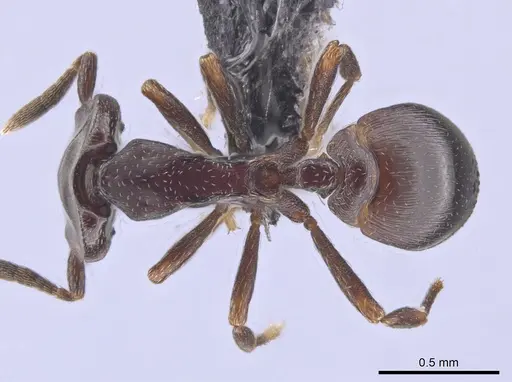
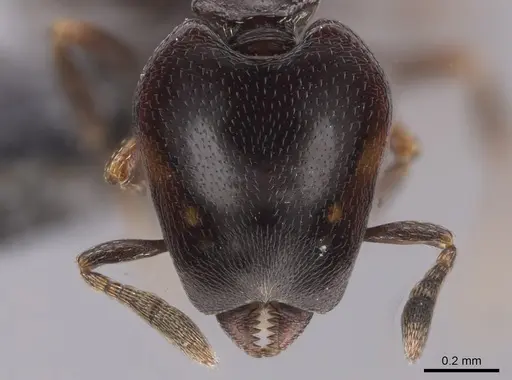
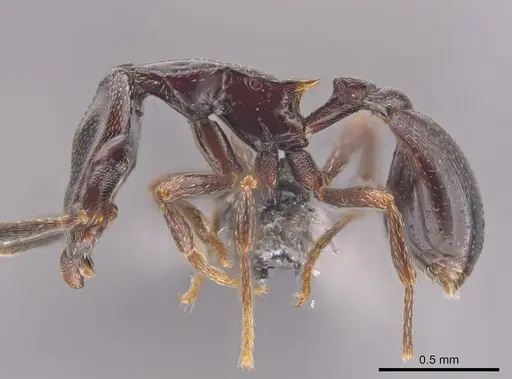
INBIOCRI001282478
View on AntWeb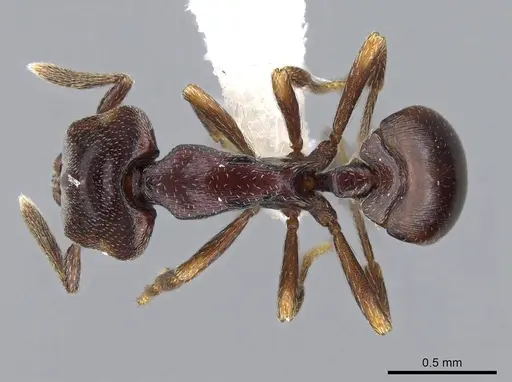
INBIOCRI001282480
View on AntWeb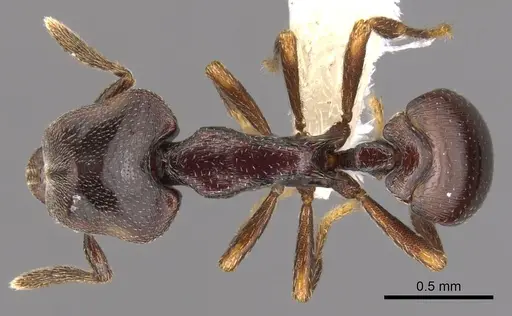
INBIOCRI001283697
View on AntWeb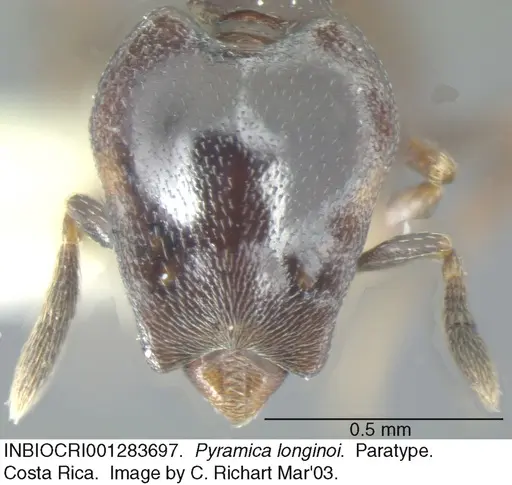
Literature
Loading distribution map...Loading products...