
Lewis’ Pygmy Snapping Ant
Strumigenys lewisi
- Sci. Name
- Strumigenys lewisi
- Tribe
- Attini
- Subfamily
- Myrmicinae
- Author
- Cameron, 1886
- Common Name
- Lewis’ Pygmy Snapping Ant
- Distribution
- Found in 3 countries
Introduction
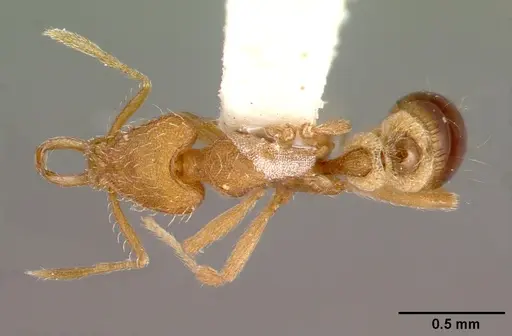
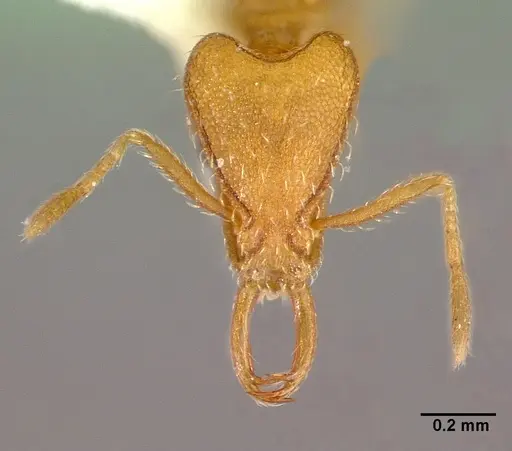
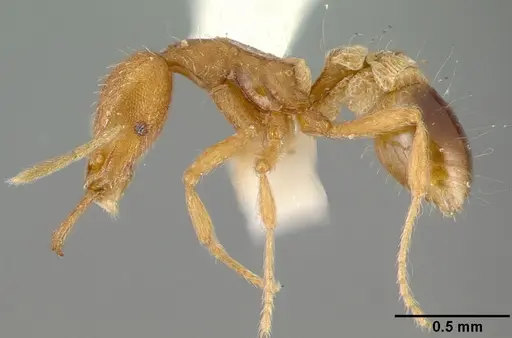
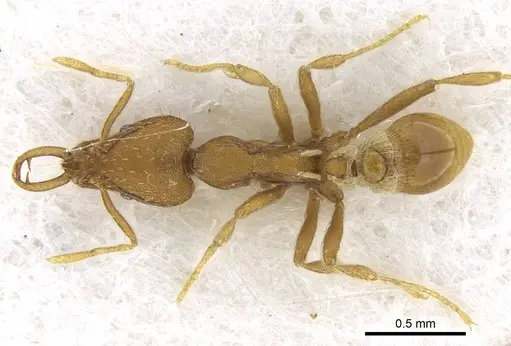
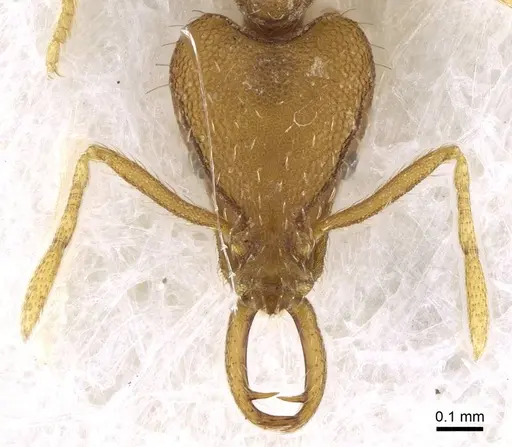
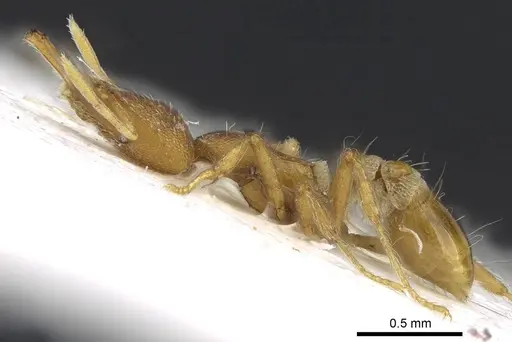
Strumigenys lewisi is a tiny, specialized predator native to East Asia. Workers measure just 2.6-2.7 mm in total length and have distinctive long, slender mandibles with apical teeth, plus a yellowish‑brown to reddish‑brown body . It is one of the most common soil‑dwelling ants in Japan, found across Honshu, Shikoku, Kyushu, and the Ryukyu Islands, as well as in Korea, China, Taiwan, and Vietnam . The species is predominantly polygynous (multiple queens per colony) and nests under stones, logs, in soil, decayed stumps, or bamboo stems . It hunts springtails (Collembola) using its long mandibles and holds them open at a 170° angle while waiting for prey . Although it belongs to the tribe Attini, it is not a fungus‑grower but a dedicated predator.
Quick Summary
- Difficulty: Expert
- Origin & Habitat: Native to Japan, Korea, China, Taiwan, and Vietnam. Found in both closed and open broadleaf forests at elevations up to 1 180 m [4]. Nests under stones, logs, in soil, decayed stumps, or bamboo stems [2]. It is also established as an introduced species in Hawaii, Niue, and Malta [5][6][7].
- Colony Type: Polygynous, colonies routinely contain multiple queens [1][8]. Colony size is small, usually tens to 100 workers, but up to 239 individuals have been recorded [2][8].
- Size & Growth:
- Queen: Size data unavailable (no total length reported in the research).
- Worker: 2.6-2.7 mm total length [1].
- Colony: Up to 239 workers [8].
- Growth: Slow to moderate
- Development: Unknown, no specific data available. Based on typical small Strumigenys colonies, expect several months. (Development likely depends on temperature and food availability. Larval stages have not been studied in detail for this species.)
- Antkeeping:
- Temperature: Keep at room temperature, roughly 20-24 °C. Avoid prolonged exposure above 28 °C. These ants come from temperate forests and prefer moderate temperatures.
- Humidity: High humidity is essential. Keep the nest substrate consistently moist but not waterlogged. The species lives in forest‑floor leaf litter and soil, so it is sensitive to drying out.
- Diapause: Yes, this temperate species likely requires a winter rest period. Reduce temperature to 10-15 °C for 2-3 months during winter, though the exact duration has not been confirmed in literature.
- Nesting: Soil‑based setups are best. Y‑tong, plaster, or 3D‑printed nests with a moist soil substrate work well. Provide leaf litter, wood pieces, or stones for cover. Avoid dry acrylic nests, the ants need high humidity.
- Behavior: 170° while waiting for prey [3]. Due to their tiny size (~2 mm), escape prevention is critical, use fine mesh (0.5 mm or smaller) on all openings. In northern populations, queens may have reduced wings and flight ability [1].
- Common Issues: tiny size (2 mm) makes escapes likely without fine mesh barriers (, obligate springtail predators, they cannot survive on sugar or general insect prey., small colony size and slow growth can frustrate keepers expecting large, active colonies., sensitive to drying out, must maintain consistently moist substrate., rarely available from ant suppliers, observation is limited to specialists.
Housing and Nest Setup
Strumigenys lewisi thrives in soil‑based setups. A test tube with a water reservoir and a plug of moist soil works for founding colonies. For established colonies, use a naturalistic formicarium with a soil layer 2-3 cm deep, Y‑tong, or plaster nest with a soil chamber. Keep the substrate consistently moist, these ants come from damp forest floor habitat. Add small stones, pieces of bark, or leaf litter to provide cover. Because they are only ~2 mm long, seal all openings with fine mesh ( [2][1]
Feeding and Diet
This species is an obligate predator on springtails (Collembola) [2][9][3]. It will not accept sugar water, honey, or other insects, you must provide live springtails. Culture your own springtails in a separate container (e.g., a plastic box with charcoal and water) to ensure a constant supply. Offer 2-3 springtails per worker every few days. Remove uneaten prey after 24 hours to prevent mold. The ants are highly specialized and will ignore alternative prey.
Temperature and Seasonal Care
Keep the colony at room temperature, ideally 20-24 °C. Avoid prolonged heat above 28 °C, these ants come from temperate forests and are not heat‑tolerant. During winter, they benefit from a diapause period. Reduce temperature to about 10-15 °C for 2-3 months, although the exact duration has not been determined in research. Monitor for stress signs such as clustering away from heated areas. [2][1]
Behavior and Temperament
170° while waiting for a springtail to pass, then snap shut [3]. They rarely sting and are harmless to humans. Colonies are polygynous, so multiple queens can coexist peacefully. Workers are tiny (~2 mm) and quick, so they can slip through very small gaps, use fine mesh barriers. In northern populations, queens may have reduced wings and flight ability, making colony foundation even more dependent on existing workers [1].
Colony Structure and Reproduction
The species is predominantly polygynous, with multiple queens found in most colonies [1][8]. Colony size is small: typically tens to 100 workers, though one study recorded up to 239 individuals [2][8]. Winged reproductives (alates) appear in August [2]. Northern populations show degenerated flight ability: queens have smaller eyes, reduced ocelli, and narrower fore wings [1]. This suggests that new colonies may rely on budding (fission) rather than long‑distance mating flights in cooler regions.
Frequently Asked Questions
Can I keep Strumigenys lewisi in a test tube?
Yes, for founding colonies a test tube with a water reservoir and moist soil plug works well. Once the colony reaches about 20 workers, move them to a larger naturalistic setup with a soil layer.
What do Strumigenys lewisi eat?
They only eat live springtails (Collembola). They are obligate specialists and will not accept sugar, honey, or other insects. You must culture your own springtails to feed them.
How long until first workers?
The exact development time is unknown. Based on typical small Strumigenys species, expect several months from egg to first worker. Be patient, colonies grow slowly.
Can I keep multiple queens together?
Yes, this species is naturally polygynous. Multiple queens live together peacefully. Do not separate them, they cooperate in colony growth.
How big do colonies get?
Colonies typically reach tens to 100 workers, but up to 239 individuals have been recorded. This is normal for the species.
Are they good for beginners?
No, they are expert‑level due to their specialized springtail diet and high humidity needs. They require constant live prey and are sensitive to drying out, making them unsuitable for inexperienced keepers.
Do they need hibernation?
Yes, based on their temperate distribution, they benefit from a winter rest period. Reduce temperature to 10-15 °C for 2-3 months, but note that the exact requirement is unconfirmed by research.
Why are my Strumigenys lewisi dying?
Common causes: dried‑out substrate (they need constant moisture), wrong food (they only eat springtails), temperatures above 28 °C, or escapes due to inadequate barriers. Also, colony size is naturally small, so don't panic if growth seems slow.
When to move to a larger nest?
Move to a larger naturalistic setup (soil‑based) when the test tube becomes crowded, usually around 20-30 workers. Use a moist soil nest, never a dry acrylic nest.
Report an Issue
The current care sheet is based fully on literature. See inconsistencies, or something that's incorrect? Please , it will be resolved after review from an admin. Contributing to the blogs tab also helps providing information, to make us be able to further improve the caresheets. Thank you for your support!
References

This caresheet is licensed under CC BY-SA 4.0 .
Community Blogs
Literature
Loading distribution map...Loading products...