
Strumigenys labaris
- Sci. Name
- Strumigenys labaris
- Tribe
- Attini
- Subfamily
- Myrmicinae
- Author
- Fisher, 2000
- Distribution
- Found in 1 countries
Introduction
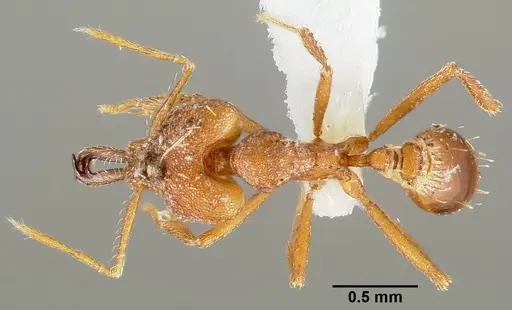
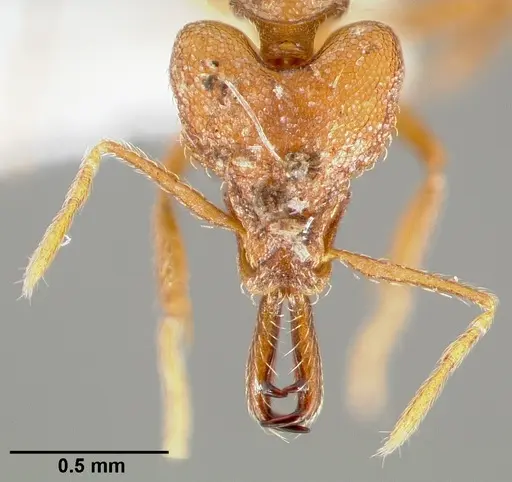
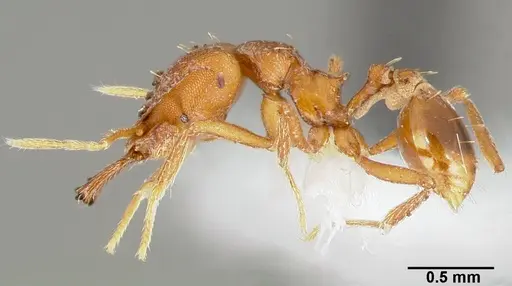
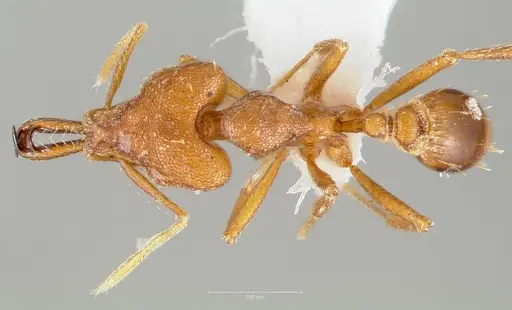
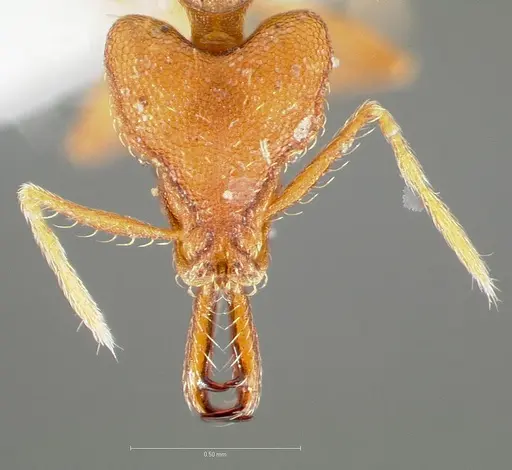
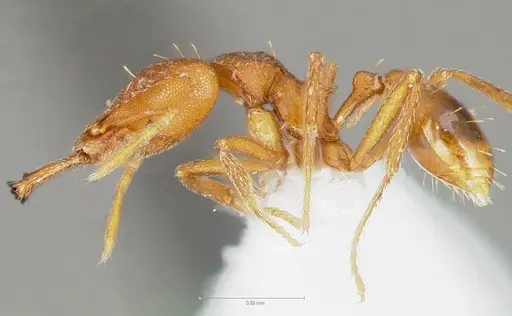
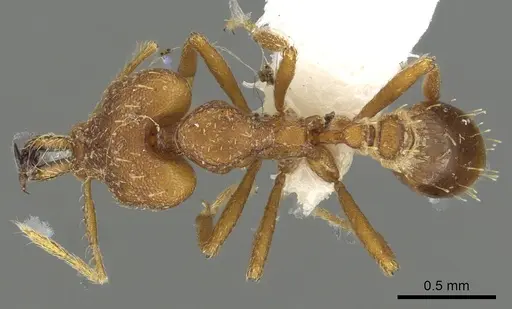
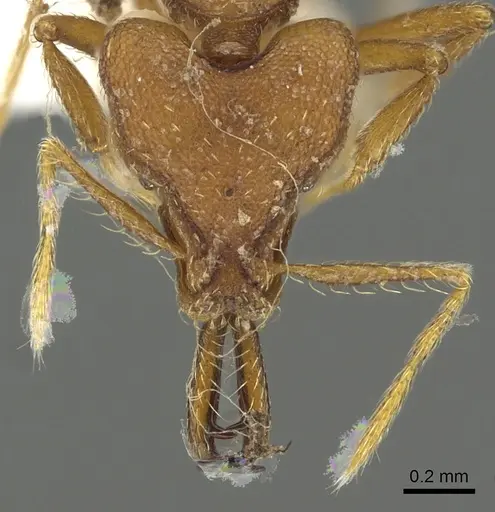
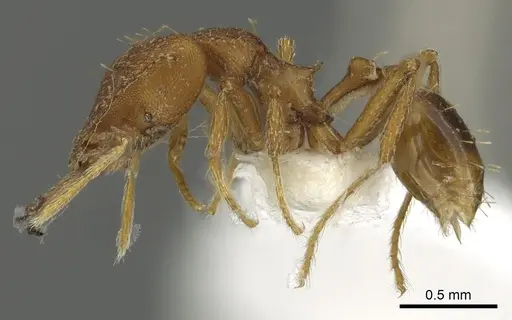
Strumigenys labaris is a tiny predatory ant from Madagascar. Workers are among the smallest in the genus, typically around 2-3 mm. They have pale amber bodies and long, tooth-lined mandibles that snap shut at extreme speeds to trap prey. This species was collected from leaf litter at high elevations (1240 m and 1580 m) in the Réserve Spéciale de Manongarivo, which suggests they live in cool, humid forest floor habitats . These ants are specialized hunters of small arthropods like springtails, using their trap-jaw mechanism to snatch fast-moving prey. Their biology in the wild is still poorly studied, so care advice is mostly based on patterns seen in related species.
Quick Summary
- Difficulty: Hard
- Origin & Habitat: Endemic to Madagascar, collected from leaf litter at 1240 m and 1580 m in the Réserve Spéciale de Manongarivo [1]. They live in cool, humid highland forests.
- Colony Type: Unconfirmed, likely single-queen based on typical Strumigenys patterns, but not directly studied. Colony size is unknown but probably small.
- Size & Growth:
- Queen: Size unknown, inferred from Strumigenys genus (~3-4 mm)
- Worker: Size unknown, inferred from Strumigenys genus (~2-3 mm)
- Colony: Unknown, typically small for the genus
- Growth: Slow
- Development: Unknown, based on related species, likely 8-12 weeks at optimal conditions (Development is probably slow. Exact timing depends on temperature and food availability.)
- Antkeeping:
- Temperature: Keep cool, around 18-22°C is a safe starting point based on high-elevation origin. Avoid prolonged temperatures above 25°C. No exact data available.
- Humidity: High humidity needed, keep the nest substrate consistently moist but not waterlogged. A gradient with a wet area and dry area is best. No exact percentages known.
- Diapause: Unknown, if the ants show a winter slowdown, you can try a cool period (around 15°C) for 2-3 months, but this is not confirmed
- Nesting: Naturalistic setup with tight spaces, a small formicarium with narrow chambers or a plaster/soil nest works well. Avoid large open areas. They feel secure in small, dark cavities.
- Behavior: Very shy and non-aggressive. They flee from disturbance and rarely use their sting on humans. Their trap-jaw is mainly for hunting, not defense. Escape risk is moderate, their tiny size lets them squeeze through small gaps, so use fine mesh or tight seals. They move slowly and spend most of their time hunting in leaf litter.
- Common Issues: specialized diet makes feeding tricky, they need live micro-arthropods (springtails, booklice) and may reject dead food, high humidity needs can cause mold if ventilation is poor, use a wet/dry gradient, slow growth and small colony size make them less rewarding for impatient keepers, tiny size means escape prevention must be meticulous, check all seams and barriers, wild-caught colonies may have parasites or other issues that are hard to treat
Housing and Nest Setup
Strumigenys labaris needs a setup that mimics a forest floor. A small formicarium with tight chambers (plaster, Y-tong, or 3D-printed) works well. You can also use a bioactive terrarium with layers of leaf litter and moist substrate. The key is small, dark, humid spaces, test tubes are not ideal long-term because they can't provide the surface area the ants need to feel secure. Keep the nest area moist but not flooded. Use a fine mesh lid or tight-sealing lid to prevent escapes, their small size means they can slip through tiny gaps. Avoid acrylic nests. Smooth surfaces (glass, Fluon) are effective because they cannot climb well. [1]
Feeding and Diet
This species is a specialized predator of small arthropods. Their main food should be live springtails (Collembola). They may also accept booklice (psocids), minute soil mites, and small fruit fly larvae. Do not rely on sugar or honey water, Strumigenys are obligate predators and rarely take sugar. Feed small prey every 2-3 days. A self-sustaining springtail culture in the nest area provides a constant food source. Remove uneaten prey after a day to prevent mold.
Temperature and Seasonal Care
Because they come from high-elevation Madagascar forests, they likely prefer cool temperatures, aim for 18-22°C. Avoid heat above 25°C. There is no confirmed need for a winter diapause, but some keepers reduce temperature to ~15°C for a few months during winter to simulate seasonal changes. Provide a temperature gradient so ants can choose their comfort zone. Use a low-power heat mat on one side only if the room gets below 18°C. [1]
Behavior and Observation
Strumigenys labaris is a shy, slow-moving ant. They spend most of their time motionless, waiting for prey to come within striking distance. Their trap-jaw is one of the fastest animal movements, used to capture springtails and other micro-arthropods. They have a functional stinger (typical of Myrmicinae) but rarely use it on humans, their main defense is fleeing. You'll enjoy watching them hunt, but they won't be interactive. Handle disturbances minimally, as stress can slow colony growth.
Colony Development
Colony growth is slow. Queens likely produce a small number of eggs and raise the first workers alone (claustral founding is common in the genus, but not confirmed for this species). First workers (nanitics) are very small and may struggle with large prey. A mature colony probably stays under a few hundred workers, but no exact data exists. Expect a colony to take 2-3 years to reach a stable size. Patience is key.
Frequently Asked Questions
What do Strumigenys labaris ants eat?
They need live small arthropods, mainly springtails (Collembola). They may also take booklice, small mites, and tiny fruit fly larvae. They rarely accept sugar or dead prey.
How long does it take for Strumigenys labaris to produce first workers?
Exact timing is unknown. Based on related species, it probably takes 8-12 weeks from egg to first worker at around 20°C. Development is slow.
What temperature do Strumigenys labaris ants need?
Keep them cool, 18-22°C is a good range. Avoid temps above 25°C. No exact data is available, but their high-elevation origin suggests cool conditions [1].
Are Strumigenys labaris good for beginners?
No, they are difficult. Their specialized diet, high humidity needs, slow growth, and small size make them challenging. Better for experienced keepers.
How big do Strumigenys labaris colonies get?
Unknown. Related Strumigenys species usually have small colonies, under a few hundred workers. Exact maximum is not documented.
Do Strumigenys labaris need hibernation?
Not confirmed. If they show a winter slowdown, you can try a cool rest at ~15°C for 2-3 months, but there is no evidence it's required.
Can I keep Strumigenys labaris in a test tube?
Test tubes are not ideal for long-term housing. They prefer small chambers with high humidity. A plaster or soil nest with tight spaces works better.
Why are my Strumigenys labaris dying?
Possible causes include: temperatures too high, humidity too low, lack of live prey, mold from excess moisture, or excessive disturbances. Check conditions carefully.
Where is Strumigenys labaris found in the wild?
It is endemic to Madagascar, collected from leaf litter at 1240 m and 1580 m in the Réserve Spéciale de Manongarivo [1]. It lives in cool, humid highland forests.
Report an Issue
The current care sheet is based fully on literature. See inconsistencies, or something that's incorrect? Please , it will be resolved after review from an admin. Contributing to the blogs tab also helps providing information, to make us be able to further improve the caresheets. Thank you for your support!
References

This caresheet is licensed under CC BY-SA 4.0 .
Community Blogs
Literature
Loading distribution map...Loading products...