
Strumigenys khakaura
- Sci. Name
- Strumigenys khakaura
- Tribe
- Attini
- Subfamily
- Myrmicinae
- Author
- Bolton, 2000
- Distribution
- Found in 1 countries
Introduction
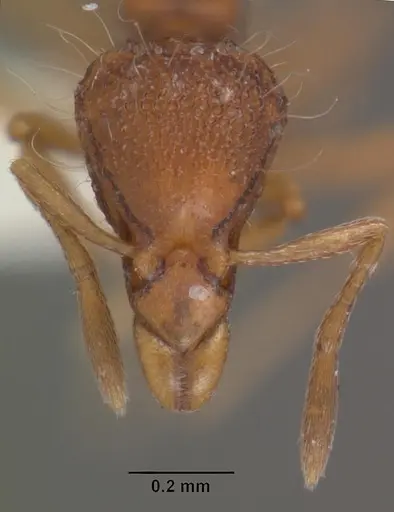
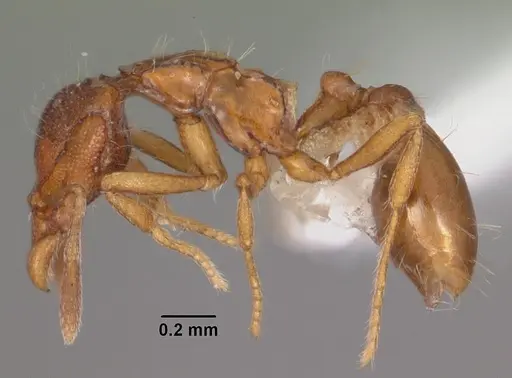
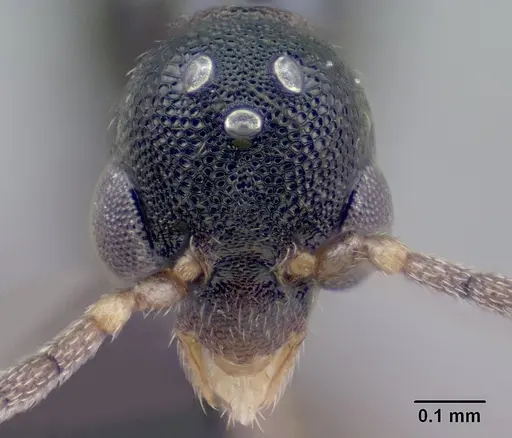
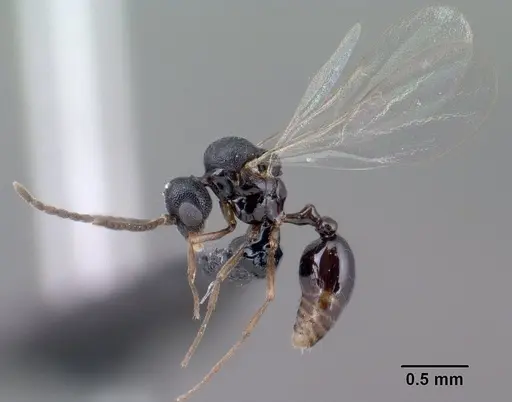
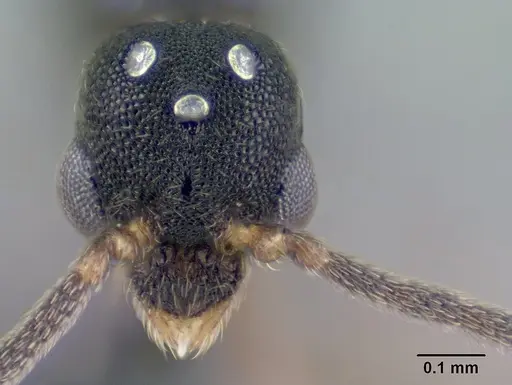
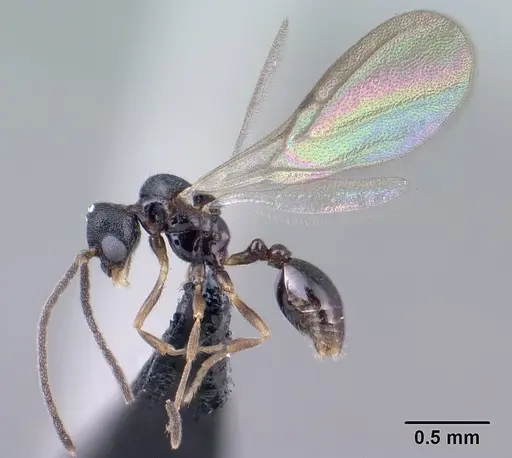
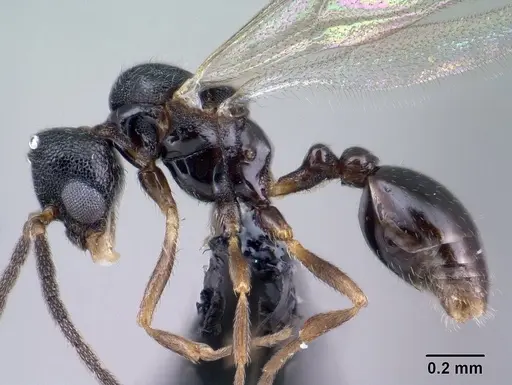
Strumigenys khakaura is a tiny predatory ant native to the highlands of northern Madagascar. Workers are very small, with a mesosoma length of 0.59 mm , and total length estimated at 2-3 mm based on genus averages. The species was collected at 1580 m elevation in leaf litter of the Réserve Spéciale de Manongarivo . Habitat data indicates they are ground-dwelling (terricolous), prefer humid and dark conditions, and possess spines . The species was originally described under the genus Pyramica. Their eyes appear to be extremely reduced or absent (eye index 0.00), suggesting they rely heavily on tactile and chemical senses .
Quick Summary
- Difficulty: Hard, very little is known about captive care. Specialized diet and specific environmental needs make this species challenging even for experienced keepers.
- Origin & Habitat: Northern Madagascar highlands, specifically the Réserve Spéciale de Manongarivo. Found in leaf litter at 1580 m elevation in humid forest habitat [2][1].
- Colony Type: Unknown, no specific data on colony structure in available research.
- Size & Growth:
- Queen: No body length measurement available, inferred from genus as ~3-4 mm total length.
- Worker: No body length measurement available. Mesosoma length is 0.59 mm [1], suggesting total length ~2-3 mm.
- Colony: Unknown, no data on colony size for this species.
- Growth: Unknown, no data on development speed.
- Development: Unknown, no data available. (No developmental timeline has been studied for this species.)
- Antkeeping:
- Temperature: No specific data. Based on highland origin (1580 m elevation) [2], likely cooler and stable. Avoid temperatures above 25°C as a precaution. Start at room temperature (20-22°C) and observe.
- Humidity: Described as humid habitat [1]. Keep substrate consistently moist but not waterlogged. High humidity is essential.
- Diapause: Unknown, Madagascar highlands lack extreme winters, but no data on this species. If kept at stable room temperature, no diapause may be needed.
- Nesting: Unknown, likely nests in leaf litter or rotting wood based on genus habits. A naturalistic setup with deep moist substrate, leaf litter, and small crevices is recommended.
- Behavior: Temperament unknown, based on genus, likely docile and non-aggressive. They have functional stingers but are unlikely to sting unless severely provoked. Escape risk is very high due to tiny size, use fine mesh or tight seals.
- Common Issues: very little is known about this species in captivity, expect high uncertainty and be prepared to experiment., tiny size makes escape prevention critical, use the smallest possible gaps and fine mesh., prey preferences are unknown, likely requires tiny live prey (springtails, micro-arthropods), which must be reliably cultured., high humidity needs can lead to mold if ventilation is poor, balance moisture with airflow., wild-caught colonies may have unknown parasites or stress factors that cause collapse.
Known Biology and Morphology
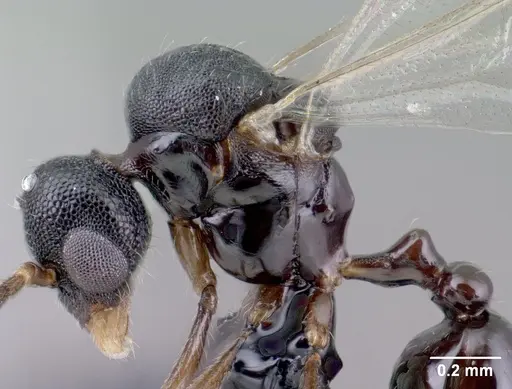
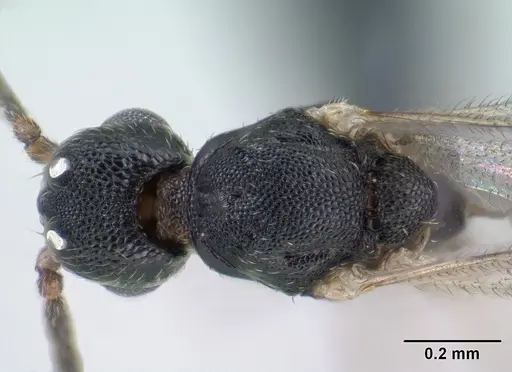
Very little biological data exists specifically for Strumigenys khakaura. The most detailed information comes from a phylogenetic study, which provides morphological and habitat data [1]. Key findings include: they are ground-dwelling (terricolous), prefer humid and dark environments, and possess spines on the body. The eye index is 0.00,indicating extremely reduced or absent eyes, these ants likely navigate by touch and smell rather than sight. The mesosoma (thorax) length is 0.59 mm, confirming their minute size. The species was originally described as Strumigenys khakaura but is now placed in Strumigenys [2].
Housing and Nest Setup
Because so little is known, husbandry must be based on general Strumigenys practices. Use a small, escape-proof container with a deep layer of moist substrate (e.g., coco fiber or peat mixed with rotting leaf litter and wood fragments). The substrate should be kept damp but not waterlogged. Provide hiding spots under bark, moss, or small stones. Y-tong or plaster nests with tiny chambers may be accepted, but a naturalistic terrarium that allows hunting through substrate is often more successful for similar species. Given their tiny size, seal all potential escape routes with fine mesh or silicone, gaps of 0.5 mm may be enough for them to squeeze through. Avoid acrylic nests, as they lack moisture and natural texture. [2]
Feeding and Diet
Strumigenys species are generally specialized predators of small soil arthropods, especially springtails (Collembola). Although dietary studies for Strumigenys khakaura are absent, it is reasonable to assume they require live micro-prey. Offer cultured springtails as a staple, and supplement with fruit fly larvae, tiny isopods, or other micro-arthropods. They are unlikely to accept sugar water, honey, or seeds, do not offer these. Feed small amounts every few days, removing uneaten prey to prevent mold. If the colony does not take springtails, experiment with other tiny live prey, observation is key.
Temperature and Humidity
The only environmental clue is the collection site at 1580 m elevation in highland Madagascar [2]. This suggests a cool, stable climate with high humidity. In captivity, maintain temperatures around 18-22°C, avoiding spikes above 25°C. Room temperature (20°C) is likely safe. Humidity should be high, the substrate must remain moist to the touch, but without standing water. Cover part of the setup with a lid to retain moisture, and ensure good ventilation to prevent mold. Use a hygrometer to monitor, aim for 80-90% relative humidity in the nest area.
Colony Growth and Development
No data exists on colony growth, founding method, or development time for Strumigenys khakaura. Queue trapping and rearing have not been documented. Based on related Strumigenys, founding may be claustral (queen sealed in a chamber) and colonies likely remain small (few dozen to under 100 workers). Growth is probably slow, with egg-to-worker development taking several weeks to months. Patience is essential, do not disturb a potential founding queen. If you obtain a colony, observe without opening the nest often. Record your observations to contribute knowledge.
Behavior and Temperament
Behavioral studies are lacking. As a member of the dacetine tribe (Attini, subtribe Dacetina), Strumigenys are known for rapid trap-jaw mandibles used to catch swift prey like springtails. However, this specific behavior has not been confirmed for Strumigenys khakaura. They are likely slow-moving ambush predators. Workers are not aggressive toward keepers, they will not sting or bite unless severely provoked. Their tiny size and reduced eyes mean they rely on antennal contact. In the nest, they spend most time hidden in substrate. Do not expect frequent visible activity.
Frequently Asked Questions
What do Strumigenys khakaura eat?
Specific diet is unknown, but like most Strumigenys they are probably specialized predators of small soil arthropods such as springtails. Offer live springtails as a primary food source. They will not accept sugar water or seeds.
How long does it take for Strumigenys khakaura to raise first workers?
No data are available. Based on related species, development may take several weeks to months at suitable temperatures. Be patient and avoid disturbance.
Can I keep Strumigenys khakaura in a test tube?
Test tubes may work for founding, but a naturalistic setup with moist substrate and leaf litter is likely better long-term. Test tubes lack hunting space and humidity gradients. If using a test tube, keep it in a humid enclosure.
Are Strumigenys khakaura good for beginners?
No, they are regarded as expert-level due to lack of care data, specialized diet, minute size, and slow growth. Only experienced keepers with the ability to culture micro-prey should attempt them.
How big do Strumigenys khakaura colonies get?
Colony size is unknown. Based on genus, colonies are usually small, likely under 100 workers. Do not expect large populations.
What temperature do Strumigenys khakaura need?
No precise data, based on highland origin, keep at 18-22°C. Avoid heat above 25°C. Room temperature is often suitable. Monitor and adjust if the colony shows stress.
Do Strumigenys khakaura need hibernation?
Unknown, Madagascar highlands do not have severe winters. If kept at stable room temperature, no diapause is likely required. Some seasonal slowdown may occur naturally.
Why are my Strumigenys khakaura dying?
Common causes for tiny Strumigenys include: overheating (above 25°C), desiccation, lack of adequate prey, mold from poor ventilation, or stress from disturbance. Wild-caught colonies may carry parasites. Ensure stable conditions and clean food.
When should I move Strumigenys khakaura to a formicarium?
Given the limited knowledge, it is best to keep them in a naturalistic terrarium from the start. If using a test tube for founding, move only after you see at least 20-30 workers and they are actively foraging. Use a nest with extremely small chambers.
Report an Issue
The current care sheet is based fully on literature. See inconsistencies, or something that's incorrect? Please , it will be resolved after review from an admin. Contributing to the blogs tab also helps providing information, to make us be able to further improve the caresheets. Thank you for your support!
References

This caresheet is licensed under CC BY-SA 4.0 .
Community Blogs

Literature
Loading distribution map...Loading products...