
Strumigenys insula
- Sci. Name
- Strumigenys insula
- Tribe
- Attini
- Subfamily
- Myrmicinae
- Author
- Bolton, 2000
- Distribution
- Found in 1 countries
Introduction
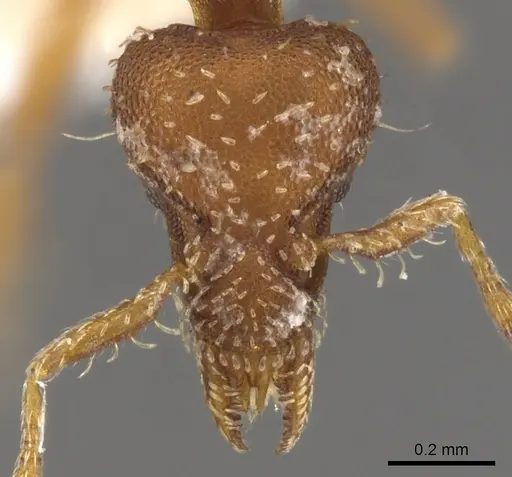
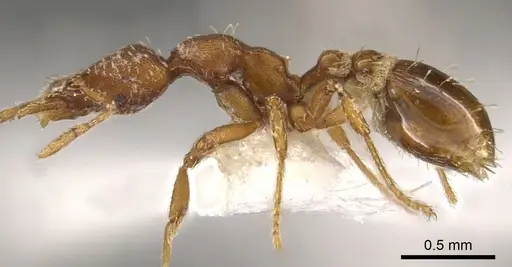
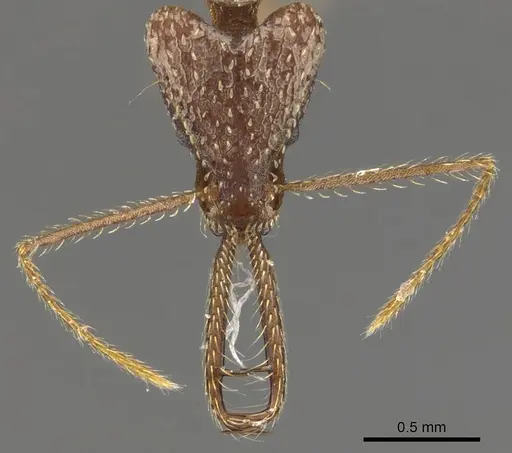
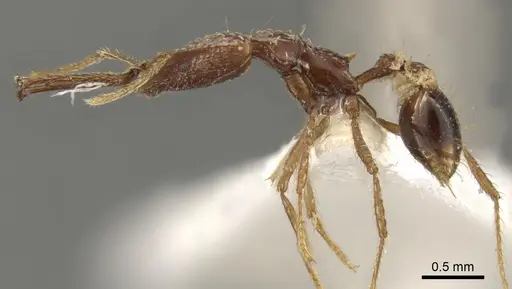
Strumigenys insula is an extremely rare tiny ant species endemic to French Polynesia, specifically found only on Tahiti. Workers measure just 2.7–2.8 mm in total length, making them among the smaller ants in the genus . They belong to the Strumigenys capitata group and have distinctive long, tapered humeral hairs on the pronotum that set them apart from related species . The species was originally described from two worker specimens collected in 1982 from Mont Te Atara (formerly Mont Tentara) at about 1000 m elevation on the Tahiti Iti peninsula . This ant is one of the most poorly known ant species in the world, no biological observations have ever been recorded since its initial description. The genus Strumigenys is known for specialized predatory behavior, using trap-jaw mandibles to capture tiny prey like springtails .
Quick Summary
- Difficulty: Expert
- Origin & Habitat: Endemic to French Polynesia, specifically Tahiti Island in the Society archipelago. Known only from mont Te Atara at 1000 m elevation in a forested tropical habitat [2][3].
- Colony Type: Unknown – colony structure has never been documented. Based on related Strumigenys species, likely forms small colonies with single or few queens [1].
- Size & Growth:
- Queen: Unknown – queens have never been described [1]
- Worker: 2.7–2.8 mm [1]
- Colony: Unknown – no colony size data exists [1][2]
- Growth: Unknown
- Development: Unknown – no development data exists for this species. Based on related Strumigenys species, likely 4–8 weeks at tropical temperatures [1] (Development timeline is entirely unconfirmed for this species. Any estimate would be speculative.)
- Antkeeping:
- Temperature: Based on Tahiti's tropical climate, aim for 24–28 °C. Related Strumigenys species prefer warm, humid conditions [1].
- Humidity: High humidity required – think damp forest floor. Keep nest substrate consistently moist but not waterlogged [1].
- Diapause: Unknown – Tahiti has no cold season, so diapause is unlikely. Related tropical Strumigenys do not typically hibernate [1].
- Nesting: Unknown for this species. Related Strumigenys typically nest in soil, rotting wood, or leaf litter. A naturalistic setup with moist substrate or a Y-tong/plaster nest works well for the genus [1].
- Behavior: Behavior is entirely undocumented. Based on the genus Strumigenys, these ants are specialized predators that use their trap-jaw mandibles to capture tiny prey, primarily springtails. They are likely shy and non-aggressive, preferring to flee rather than fight. Their tiny size means escape prevention is critical – they can squeeze through extremely small gaps. Strumigenys belong to the tribe Attini and have a functional sting, but it is small and of little medical significance to humans [1].
- Common Issues: this species has never been kept in captivity – no established care protocols exist, extreme rarity means no captive-bred colonies are available, virtually no biological data exists to guide care requirements, related species are notoriously difficult to keep alive in captivity, tiny size makes escape prevention challenging without fine mesh barriers
Species Overview and Rarity
Strumigenys insula represents one of the most enigmatic ant species in the world. Described by Bolton in 2000 from just two worker specimens collected in 1982,this species has never been observed in the wild since its original discovery [1][2]. It is endemic to Tahiti in French Polynesia, making it a true island endemic with an extremely restricted range of only a few square kilometers [2]. The species is considered potentially threatened or endangered due to its limited distribution and lack of recent records [3].
The morphology of S. insula is distinctive within the Strumigenys capitata group. It possesses long, apically tapered humeral hairs that are unusual for this group and more reminiscent of unrelated Strumigenys species like S. rhea and S. serraformis [1]. This morphological oddity has led researchers to suggest that the species may eventually be reclassified or that it represents a complex of similar species that genetic analysis would clarify [2].
For antkeepers, this species represents an extreme challenge. No captive colonies exist, no biological observations have ever been published, and even basic information like queen size, colony structure, and diet preferences remain completely unknown. Attempting to keep this species would be an entirely experimental endeavor with no established protocols to draw upon.
Related Species Care (Best Available Guidance)
Since no care information exists for Strumigenys insula specifically, we must rely on what is known about related Strumigenys species in general. The genus Strumigenys contains over 850 species worldwide and is known for its specialized trap-jaw mandibles used to capture tiny prey, primarily springtails (Collembola) and other micro-arthropods [1].
Related species in the genus are typically found in moist, forested habitats where they nest in soil, rotting wood, or leaf litter. They prefer warm, humid conditions and are highly sensitive to drying out. In captivity, most Strumigenys species prove extremely difficult to maintain long-term, with colonies often declining rapidly without obvious cause [1].
Feeding protocols for related species center on live springtails as a primary food source. These tiny ants cannot tackle larger prey and require appropriately sized live food. Some species may accept other tiny arthropods, but success varies. Sugar sources are generally not accepted, as Strumigenys are obligate predators [1].
If attempting to keep any Strumigenys species, excellent escape prevention is essential due to their minute size. They can escape through gaps that appear completely sealed to the keeper. High humidity maintenance is critical, as is a constant supply of live prey.
Temperature and Humidity Requirements
While specific requirements for Strumigenys insula are unknown, we can make educated inferences based on its origin. Tahiti maintains a tropical climate with temperatures ranging from 24–30 °C year-round and high humidity levels. The collection site at 1000 m elevation suggests slightly cooler conditions than sea level, but still firmly in the tropical range [2].
For related Strumigenys species, the general recommendation is to maintain temperatures between 24–28 °C with high humidity around 70–80%. These ants are highly sensitive to temperature fluctuations and drying, which quickly leads to colony decline. A heating cable on one side of the nest can create a gentle gradient, but should never cause the substrate to dry out [1].
Humidity is perhaps the most critical factor. The nest substrate should remain consistently moist but never waterlogged. Related species are known to abandon nests that dry out, and prolonged dryness is fatal. However, stagnant air should also be avoided to prevent mold growth. Adequate ventilation while maintaining humidity is essential.
Legal and Ethical Considerations
Strumigenys insula is endemic to French Polynesia and has never been documented outside of Tahiti. It is not known whether the species is protected under French Polynesian or French law, but its extreme rarity and restricted distribution suggest it may be of conservation concern [2][3].
Any attempt to acquire this species would require specimens from the wild, as no captive breeding programs exist. However, the species has not been collected since 1982,suggesting it may be extremely difficult to locate or potentially endangered [2]. Removing individuals from the wild could potentially harm already tiny populations.
For antkeepers outside French Polynesia, this species has never been documented as established anywhere else in the world. Introduction to new regions would be entirely inappropriate given the species' rarity and unknown ecological requirements. Additionally, keeping a species with no established care protocols and potentially protected status raises significant ethical concerns.
Frequently Asked Questions
Can I keep Strumigenys insula as a pet ant?
No. This species has never been kept in captivity, no biological data exists to guide care, and it may be protected or endangered. No captive-bred colonies are available, and the species has not been observed in the wild since 1982 [1][2].
What do Strumigenys insula ants eat?
Unknown for this specific species. Based on related Strumigenys, they are specialized predators that likely feed primarily on springtails and other tiny micro-arthropods. They probably do not accept sugar sources [1].
How big do Strumigenys insula colonies get?
Unknown. No colony size data has ever been documented. Related Strumigenys species typically form small colonies of under 100 workers [1].
What temperature should I keep Strumigenys insula at?
No species-specific data exists. Based on Tahiti's tropical climate and related species, aim for 24–28 °C with high humidity. However, attempting to keep this species is not recommended given the complete lack of biological data [2][1].
Are Strumigenys insula good for beginners?
Absolutely not. This is among the most difficult ant species to keep informationally – no care protocols exist, no captive colonies exist, and the species may be endangered. Even experienced antkeepers would struggle with this complete information void [1][2].
Where does Strumigenys insula live?
Only known from Tahiti in French Polynesia, specifically from Mont Te Atara at approximately 1000 m elevation. It has never been documented anywhere else in the world [2][3].
How long do Strumigenys insula live?
Unknown. No lifespan data exists for this species or any aspect of its biology [1].
Do Strumigenys insula need hibernation?
Unlikely. Tahiti has a tropical climate with no cold season, so diapause would not be expected. Related tropical Strumigenys do not typically enter hibernation [1].
Report an Issue
The current care sheet is based fully on literature. See inconsistencies, or something that's incorrect? Please , it will be resolved after review from an admin. Contributing to the blogs tab also helps providing information, to make us be able to further improve the caresheets. Thank you for your support!
References

This caresheet is licensed under CC BY-SA 4.0 .
Community Blogs
CASENT0900112
View on AntWeb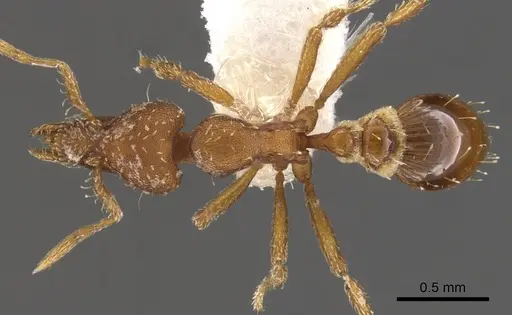
CASENT0900439
View on AntWeb
Literature
Loading distribution map...Loading products...