
Strumigenys frivaldszkyi
- Sci. Name
- Strumigenys frivaldszkyi
- Tribe
- Attini
- Subfamily
- Myrmicinae
- Author
- Emery, 1897
- Distribution
- Found in 2 countries
Introduction
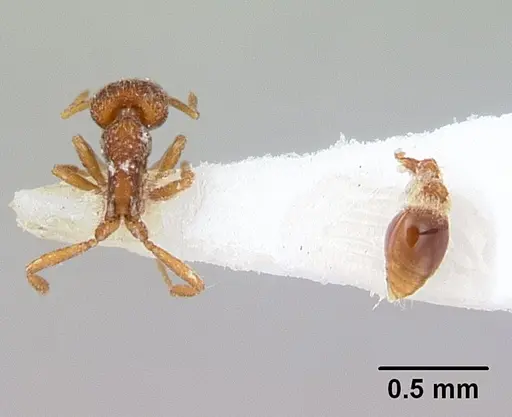
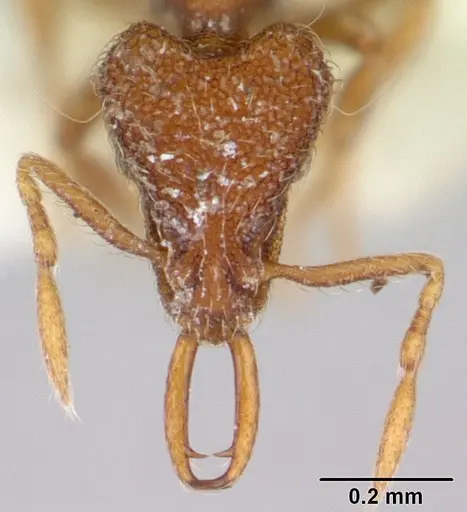
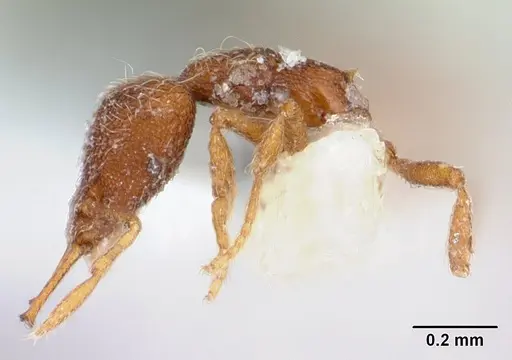
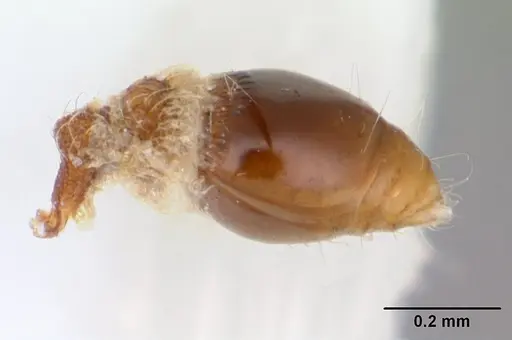
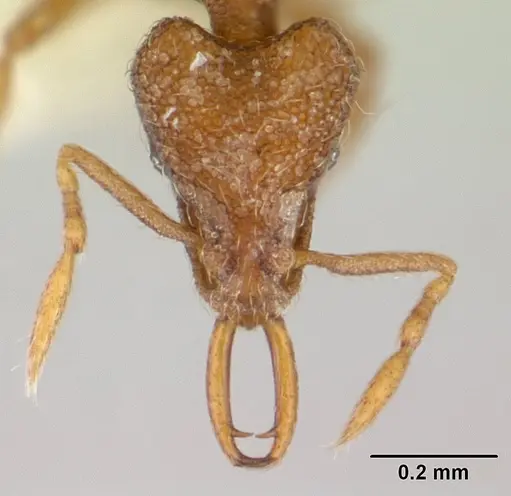
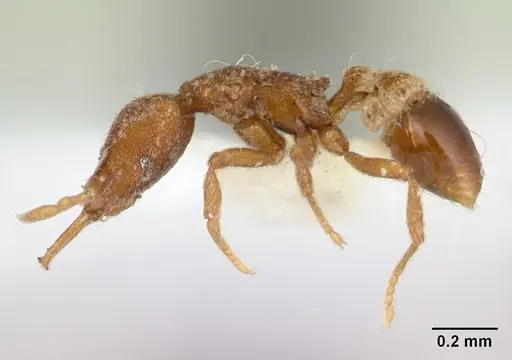
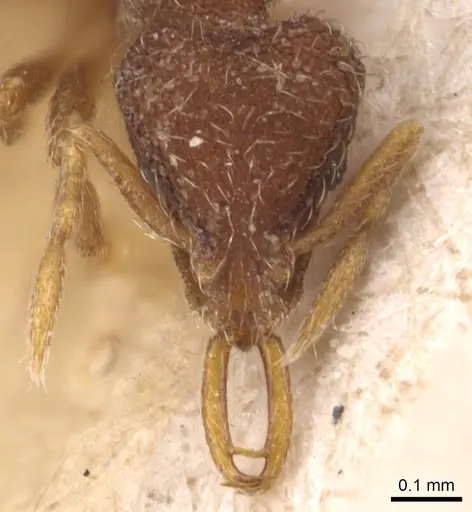
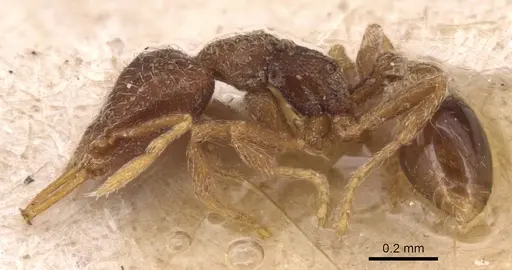
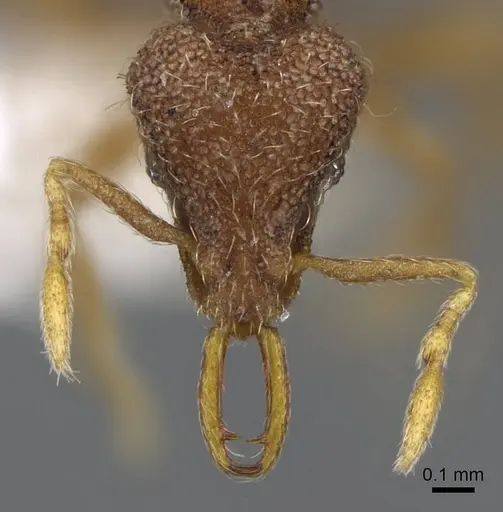
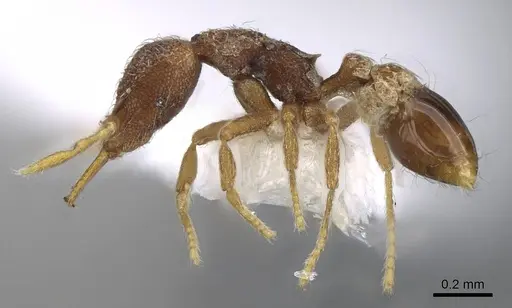
Strumigenys frivaldszkyi is a tiny ant, with workers measuring just 1.8–1.9mm in total length . It belongs to the dacetine ant tribe Attini and is part of the Strumigenys frivaldszkyi group. These ants are native to the Australasian region, with documented populations in New Guinea, Micronesia, Palau, and the Solomon Islands . All known specimens have been collected from forest litter samples, indicating they live in damp, shaded microhabitats on the forest floor . Like other Strumigenys, this species is a specialized predator that feeds primarily on springtails and other tiny soil-dwelling arthropods. They have distinctive flagellate hairs: one on the dorsolateral margin of the head, one on the hind tibia, and two on the hind basitarsus . Their small size and cryptic lifestyle make them challenging to keep, but they offer a unique glimpse into the diverse ant fauna of the Pacific region.
Quick Summary
- Difficulty: Hard
- Origin & Habitat: Native to New Guinea, Micronesia, Palau, and the Solomon Islands (recorded from Guadalcanal and Makira) [2]. Found in forest floor litter in tropical humid environments [1].
- Colony Type: Likely monogyne (single queen) based on typical Strumigenys colony structure, but not confirmed from literature. Colony size is unknown but related species typically form small colonies of fewer than 100 workers [1].
- Size & Growth:
- Queen: Undocumented – size data unavailable
- Worker: 1.8–1.9mm [1]
- Colony: Unknown – likely under 100 workers based on related species [1]
- Growth: Slow – inferred from genus patterns
- Development: Unknown – estimated 2–3 months based on related tropical Strumigenys species (No direct development data exists for this species. Estimates based on genus-level patterns for small tropical Myrmicinae.)
- Antkeeping:
- Temperature: Keep at 24–28°C – these are tropical ants from warm, humid forests. Room temperature (22–25°C) is suitable, with slight heating if needed [1].
- Humidity: High humidity is essential – they come from damp forest litter. Keep substrate consistently moist but not waterlogged. Think damp, not wet [1].
- Diapause: No – these are tropical ants that do not require hibernation. Maintain warm conditions year-round [1].
- Nesting: Naturalistic setup with fine substrate (like coco fiber or soil mix) works best. They nest in shallow chambers within litter material. A small test tube setup with damp cotton can work for founding colonies, but they prefer more space to forage. Avoid acrylic nests, use Y-tong (AAC), plaster, soil nests, or 3D-printed nests [1].
- Behavior: These ants are slow-moving and cryptic. They are specialized predators on springtails and other tiny arthropods, using their trap-jaw mandibles to capture prey [1]. They possess a functional stinger but it is too small to affect humans. Escape prevention is critical due to their tiny 1.8mm size – they can squeeze through standard mesh. Use fine mesh barriers and ensure all openings are sealed [1].
- Common Issues: escape prevention is critical – their tiny 1.8mm size means they can squeeze through standard ant mesh barriers, high humidity requirements can lead to mold problems if ventilation is poor, specialized diet means they may refuse standard ant foods – live springtails are essential, slow growth can frustrate keepers expecting rapid colony development, they are very sensitive to drying out – substrate must remain consistently damp
Housing and Setup
Strumigenys frivaldszkyi requires a setup that mimics their natural forest floor habitat. A naturalistic terrarium-style enclosure works best, filled with a moist substrate layer (about 2–3cm deep) made from a mix of coco fiber, peat moss, and small amounts of sand. This maintains the high humidity they need while allowing them to build shallow nests [1].
Because they are so tiny (1.8mm), escape prevention is absolutely critical. Standard ant mesh will not contain them – you must use fine mesh (like silk mesh or very fine nylon mesh) on all ventilation holes. Even small gaps around lid edges can allow escapes. Many keepers use a two-layer setup with a foraging area connected to a nest area through tubing, with fluon barriers applied to the edges [1].
A test tube setup can work for newly caught queens, but these ants really need more space to express natural behaviors. If using test tubes, use multiple connected tubes with damp cotton – one for nesting, one for foraging. However, a small plastic or glass enclosure (like a small kritter keeper) with a secure fine mesh lid is more suitable for established colonies. Avoid acrylic nests, Y-tong (AAC), plaster, or soil nests are better options [1].
Feeding and Diet
Strumigenys frivaldszkyi is a specialized predator that requires live prey. In the wild, they hunt springtails (Collembola) and other tiny soil-dwelling arthropods. In captivity, their primary food should be live springtails – these can be cultured separately and added to the colony enclosure [1].
They will likely accept other tiny live prey such as booklice (psocids), tiny mites, and fruit fly larvae, but springtails should form the bulk of their diet. They are unlikely to accept sugar water or honey, as Strumigenys are not typically attracted to carbohydrate sources [1].
Feed small amounts of prey every few days, removing any uneaten prey after 24 hours to prevent mold. The amount depends on colony size – start with just a few springtails and adjust based on how quickly they are consumed. A well-fed colony will have workers with distended abdomens [1].
Temperature and Humidity
These are tropical ants from warm, humid environments in New Guinea and the Pacific islands [2]. Keep the enclosure at 24–28°C – this is warm but not extreme, matching their natural forest floor conditions. Room temperature (22–25°C) is often suitable, but you may need a small heating mat on one side of the enclosure to maintain warmth during cooler months [1].
Humidity is perhaps the most critical factor. Their natural habitat is the damp forest floor litter layer, where humidity stays consistently high. Keep the substrate moist but not waterlogged – it should feel damp to the touch like a wrung-out sponge. Allow the substrate to dry only slightly in spots before rehydrating. Mist the enclosure lightly if needed, but avoid direct spraying on the nest area. A shallow water dish in the foraging area also helps maintain humidity [1].
Do not let the substrate dry out completely – these ants are extremely sensitive to desiccation and can die quickly in dry conditions.
Behavior and Colony Life
Strumigenys frivaldszkyi is a cryptic, slow-moving ant that spends most of its time foraging in the leaf litter layer. They are not aggressive and their small size means their stinger is harmless to humans. When they encounter prey, they use their specialized trap-jaw mandibles to snap shut rapidly – this is their primary hunting mechanism [1].
Colony size is likely small – probably under 100 workers at maturity based on related species. They are not prolific breeders, which makes establishing a colony from a wild-caught queen more challenging. The queen likely seals herself in during founding (claustral behavior) and raises the first workers alone on her stored fat reserves, though this is unconfirmed for this species [1].
These ants are not climbers and stay primarily on the ground. They are unlikely to escape from smooth surfaces, but their tiny size means they can fit through impossibly small gaps. Always assume they can escape and use multiple barriers.
Frequently Asked Questions
How long does it take for Strumigenys frivaldszkyi to raise first workers?
The exact timeline is unknown for this species, but based on related Strumigenys species, expect 2–3 months from founding to first workers emerging. The queen likely seals herself in and raises her first brood alone, living off her fat reserves during this time [1].
Report an Issue
The current care sheet is based fully on literature. See inconsistencies, or something that's incorrect? Please , it will be resolved after review from an admin. Contributing to the blogs tab also helps providing information, to make us be able to further improve the caresheets. Thank you for your support!
References

This caresheet is licensed under CC BY-SA 4.0 .
Community Blogs
CASENT0173561
View on AntWeb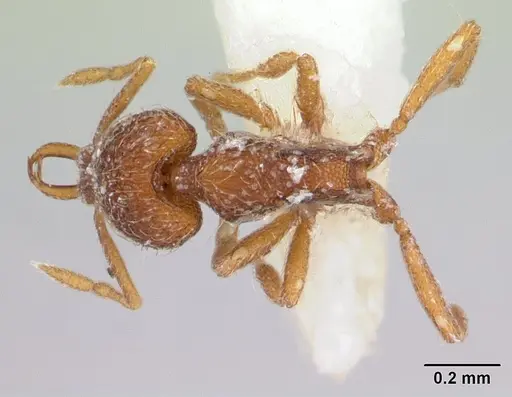
CASENT0178456
View on AntWeb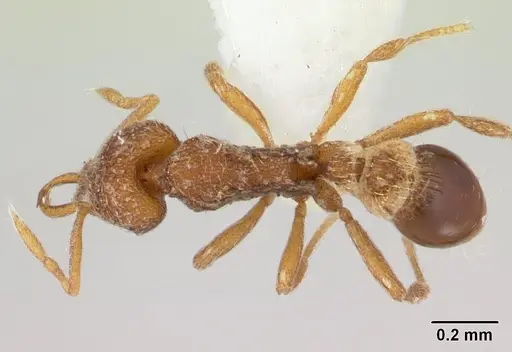
CASENT0199963
View on AntWeb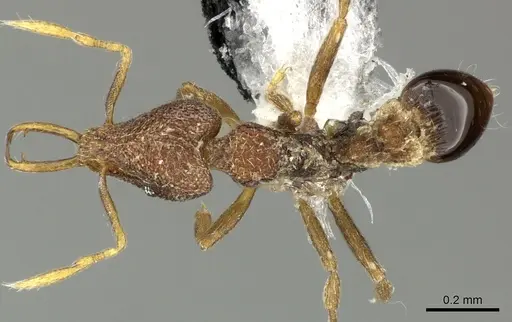
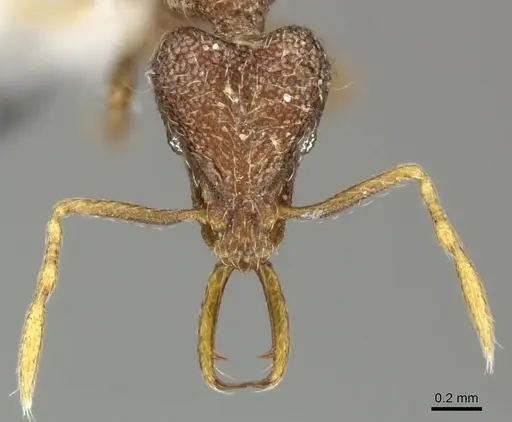
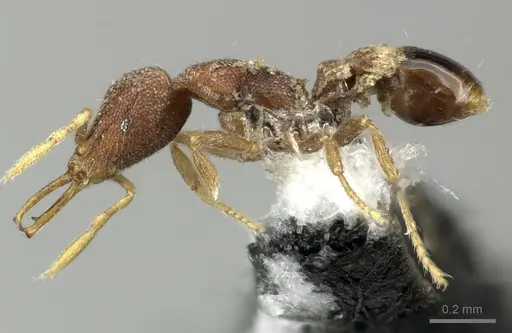
CASENT0904947
View on AntWeb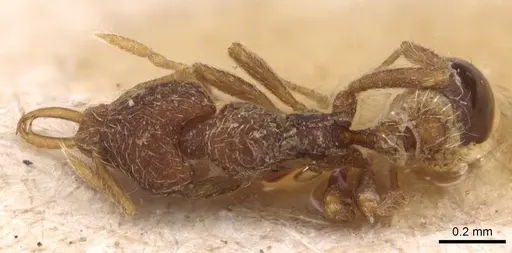
CASENT0914796
View on AntWeb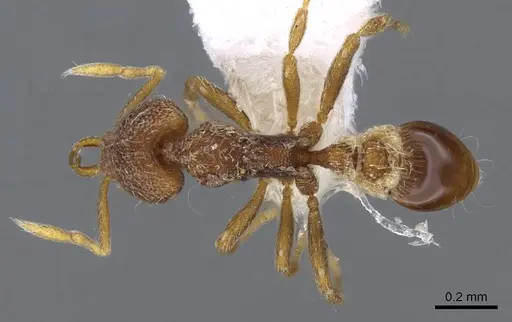
Literature
Loading distribution map...Loading products...