
Strumigenys finator
- Sci. Name
- Strumigenys finator
- Tribe
- Attini
- Subfamily
- Myrmicinae
- Author
- Fisher, 2000
- Distribution
- Found in 1 countries
Introduction
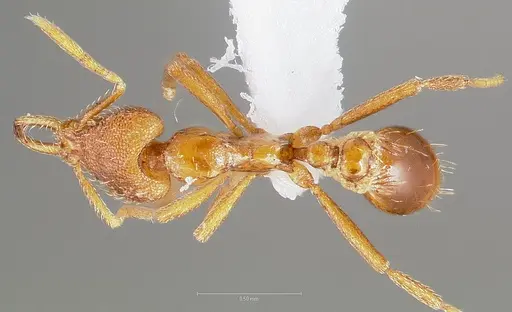
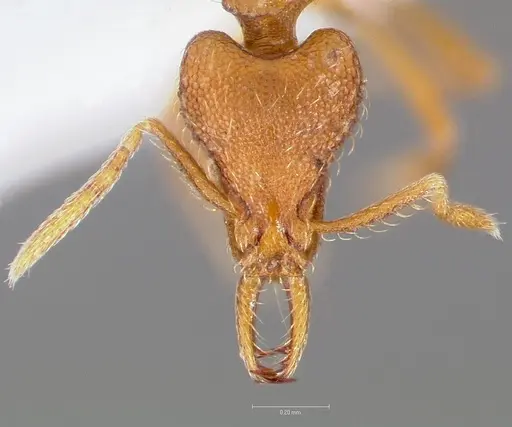
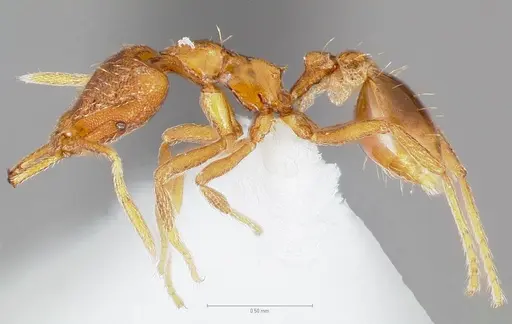
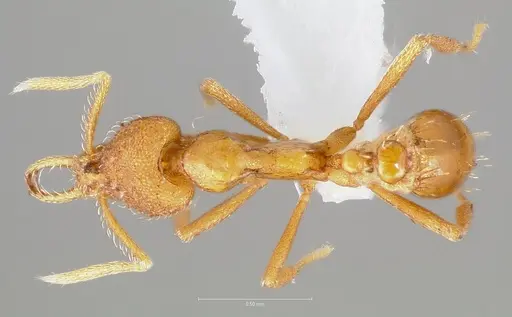
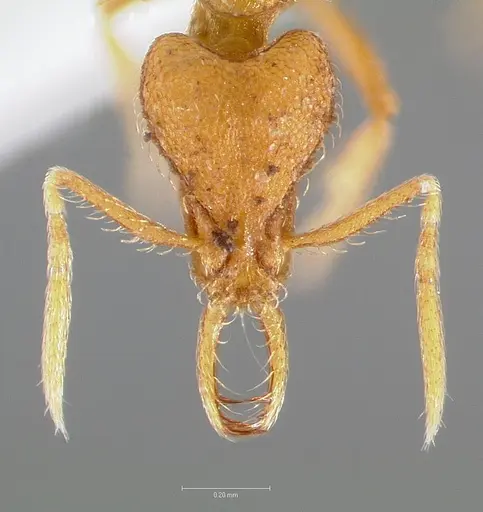
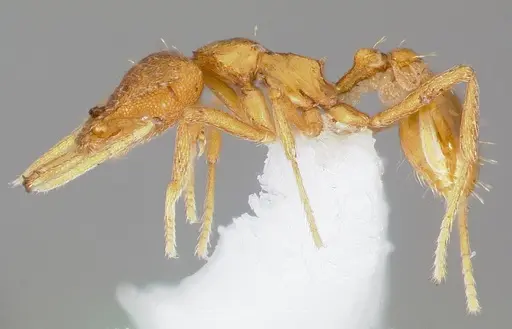
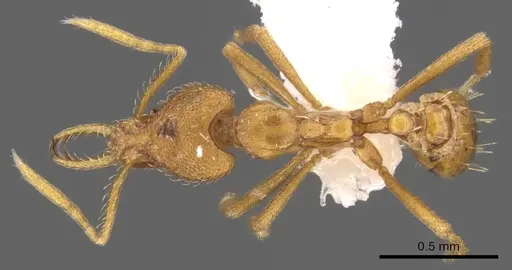
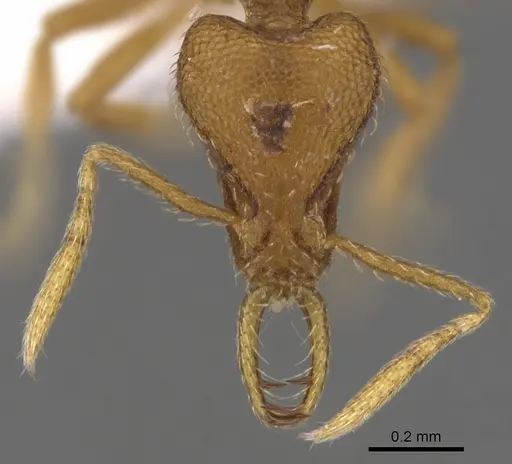
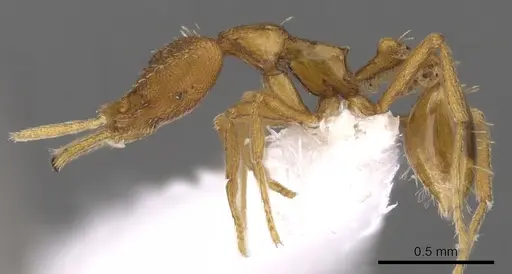
Strumigenys finator is a tiny predatory ant from Madagascar. Workers are about 2-3 mm long and have the genus’s typical trap-jaw mandibles, which they use to ambush springtails and other small arthropods in leaf litter. The species was collected at 1,860 m elevation in the Réserve Spéciale de Manongarivo, suggesting it prefers cooler highland forests . These ants live in the dark, humid microhabitat beneath the forest floor.
Quick Summary
- Difficulty: Hard
- Origin & Habitat: Madagascar – collected from leaf litter at 1,860 m in the Réserve Spéciale de Manongarivo, in highland forest habitat [1].
- Colony Type: Likely single-queen colonies based on typical Strumigenys behavior, though colony structure for this species is unconfirmed [2].
- Size & Growth:
- Queen: Approximately 4–5 mm – estimated from typical Strumigenys queens [2]
- Worker: 2–3 mm [1]
- Colony: Likely under 100 workers based on typical Strumigenys colonies [2]
- Growth: Slow
- Development: Based on typical Strumigenys development, roughly 8–12 weeks at optimal temperature [2] (Development is slow – colonies typically grow gradually over many months.)
- Antkeeping:
- Temperature: Keep at 22–26°C. Given the high elevation collection site, this species may tolerate slightly cooler conditions than typical lowland Strumigenys [1]. Avoid sudden drops below 15°C or spikes above 30°C.
- Humidity: Keep the nest substrate consistently moist but not waterlogged, with visible condensation on walls – typical of leaf‑litter microhabitats [2].
- Diapause: No confirmed diapause requirement. A slight winter cooling (15–18°C) may be beneficial because of the high‑elevation origin, but it is not mandatory [2].
- Nesting: Naturalistic setups with moist soil and leaf litter work best. A Y‑tong (aerated concrete block) or plaster nest with small, snug chambers is good. The outworld should have a 1–2 cm layer of moist leaf litter for hunting [2].
- Behavior: Docile and non‑aggressive. Workers are slow ambush predators that use trap‑jaw mandibles to strike passing prey. They do not forage openly – they patrol through leaf litter. Escape prevention is critical because of their tiny size – they can squeeze through very small gaps. They have a functional stinger (subfamily Myrmicinae) but rarely use it on humans.
- Common Issues: escape prevention is critical – their tiny size means they can slip through the smallest gaps without fine mesh barriers., specialized diet requires live prey – they will not accept dead insects or sugar water like many ants., slow growth tests keeper patience – colonies take many months to reach even 20 workers., high humidity needs can lead to mold if ventilation is poor., wild‑caught colonies may have parasites that cause rapid decline.
Housing and Nest Preferences
Strumigenys finator needs a naturalistic setup that mimics leaf litter habitat. Use a moist substrate mixture of soil and decaying leaves – this keeps humidity high and provides hunting ground for prey. A Y‑tong (aerated concrete block) or plaster nest with tight, small chambers works well. Always pair it with an outworld containing a 1–2 cm layer of moist leaf litter where the ants can hunt. The nest chambers should be small and snug – these tiny ants feel insecure in large open spaces. Keep the nest area consistently moist but not waterlogged, with some condensation visible on the walls [2].
Feeding and Diet
This is the most challenging aspect. Strumigenys finator is a specialized predator that requires live prey – primarily springtails and other tiny arthropods from leaf litter. They will not accept dead insects, honey, or sugar water. Their trap‑jaw mandibles are built for catching small, fast‑moving prey, and they ignore stationary food. Offer live springtails regularly (you can culture them separately). Other acceptable prey includes tiny isopods, booklice, and fruit fly larvae. Feed 2–3 times per week and remove uneaten prey after 24 hours. A well‑fed colony will have workers with plump abdomens. Do not rely on commercial ant foods – this species is an obligate predator [2].
Temperature and Seasonal Care
Maintain temperatures between 22–26°C year‑round. The high‑elevation origin (1,860 m) suggests this species can tolerate slightly cooler conditions than lowland tropical ants, but there is no evidence it needs cold hibernation. A slight winter reduction to around 18–20°C is reasonable but probably not mandatory. Avoid temperature extremes – sudden drops below 15°C or spikes above 30°C can be fatal. Use a heating cable on one side of the nest only if room temperature falls below 22°C, and place it on top of the nest to avoid drying out the substrate. Monitor colony activity – if workers become sluggish and cluster together, the temperature may be too low [1][2].
Behavior and Handling
Strumigenys finator is docile and poses no real threat to keepers. Workers are slow and deliberate, spending most of their time patrolling through leaf litter in search of prey. When they detect potential prey, they freeze, then strike with their trap‑jaw mandibles in a fraction of a second. They are not aggressive toward humans and will only sting if directly handled. The sting is mild for most people – these are not defensive ants. However, escape prevention is absolutely critical – their 2–3 mm size allows them to squeeze through gaps that would trap larger ants. Use fine mesh on all openings and consider applying fluon to the rim of the formicarium. They are not colonygressive and can be kept in relatively small setups [2].
Frequently Asked Questions
Is Strumigenys finator good for beginners?
No – this species is not recommended for beginners. Their specialized live‑prey diet, high humidity requirements, slow growth, and tiny size make them challenging. Try easier species first [2].
Can I keep Strumigenys finator in a test tube?
A test tube alone is not suitable – they need an outworld with leaf litter for hunting. Use a test tube as a nest chamber connected to a naturalistic outworld with moist substrate and decaying leaves where they can hunt live prey [2].
How long does it take for Strumigenys finator to produce first workers?
Based on typical Strumigenys development, roughly 8–12 weeks from egg to first worker at 22–26°C. Development is slow, and founding colonies may take several months before nanitics emerge [2].
Can I keep multiple Strumigenys finator queens together?
Not recommended. Strumigenys are typically single‑queen colonies, and combining unrelated queens is undocumented for this species. They will likely fight. Start with one founding queen [2].
Do Strumigenys finator need hibernation?
Probably not a true hibernation. Given their high‑elevation origin, they may benefit from a slight cool period in winter (around 15–18°C), but this is not mandatory. Avoid temperatures below 10°C [1][2].
Why are my Strumigenys finator dying?
Common causes include: lack of live prey (they will starve on dead food), humidity too low (dry conditions kill quickly), improper temperature (too cold causes lethargy and death), or parasites from wild‑caught colonies. Ensure you provide adequate live springtails and maintain high humidity [2].
What do Strumigenys finator eat in captivity?
Live springtails are ideal. They may also accept tiny live isopods, booklice, and fruit fly larvae. They will not eat dead insects, honey, sugar water, or commercial ant foods. They are obligate predators [2].
How big do Strumigenys finator colonies get?
Based on typical Strumigenys colonies, likely under 100 workers. The exact maximum for this species is unknown, but growth is slow – a mature colony may reach 50–80 workers after a year or more [2].
When should I move Strumigenys finator to a formicarium?
Wait until the colony has at least 15–20 workers before moving to a formicarium. They do best in naturalistic setups with leaf‑litter outworlds rather than pure acrylic nests. A Y‑tong or plaster nest connected to a naturalistic outworld is ideal [2].
Report an Issue
The current care sheet is based fully on literature. See inconsistencies, or something that's incorrect? Please , it will be resolved after review from an admin. Contributing to the blogs tab also helps providing information, to make us be able to further improve the caresheets. Thank you for your support!
References

This caresheet is licensed under CC BY-SA 4.0 .
Community Blogs
Literature
Loading distribution map...Loading products...