
Strumigenys enkara
- Sci. Name
- Strumigenys enkara
- Tribe
- Attini
- Subfamily
- Myrmicinae
- Author
- Bolton, 1983
- Distribution
- Found in 1 countries
Introduction
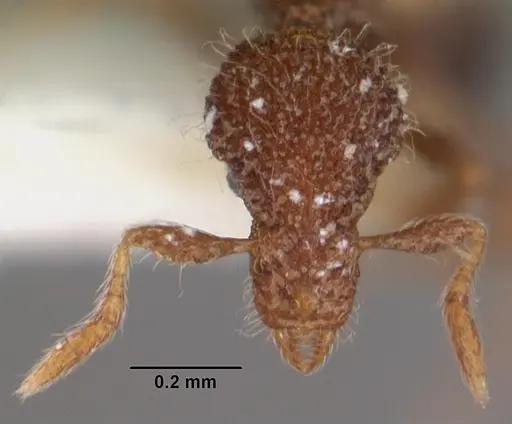
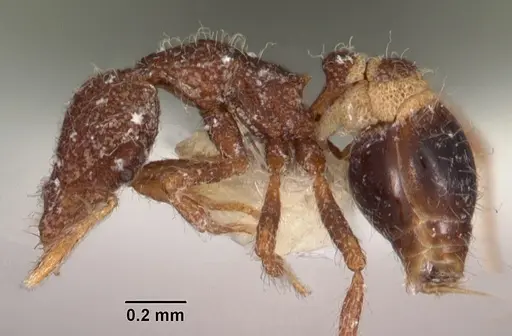
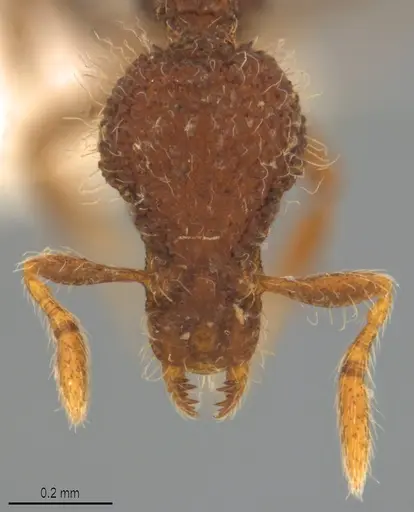
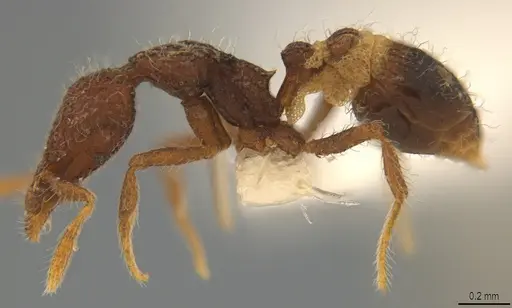
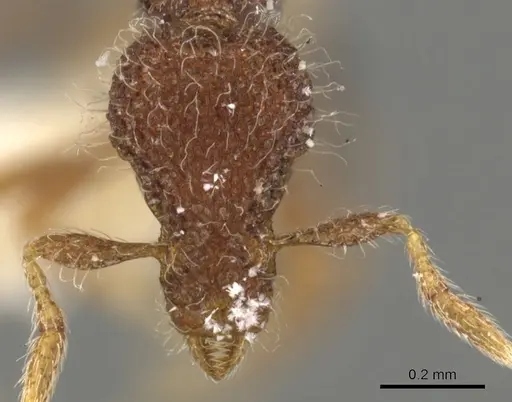
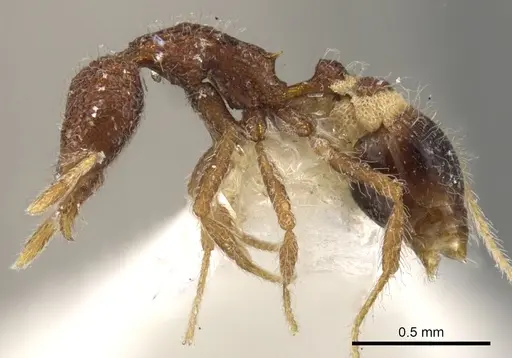
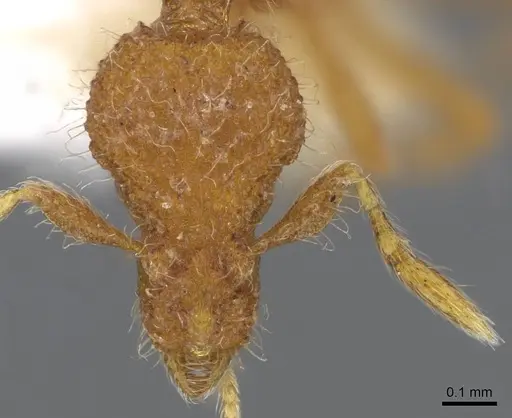
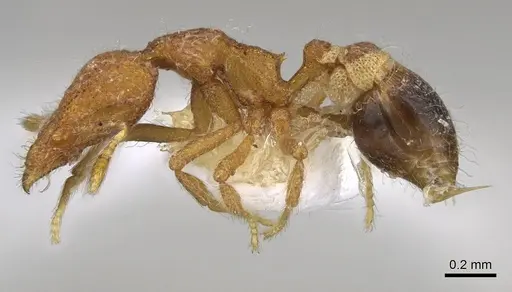
Strumigenys enkara is a tiny ant species recorded from the Democratic Republic of Congo . Very little specific information is available about this species, so most care advice is inferred from its genus. Like other Strumigenys, workers are likely very small (around 2-3 mm) with an unmistakable appearance: long, slender mandibles lined with teeth that snap shut to capture tiny prey . Their coloration is probably pale yellowish to reddish-brown. These ants belong to the dacetine group (tribe Attini), known for specialized hunting of soil arthropods like springtails. Colonies are thought to be small, with no more than a few hundred workers, making them interesting but challenging to keep.
Quick Summary
- Difficulty: Hard
- Origin & Habitat: Recorded from the Democratic Republic of Congo [1]. In nature, they inhabit leaf litter and soil microhabitats in tropical African forests, likely living in the upper soil layers and decaying organic matter [2].
- Colony Type: Unconfirmed, likely single-queen (monogyne) based on typical genus patterns, but no specific data exists. Colony size is thought to be small, probably under 200 workers.
- Size & Growth:
- Queen: Size data unavailable.
- Worker: Size data unavailable, likely small (around 2-3 mm) based on genus patterns [2].
- Colony: Up to 200 workers (estimated from typical genus behavior, unconfirmed for this species).
- Growth: Unknown, likely slow due to specialized diet and small colony size.
- Development: Unknown, related Strumigenys species take 8-12 weeks, but no data for this species. (Development is likely slow and depends on steady access to live micro-prey.)
- Antkeeping:
- Temperature: Tropical forest species, keep warm and stable, roughly 22-26°C. Use a gentle heat source if needed, avoid sudden drops [2].
- Humidity: High humidity is essential. Keep the nest substrate consistently moist but not waterlogged. A moisture reservoir helps maintain stable conditions [2].
- Diapause: Unlikely, as a tropical species, no true diapause is expected. Reduce activity in cooler months is normal [2].
- Nesting: Y-tong (AAC) nests or test tube setups with tight, small chambers work well. Provide a moisture reservoir to maintain humidity. Precise chamber size matching the ants' tiny bodies helps them feel secure [2].
- Behavior: Strumigenys are specialized hunters of tiny arthropods, primarily springtails. Based on subfamily characteristics, they possess a functional stinger used to subdue prey, but it is not considered medically significant to humans. They are docile and avoid confrontation, relying on escape or their trap-jaw mandibles when threatened. Their tiny size makes them excellent escape artists. Foraging is slow and methodical as they search through substrate for prey.
- Common Issues: escape prevention is critical, they are tiny and can squeeze through standard barrier gaps, specialized diet means they may refuse standard ant foods, live springtails are essential, slow growth tests keeper patience, colonies take months to establish, small colony size means losses are harder to recover from, humidity control is challenging, too dry kills them, too wet causes mold
Housing and Nest Setup
Due to their tiny size, housing for Strumigenys enkara must be carefully scaled. A Y-tong (AAC) nest with very small chambers is ideal, or you can start with a test tube setup where a cotton plug creates a small chamber. The key is to make chambers tightly sized so the ants feel secure. Provide a water reservoir connected to the nest to keep humidity stable without frequent disturbance. A small outworld with a thin layer of substrate allows foraging and hunting. Escape prevention is paramount: use fine mesh barriers and seal all connections perfectly, as these ants can slip through any gap [2].
Feeding and Diet
Feeding is the biggest challenge for this species. Like most Strumigenys, they are specialized predators of tiny arthropods, primarily springtails (Collembola) [2]. Live springtails should form the bulk of their diet, as they typically refuse dead prey. Other small live prey like fruit flies, newly hatched pinhead crickets, or booklice may sometimes be accepted, but springtails are the most reliable. Sugar sources like honey water are usually ignored. Feed small amounts every 2-3 days and remove uneaten prey within 24 hours to prevent mold. Without a steady supply of live micro-prey, the colony will starve.
Temperature and Humidity
As a tropical forest species, Strumigenys enkara needs warm, stable conditions. Keep the nest at roughly 22-26°C, using a small heating cable on one side to create a gentle gradient if needed. Avoid hot spots. Humidity is equally critical: aim for high (70-80%) relative humidity. The substrate should feel consistently moist but never waterlogged. A moisture reservoir in the nest setup helps maintain stable conditions. Monitor with a digital hygrometer near the nest. Avoid both drying out and excessive condensation [2].
Behavior and Temperament
Strumigenys enkara is docile and poses no threat to humans. Based on its subfamily (Myrmicinae, tribe Attini), it possesses a functional stinger, but it is not considered medically significant and is primarily used for subduing tiny prey. When threatened, their first response is to flee. Their most remarkable feature is their trap-jaw mandibles, which can snap shut in milliseconds to capture prey. Workers move slowly and methodically when foraging. Colonies are quiet and unobtrusive, making them interesting observation ants once established [2].
Colony Establishment and Growth
Starting a colony requires patience. The founding behavior for this species is unconfirmed, but based on genus patterns, a newly mated queen likely seals herself into a small chamber and raises the first workers (nanitics) alone. This founding phase can take 2-4 months. The first workers will be extremely small, and the colony grows slowly. Avoid disturbing the queen during founding to prevent stress. Once the first workers emerge, they will help hunt and the colony can gradually expand. Maximum colony size is likely under 200 workers [2].
Frequently Asked Questions
How long does it take for Strumigenys enkara to produce first workers?
The exact timeline is unknown for this species. Related Strumigenys species take about 8-12 weeks from egg to worker under optimal conditions, but no data exists for S. enkara. Patience is essential [2].
What do Strumigenys enkara eat?
They are specialized predators of tiny arthropods. Live springtails (Collembola) are the ideal and likely essential food. They typically refuse dead prey or sugar. Small live fruit flies may be accepted experimentally [2].
Can I keep Strumigenys enkara in a test tube?
Yes, a test tube setup can work for founding colonies. Create a small chamber with a cotton plug to give the queen appropriately sized space. Add a water reservoir and maintain high humidity. Transfer to a proper nest once the colony reaches 20+ workers [2].
Are Strumigenys enkara good for beginners?
No, this species is challenging and not recommended for beginners. Their specialized diet (live springtails required), tiny size (escape risk), and slow growth make them difficult for new antkeepers.
How big do Strumigenys enkara colonies get?
Specific colony size is unknown, but based on typical Strumigenys patterns, they likely reach up to about 200 workers at maturity. They never form large colonies [2].
Do Strumigenys enkara need hibernation?
Unlikely, given their tropical African origin. They may show reduced activity in cooler conditions but do not require a true diapause period [2].
Why are my Strumigenys enkara dying?
Common causes include: lack of live springtail prey (starvation), low humidity (drying out), escape through tiny gaps, or stress from disturbance during founding. Check these factors first [2].
When should I move Strumigenys enkara to a formicarium?
Wait until the colony has at least 20-30 workers and is actively hunting in the outworld. Moving too early stresses the colony. A Y-tong nest with small chambers works well once they outgrow a test tube [2].
Can I keep multiple Strumigenys enkara queens together?
Not recommended. While colony structure is not fully studied for this species, combining unrelated queens typically leads to fighting. Stick to single-queen colonies [2].
Report an Issue
The current care sheet is based fully on literature. See inconsistencies, or something that's incorrect? Please , it will be resolved after review from an admin. Contributing to the blogs tab also helps providing information, to make us be able to further improve the caresheets. Thank you for your support!
References

This caresheet is licensed under CC BY-SA 4.0 .
Community Blogs
CASENT0102543
View on AntWeb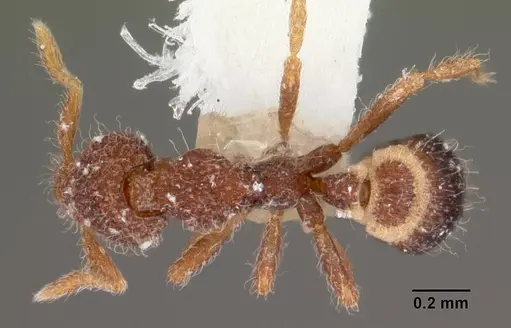
CASENT0763614
View on AntWeb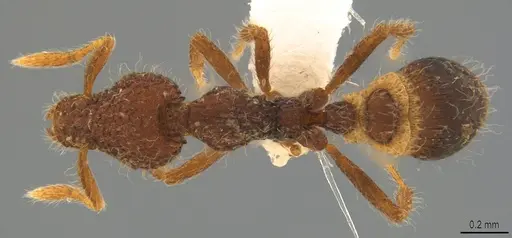
CASENT0763618
View on AntWeb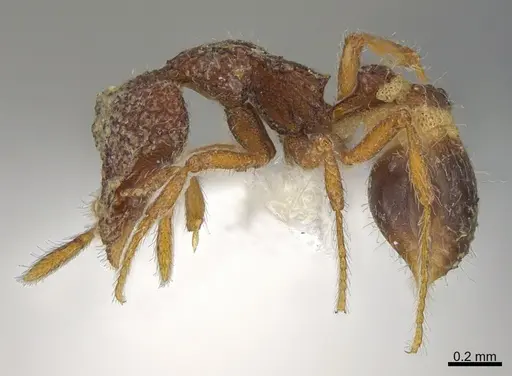
CASENT0900086
View on AntWeb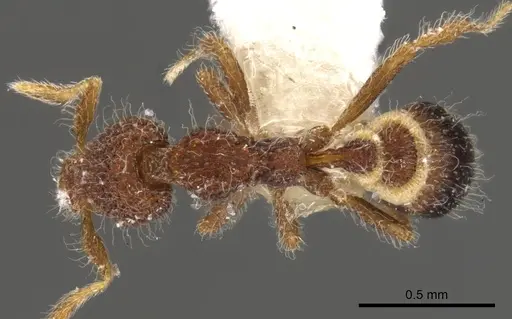
CASENT0914707
View on AntWeb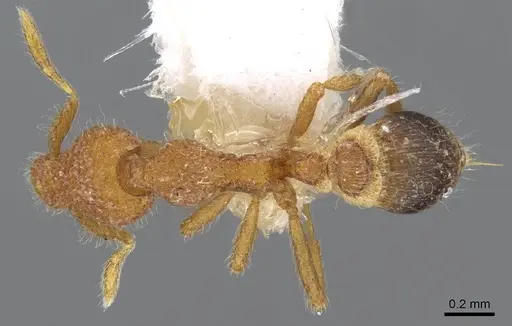
Literature
Loading distribution map...Loading products...