
Strumigenys emiliae
- Sci. Name
- Strumigenys emiliae
- Tribe
- Attini
- Subfamily
- Myrmicinae
- Author
- Forel, 1907
- Distribution
- Found in 1 countries
Introduction
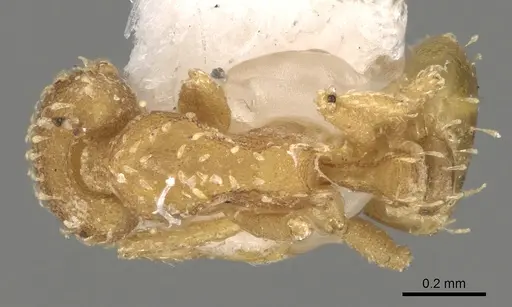
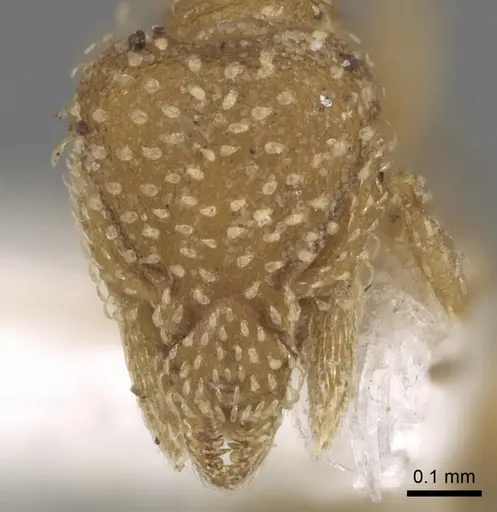
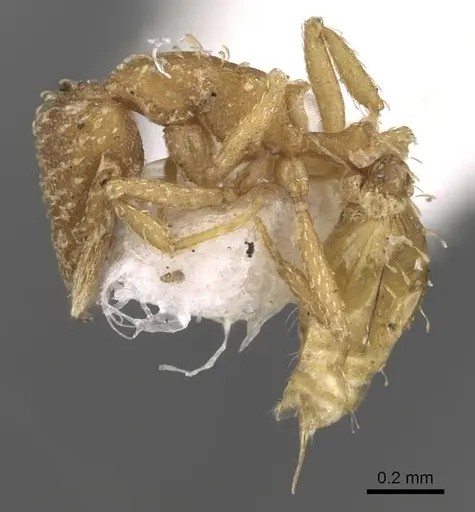
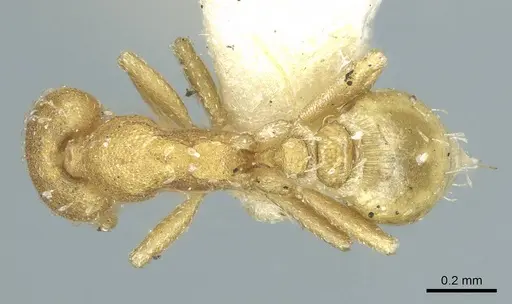
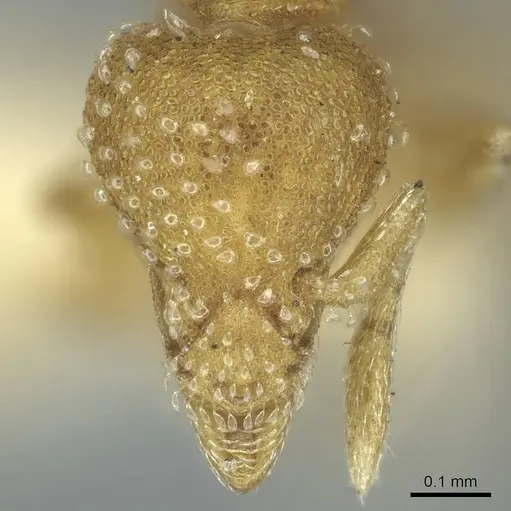
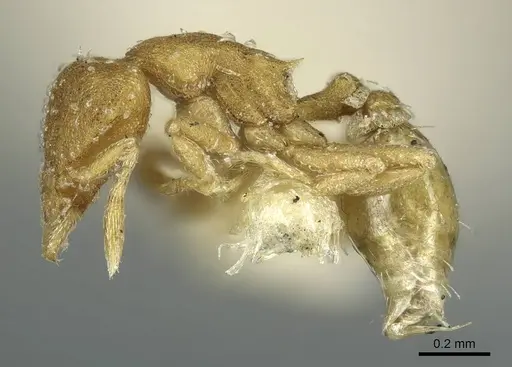
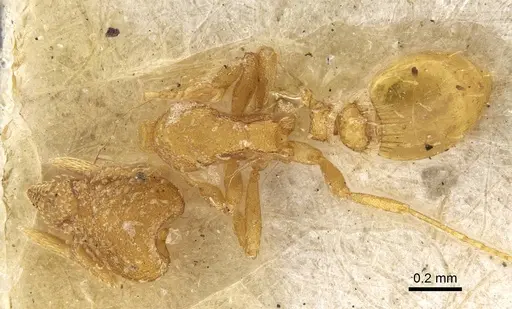
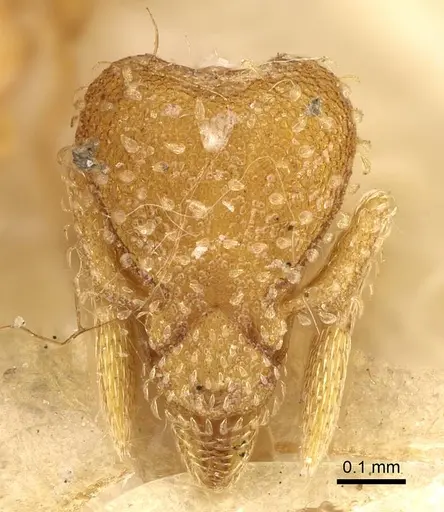
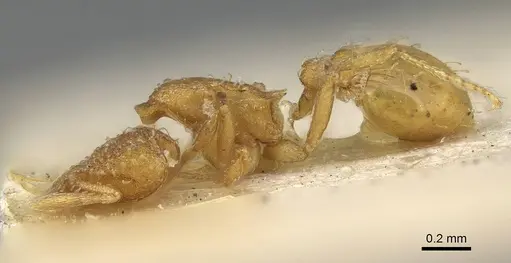
Strumigenys emiliae is a tiny predatory ant that grows to just 1.9-2.0 mm in total length . Workers have distinctive mandibles with three stout basal teeth and a plate-like fourth tooth that reflects light . The body is covered with curved spoon-shaped hairs. It is found across the Neotropical region in Argentina, Brazil, and Paraguay . Records include southern Brazilian grasslands (Pampa) and coastal forests in Bahia . Like other members of the tribe Attini, Strumigenys emiliae has a functional stinger (though it is not significant to humans) and uses its trap-jaw mandibles to capture tiny prey like springtails. Very little is documented about its colony biology, making it an experimental species to keep. Its small size and specialized diet require extra caution.
Quick Summary
- Difficulty: Hard
- Origin & Habitat: Neotropical region, Argentina, Brazil, and Paraguay [1]. Recorded in Pampa grasslands (Lavras do Sul) [2] and multiple locations in Bahia: Buerarema, Camamu, Canavieiras, Ibirapitanga, Iguai, Ilhéus, Itabuna, Ubaíra, Wenceslau Guimaraes, and Rio Grande do Sul (Santa Maria) [3].
- Colony Type: Colony structure is unknown. Based on genus patterns, likely monogyne (single queen) with small colonies.
- Size & Growth:
- Queen: Undocumented, size data unavailable.
- Worker: 1.9-2.0 mm [1]
- Colony: Undocumented, based on genus patterns, up to an estimated 200 workers.
- Growth: Slow
- Development: Undocumented for this species, based on similar small Myrmicinae, development likely takes 8-12 weeks. (No specific development data exists. Keep undisturbed during founding and be patient.)
- Antkeeping:
- Temperature: No experimental data, based on tropical distribution, keep at 22-26°C. Avoid drops below 20°C. Use a gentle gradient with a small heating cable if needed.
- Humidity: Moderate to high, keep nest substrate damp but not waterlogged. A small water reservoir helps maintain moisture. Good ventilation prevents mold.
- Diapause: Likely not required due to tropical origin, but activity may slow in cooler months. Provide stable warmth year-round.
- Nesting: Use small containers like test tubes or Y‑tong nests with very narrow chambers. Their 2 mm size requires tight spaces and fine mesh (≥0.3 mm) to prevent escape.
- Behavior: These are very small (2 mm) trap-jaw ants, non‑aggressive and slow‑moving. They have a functional stinger, but the venom is not medically significant to humans. Escape risk is extreme because they can squeeze through standard barriers. Predatory on micro‑arthropods, foraging individually or in small groups.
- Common Issues: escape prevention is critical, standard mesh fails for 2 mm ants, use 0.3 mm or smaller mesh and fluon barriers., live micro-prey must be sourced consistently, springtails are essential and can be hard to culture in large amounts., little documentation makes care experimental, expect trial and error., slow growth requires patience, colonies may take a year or more to reach 50 workers., wild-caught colonies may harbor parasites or pathogens that kill them in captivity.
Housing and Nest Setup
Strumigenys emiliae workers measure just 1.9-2.0 mm [1], so standard formicarium chambers are far too large. Use small test tubes with tight stoppers or Y‑tong/plaster nests with the narrowest available passages, chambers should be just large enough for a dozen workers to move through. The most critical challenge is escape prevention. Standard cotton plugs and ventilation mesh will not hold these ants, use mesh with openings no larger than 0.3 mm on all openings, and apply fluon barriers to the edges of the outworld. Keep the nest dark and undisturbed. A small water reservoir in the setup helps maintain stable humidity without flooding the tiny chambers.
Feeding and Diet
Like other Strumigenys, this species is a specialist predator of tiny soil arthropods. Offer live springtails (Collembola) as the primary food source, they are the right size and nutrition. Other suitable prey includes booklice, tiny isopods, and equally small arthropods. Do not offer large prey items, the ants cannot handle anything bigger than themselves. Sugar sources (honey, sugar water) are generally not accepted. Feed a few prey items every 2-3 days, removing leftovers to prevent mold. A well‑fed colony shows slightly distended gasters. Because documented data are lacking, adjust the menu based on what your colony accepts.
Temperature and Humidity
These ants are native to warm Neotropical regions [2][3]. Keep the nest area at 22-26°C. A small heating cable on one side of the nest creates a gentle gradient, but avoid direct heat that could dry out the nest. For humidity, keep the substrate consistently damp, aim for a moisture level where the substrate feels moist but does not drip when squeezed. A small water reservoir helps, and good ventilation is still needed to prevent mold. Avoid swings in temperature or humidity.
Colony Development
Expect extremely slow colony growth. The founding queen should be left completely undisturbed in a dark, quiet place for at least 3-4 months. First workers (nanitics) will be tiny, under 2 mm. Based on genus patterns, mature colonies likely remain under 200 workers. Growth can take a year or more to reach 50 workers. Be patient and avoid overfeeding, which can cause mold in the small nest. Monitor brood development through the glass, healthy colonies will have eggs, larvae, and pupae visible.
Handling and Temperament
These ants are harmless to humans. They have a functional stinger, but the venom is not medically significant and they rarely attempt to sting. Their tiny size makes them fragile, avoid handling the ants themselves. When inspecting the nest, view from above without disturbing the structure. Their trap-jaw snap is aimed at prey, not at humans. Focus on providing appropriate housing and prey rather than interaction.
Frequently Asked Questions
How long does it take for Strumigenys emiliae to produce first workers?
The exact timeline is unknown for this species. Based on related Strumigenys species, expect 3-6 months from founding to first workers. Development is slow due to their tiny size and the complexity of producing functional trap-jaw mandibles.
What do Strumigenys emiliae ants eat?
They are predatory and need live micro‑arthropods. Live springtails are the best primary food. Other options include booklice and tiny isopods. They do not typically accept sugar or honey.
Can I keep Strumigenys emiliae in a test tube?
Yes, test tubes work well. Use small tubes with tight stoppers, their 2 mm size means standard cotton will not prevent escape. Add a small water reservoir for humidity and cover any air holes with fine mesh (≥0.3 mm).
Are Strumigenys emiliae good for beginners?
No, this is a difficult species. Their biology is poorly documented, they require live micro‑prey, their tiny size makes escape likely, and they are slow‑growing. Best suited for experienced keepers.
How big do Strumigenys emiliae colonies get?
Based on genus patterns, colonies likely stay under 200 workers at maturity. They remain small‑colony ants due to the tiny 2 mm worker size.
What temperature do Strumigenys emiliae need?
Keep them at 22-26°C. These are Neotropical ants from Brazil, Paraguay, and Argentina that prefer warm, stable conditions.
Why are my Strumigenys emiliae escaping?
Their 2 mm size lets them squeeze through standard barriers. Use fine mesh (0.3 mm or smaller), fluon barriers on outworld edges, and seal all connections. Standard cotton and ventilation mesh will not contain them.
Do Strumigenys emiliae need hibernation?
Likely no, their tropical distribution suggests they do not require a true diapause. You may observe reduced activity in cooler months, but a full hibernation is not needed. Keep warmth stable year‑round.
Where is Strumigenys emiliae found in the wild?
They are found in Argentina, Brazil, and Paraguay [1]. Specifically recorded in Pampa grasslands (Lavras do Sul, Rio Grande do Sul) [2] and in Bahia (Buerarema, Canavieiras, Ilhéus, Itabuna, and others) [3].
Report an Issue
The current care sheet is based fully on literature. See inconsistencies, or something that's incorrect? Please , it will be resolved after review from an admin. Contributing to the blogs tab also helps providing information, to make us be able to further improve the caresheets. Thank you for your support!
References

This caresheet is licensed under CC BY-SA 4.0 .
Community Blogs
Literature
Loading distribution map...Loading products...