
Strumigenys dora
- Sci. Name
- Strumigenys dora
- Tribe
- Attini
- Subfamily
- Myrmicinae
- Author
- Fisher, 2000
- Distribution
- Found in 1 countries
Introduction
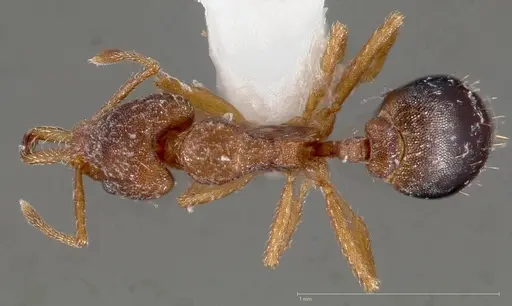
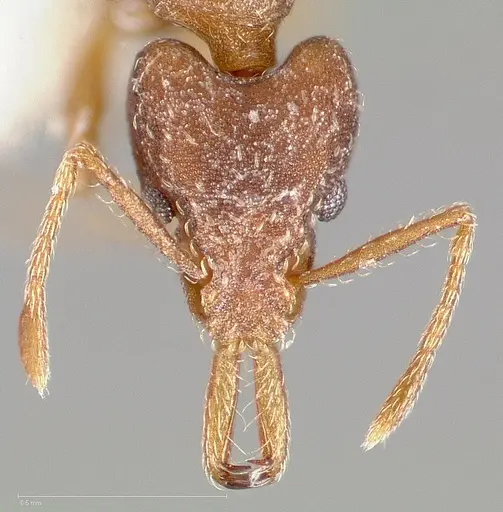
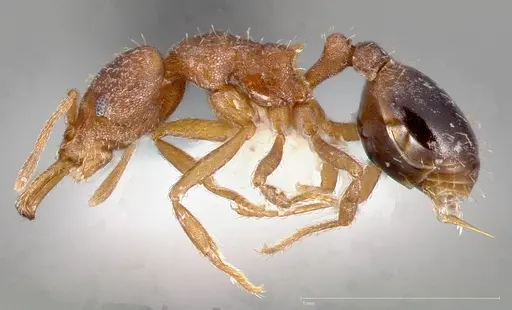
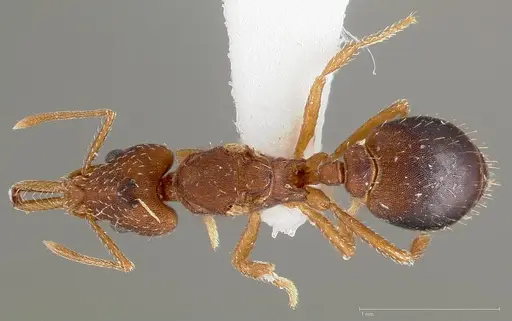
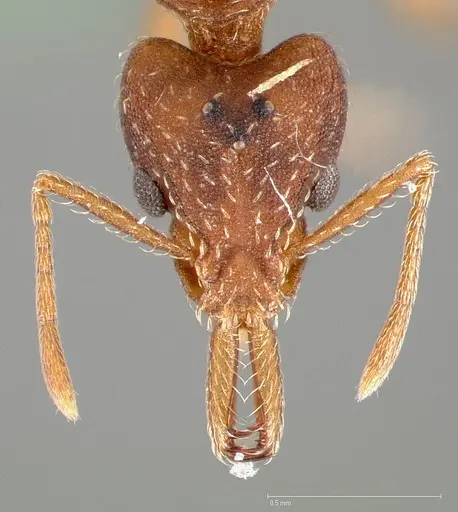
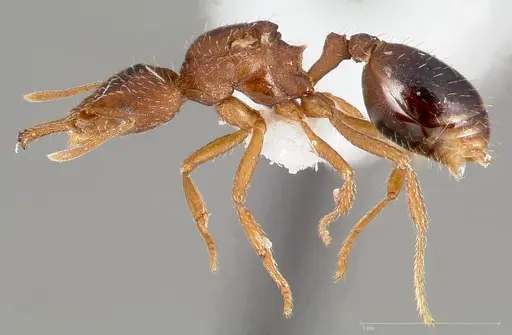
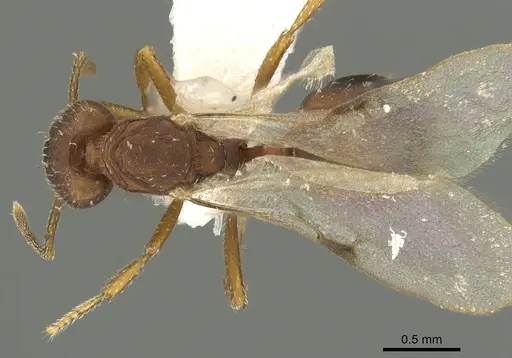
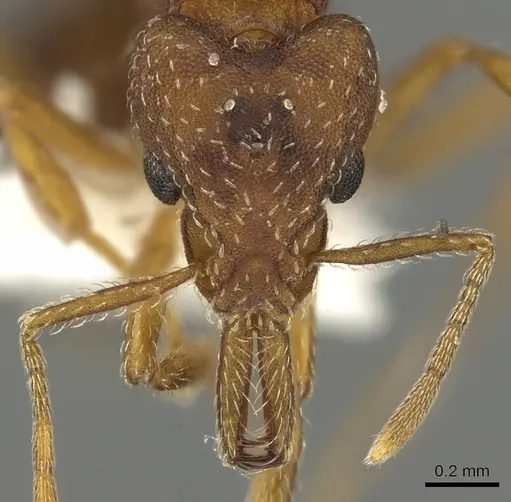
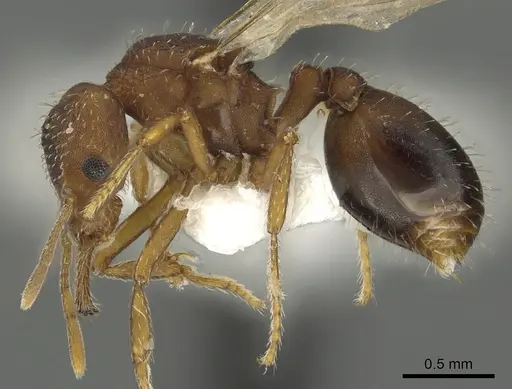
Strumigenys dora is a tiny ant from Madagascar, described by Fisher in 2000. Workers are total length 3.2 mm , with a chocolate-brown color and a distinct set of morphological features, including a punctate first gastral tergite and at least three pairs of standing hairs on the petiole dorsum . They belong to the Strumigenys grandidieri group and the tribe Attini (subfamily Myrmicinae). Like other attines, they possess a functional stinger used to inject venom, though it is not medically significant to humans. This species is known only from a few litter samples collected in savanna and tropical dry forest habitats of southern Madagascar . While details of their natural history are sparse, they are expected to lead a cryptic lifestyle, hunting small arthropods within leaf litter and soil.
Quick Summary
- Difficulty: Medium
- Origin & Habitat: Endemic to southern Madagascar, recorded from the Betroka area at around 825 m elevation. Found in savanna and tropical dry forest [1]. Voucher data indicate a terricolous (ground-dwelling) life in dry, dark microhabitats [2].
- Colony Type: Colony structure is unconfirmed. Type material includes both alate and dealate queens, but whether colonies are single‑queen (monogyne) or multi‑queen (polygyne) is unknown.
- Size & Growth:
- Queen: Size data unavailable (queens present in type series but no measurements published) [1].
- Worker: 3.2 mm total length (TL) [1].
- Colony: Unknown, no colony size data exist for this species.
- Growth: Unknown
- Development: Unknown, no developmental data are available. (Development time is unstudied. As with all ants, it will be temperature‑dependent, but no specific timeline can be given.)
- Antkeeping:
- Temperature: Based on their native savanna and tropical dry forest habitats [1], they probably prefer warm, dry conditions. A trial range of 24-28°C (75-82°F) is a reasonable starting point, avoid temperatures below 20°C.
- Humidity: Low to moderate, the habitat is dry [1][2]. Keep the nest substrate only slightly moist, never wet, and provide good ventilation.
- Diapause: Unknown. Being from tropical Madagascar, a true diapause is unlikely, but no studies confirm this.
- Nesting: In nature, they nest in leaf litter and soil [1]. A naturalistic setup with a shallow layer of dry‑ish sandy soil or a Y‑tong block with very small chambers is suitable.
- Behavior: Workers are cryptobiotic, spending most of their time hidden in substrate. They are specialized predators, though the exact prey is undocumented, related Strumigenys hunt small soil arthropods like springtails. Due to their tiny size (3.2 mm), escape prevention is critical, use ultra‑fine mesh barriers. They are not aggressive to humans and their sting is not a concern.
- Common Issues: tiny size makes escapes likely unless all gaps are sealed with fine mesh., specialized diet requires a steady supply of live micro‑prey, they are unlikely to accept common ant foods., extreme rarity in captivity, almost all records are from a handful of museum collections, so availability is near zero., slow or unpredictable colony growth, without specific data, expect a slow pace typical of small dacetines., wild‑caught specimens may carry parasites or suffer from collection stress.
Housing and Nest Setup
Because Strumigenys dora naturally occupies leaf litter and soil in dry savanna and tropical dry forest [1][2], a simple naturalistic nest works best. Fill a shallow container with a mix of dry sand and a little soil, just barely moist. The substrate should be deep enough for them to dig small chambers. Alternatively, use a Y‑tong (AAC) block with narrow, low chambers. All ventilation openings must be covered with fine mesh (≤0.5 mm openings) because workers are only 3.2 mm long. Connect a small outworld with a layer of dry leaf litter, twigs, and stones where they can hunt.
Feeding and Diet
The natural prey of S. dora is not recorded, but like other Strumigenys, they almost certainly hunt tiny soil arthropods. In captivity, their primary food should be live springtails (Collembola), these are the correct size and nutritional profile. You can also offer booklice (psocids), micro mites, or small fruit fly larvae. They show no interest in sugar water, honey, or dead insects. Establish a thriving springtail culture before acquiring this ant. Feed once every 2-3 days, providing only as many prey as they can eat in a day to avoid mold.
Temperature and Care
Their native habitat is dry and warm [1]. Keep the nest area around 24-28°C (75-82°F). A heating mat on one side of the nest creates a gradient so the ants can choose. Avoid prolonged temperatures below 20°C, which may slow metabolism or harm brood. Humidity should be low to moderate, let the nest substrate dry out slightly between waterings, and ensure the outworld is well‑ventilated. Mold is a greater risk than dehydration.
Behavior and Temperament
Workers are reclusive and spend most of their time hidden in the substrate. They forage alone, moving slowly through the litter in search of prey. Like other Strumigenys, they have specialized mandibles that can snap shut rapidly. They do not defend themselves aggressively, if disturbed, they prefer to flee. Their sting is functional but negligible to humans. The main challenge is their minuscule size, they are expert escape artists. Use fine mesh or cotton plugs on every opening, and inspect regularly for gaps.
Acquisition and Rarity
Strumigenys dora is extraordinarily rare in the antkeeping world. The only known records are from two collections in Madagascar, and all type specimens are in museums. It is not known to be legally protected, but wild collection in Madagascar would likely require permits. If any captive colonies exist, they must come from reputable specialists. Never release any non‑native species into the wild, this is ecologically irresponsible and often illegal. [1]
Frequently Asked Questions
How long does it take for Strumigenys dora to produce first workers?
This is unknown because the species has not been studied in captivity. No egg‑to‑worker timeline can be given.
Can I keep Strumigenys dora in a test tube setup?
It is possible for a founding queen, but there are no reports of this species being raised that way. Given their natural habitat in leaf litter, a shallow naturalistic setup from the start is likely better. If you use a test tube, pack the cotton very tightly because workers are tiny and can squeeze past loose fibers.
What do Strumigenys dora eat?
Their natural diet is undocumented. Based on related species, they probably eat tiny soil arthropods. In captivity, live springtails are the best option. They will not eat sugar water, honey, or dead insects.
Are Strumigenys dora ants good for beginners?
No. This is a medium‑difficulty species suitable only for experienced keepers. Their extreme rarity, specialized diet, tiny size (high escape risk), and lack of published husbandry data make them very challenging. Beginners should start with more common, robust species like Lasius niger or Camponotus herculeanus.
How big do Strumigenys dora colonies get?
Colony size is unknown. No observations of wild or captive colonies exist. By comparison with other small Strumigenys, a mature colony may have only a few dozen to a few hundred workers, but this is speculative.
Do Strumigenys dora need hibernation?
Probably not. They come from tropical Madagascar, where winters are mild. There is no evidence that they require a true diapause, and forcing one could be harmful. Simply keep them warm year‑round.
Why are my Strumigenys dora dying?
Common causes when keeping a delicate, rare species include: escape (check all seals), starvation (insufficient live prey), overheating or chilling, mold from over‑watering, and stress from wild collection. Because so little is known, any unexplained mortality should be investigated carefully.
When should I move Strumigenys dora to a formicarium?
There is no standard advice for this species. In general, move the colony when the current nest becomes dirty or shows mold. A shallow naturalistic setup can serve as a permanent home from the start.
Can I keep multiple queens together?
Not recommended. There is no published information on colony structure. Most Strumigenys are thought to be monogyne, but even if they were polygyne, introducing wild, unrelated queens is risky. Keep them separately unless evidence suggests otherwise.
Report an Issue
The current care sheet is based fully on literature. See inconsistencies, or something that's incorrect? Please , it will be resolved after review from an admin. Contributing to the blogs tab also helps providing information, to make us be able to further improve the caresheets. Thank you for your support!
References

This caresheet is licensed under CC BY-SA 4.0 .
Community Blogs
Literature
Loading distribution map...Loading products...