
Strumigenys diabola
- Sci. Name
- Strumigenys diabola
- Tribe
- Attini
- Subfamily
- Myrmicinae
- Author
- Bolton, 2000
- Distribution
- Found in 2 countries
Introduction
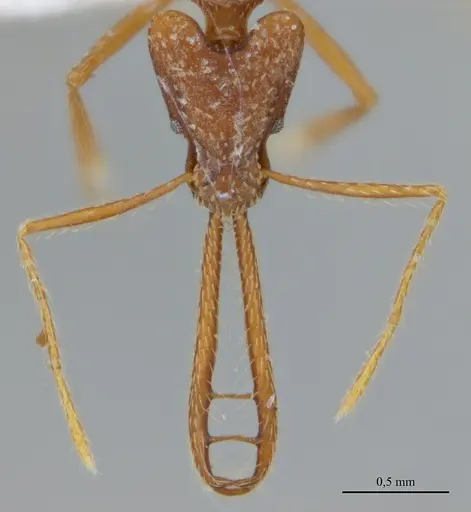
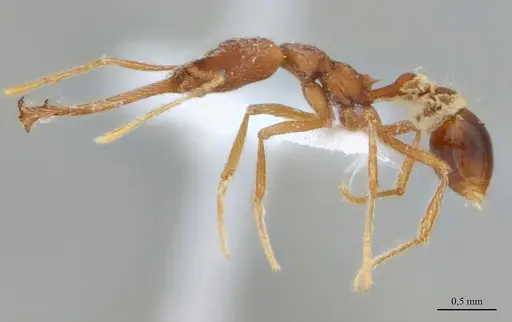
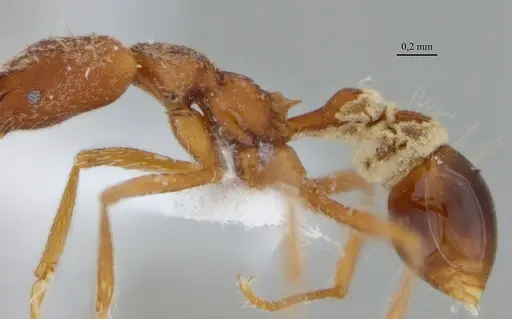
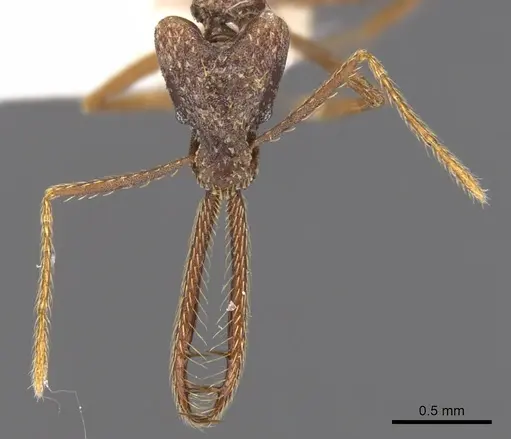
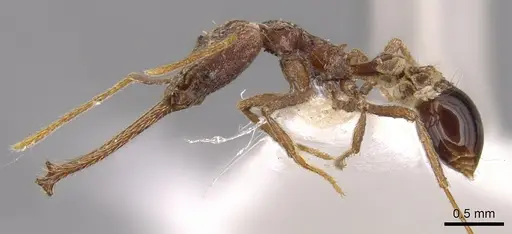
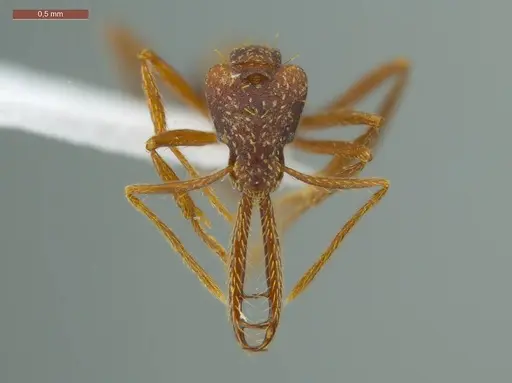
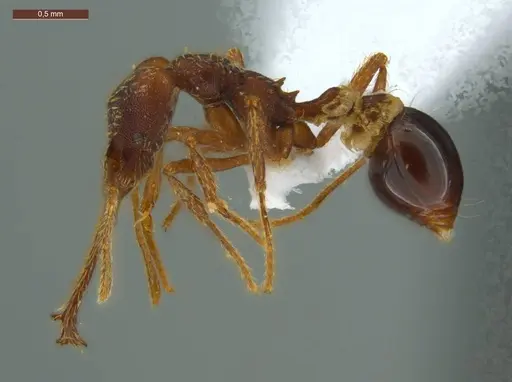
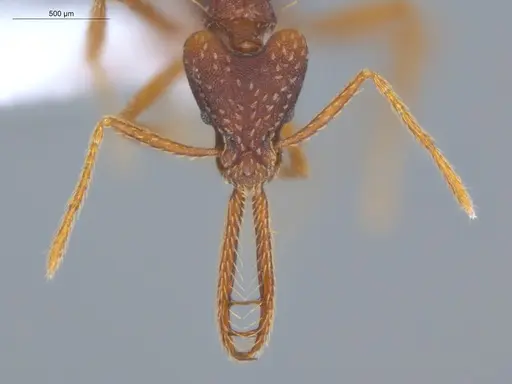
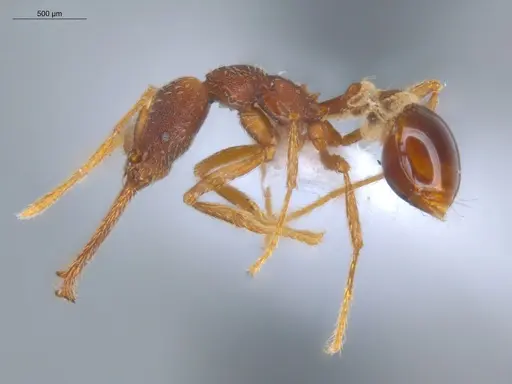
Strumigenys diabola is a tiny predatory ant known only from the Amazon rainforest of Brazil and French Guiana. Workers measure 4.2 mm total length and have an unusually elongated head with extraordinarily long, slender mandibles that give them a distinctive, almost alien appearance . The species was described in 2000 by Barry Bolton from a holotype collected near Manaus, Brazil . It belongs to the Strumigenys mandibularis group and is closely related to Strumigenys cordovensis, from which it can be separated by its even longer mandibles, a longer, narrower petiole node, and smaller femoral gland bullae . Its recorded occurrences come from plateau forest leaf litter in French Guiana .
Quick Summary
- Difficulty: Expert
- Origin & Habitat: Amazon rainforest of Brazil (Amazonas state, near Manaus) and French Guiana, where it has been collected in leaf-litter samples from pristine plateau forests [1][3][4].
- Colony Type: Unconfirmed. Based on genus-level patterns in Strumigenys, colonies are likely monogyne (single queen) and small, but no direct evidence exists for this species.
- Size & Growth:
- Queen: Undescribed, the queen has never been collected or documented [1].
- Worker: 4.2 mm total length [1]
- Colony: Unknown, Strumigenys colonies are typically small (often under 100 workers), but no data is available for S. diabola specifically.
- Growth: Unknown, inferred to be slow from related species.
- Development: Unknown, no direct data. (Based on related tropical Strumigenys species, egg-to-worker development may take 8-12 weeks, but this is unconfirmed for S. diabola.)
- Antkeeping:
- Temperature: Keep warm at 24-27°C year-round. This tropical species cannot tolerate prolonged temperatures below 22°C. Use a heating cable on one side of the nest to create a gentle gradient if room temperature is lower.
- Humidity: Very high humidity (80-90% RH) is essential. The nesting substrate should be consistently damp but not waterlogged. Visible condensation on nest walls is a good sign. A water reservoir or humidifier may be needed.
- Diapause: No, this is a tropical species that does not hibernate. Maintain warmth all year.
- Nesting: Tight, dark, humid chambers are preferred. Y-tong, plaster, or a well-sealed test tube setup can work. Escape prevention must be meticulous: use fine mesh (≤0.5 mm) and Fluon barriers. Start with a test tube for a foundress, then transfer to a small formicarium once a few workers appear.
- Behavior: Extremely shy and cryptic. Most of the time workers hide in the nest or move slowly through leaf litter. They are not aggressive and will flee from disturbance. Their elongated mandibles are specialized hunting tools for springtails, not defensive weapons. Foraging is slow and deliberate. Escape risk is very high due to their minute size, they can squeeze through gaps of less than 1 mm.
- Common Issues: escape prevention is critical, they are tiny and will find any gap larger than ~0.5 mm, high humidity requirements can lead to mold if ventilation is poor, unknown founding biology makes colony rearing unpredictable, specialized diet (live springtails) is non-negotiable and can be hard to supply, slow growth and small colony size make this a long-term, low-visibility species
Housing and Nest Setup
Because nothing is known about the natural nesting habits of Strumigenys diabola, we must infer from related Strumigenys species. These tiny ants prefer small, dark, humid chambers. A test tube with a water reservoir is a good starting point for a foundress queen, it maintains humidity and allows you to observe development. Once a small worker force appears (5-10 workers), you can move them to a Y-tong or plaster nest with chambers sized to their diminutive scale. Whichever nest type you choose, escape prevention is absolutely critical. Use the finest mesh available (0.5 mm or smaller) on all ventilation holes, apply a generous band of Fluon to the inner walls of the outworld, and seal any gaps with silicone or tape. The nest area should be kept dark or dimly lit.
Feeding and Diet
All Strumigenys are specialized predators, and S. diabola is no exception. Its enormous mandibles are a trap mechanism designed to capture fast-moving prey like springtails (Collembola). In captivity you must provide live springtails as the staple food, there is no substitute. Other minute live prey such as booklice (psocids), tiny soil mites, or first-instar fruit fly larvae may be accepted, but springtails should form the bulk of the diet. Offer small portions every 2-3 days, removing any uneaten prey to prevent mold. Sugar sources are not accepted: these ants are obligate carnivores.
Temperature and Humidity
As a tropical species from the Amazon, Strumigenys diabola needs warm, stable conditions. Keep the nest at 24-27°C, temperatures below 22°C can stress or kill the colony. Use a heating cable placed on top of the nest (never underneath, which can dry out the substrate) if your room temperature is too low. Humidity is the other make-or-break factor. Aim for 80-90% relative humidity inside the nest. The substrate should feel damp to the touch but not waterlogged. Connect a water reservoir to the nest so that moisture wicks into the chamber. You should see condensation on the walls regularly, if not, increase humidity. Poor humidity is the fastest way to kill these ants.
Colony Founding and Growth
The founding behavior of Strumigenys diabola has not been documented. Based on the genus, it is possible that queens are claustral (sealing themselves in a chamber and relying on stored reserves), but this remains speculation. The queen has never been described, so we don't even know her size. Once the first workers (nanitics) appear, they will begin hunting for springtails. Colony growth is expected to be very slow, and mature colonies probably number fewer than 100 workers. Expect a timeline of several years from a single queen to a stable, visible colony. Patience is essential, this is not a species for antkeepers who want quick results.
Behavior and Temperament
Strumigenys diabola is an extremely shy, cryptic ant. Workers spend most of their time hidden inside the nest or moving slowly through the leaf-litter substrate. They are not aggressive and will not defend their nest with aggression, their first response to disturbance is to freeze or flee. Their elongated mandibles are specialized hunting tools, not defensive weapons. As a member of the subfamily Myrmicinae and tribe Attini, S. diabola possesses a functional sting, but it is not used in defense against large animals and is not medically significant to humans. These ants are best appreciated through patient observation of their hunting behavior and nest structure. They are not suitable for antkeepers who want an active, visible colony.
Frequently Asked Questions
How long does it take for Strumigenys diabola to produce first workers?
There is no recorded data. Based on related tropical Strumigenys species, it may take 8-12 weeks from egg to worker at optimal temperature (24-27°C), but this is an unconfirmed estimate for S. diabola.
What do Strumigenys diabola ants eat?
They are specialized predators that require live springtails (Collembola) as their primary food. This is the single most important care requirement, without a steady supply of live springtails, the colony will not survive. Other tiny live prey may be accepted experimentally, but springtails should form the core of the diet.
How big do Strumigenys diabola colonies get?
The maximum colony size is unknown for this species. Most Strumigenys species have small colonies, typically well under 100 workers, so it is safe to assume S. diabola follows this pattern, but no concrete data exists.
Can I keep Strumigenys diabola in a test tube?
Yes, a test tube setup is a good choice, especially for a founding queen. Use a small test tube with a water reservoir (cotton ball at one end) and ensure the tube is not too large. Maintain high humidity inside the tube. Once a small worker force emerges and the tube becomes crowded, you can connect a Y-tong or plaster nest. Be meticulous about escape prevention at all stages.
Do Strumigenys diabola need hibernation?
No. As a tropical Amazon species, they do not require any cool period. Keep them warm (24-27°C) year-round. Temperatures below 20°C can be harmful or fatal.
Are Strumigenys diabola good for beginners?
No. This is an expert-level species. The combination of specialized diet (live springtails), extreme humidity requirements, tiny size (escape challenge), unknown founding biology, and very slow growth makes it unsuitable for anyone without experience with difficult tropical leaf-litter ants.
Why are my Strumigenys diabola dying?
The most common causes are: insufficient humidity (needs 80-90% RH), temperatures too low (below 22°C), lack of live springtail prey, escape (they are tiny and will vanish through gaps), and mold from stagnant air. Check each of these factors carefully. If the ants are dying soon after arrival, they may have been stressed during shipping or collected from a foundress that was not fully healthy.
What humidity do Strumigenys diabola need?
Very high humidity, aim for 80-90% relative humidity inside the nest. The substrate must be consistently damp but not waterlogged. Visible condensation on the nest walls is a useful indicator. Use a water reservoir and, if necessary, a room humidifier or a damp sponge in the outworld.
When should I move Strumigenys diabola to a formicarium?
Move when the test tube becomes visibly crowded, typically once you have a handful of workers (5-15). There is no set number. The new nest should be small, humid, and escape-proof. Transfer by connecting the test tube to the new nest entrance and allowing the ants to move on their own over a few days.
Report an Issue
The current care sheet is based fully on literature. See inconsistencies, or something that's incorrect? Please , it will be resolved after review from an admin. Contributing to the blogs tab also helps providing information, to make us be able to further improve the caresheets. Thank you for your support!
References

This caresheet is licensed under CC BY-SA 4.0 .
Community Blogs
ANTWEB1032466
View on AntWeb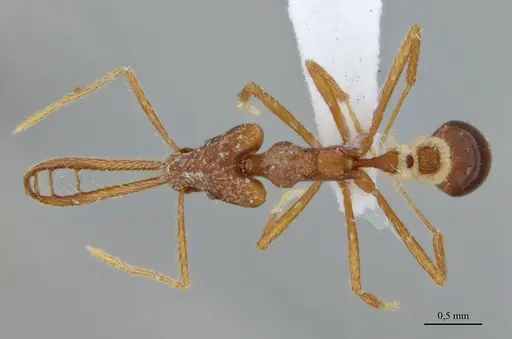
CASENT0900432
View on AntWeb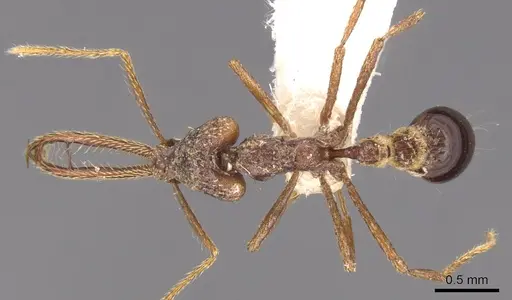
ECOFOG-IT14-0819-32
View on AntWeb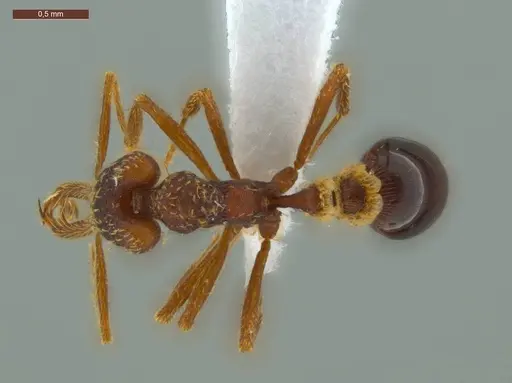
ECOFOG-KR17-0023-19
View on AntWeb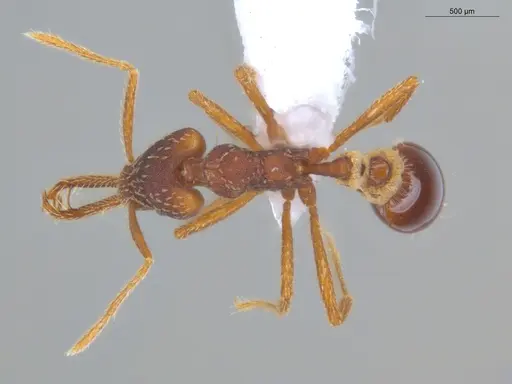
Literature
Loading distribution map...Loading products...