
Strumigenys dextra
- Sci. Name
- Strumigenys dextra
- Tribe
- Attini
- Subfamily
- Myrmicinae
- Author
- Brown, 1954
- Distribution
- Found in 5 countries
Introduction
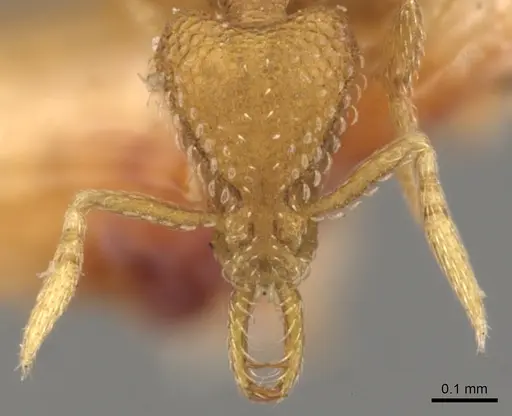
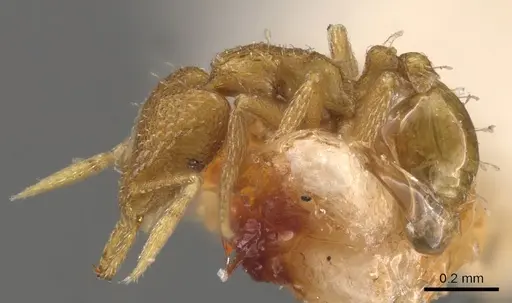
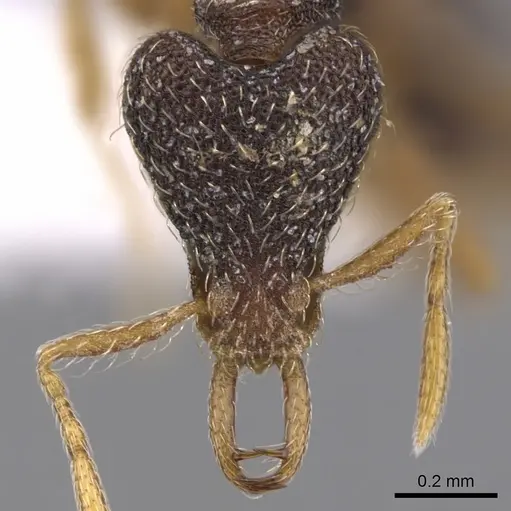
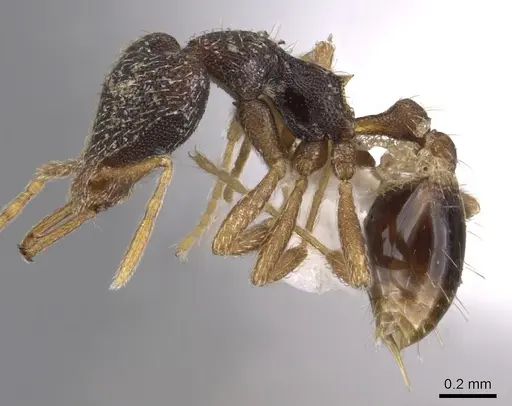
Strumigenys dextra is a tiny ant measuring 1.6–1.8 mm total length, with a dull yellow body and slender, specialized mandibles . It belongs to the subfamily Myrmicinae and the tribe Attini (also placed in Dacetonini) . The species was first described from Uganda in 1954 and is now known from Angola, Cameroon, Central African Republic, Democratic Republic of the Congo, Equatorial Guinea, Gabon, Kenya, and Uganda . It lives exclusively in the leaf litter layer of wet tropical forests, from lowlands (110 m) up to 640 m elevation in Gabon . Their eyes are tiny (3–5 ommatidia), matching their cryptobiotic lifestyle . Like other Strumigenys, they use their slender mandibles to hunt small arthropods in the litter, but specific trapping behavior has not been documented for this species. It is the most widely distributed Strumigenys species at Monts Doudou in Gabon, found across all sampled elevations .
Quick Summary
- Difficulty: Hard
- Origin & Habitat: Wet tropical forests of Central and East Africa. Collected exclusively from leaf litter samples at elevations from 110 m to 640 m, indicating a preference for very humid, shaded microhabitats [2][1].
- Colony Type: Unknown – no published data on social structure or queen number.
- Size & Growth:
- Queen: Undescribed – queens have not been separately documented in the literature [1].
- Worker: 1.6–1.8 mm total length [1].
- Colony: Unknown – no colony size data recorded in available literature.
- Growth: Probably slow, based on their small size and specialized predatory lifestyle (inferred).
- Development: No published observations. Development time is unknown. (No captive data available, all timelines are speculative.)
- Antkeeping:
- Temperature: Based on its wet‑forest habitat, temperatures around 24–28 °C are likely suitable. Provide a gentle gradient by heating one side of the setup [2].
- Humidity: Very high humidity is critical. Keep the nest substrate damp (not waterlogged) and use a closed system (e.g., test tube with water reservoir) to reduce moisture loss [1].
- Diapause: No – occurs in a tropical region without a cold season. No hibernation needed (inferred).
- Nesting: A small test tube with a water reservoir is recommended. The setup must be fully darkened to mimic natural leaf‑litter conditions. Acrylic nests should be avoided due to poor humidity retention and inappropriate chamber size (inferred).
- Behavior: Non‑aggressive, cryptobiotic – workers avoid light and will retreat into hiding when disturbed. Their tiny size (under 2 mm) makes escape prevention absolutely critical. They move slowly compared to larger ants (inferred from genus). Stinging is possible but very unlikely to be noticeable to humans.
- Common Issues: 0.5 mm can be exploited., mold can rapidly overtake the nest if humidity is too high without airflow., specialized diet – they will not accept standard ant foods, live micro‑prey (springtails) is essential., very slow colony growth may test patience., their minute size makes handling and transferring risky.
Housing and Nest Setup
Because the species is only 1.6–1.8 mm long, housing must be scaled accordingly. A small test tube (10 mm diameter or less) with a water reservoir at one end works well for a founding queen or small colony. The tube should be kept horizontal or slightly angled, and covered with a dark cloth to simulate leaf‑litter darkness. For larger colonies, a plaster nest with very small chambers can be used, but it must maintain high humidity without becoming waterlogged. Avoid acrylic nests – they are too dry for this species and have gaps that are too large. Ensure all openings are sealed with fine mesh or cotton, as workers can squeeze through surprisingly tiny gaps (inferred). [2][1]
Feeding and Diet
Strumigenys dextra is a specialized predator that requires live micro‑prey. In the wild it likely hunts springtails, mites, and other minute arthropods in leaf litter. In captivity, the staple food should be live springtails (Collembola). Very small fruit flies or booklice may also be accepted. Dead insects, sugar water, or honey will likely be ignored. Feed every 2–3 days, offering only as much as the colony can consume in a day. Remove uneaten prey after 24 hours to prevent mold (inferred from genus behavior). [1]
Temperature and Humidity
As a wet tropical forest dweller, Strumigenys dextra needs warm, humid conditions. Maintain temperatures around 24–28 °C, with a slight gradient so the colony can choose its preferred spot [2]. Humidity is the most critical factor – the nest must be consistently damp but not waterlogged. Use a water reservoir in the test tube or a humid chamber. Monitor the substrate directly, it should feel damp to the touch. Too dry and the colony will rapidly decline, too wet (standing water) will encourage mold (inferred).
Behavior and Colony Dynamics
Strumigenys dextra workers are slow-moving, cryptobiotic, and non‑aggressive. They will retreat rather than fight. Their primary defense is hiding. They are believed to use their slender mandibles to capture tiny prey, but no specific trap‑jaw behavior has been documented for this species. Colony dynamics, including queen number and communication, have not been studied. Because the species is so poorly known, all behavioral advice is based on inference from related Strumigenys species (inferred). [2][1]
Frequently Asked Questions
Can I keep Strumigenys dextra in a test tube?
Yes, a small test tube setup is the recommended approach for this tiny species, as it provides the high humidity and darkness they need. Use a tube of 10 mm diameter or less with a water reservoir [1].
What do Strumigenys dextra ants eat?
They require live micro‑prey – primarily springtails. They will not accept sugar water, honey, or dead insects. Their tiny size (1.6–1.8 mm) limits them to prey smaller than themselves [1].
How long does it take for Strumigenys dextra to raise first workers?
No published data exist. Development time is unknown and can only be guessed from related species, but there is no reliable estimate.
How big do Strumigenys dextra colonies get?
Unknown – no colony size has ever been reported in the literature. Speculation should be avoided.
Are Strumigenys dextra good for beginners?
No. Their care requirements are poorly understood, they need very high humidity and live micro‑prey, and their tiny size makes escape prevention and handling very difficult. This species is only suitable for experienced keepers with a strong interest in specialized litter‑dwelling ants.
Do Strumigenys dextra need hibernation?
No. They come from a tropical region without cold winters, so they do not require a diapause period. Keep conditions warm year‑round [2].
Why are my Strumigenys dextra dying?
Possible causes include low humidity (most common), lack of live springtails, mold from excessive moisture, or escape. Check that the nest is damp, that only live micro‑prey is offered, and that all openings are sealed [1].
When should I move Strumigenys dextra to a larger nest?
There are no guidelines for this species. In general, only move when the colony has clearly outgrown the current setup and the existing nest is no longer providing adequate space or humidity. Because colony size is unknown, watch for signs of crowding.
Can I keep multiple Strumigenys dextra queens together?
No data are available. It is safest to assume each colony contains only one queen (monogyne) and to not attempt to combine unrelated queens, as this could lead to aggression.
Report an Issue
The current care sheet is based fully on literature. See inconsistencies, or something that's incorrect? Please , it will be resolved after review from an admin. Contributing to the blogs tab also helps providing information, to make us be able to further improve the caresheets. Thank you for your support!
References

This caresheet is licensed under CC BY-SA 4.0 .
Community Blogs
CASENT0355553
View on AntWeb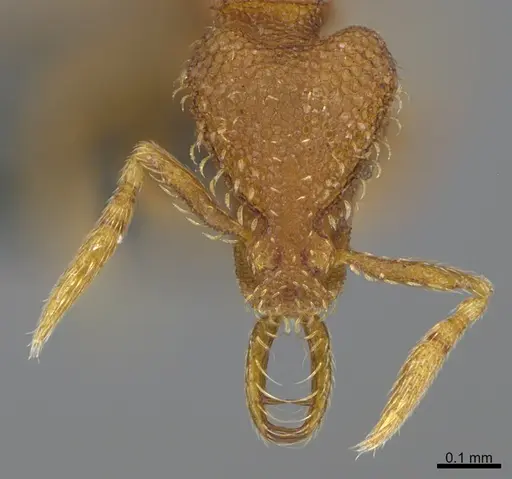
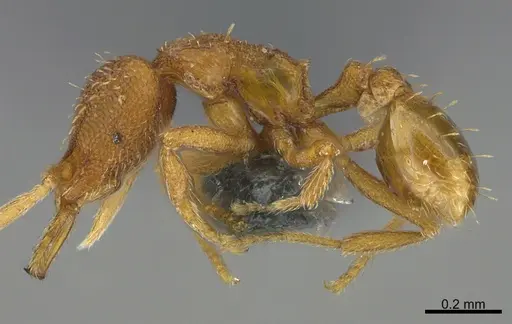
CASENT0763587
View on AntWeb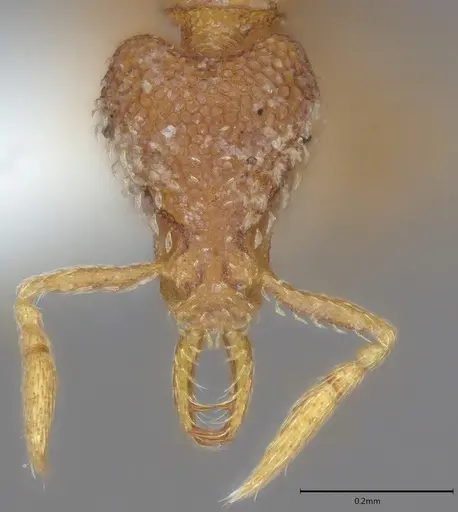
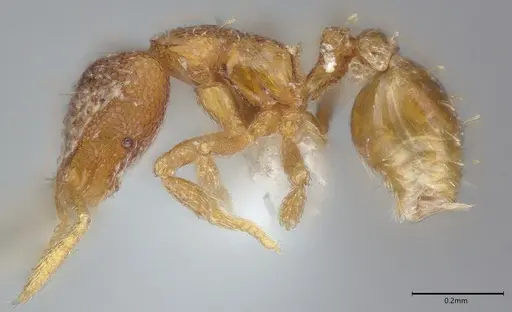
CASENT0900628
View on AntWeb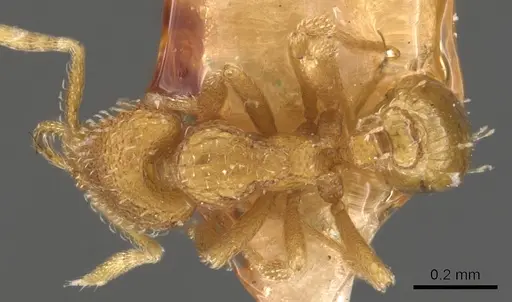
CASENT0900907
View on AntWeb
Literature
Loading distribution map...Loading products...