
Strumigenys dentinasis
- Sci. Name
- Strumigenys dentinasis
- Tribe
- Attini
- Subfamily
- Myrmicinae
- Author
- Kempf, 1960
- Distribution
- Found in 1 countries
Introduction
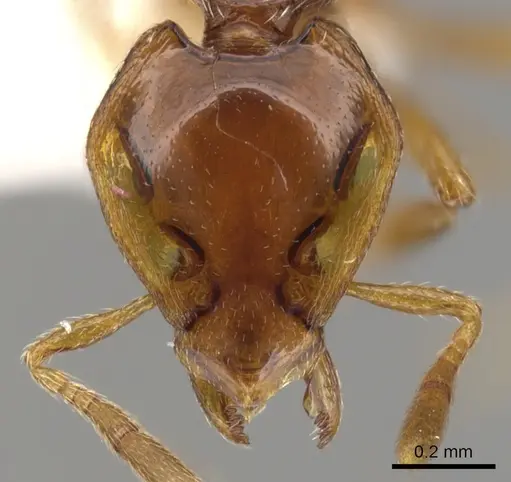
Strumigenys dentinasis is a tiny predatory ant with worker total length of just 2.6-2.8mm . It belongs to the Strumigenys splendens group and is immediately recognizable by a forward-inclined, acute tooth on the front of the head (clypeus) – a feature that gives the species its name . Workers have a smooth, shiny head, sharply angled shoulders, and a spongy lateral lobe on the petiole. Originally described as Gymnomyrmex dentinasis in 1960,it was later moved to Pyramica and then to Strumigenys . This is a rare species known from only a handful of specimens collected in Brazil's Atlantic Forest, specifically from Paraná and São Paulo states, at an elevation of about 1000m . The biology of this ant remains completely unstudied in the scientific literature, so all care advice is inferred from related Strumigenys species.
Quick Summary
- Difficulty: Expert
- Origin & Habitat: Brazil (Paraná, São Paulo) – Atlantic Forest region, collected at approximately 1000m elevation [2]. Likely inhabits leaf litter and rotting wood in humid forest environments, like other Strumigenys.
- Colony Type: Unknown. Most Strumigenys are monogyne (single queen), but this has not been confirmed for S. dentinasis.
- Size & Growth:
- Queen: Undescribed – no queen caste has been documented for this species.
- Worker: 2.6-2.8mm [1]
- Colony: Unknown – based on genus patterns, likely under 200 workers, but no data exists.
- Growth: Unknown – likely slow based on related species, but unconfirmed.
- Development: Unknown – no data exists for this species or most Strumigenys. Expect several weeks at warm temperatures based on genus inference. (All development times are speculative. No direct observations are available.)
- Antkeeping:
- Temperature: Keep at 22-26°C – warm and stable, based on typical Brazilian Atlantic Forest conditions. No species-specific data exists.
- Humidity: High humidity required – keep the nest substrate consistently moist but not waterlogged. These are leaf-litter ants from a humid forest environment.
- Diapause: Likely no true diapause – Brazil's Atlantic Forest does not have harsh winters. Activity may slow during cooler periods, but no induced hibernation needed.
- Nesting: Y-tong (AAC) nests or test tubes with moist substrate work well. Provide tight, small chambers scaled to their tiny size. Naturalistic setups with leaf litter and rotting wood pieces are also appropriate.
- Behavior: Strumigenys are specialized predators that hunt tiny soil arthropods. Workers forage individually or in small groups, moving slowly. They have a functional stinger (subfamily Myrmicinae), but are not aggressive toward humans and rarely sting. Escape prevention is critical due to their very small size – standard mesh may not contain them. Colonies are likely to remain small (dozens to low hundreds of workers).
- Common Issues: extremely small size (2.6mm) means escapes are likely without fine mesh or fluon barriers., no species-specific biological data exists – all care recommendations are speculative., they require a constant supply of live micro-prey (springtails), which can be difficult to maintain., high humidity needs can lead to mold if ventilation is poor., wild-caught colonies may carry parasites that can devastate a small colony.
Housing and Nest Setup
Strumigenys dentinasis are tiny ants (workers 2.6-2.8mm), so they need appropriately scaled housing. Y-tong (AAC) nests with narrow chambers work well, or you can use test tubes with a small cotton reservoir. The key is providing tight spaces – these ants feel secure in snug quarters. Foraging areas should be small and easy for them to navigate. Because of their minute size, escape prevention is critical: use fluon on container rims and ensure any mesh barriers have holes small enough to contain them (standard mesh may still allow escapes). A naturalistic setup with a layer of moist leaf litter and small pieces of rotting wood can mimic their leaf-litter habitat and provide hunting grounds.
Feeding and Diet
Strumigenys are specialized predatory ants. In the wild, they hunt tiny soil-dwelling arthropods, particularly springtails (Collembola) – this is typical for the genus. For captive colonies, your primary food should be live springtails. You can culture your own springtail colonies to ensure a constant supply. Other tiny live prey such as booklice (psocids), grain mites, and small fruit fly larvae may also be accepted. Sugar sources are unlikely to be accepted – Strumigenys are not honeydew feeders. Do not offer standard ant foods like honey or protein mixes, these tiny predators need live prey. Feed small prey items every 2-3 days, adjusting based on colony size and consumption rate. Note: no direct observations exist for this species, so diet is inferred from related Strumigenys.
Temperature and Humidity
Maintain temperatures in the warm range of 22-26°C. Brazilian Atlantic Forest species like S. dentinasis prefer stable warmth without major fluctuations. A heating cable on one side of the nest can create a gentle gradient, but ensure the main nest area stays within range. Humidity is critical – keep the nest substrate consistently moist but not waterlogged. These ants come from humid forest floor environments where moisture is constant. Use a water reservoir connected to the nest or mist regularly, monitoring for condensation and substrate dampness. Poor humidity leads to colony decline and death. These recommendations are based on inferred habitat conditions, not species-specific data.
Behavior and Colony Dynamics
Strumigenys workers are slow, methodical foragers that hunt alone or in small groups rather than forming large raiding parties. They have a functional stinger (typical of Myrmicinae) but are not aggressive toward humans and use it primarily on prey. Queens have not been described for this species, suggesting they may be rare or that colony foundation is claustral (queen seals herself in and raises first workers alone). Colonies likely remain small, typically under a few hundred workers even when mature. Workers’ main defense is staying hidden in the nest. The species is not known to be invasive and poses no ecological threat outside its native range. All behavioral notes are inferred from related species, no direct observations exist for S. dentinasis.
Acquiring and Establishing a Colony
This is one of the most challenging ants to keep because no biological data exists and specimens are extremely rare. If you obtain a colony, it will likely be wild-caught. Quarantine and observe carefully – wild-caught colonies often harbor parasites that can kill them in captivity. Start with a simple test tube setup with moist cotton, placed in a small container with leaf litter for hunting. Do not disturb the colony excessively during the founding or early growth phase. These ants are sensitive to vibration and disturbance. Given the complete lack of species-specific data, be prepared to experiment with conditions and document your observations carefully to contribute to our knowledge of this mysterious ant. Be aware that collecting this species in Brazil may require permits – check local regulations. [3]
Frequently Asked Questions
How long does it take for Strumigenys dentinasis to produce first workers?
The egg-to-worker timeline is unknown for this species. No developmental data exists for any Strumigenys species. Based on typical Myrmicinae development at warm temperatures, expect at least several weeks, but this is pure speculation.
Can I keep Strumigenys dentinasis in a test tube?
Yes, test tubes work well for founding colonies. Use a small test tube with a water reservoir and cotton chamber. Keep the substrate consistently moist and provide a small foraging area. Due to their tiny size (2.6mm), ensure the cotton is packed tightly to prevent escapes.
What do Strumigenys dentinasis eat?
They are specialized predators that need live prey. Feed live springtails (Collembola) as a primary food source – this is typical for the genus. Other tiny live prey like booklice, grain mites, and fruit fly larvae may be accepted. Sugar and honey are unlikely to be eaten. No direct feeding observations exist for this species.
Are Strumigenys dentinasis good for beginners?
No. This is an expert-level species due to several factors: their tiny size requires excellent escape prevention, they need live prey (not convenient ant foods), high humidity must be maintained, and absolutely no species-specific biological data exists to guide care. Beginners should start with easier species like Lasius or Tetramorium.
How big do Strumigenys dentinasis colonies get?
Colony size is unknown but likely remains small – probably under a few hundred workers even in mature colonies, based on genus patterns. No direct data exists.
Do Strumigenys dentinasis need hibernation?
Likely no true hibernation. Brazil's Atlantic Forest does not have harsh winters. Activity may naturally slow during cooler periods, but you do not need to induce a diapause period.
Why are my Strumigenys dentinasis dying?
Common causes include: escape (their tiny size means they can slip through standard barriers), low humidity (they need consistently moist substrate), lack of live prey (they will not survive on sugar or dead food), mold from poor ventilation, and parasites from wild-caught colonies. Review each of these factors.
When should I move Strumigenys dentinasis to a formicarium?
Only move them when the colony is well-established with 20+ workers and the test tube environment is becoming cramped. Strumigenys prefer stable, snug conditions – do not move them prematurely. A small Y-tong nest works well for established colonies.
Can I keep multiple queens together?
This has not been studied for this species. Most Strumigenys are monogyne (single queen), but polygyny has been observed in some related species. Do not attempt combining unrelated queens – the outcome is unpredictable and likely fatal for some individuals.
Report an Issue
The current care sheet is based fully on literature. See inconsistencies, or something that's incorrect? Please , it will be resolved after review from an admin. Contributing to the blogs tab also helps providing information, to make us be able to further improve the caresheets. Thank you for your support!
References

This caresheet is licensed under CC BY-SA 4.0 .
Community Blogs
CASENT0900191
View on AntWeb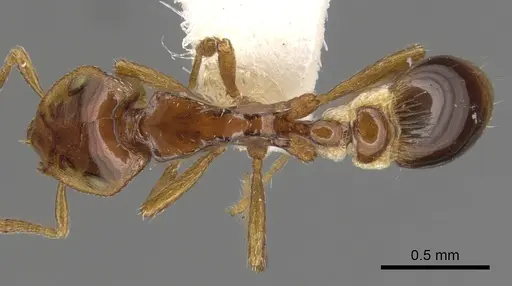

Literature
Loading distribution map...Loading products...