
Strumigenys decollata
- Sci. Name
- Strumigenys decollata
- Tribe
- Attini
- Subfamily
- Myrmicinae
- Author
- Mann, 1919
- Distribution
- Found in 1 countries
Introduction
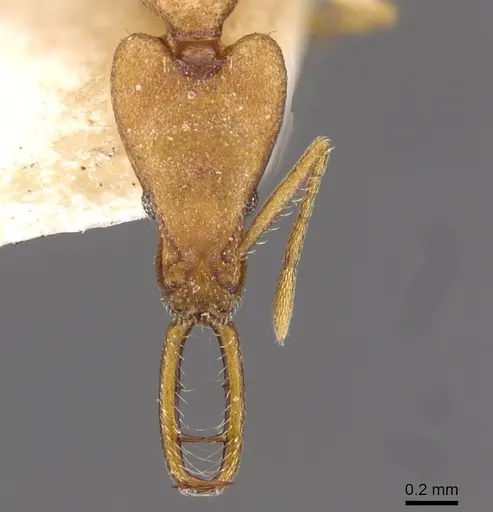
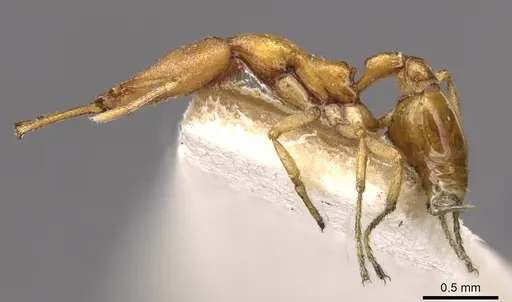
Strumigenys decollata is a small predatory ant species native to the Solomon Islands in the Oceania region . Workers are about 4.2 mm long, making them small but not the tiniest in the genus . They belong to the *decollata* group and are closely related to *Strumigenys praecollata*, but you can tell them apart by the different shape of the petiole and the head sculpture . This species was first recorded from the Solomon Islands in 1919 and has been found on Makira, Guadalcanal, and Ysabel islands . Almost nothing is known about the biology of this species in the wild. Like other *Strumigenys*, they are specialized predators with trap-jaw mandibles that snap shut on tiny prey. They likely live on the forest floor of tropical islands, where it stays warm and humid all year. Their small size and specialized hunting make them interesting to keep, but also challenging because so little is known about their specific needs.
Quick Summary
- Difficulty: Hard
- Origin & Habitat: Solomon Islands (Makira, Guadalcanal, Ysabel) in the Oceania region. They likely inhabit forest floor environments in this tropical island chain [1].
- Colony Type: Unknown, colony structure hasn't been documented for this species. Most *Strumigenys* species have a single queen (monogyne), but that hasn't been confirmed here.
- Size & Growth:
- Queen: Undescribed, the queen caste hasn't been documented in the literature.
- Worker: ~4.2 mm total length (TL) [2]
- Colony: Unknown, no colony size data exists for this species.
- Growth: Unknown, no development data available.
- Development: Unknown, no direct observations. Based on typical *Strumigenys* patterns, expect 6-10 weeks at warm temperatures, but this is an estimate. (No species-specific development data exists. Related *Strumigenys* species often develop slowly due to their specialized predatory lifestyle.)
- Antkeeping:
- Temperature: Aim for 24-28°C, based on their tropical origin. Avoid letting it drop below 22°C. Provide a slight temperature gradient so the ants can choose their comfort zone.
- Humidity: High humidity is needed. Keep the nest substrate consistently moist but not waterlogged. Provide a humidity gradient so workers can move between wetter and drier areas.
- Diapause: Unlikely, this tropical species probably doesn't need a cool rest period. Keep warm year-round.
- Nesting: Provide a small, humid nest with chambers scaled to their tiny size. Y-tong (AAC) or 3D-printed nests work well, avoid acrylic. Use fine mesh (0.5 mm or smaller) on all ventilation to prevent escapes.
- Behavior: *Strumigenys* are specialized predators with trap‑jaw mandibles that snap shut on small prey. Workers forage alone, not in groups. They have a functional stinger (as is typical for Myrmicinae) but it's not medically significant to humans. Their primary defense is to flee. Because they are only 4.2 mm long, escape prevention is critical, they can slip through standard test‑tube setups. Use fine mesh barriers.
- Common Issues: completely unstudied biology means all care is based on genus‑level guesses, species‑specific needs may be different., tiny size (4.2 mm) makes escape prevention hard, standard barriers may not contain them., slow colony growth is typical for specialized predators, patience is essential., no documented colony structure, queen number and social system are unknown., humidity requirements are inferred, not confirmed for this species., they need a constant supply of live micro‑prey, they won't accept sugar water.
Species Overview and Identification
Strumigenys decollata belongs to the ant tribe Attini (the fungus‑growing ant tribe), but Strumigenys themselves are predators and don't grow fungus [2]. The species was first described by William Mann in 1919 from the Solomon Islands [2]. It's part of the decollata group and is closest to Strumigenys praecollata, you can tell them apart by the petiole shape and head sculpture [2]. Workers are about 4.2 mm long (total length) [2]. The species has been recorded from Ysabel, Makira, and Guadalcanal islands [1][3]. Unfortunately, almost nothing else is known about its biology, no colony structure, development, or behavior studies exist.
Housing and Nest Setup
Because workers are only 4.2 mm long, you need top‑notch escape prevention. Use test tubes with tight cotton plugs, or better, a small Y‑tong (AAC) or 3D‑printed nest with chambers suited to their size. Do not use acrylic nests, they don't hold humidity well. Cover all ventilation holes with fine mesh (0.5 mm or smaller). Connect the nest to a humid outworld and provide a small water tube. These ants get most of their moisture from prey, but a drinking source helps. The nest material should hold humidity, Y‑tong or plaster works better than bare acrylic for keeping a moisture gradient.
Feeding and Diet
Like all Strumigenys, this species is a specialized predator. Their trap‑jaw mandibles are built for catching tiny, soft‑bodied prey. Feed them small live prey such as springtails (Collembola), fruit flies (Drosophila), and other micro‑arthropods. They probably won't take sugar water or honey, they are strict carnivores. Offer small prey every 2-3 days, and remove any leftovers to prevent mold. Make sure the prey is small enough, anything much bigger than their head will be ignored.
Temperature and Humidity Requirements
This tropical species needs warmth. Keep the temperature between 24-28°C and avoid letting it drop below 22°C. You can use a heating cable on one side of the nest to create a gradient. Humidity should be high, aim for 70-80% relative humidity in the nest. Keep the substrate moist but not waterlogged. Provide a gradient so workers can choose drier or wetter spots. Poor humidity will quickly stress them, and they may die.
Behavior and Colony Dynamics
Strumigenys are solitary foragers, each worker hunts alone. They use their trap‑jaw mandibles to snap up small arthropods with incredible speed. Colonies are probably small to moderate, as is typical for the genus. Workers are not aggressive and will run away from threats. They have a functional stinger (like most Myrmicinae) but it's not medically significant to humans. Because they come from the tropics, they likely don't need a winter rest period and will stay active all year if kept warm.
Challenges and Common Problems
The biggest challenge is that we know almost nothing about Strumigenys decollata specifically. All care advice is based on what works for other Strumigenys and may not be perfect. Their tiny size makes escapes a constant risk, check all barriers regularly. Slow growth is normal for specialized predators, so be patient. Wild‑caught colonies may carry mites or parasites that can kill a small colony, quarantine new finds. Never combine this species with any other ant.
Frequently Asked Questions
How long does it take for Strumigenys decollata to produce first workers?
The egg‑to‑worker time is unknown for this species. Based on other Strumigenys, expect about 6-10 weeks at 26°C, but that's a guess.
What do Strumigenys decollata ants eat?
They are specialized predators. Feed them small live prey like springtails, fruit flies, and other micro‑arthropods. They won't take sugar or honey.
Can I keep Strumigenys decollata in a test tube?
Yes, but escape prevention is critical because they are so small. Use a tight cotton plug and consider adding a ring of fluon or PTFE. Monitor for escapes regularly.
What temperature do Strumigenys decollata need?
Keep them warm at 24-28°C. As a tropical Solomon Islands species, they can't handle cool temperatures. Provide a slight gradient.
Are Strumigenys decollata good for beginners?
No. This is an expert‑level species because we know so little about its biology, they need constant live prey, they are tiny escape artists, and they require high humidity. Not recommended for beginners.
Do Strumigenys decollata need hibernation?
No. As a tropical species, they don't need a diapause period. Keep them warm all year round.
How big do Strumigenys decollata colonies get?
Colony size is unknown. Based on other Strumigenys, colonies are probably small, likely under a few hundred workers.
Why are my Strumigenys decollata dying?
Common causes: low humidity (aim for 70-80%), temperature below 22°C, escapes, starvation (they need live prey), or stress from handling. Double‑check all your settings and make sure they are catching prey.
Can I keep multiple queens together?
Colony structure is unconfirmed, so it's not recommended. Most Strumigenys are single‑queen (monogyne). Combining unrelated queens could lead to fighting.
When should I move Strumigenys decollata to a formicarium?
Wait until the colony has at least 20-30 workers and is actively foraging. Test tubes can work long‑term if humidity is managed. Move only when the tube gets overcrowded.
Is Strumigenys decollata aggressive?
No, they are not aggressive toward humans. They are small, solitary hunters that flee from threats. They are harmless to keepers.
Report an Issue
The current care sheet is based fully on literature. See inconsistencies, or something that's incorrect? Please , it will be resolved after review from an admin. Contributing to the blogs tab also helps providing information, to make us be able to further improve the caresheets. Thank you for your support!
References

This caresheet is licensed under CC BY-SA 4.0 .
Community Blogs
CASENT0909306
View on AntWeb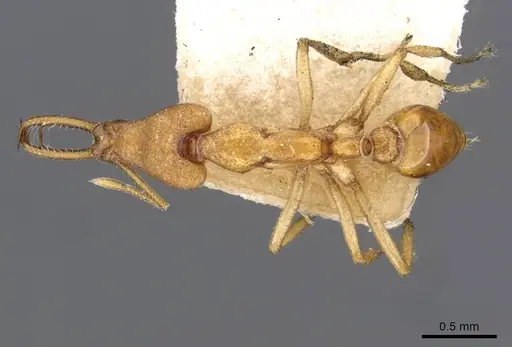
Literature
Loading distribution map...Loading products...