
Strumigenys dapsilis
- Sci. Name
- Strumigenys dapsilis
- Tribe
- Attini
- Subfamily
- Myrmicinae
- Author
- Bolton, 2000
- Distribution
- Found in 1 countries
Introduction
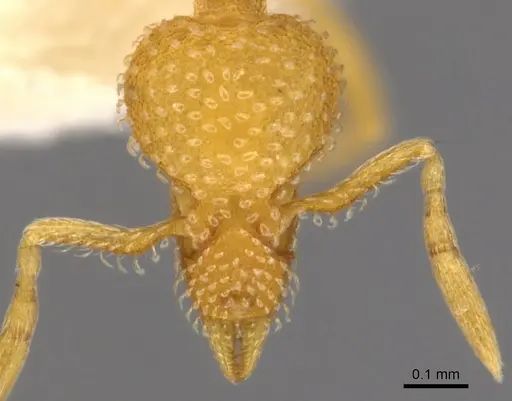
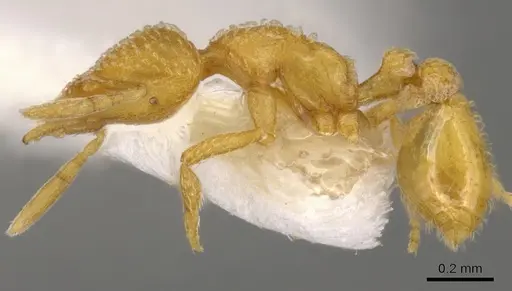
Strumigenys dapsilis is a tiny ant measuring just 1.8 mm in total length . Workers have a distinctive look: long slender scapes (antenna bases), minute eyes made of only 1-2 light-sensitive cells, and mandibles with a unique gap (diastema) and specialized teeth. The head and alitrunk (thorax) are nearly bare of standing hairs, but the postpetiole (second waist segment) is covered in dense curved spoon-shaped hairs. This species belongs to the Strumigenys schulzi group and is only known from Brazil's Atlantic Forest, specifically in São Paulo state (Boracéia Biological Station) and Santa Catarina . The genus Strumigenys is famous for its trap‑jaw mechanism – these ants can snap their mandibles shut at extreme speeds to catch prey. While the exact behavior of S. dapsilis hasn't been studied, other members of the genus are specialized predators that hunt small soil arthropods like springtails and mites. That makes them fascinating but tough to keep: you'll need a steady supply of live micro‑prey and carefully controlled humidity. This is an expert‑level species.
Quick Summary
- Difficulty: Expert
- Origin & Habitat: Brazil – Atlantic Forest in São Paulo state (Salesópolis, Boracéia Biological Station) and also recorded from Santa Catarina (São Bento do Sul) [2][3]. This is a tropical rainforest habitat with high humidity and warm, stable temperatures year‑round.
- Colony Type: Colony structure is unconfirmed. Based on typical Strumigenys patterns, colonies are probably monogyne (single queen) and small. No data on ergatoid (worker‑like) replacement queens exists for this species.
- Size & Growth:
- Queen: No queen caste has been described for this species – size unknown.
- Worker: 1.8 mm total length (TL) [1]
- Colony: Likely small – typical Strumigenys colonies reach dozens to a few hundred workers, not thousands.
- Growth: Slow – inferred from small colony sizes and tropical distribution.
- Development: Unconfirmed – no direct data exists. Based on related Strumigenys species, estimate 6–10 weeks at warm temperatures (≈26°C). (Development time is not confirmed for this species. The estimate comes from genus‑level patterns for tropical Strumigenys.)
- Antkeeping:
- Temperature: Keep at 24–28°C – these are tropical ants from Brazil's Atlantic Forest that need stable warmth. Provide a gentle heat gradient so they can choose their preferred spot. Avoid letting any part go above 30°C [1].
- Humidity: High humidity is essential – think damp forest floor. Keep the nest substrate consistently moist but not waterlogged. Use a water tube or enclosed setup to hold moisture. Ventilation must be present to prevent mold [1].
- Diapause: No – as a tropical species from Brazil, they do not need hibernation. Keep warm year‑round.
- Nesting: These tiny ants do best in small, tight chambers. Use Y‑tong (AAC) nests, plaster nests, or naturalistic soil setups with leaf litter. A test tube with cotton works for founding if placed inside a humid enclosure. Never use acrylic nests – they don't hold humidity well and are hard to escape‑proof for such small ants [1].
- Behavior: These are specialized predators with a trap‑jaw mechanism that allows them to strike prey extremely fast. They probably hunt and forage alone or in small groups, not in mass raids. Workers are tiny (1.8 mm) and can slip through very small gaps – excellent escape prevention is critical. They aren't aggressive toward keepers, but their size makes them hard to handle. Based on genus behavior, they likely hunt springtails, mites, and other micro‑arthropods in soil litter [1].
- Common Issues: escape prevention is critical due to their tiny 1.8 mm size – they can squeeze through standard barrier gaps, so use tight seals and smooth barriers., no biological data exists for this specific species – keepers must rely on genus‑level guesses for care., they require live micro‑prey (springtails, mites), which can be difficult to culture and must be maintained separately., high humidity needs can lead to mold problems if ventilation is poor – balance moisture with airflow., slow growth and small colony sizes mean these ants remain fragile for extended periods, making them unsuitable for impatient keepers.
Housing and Nest Setup
Strumigenys dapsilis is extremely small, so you need housing scaled to their size. For founding, a small test tube setup works if placed inside a humid enclosure (like a plastic storage box). For established colonies, use a small Y‑tong (AAC) nest, a plaster nest, or a naturalistic setup with moist soil and leaf litter. The key requirements are: high humidity retention, small chambers (a few times the worker size), and a water source (test tube with cotton or built‑in reservoir). Avoid large open spaces where these tiny ants can get lost or separated from the colony. Escape prevention must be excellent – they can slip through gaps you’d think impossible. Check all openings and use fine mesh or smooth barriers [1].
Feeding and Diet
Strumigenys ants are specialized predators with trap‑jaw mandibles built for catching small, fast prey. In captivity, their main food should be live springtails – they are the perfect size and movement to trigger hunting. Other acceptable micro‑prey include small soil mites, booklice (psocids), and tiny fruit flies. Sugar sources (honey, sugar water) are NOT a natural part of their diet – they are predators, not honeydew feeders. Feed live prey 2–3 times a week and remove any leftovers after 24 hours to prevent mold. The biggest challenge is keeping a steady culture of micro‑prey, so start your springtail culture before getting the ants [1].
Temperature and Humidity Requirements
As a tropical species from Brazil's Atlantic Forest, Strumigenys dapsilis needs warm, humid conditions all year. Aim for 24–28°C with only small changes. Placing a heating cable on one side of the nest creates a gentle gradient – just don't let the warm side exceed 30°C. Humidity should be high: the substrate should feel damp (not soaked) and you should provide a water tube or moist area. Keep the nest in an enclosed space to hold moisture, but allow some airflow to stop mold. Don't put the setup near air conditioning vents or drafty windows. Unlike temperate ants, they do not need any cooling or hibernation period [1].
Understanding the Challenge
This is an expert‑level species. Here’s why: absolutely no specific biological data exists for Strumigenys dapsilis – everything we know about their care comes from general Strumigenys husbandry. They need live micro‑prey (springtails, mites) that you must culture separately. Their tiny 1.8 mm size makes escapes likely and handling difficult. Growth is slow, so colonies stay fragile for months or years. And the high humidity they require creates a constant risk of mold. If you’re determined to try, start by establishing a springtail culture, then get your colony. Expect a steep learning curve and be prepared for losses – that’s normal when pioneering a rarely‑kept species [1].
Frequently Asked Questions
How long does it take for Strumigenys dapsilis to produce first workers?
The egg‑to‑worker time is unconfirmed for this species. Based on typical Strumigenys development, expect 6–10 weeks at warm temperatures (around 26°C). This is a rough estimate – actual time could vary. Keep conditions stable and provide plenty of live prey [1].
Can I keep Strumigenys dapsilis in a test tube?
Yes, test tubes work for founding, but you must keep them inside a humid enclosure (like a plastic box) to stop the tube drying out. Place a second tube with water and cotton in the enclosure to maintain humidity, and add a secure escape barrier (e.g., fluon or oil) on the tube the ants live in [1].
What do Strumigenys dapsilis ants eat?
They are specialized predators that need live micro‑prey. Their main food should be live springtails – these are the right size to trigger their trap‑jaw strike. They also accept small soil mites, booklice, and tiny fruit flies. They do not feed on sugar or honey – they are predators, not honeydew feeders [1].
Are Strumigenys dapsilis good for beginners?
No – this is an expert‑level species. There is no biological data for this specific ant, they require live micro‑prey cultures, their tiny size makes escape easy, and they need carefully maintained warm, humid conditions. Beginners should start with more documented species like Lasius niger, Camponotus, or Messor [1].
How big do Strumigenys dapsilis colonies get?
Colony size is unconfirmed for this species, but based on typical Strumigenys patterns, colonies likely reach dozens to a few hundred workers – not thousands. They stay small even when mature. This is normal for the genus [1].
Do Strumigenys dapsilis need hibernation?
No – they are a tropical species from Brazil's Atlantic Forest, so they do not need any hibernation or diapause. Keep them warm year‑round at 24–28°C. Cooling them can harm or kill the colony [1].
Why are my Strumigenys dapsilis dying?
Common causes include: escape (they are tiny and squeeze through gaps), drying out (they need high humidity), mold from too much moisture with poor airflow, starvation (they need live prey, not dead insects or sugar), and temperature stress (they need warmth, not room temperature). Check each factor and adjust [1].
When should I move my colony to a formicarium?
Wait until the colony has a good number of workers (at least 20–30) and is actively foraging. For Strumigenys, this may take many months. Moving too early can stress them. A small Y‑tong (AAC) or plaster nest works well once they outgrow the test tube [1].
Can I keep multiple Strumigenys dapsilis queens together?
This is unconfirmed for this species. Strumigenys colony structures vary – some are single‑queen, some have multiple queens. Unless you observe multiple queens living together peacefully in an established colony, keep them separate. Combining unrelated queens is risky and not recommended [1].
Report an Issue
The current care sheet is based fully on literature. See inconsistencies, or something that's incorrect? Please , it will be resolved after review from an admin. Contributing to the blogs tab also helps providing information, to make us be able to further improve the caresheets. Thank you for your support!
References

This caresheet is licensed under CC BY-SA 4.0 .
Community Blogs
CASENT0900218
View on AntWeb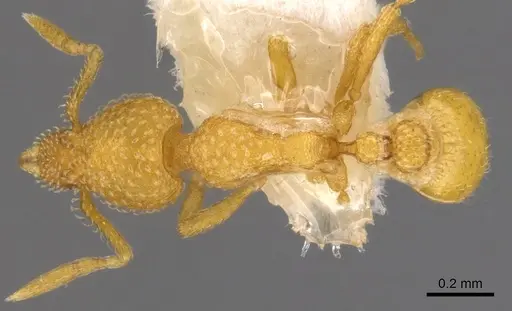
Literature
Loading distribution map...Loading products...