
Strumigenys coveri
- Sci. Name
- Strumigenys coveri
- Tribe
- Attini
- Subfamily
- Myrmicinae
- Author
- Fisher, 2000
- Distribution
- Found in 1 countries
Introduction
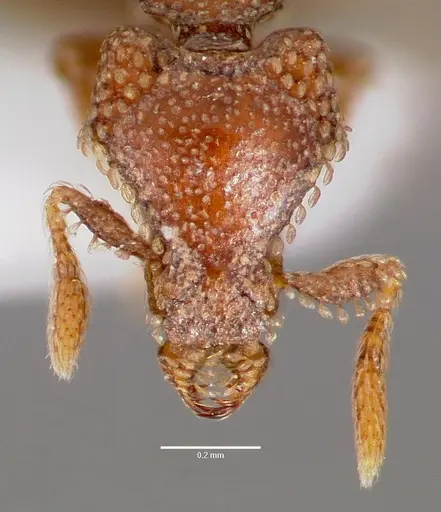
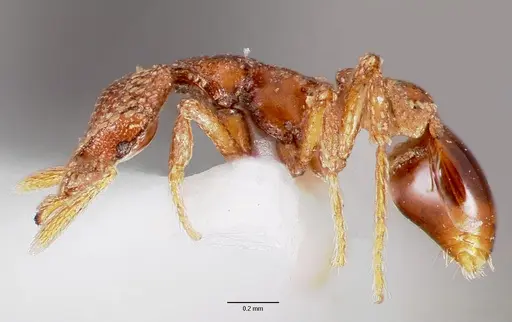
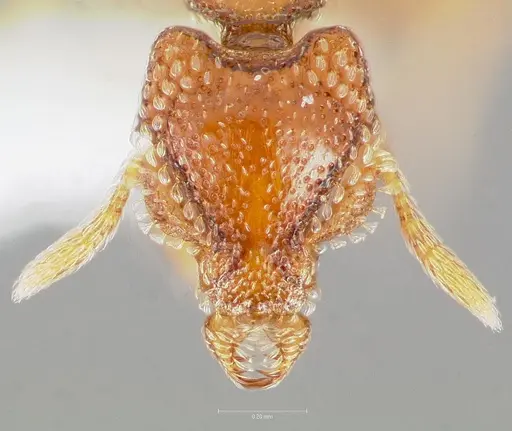
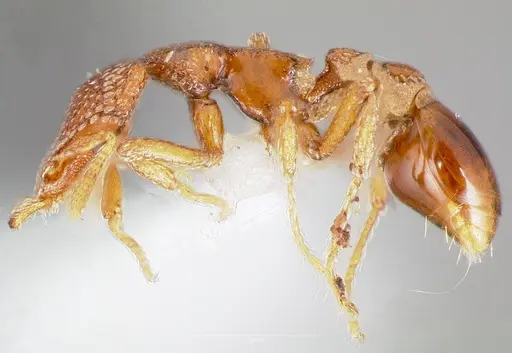
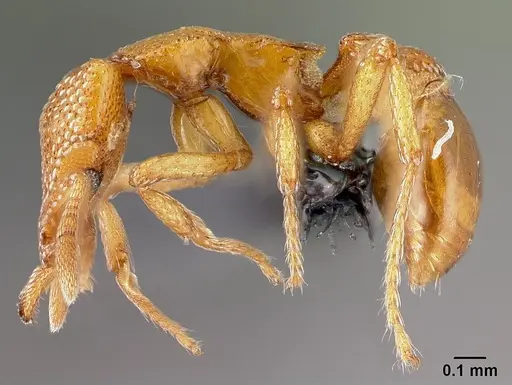
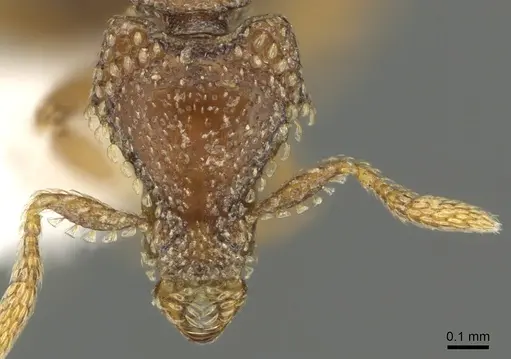
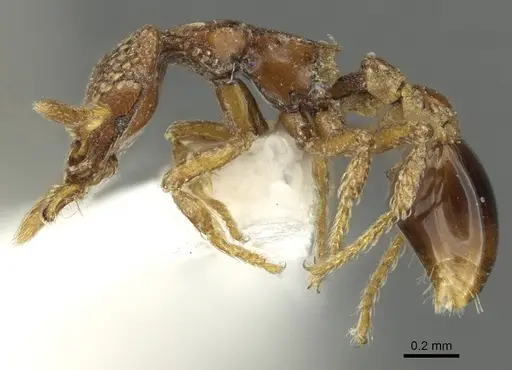
Strumigenys coveri is a tiny ant species from Madagascar, with workers measuring 2.4 mm in total length . It was first described in 2000 based on worker specimens . The worker has a smooth postpetiole disc, weakly developed basigastral costulae (fine ridges near the abdomen tip), and no standing hairs on the dorsal body surface . This species is only known from lowland rainforest in northeastern Madagascar, where it lives in rotting logs and leaf litter . As a member of the genus Strumigenys, it is a specialized predator of small arthropods, using its elongated mandibles to capture prey.
Quick Summary
- Difficulty: Expert
- Origin & Habitat: Northeastern Madagascar, lowland rainforest at around 125 m elevation. Found in rotting logs and leaf litter samples [1].
- Colony Type: Unconfirmed. Most Strumigenys species are monogyne (single queen), but no direct data exists for this species.
- Size & Growth:
- Queen: Undescribed, queens have not been formally documented [1]
- Worker: 2.4 mm total length [1]
- Colony: Unknown, no published data
- Growth: Unknown (likely slow, based on related Strumigenys)
- Development: Unknown, no data available for this species (Development time is completely unstudied. Keepers must rely on general Strumigenys patterns, which suggest slow growth.)
- Antkeeping:
- Temperature: Unknown for this species. As a tropical rainforest ant, it likely needs stable warm conditions, roughly 22-26°C. Provide a temperature gradient for self-regulation.
- Humidity: High humidity is essential (from its rainforest habitat). Keep nest substrate consistently moist but not waterlogged. In test tubes, ensure a large water reservoir.
- Diapause: No, this is a tropical species with no winter rest period. Keep warm year-round.
- Nesting: Prefers tight, dark spaces similar to rotting wood or leaf litter. Y-tong, plaster, or soil nests work well if kept moist and dark. Avoid large open chambers.
- Behavior: Specialized predator of tiny arthropods. Has a functional sting, but it is not medically significant to humans (weak venom). Extremely small (2.4 mm), so escape through tiny gaps is a high risk. Skittish and easily stressed by disturbances or bright light. Does not tend aphids or collect honeydew, requires live prey.
- Common Issues: escape prevention is critical, workers can squeeze through gaps smaller than 0.5 mm, specialized diet, they need live springtails or similar tiny prey, will not accept standard ant foods, humidity drops cause rapid colony decline, consistently moist conditions are mandatory, slow growth and small colony size mean long wait times and low tolerance for stress, wild-caught colonies may carry parasites or be already stressed
Housing and Escape Prevention
Due to their extreme small size (2.4 mm), Strumigenys coveri can escape through gaps as small as 0.3-0.5 mm. High-quality nests with tight seals are essential. Use Y-tong (AAC) or plaster nests with fine mesh (≤0.25 mm holes) over ventilation. Apply fluon or similar barriers to all outworld edges. Test tubes work for small colonies: use multiple layers of cotton to prevent escape through the water end. Keep the nest dark by covering three sides, as these ants prefer dim conditions [1].
Feeding and Diet
Strumigenys coveri is an obligate predator of small live arthropods. In the wild, it hunts springtails (Collembola), mites, and other micro-invertebrates in leaf litter. In captivity, the primary food should be live springtails, which can be cultured separately. Other suitable prey includes freshly killed fruit flies (Drosophila), tiny isopods, and psyllids. Do not offer honey, sugar water, or standard ant protein mixes, they will not accept them. Feed small amounts every 2-3 days and remove uneaten prey after 24 hours to prevent mold. The workers hunt individually, using their mandibles to capture prey.
Temperature and Humidity
As a tropical rainforest species, S. coveri requires warm, humid conditions year-round. While specific data is lacking, maintain temperatures in the 22-26°C range. Avoid temperatures below 20°C or above 28°C. A heating cable on one side can create a gradient. Humidity is critical: keep the nest substrate consistently moist but not waterlogged. For test tubes, a large water reservoir helps maintain humidity for 1-2 weeks. For naturalistic setups, mist regularly and use moisture-retaining substrates. Drops in humidity cause rapid decline, workers become sluggish and brood development stops.
Colony Establishment
Starting a colony of S. coveri is challenging because so little is known about its founding biology. If you obtain a queen, assume claustral founding (sealed chamber, no feeding until first workers). Keep the founding tube dark, humid, and undisturbed. The queen will lay a few eggs, do not offer food until nanitics appear. Once workers emerge, begin offering live springtails. Growth is expected to be very slow, it may take 6-12 months to reach 20-30 workers if conditions are ideal. Wild-caught colonies may already be stressed, quarantine new colonies for 2-3 weeks before exposing them to your main ant collection.
Behavior and Temperament
Workers are solitary foragers that hunt individually through substrate, not in trails. They are not aggressive toward humans and their sting is weak (no medical significance). However, they are extremely skittish: bright light, vibrations, or dry air can cause brood abandonment and colony decline. They prefer tight, dark nesting spaces and may relocate if conditions are not ideal. Communication is chemical, but visible recruitment behavior is minimal. Their small size and cryptic habits make them difficult to observe but rewarding for patient keepers.
Frequently Asked Questions
Can I keep Strumigenys coveri in a test tube?
Yes, test tubes work well for small colonies. Use a narrow tube (≤15 mm diameter) with a water reservoir. Pack cotton tightly to prevent escape. Keep the tube dark and humid. Transfer to a larger nest only when the colony has 30+ workers.
What do Strumigenys coveri ants eat?
They only eat live tiny prey, mainly springtails, fruit flies, and mites. They will not accept honey, sugar, or dead protein. If you cannot provide live prey, this species is not suitable for you.
How long does it take for Strumigenys coveri to produce first workers?
Unknown for this species. Based on related Strumigenys, it likely takes 8-12 weeks from egg to worker at optimal warmth (24-26°C), but this is an estimate. Growth is slow overall.
Are Strumigenys coveri good for beginners?
No, this is an expert-level species. Their tiny size, specialized diet, high humidity needs, and slow growth make them unsuitable for beginners. Start with more forgiving species like Lasius or Camponotus.
Do Strumigenys coveri need hibernation?
No, they are tropical ants from Madagascar and do not need hibernation. Keep them warm year-round (22-26°C). Temperatures below 20°C can be harmful.
Why are my Strumigenys coveri dying?
Common causes: humidity too low (quick death), temperature too cold or hot, wrong food (they starve on honey/sugar), stress from disturbance or bright light, or escape. Wild-caught colonies may also carry parasites.
How big do Strumigenys coveri colonies get?
Unknown for this species. Related Strumigenys typically form small colonies of 50-200 workers, but S. coveri might have even smaller colonies. There is no published data.
When should I move Strumigenys coveri to a formicarium?
Wait until the colony has at least 30-50 workers and the test tube is becoming cramped. These ants prefer tight spaces, so do not move them too early. Use a small Y-tong or plaster nest that can maintain high humidity.
Can I keep multiple Strumigenys coveri queens together?
Not recommended, there is no evidence that this species is polygynous. Combining unrelated queens typically results in fighting. If you find a multi-queen colony in the wild, keep them together only if they appear cooperative.
Report an Issue
The current care sheet is based fully on literature. See inconsistencies, or something that's incorrect? Please , it will be resolved after review from an admin. Contributing to the blogs tab also helps providing information, to make us be able to further improve the caresheets. Thank you for your support!
References

This caresheet is licensed under CC BY-SA 4.0 .
Community Blogs
CASENT0003240
View on AntWeb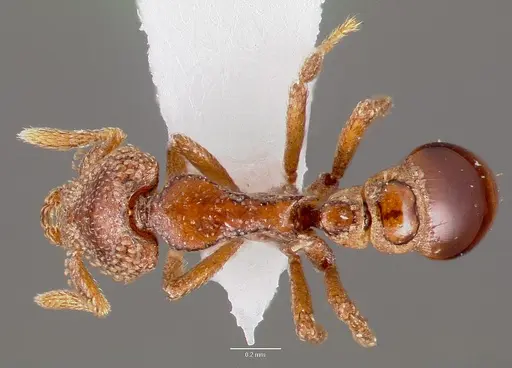
CASENT0005893
View on AntWeb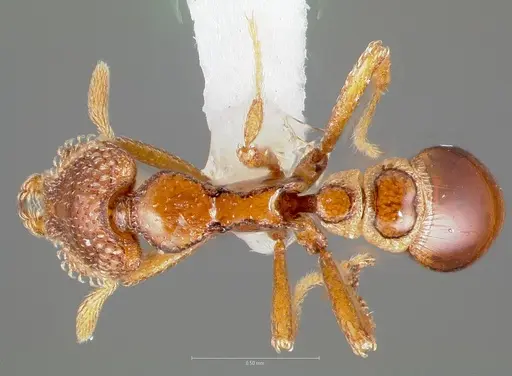
CASENT0153050
View on AntWeb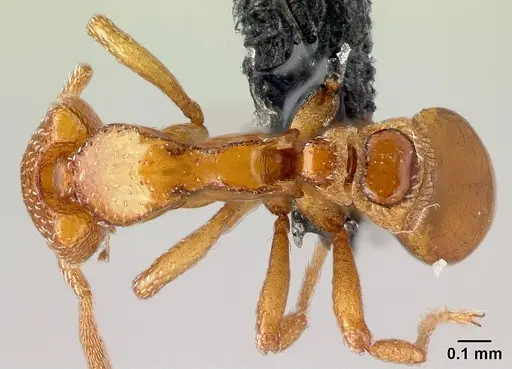
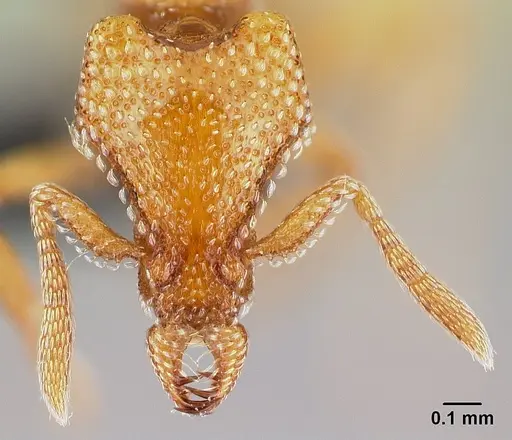
CASENT0900690
View on AntWeb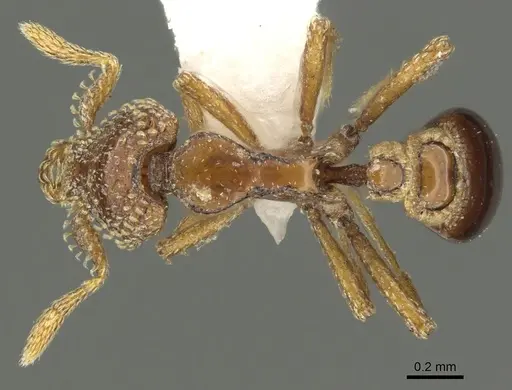
Literature
Loading distribution map...Loading products...