
Strumigenys chernovi
- Sci. Name
- Strumigenys chernovi
- Tribe
- Attini
- Subfamily
- Myrmicinae
- Author
- Dlussky, 1993
- Distribution
- Found in 1 countries
Introduction
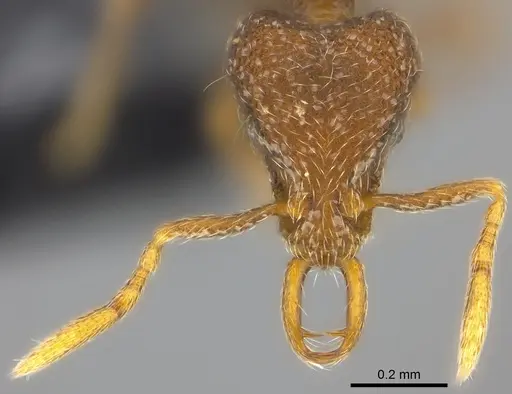
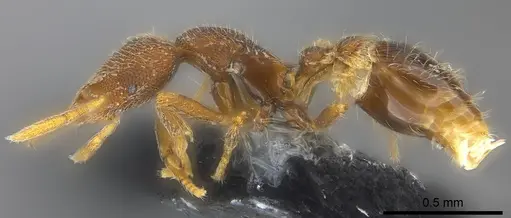
Strumigenys chernovi is a tiny trap-jaw ant endemic to the Fiji Islands. Workers measure 2.0-2.4 mm (TL), making them among the smallest ants in the genus . They are reddish-brown with long, slender mandibles and fine, flexible hairs (filiform to flagellate) on the scrobe margin, pronotal humeri, and hind basitarsus . A key feature is the contrast between the finely punctate head, mesosoma, and waist segments and the glassy smooth propodeal dorsum . The gastral sculpture extends about halfway down the first tergite . This species belongs to the smythiesii complex and is widespread across most major Fijian islands except Kadavu and Taveuni .
Quick Summary
- Difficulty: Hard
- Origin & Habitat: Endemic to Fiji. Found in lowland forest habitats on Gau, Koro, Ovalau, Vanua Levu, and Viti Levu [4][3]. Absent from Kadavu and Taveuni [3]. In leaf litter samples, it occurs at low frequency (0.006 overall,0.013 in forests) [5].
- Colony Type: Unconfirmed. Based on typical Strumigenys patterns, colonies are likely monogyne (single queen) and small.
- Size & Growth:
- Queen: Not described in detail, workers are 2.0-2.4 mm [1][2], queens are likely slightly larger.
- Worker: 2.0-2.4 mm [1][2]
- Colony: Unknown, Strumigenys colonies are typically modest, but no specific data exist for this species.
- Growth: Unknown, probably slow given tiny size and low population density in the wild [5].
- Development: Unknown, estimated 6-10 weeks at optimal tropical temperatures based on similar species. (No development data exists for this species. Keep warm and humid to support growth.)
- Antkeeping:
- Temperature: Tropical lowland origin [4] suggests 24-28°C. Avoid drops below 22°C. A gentle gradient is beneficial.
- Humidity: High humidity required, think damp forest floor. Keep substrate consistently moist but not waterlogged. Tiny ants desiccate quickly.
- Diapause: Unlikely, tropical equatorial species, maintain warm conditions year-round.
- Nesting: Use small, dark chambers scaled to their 2 mm size. Y-tong (AAC) or plaster nests work well. Test tubes are fine for founding.
- Behavior: These ants are shy and non-aggressive. They have a functional stinger (subfamily Myrmicinae, tribe Attini) but rarely use it on humans, they prefer to flee. Their trap-jaw mandibles are specialized for catching springtails. Escape prevention is critical due to tiny size.
- Common Issues: escape prevention is critical, at 2 mm, they can slip through standard mesh and tiny gaps, specialized diet, they require live springtails or other micro-prey, prepared foods are rarely accepted, desiccation risk, they dry out fast if humidity drops, slow or unknown growth, keepers may need patience, high humidity must be balanced with ventilation to prevent mold
Housing and Escape Prevention
Because workers are only 2.0-2.4 mm [1][2], standard ant keepers' equipment often has gaps they can squeeze through. Use Y-tong (AAC) or plaster nests with tight seals, or small test-tube setups with a cotton plug and additional barrier of fluon or PTFE. The outworld must be likewise sealed, silicone all tubing connections. Even a tiny gap means the whole colony can vanish. Keep the nest dark, as they prefer concealed spaces.
Feeding and Diet
Strumigenys are specialized predators of small arthropods. In captivity, the staple should be live springtails (Collembola). They may also accept booklice, fruit flies (Drosophila), or very small isopods, but springtails best match their natural prey. Provide live food several times a week. Do not rely on sugar water or solid sugars, these ants are strict predators. Remove uneaten prey after 24 hours to prevent mold. A reliable springtail culture is essential for long-term success.
Temperature and Humidity
This species comes from lowland Fijian forests [4], so keep them warm and damp year-round. Maintain 24-28°C, avoid prolonged drops below 22°C. Use a heat mat on one side for a gradient. Humidity should be very high, the nesting substrate should feel damp but not dripping. Cover part of the outworld to retain moisture, but leave a small vent for air exchange. These ants desiccate extremely fast in dry air.
Behavior and Temperament
Strumigenys chernovi is a shy, cryptic ant that avoids confrontation. It has a functional sting (as do all Myrmicinae) but does not use it aggressively toward humans. When disturbed, they flee into tight spaces. Their trap-jaw mandibles are for snatching springtails, not defense. Workers move slowly and spend most time foraging in the leaf litter layer. Colonies remain small and inconspicuous. Their tiny size makes them fascinating to watch but difficult to observe.
Colony Establishment
Founding behavior is unconfirmed. If you acquire a queen, place her in a small test tube with moist cotton and a dark cover. Do not disturb for several weeks. The first nanitic workers will be even smaller than usual. Feed them with very small springtails. Growth is slow, and colony size likely stays modest. In the wild this species is rare (frequency 0.006 [5]), suggesting colonies are not large. Patience is key.
Frequently Asked Questions
How long does it take for Strumigenys chernovi to produce first workers?
Exact timeline is unknown. Based on similar tiny Strumigenys, expect 6-10 weeks from egg to worker at 24-28°C.
What do Strumigenys chernovi ants eat?
They are specialized predators of live micro-arthropods. The best food is springtails (Collembola). They may also accept small fruit flies or booklice. They do not eat sugar or seeds.
Are Strumigenys chernovi good for beginners?
No. They are rated Hard because of their tiny size (escape risk), specialized live food, and high humidity needs. Not recommended for first-time ant keepers.
How big do Strumigenys chernovi colonies get?
Unknown. In the wild they are rare (frequency 0.006 in litter samples [5]), suggesting small colonies, but no specific size data exist.
Do Strumigenys chernovi need hibernation?
No, they are tropical and do not require a diapause period. Keep warm year-round.
Can I keep Strumigenys chernovi in a test tube?
Yes. A test tube with moist cotton and a dark wrapper works well for founding and small colonies. Ensure the cotton is packed tightly to prevent escapes, these 2 mm ants can squeeze through loose fibers.
Why are my Strumigenys chernovi dying?
Common causes: desiccation (low humidity), starvation (lack of live prey), escape (tiny gaps), mold from poor ventilation, or sudden temperature drops. Check humidity, diet, and seals.
Where is Strumigenys chernovi found in the wild?
It is endemic to Fiji, recorded on Gau, Koro, Ovalau, Vanua Levu, and Viti Levu. It is absent from Kadavu and Taveuni [3][2]. It lives in lowland forest leaf litter [4][5].
Report an Issue
The current care sheet is based fully on literature. See inconsistencies, or something that's incorrect? Please , it will be resolved after review from an admin. Contributing to the blogs tab also helps providing information, to make us be able to further improve the caresheets. Thank you for your support!
References

This caresheet is licensed under CC BY-SA 4.0 .
Community Blogs
CASENT0184914
View on AntWeb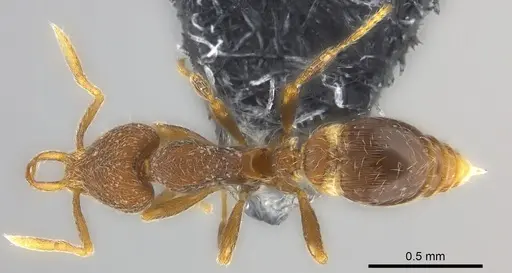
Literature
Loading distribution map...Loading products...