
Strumigenys cassicuspis
- Sci. Name
- Strumigenys cassicuspis
- Tribe
- Attini
- Subfamily
- Myrmicinae
- Author
- Bolton, 2000
- Distribution
- Found in 4 countries
Introduction
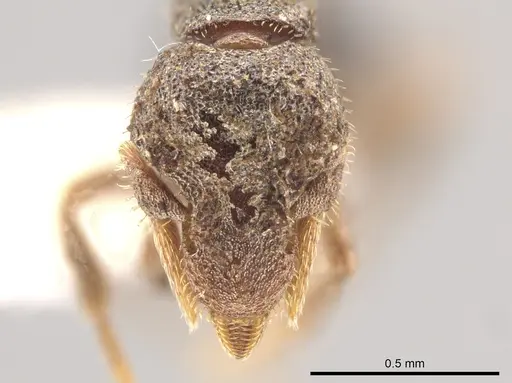
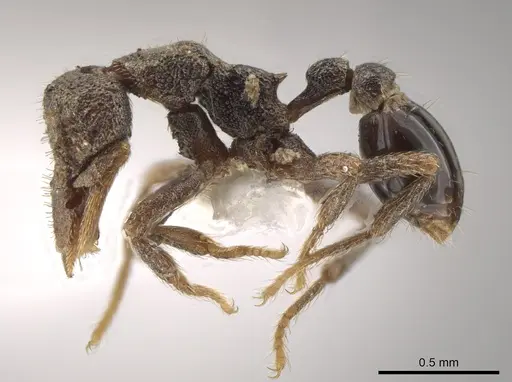
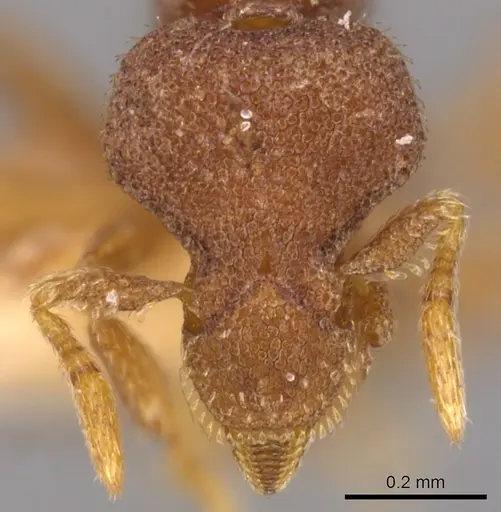
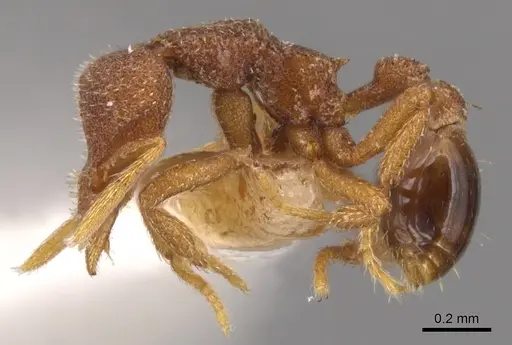
Strumigenys cassicuspis is a tiny predatory ant, with workers measuring just 2.1-2.3 mm in total length . They have a distinctive appearance: the occipital lobes (back corners of the head) are strongly expanded sideways, the mandibles are short and triangular with serrated inner edges, and the scape (first antennal segment) is broad and flat with spoon‑shaped hairs along its leading edge . The body is red‑brown with a fine, pitted (reticulate‑punctate) surface on the head and thorax, while the first abdominal segment is glassy smooth behind short grooves at the base . This species belongs to the *Strumigenys schulzi* group; it can be told apart from its close relatives *Strumigenys stauroma* because it lacks a row of long erect hairs on the clypeus and has smooth occipital lobes instead of rough little bumps . These ants are specialized predators of tiny soil animals - especially springtails - in the leaf litter of wet forests . They occur from Belize through Central America into Colombia, at elevations from 50 m up to over 2000 m . Like many *Strumigenys*, they have spongelike tissue on the waist that helps trap prey and hold moisture .
Quick Summary
- Difficulty: Hard
- Origin & Habitat: Wet forest habitats in Central America (Belize, Costa Rica, Guatemala, Honduras, Nicaragua) and into Colombia. Found in leaf litter on the forest floor at elevations from 50 m to over 2000 m [2][4][1].
- Colony Type: Likely monogyne (single queen), based on typical *Strumigenys* patterns. Colony size is small, under 100 workers in established colonies, but specific wild data are lacking.
- Size & Growth:
- Queen: Size data unavailable, queens have not been described for this species.
- Worker: 2.1-2.3 mm [1]
- Colony: Likely under 100 workers (typical for the genus) [1]
- Growth: Slow
- Development: Estimated 8-12 weeks at warm tropical temperatures (based on related *Strumigenys* species). Not directly documented. (Development time is temperature‑dependent, keep at 24-28°C for best results.)
- Antkeeping:
- Temperature: Keep at 24-28°C, these are tropical ants from wet forests. A gentle temperature gradient helps them self‑regulate [1].
- Humidity: High humidity is essential, think damp forest floor. Keep the nest substrate consistently moist but not waterlogged. A water reservoir in the nest helps maintain humidity [1].
- Diapause: No, this is a tropical species with no winter dormancy requirement [1].
- Nesting: Tiny, tight spaces suit them best: small test tubes, small plaster/Y‑tong (AAC) nests, or modified test tube setups. They prefer cramped chambers that mimic compressed leaf litter. Avoid large, open formicaria [1].
- Behavior: Slow, cryptic ants that hunt individually for springtails and other micro‑arthropods. They are docile and will flee rather than fight, but they possess a functional stinger (typical of Myrmicinae/Attini). Their tiny size (2.1 mm) makes escape prevention critical, they can squeeze through gaps that hold back larger species.
- Common Issues: tiny size means escapes are likely without fine mesh barriers and tight‑fitting lids, specialized predatory diet, need constant supply of live springtails or other micro‑prey, high humidity requirements can lead to mold problems if ventilation is poor, slow growth and small colony size makes colonies fragile, losses are hard to recover from, wild‑caught colonies may harbour parasites that can decimate small colonies
Housing and Nest Preferences
Strumigenys cassicuspis is a tiny leaf‑litter ant that thrives in small, humid enclosures. In captivity, use a small test tube set‑up or a tight plaster/Y‑tong nest with chambers sized appropriately for their 2 mm workers. Because they are so small, standard formicarium chambers are too large, they prefer tight, cramped spaces that mimic the compressed leaf litter they inhabit in the wild. The outworld should also be small and humid, with minimal open space. Escape prevention is critical, use fine mesh barriers and ensure all connections are sealed, as these ants can slip through gaps that would hold back larger species [1].
Feeding and Diet
Strumigenys cassicuspis is a specialized predator that hunts micro‑arthropods. In the wild, they primarily target springtails (Collembola) and other tiny soil‑dwelling invertebrates [3]. In captivity, their primary food should be live springtails, the most reliable prey and closest to their natural diet. Other acceptable prey includes booklice (psocids), tiny mites, and fruit fly larvae. They are unlikely to accept sugar water or honey, as Strumigenys are not honeydew feeders. Feed small prey items every 2-3 days, removing any uneaten prey after 24 hours. Because they are such tiny foragers, portion control is important, too much prey can mold and cause hygiene problems. Never rely on commercial ant foods with sugar [1].
Temperature and Care
As a tropical wet‑forest species from Central America, Strumigenys cassicuspis needs warm, humid conditions. Keep the nest area at 24-28°C, with a slight gradient if possible so workers can regulate their temperature. Room temperature in most homes (20-24°C) may be slightly cool, consider using a heating cable on one side of the nest to achieve optimal temperatures. Place the heating element on top of the nest, not underneath, to avoid drying out the substrate through evaporation. These ants do not require any hibernation or diapause period, they are active year‑round in their native tropical habitat. Maintain high humidity by keeping the nest substrate consistently moist but not waterlogged. A water reservoir in the test tube or nest set‑up helps maintain humidity. Avoid both stagnant air (which promotes mold) and excessive airflow (which dries them out) [1].
Behavior and Temperament
Strumigenys cassicuspis workers are slow‑moving and cryptic by nature. They forage individually rather than in groups, hunting through leaf litter for springtails and other tiny prey. They are not aggressive and will retreat from threats rather than engage. However, like other Myrmicinae/Attini, they possess a functional stinger and can use venom, though it is not medically significant to humans. Workers are docile toward each other and the queen, with no documented aggression between colony members. Because they are so small and slow, they are vulnerable to bullying by other ants and should be kept well isolated. Their tiny size (just over 2 mm) means they have very limited carrying capacity and can only handle the smallest prey items. Colonies remain small throughout their lives, typically maxing out at under 100 workers. This makes them a fascinating but challenging species to keep, they require specialized care and patience [3][2].
Colony Establishment
There is no documented information on the founding behavior of Strumigenys cassicuspis. Based on typical Strumigenys patterns, queens likely seal themselves in a small chamber and raise the first workers alone (claustral founding), but this is not confirmed. First‑generation workers (nanitics) will be very small, even tinier than normal workers. The colony grows slowly, expect several months before you see more than a handful of workers. Do not disturb the founding chamber during this time, as stress can cause queens to abandon or eat their brood. Once workers are established, they will begin foraging for live prey to feed the developing larvae. A healthy founding should result in 5-15 workers within the first year, with gradual growth thereafter. Wild‑caught colonies from leaf litter samples are the most common way to acquire this species, as they are rarely available from breeders [1].
Frequently Asked Questions
Can I keep Strumigenys cassicuspis in a test tube?
Yes, a test tube set‑up works well for this tiny species. Use a small test tube with a water reservoir and keep it horizontal so the ants can choose their humidity zone. The tube should be kept humid and the chambers tight, these ants do not do well in large open spaces. Cover any connections with fine mesh to prevent escapes, as they can slip through standard barrier gaps [1].
How long until first workers in Strumigenys cassicuspis?
Expect 8-12 weeks from egg to first worker at optimal tropical temperatures (24-28°C). This is an estimate based on related Strumigenys species, as the specific development timeline has not been documented. First workers (nanitics) will be very small, even tinier than regular workers. Growth is slow, colonies remain small even when established [1].
What do Strumigenys cassicuspis eat?
They are specialized predators that need live micro‑prey. Their primary food should be live springtails (Collembola), which are closest to their natural diet of leaf‑litter micro‑arthropods. Other acceptable foods include tiny booklice (psocids), micro‑mites, and fruit fly larvae. They will not accept sugar water, honey, or commercial ant foods. Feed small prey every 2-3 days and remove uneaten prey after 24 hours [3][1].
Are Strumigenys cassicuspis good for beginners?
No, this is not a beginner species. They are challenging due to their specialized predatory diet (requiring live springtails), tiny size (escape prevention is critical), high humidity needs, and slow growth. Best suited for experienced antkeepers who can provide the specific conditions [1].
Do Strumigenys cassicuspis need hibernation?
No, they do not require hibernation or any winter dormancy period. They are tropical ants from wet forests in Central America and should be kept warm year‑round at 24-28°C. They remain active throughout the year in their native habitat [1].
Why are my Strumigenys cassicuspis dying?
Common causes include: too low temperature (below 24°C), low humidity causing desiccation, escape through tiny gaps, starvation due to lack of live prey, mold from poor ventilation, or stress from disturbance during founding. These are fragile, slow‑growing colonies that recover slowly from losses. Ensure you provide live springtails, maintain high humidity, keep them warm, and use fine mesh barriers [1].
How big do Strumigenys cassicuspis colonies get?
Colonies remain small, typically under 100 workers even in established colonies. This is typical for the genus, they are cryptic leaf‑litter ants that do not form large colonies. Expect slow growth over several years to reach maximum colony size [1].
When to move Strumigenys cassicuspis to a formicarium?
Move them only when the test tube is severely degraded (mold, debris buildup) or the colony has outgrown the tube significantly. Given their small size and preference for tight spaces, a small plaster/Y‑tong nest or modified test tube set‑up is preferable to a large commercial formicarium. They do not need much space even at maturity [1].
Can I keep multiple queens together in Strumigenys cassicuspis?
Not recommended, there is no documented evidence of multi‑queen founding or polygyny in this species. They are likely monogyne (single queen per colony). Combining unrelated queens has not been studied and risks fighting [1].
Report an Issue
The current care sheet is based fully on literature. See inconsistencies, or something that's incorrect? Please , it will be resolved after review from an admin. Contributing to the blogs tab also helps providing information, to make us be able to further improve the caresheets. Thank you for your support!
References

This caresheet is licensed under CC BY-SA 4.0 .
Community Blogs
CASENT0635218
View on AntWeb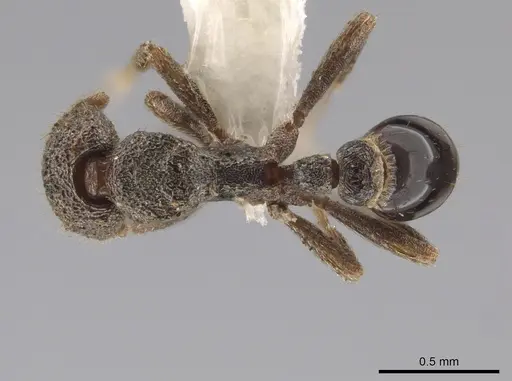
CASENT0900220
View on AntWeb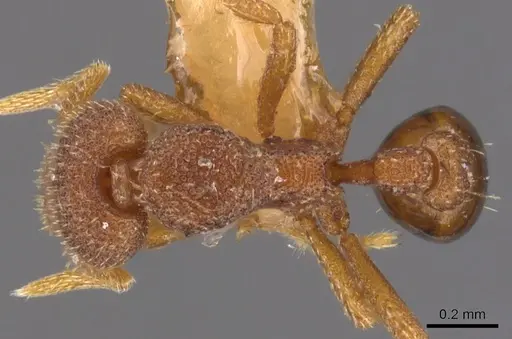
Literature
Loading distribution map...Loading products...