
Strumigenys cascanteae
- Sci. Name
- Strumigenys cascanteae
- Tribe
- Attini
- Subfamily
- Myrmicinae
- Author
- Longino, 2006
- Distribution
- Found in 1 countries
Introduction
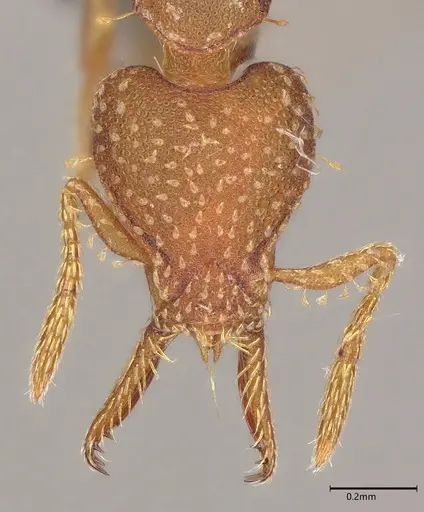
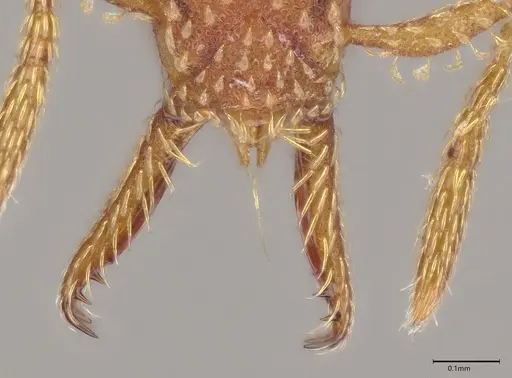
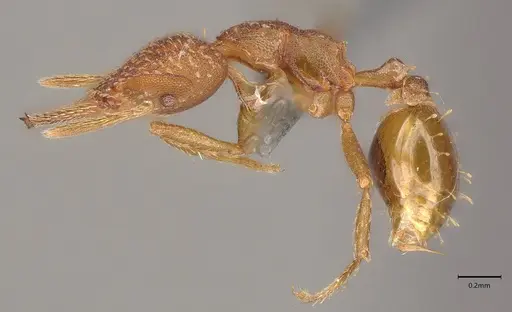
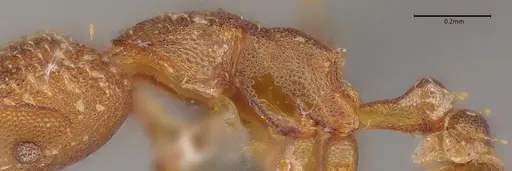
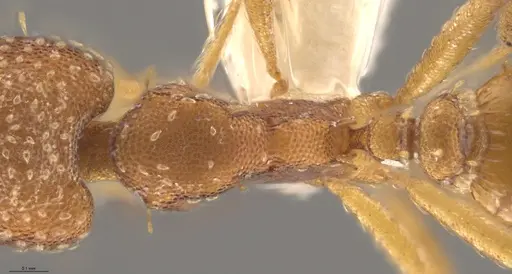
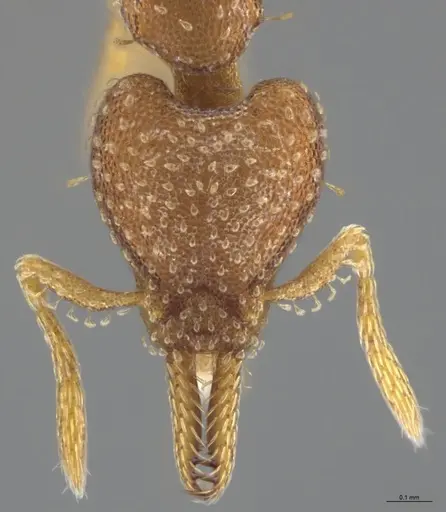
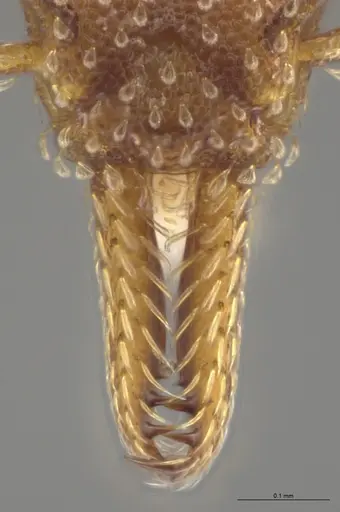
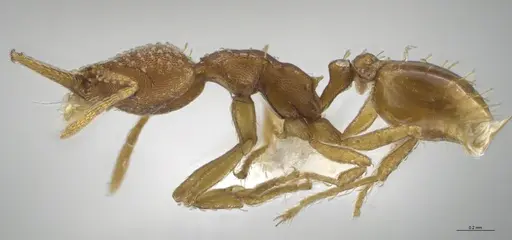
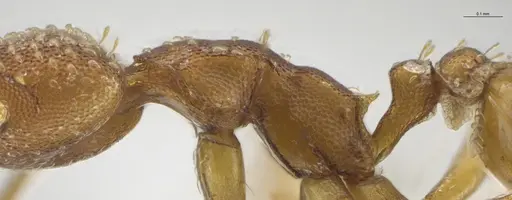
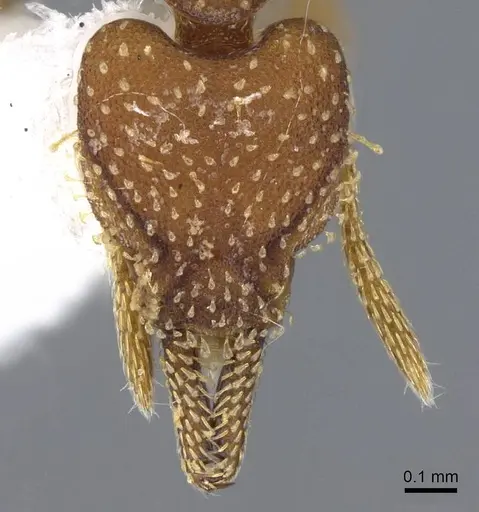
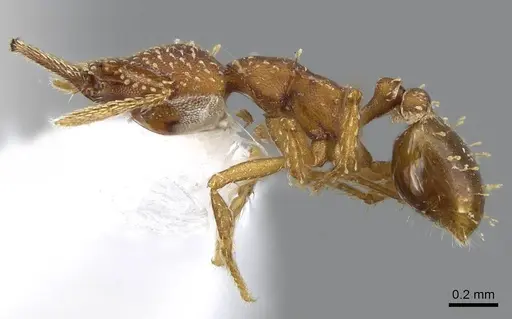
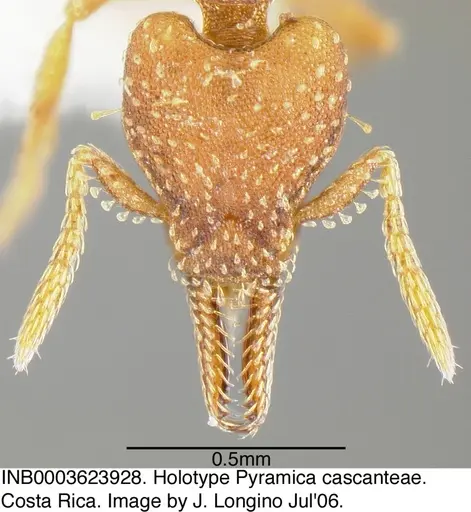
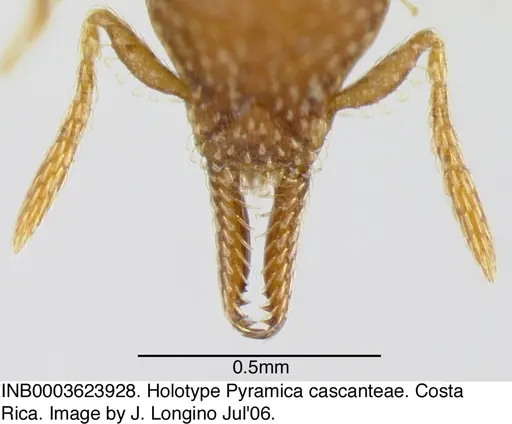
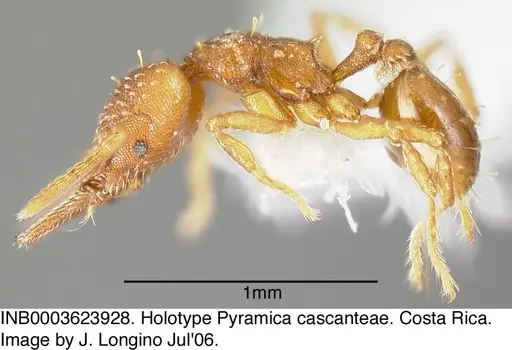
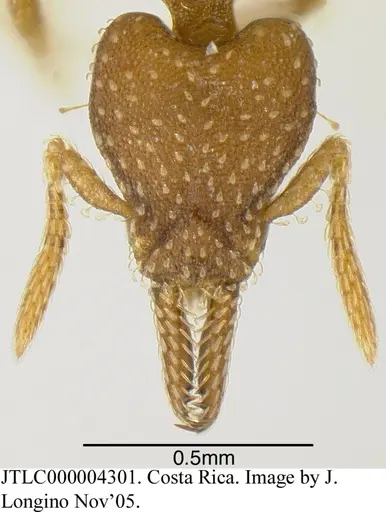
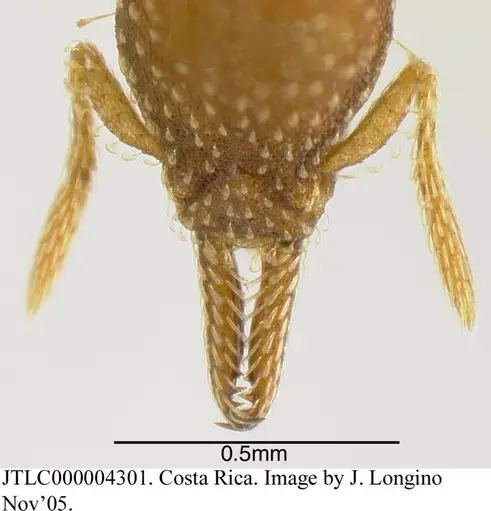
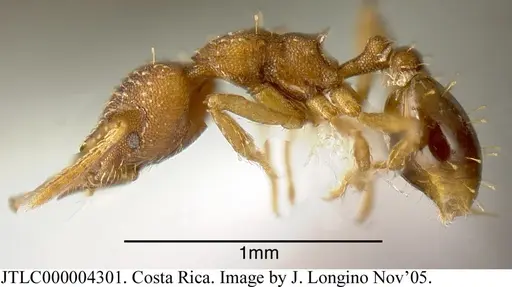
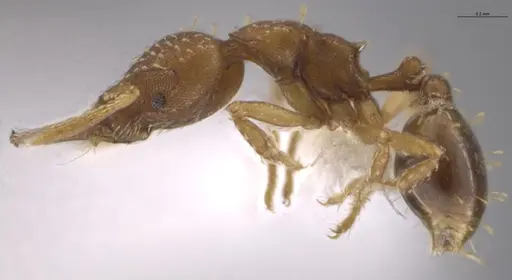
Strumigenys cascanteae is a tiny predatory ant from the tropical rainforests of Costa Rica. Its body size is not precisely known, but typical Strumigenys workers are around 2-3 mm long. Originally described as Pyramica cascanteae, this species belongs to the dacetine group of ants, many of which use specialized snap-jaw mandibles to capture springtails . Workers are ground-dwelling hunters that live in leaf litter and epiphytic material at elevations around 300 m in Braulio Carrillo National Park and Arenal National Park . Their specialized lifestyle and small size make them a challenging but rewarding species for experienced antkeepers.
Quick Summary
- Difficulty: Expert
- Origin & Habitat: Costa Rica, found in Braulio Carrillo National Park at 300 m elevation and Arenal National Park. Inhabits tropical rainforest leaf litter and epiphytic material [1][2].
- Colony Type: Unknown colony structure, likely single-queen colonies based on typical Strumigenys patterns. Founding behavior is unconfirmed.
- Size & Growth:
- Queen: Unknown, estimated slightly larger than workers, but no data available.
- Worker: Body size data unavailable. Typical Strumigenys workers are around 2-3 mm.
- Colony: Likely under 100 workers.
- Growth: Slow
- Development: Estimated 8-12 weeks (Exact timeline unconfirmed for this species. Expect slow growth typical of specialized predatory ants.)
- Antkeeping:
- Temperature: Keep at 24-27°C, these are tropical ants that need warm, stable conditions. Avoid temperatures below 22°C
- Humidity: High humidity (70-85%). Maintain consistently moist substrate but not waterlogged. A water reservoir connected to the nest helps stabilize moisture
- Diapause: No, as a tropical species, they do not require hibernation. Keep warm year-round
- Nesting: Prefers naturalistic setups with moist soil and leaf litter. Y-tong (AAC) or plaster nests with small, tight chambers work well. Provide compact, humid spaces scaled to their tiny size
- Behavior: Very docile and non‑aggressive. They have a functional sting (like other myrmicines) but it is not medically significant due to their tiny size. These ants are slow‑moving specialized predators that hunt springtails and other micro‑arthropods in leaf litter. Escape risk is high because they are so small, use fine mesh and tight‑fitting lids. They are not strong climbers
- Common Issues: high escape risk due to tiny size, use fine mesh and tight-fitting lids, specialized diet requires live springtails or micro-prey, they cannot survive on sugar alone, slow growth and small colony sizes can make colonies appear stagnant, high humidity may cause mold if ventilation is poor, wild-caught colonies may carry parasites that are hard to detect or treat
Housing and Nest Setup
This species lives in leaf litter and epiphytic material in the wild [1]. Your setup should recreate that humid, cluttered environment. Use a container with a layer of moist soil or coco fiber mixed with leaf litter and small pieces of bark. For a nest, a Y‑tong (AAC) or plaster block with small chambers works well, but a naturalistic setup with tunnels in soil is also fine. Keep chambers small and tight, these ants feel secure in compact spaces. Humidity must be high, so connect a water reservoir to the nest or mist the substrate regularly. Escape prevention is critical: use very fine mesh on ventilation holes and seal all gaps. Their tiny size means they can slip through any crack.
Feeding and Diet
Strumigenys cascanteae are specialized predators. In the wild they feed on springtails and other tiny arthropods living in leaf litter. In captivity you must provide live springtails as their main food, they will not eat sugar water or honey. Offer small prey every two to three days, adjusting the amount based on how much the workers actually hunt and carry back. Some keepers also give small fruit flies, but springtails should be the staple. Do not overfeed, leftover prey can rot and harm the colony. A healthy colony will show steady hunting activity.
Temperature and Humidity
Being tropical, this ant needs warm conditions year‑round. Keep temperatures between 24 and 27°C. Do not let it drop below 22°C, as that can slow metabolism and reduce feeding. Use a small heating cable on one side of the enclosure if your room is cooler. Humidity should be high, aim for 70-85%. The substrate should feel consistently moist but never waterlogged. A water reservoir built into the nest will help keep humidity stable. Mist the inside of the outworld if needed, but ensure some ventilation to stop mold from building up. A layer of leaf litter on the surface helps retain moisture and provides hunting areas.
Colony Development
Colony development is slow for this species. The queen probably raises her first workers on stored reserves (founding method is unconfirmed). Based on related Strumigenys, you can expect the first workers to emerge after roughly 8-12 weeks. These nanitic workers will be smaller than mature workers. The colony will stay small, likely under 100 workers even when mature. Growth is slow because each worker must hunt live prey individually. Do not disturb the queen during founding. Once workers appear, the colony will gradually expand as long as you provide a steady supply of springtails. Patience is essential.
Behavior and Observation
These ants are fascinating to watch, especially when hunting. Like many Strumigenys, they have quick‑snapping mandibles used to grab springtails. Workers are slow and deliberate foragers, often waiting motionless in the leaf litter until prey triggers their strike. They are completely docile toward keepers, they rarely bite, and their sting is too tiny to bother humans. They do not form obvious trails or forage in large groups. The best way to observe them is to watch near the nest entrance or on the substrate surface. Seeing a worker carry a springtail back to the nest is a sign of a healthy, well‑fed colony.
Frequently Asked Questions
Can I keep Strumigenys cascanteae in a test tube?
Test tubes are not ideal for this species. They need a more naturalistic setup with moist substrate and leaf litter to hunt in. A Y‑tong or plaster nest with a water reservoir works much better. Test tubes dry out quickly and don't give them space to forage.
What do Strumigenys cascanteae eat?
They are specialized predators and need live springtails as their main food. They will not eat sugar water or honey. Small fruit flies can be offered occasionally, but springtails should be the staple.
How long does it take for first workers to emerge?
The exact timeline is unconfirmed for this species. Based on related Strumigenys, expect 8-12 weeks from egg to first worker at 24-27°C. Growth is slow, so be patient.
Are Strumigenys cascanteae good for beginners?
No, this species is not recommended for beginners. They have very specific needs: high humidity, a constant supply of live springtails, and very slow growth. Only experienced antkeepers who can maintain stable conditions and a springtail culture should attempt to keep them.
How big do Strumigenys cascanteae colonies get?
Colony size is unconfirmed but likely stays under 100 workers. This is typical for Strumigenys species, which keep small, specialized colonies rather than large swarms.
Do Strumigenys cascanteae need hibernation?
No, they do not need hibernation. As a tropical species from Costa Rica, they need warm conditions year‑round (24-27°C).
Why are my Strumigenys cascanteae dying?
Common causes include: temperature too low (below 22°C), humidity too low or too high, lack of live prey (they must have springtails), or stress from too much disturbance. Check these parameters first.
When should I move Strumigenys cascanteae to a formicarium?
Wait until the colony is well established with several workers, at least a few dozen. They do well in naturalistic setups and Y‑tong nests, so a formal formicarium is optional. Focus on stable humidity and hunting space rather than a specific nest type.
Can I keep multiple queens together?
This has not been studied for this species. Based on typical Strumigenys behavior, they likely have single‑queen colonies. Do not try to combine unrelated queens, it is not recommended.
Report an Issue
The current care sheet is based fully on literature. See inconsistencies, or something that's incorrect? Please , it will be resolved after review from an admin. Contributing to the blogs tab also helps providing information, to make us be able to further improve the caresheets. Thank you for your support!
References

This caresheet is licensed under CC BY-SA 4.0 .
Community Blogs
CASENT0636148
View on AntWeb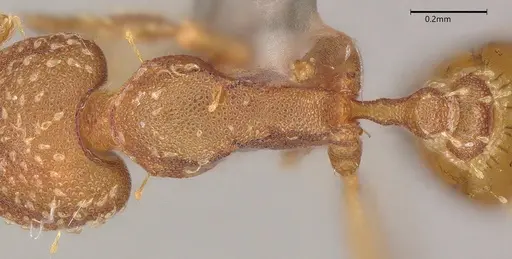
CASENT0637223
View on AntWeb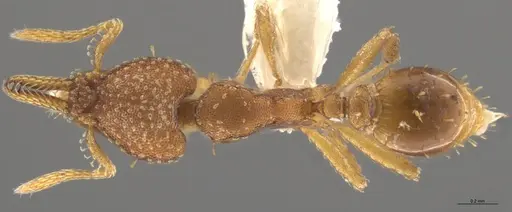
INB0003619741
View on AntWeb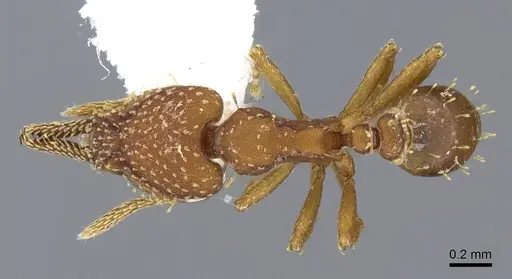
INB0003623928
View on AntWeb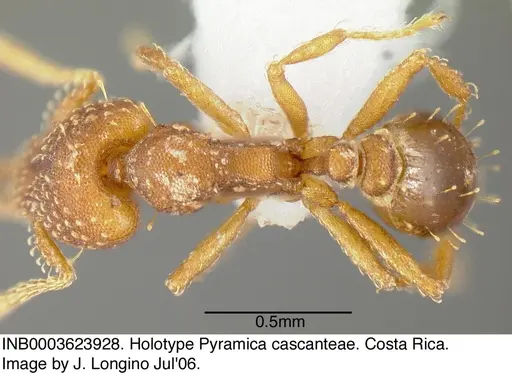
JTLC000004301
View on AntWeb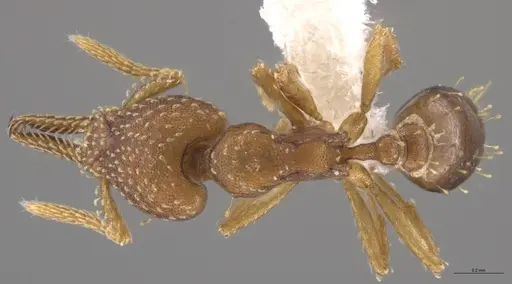
Literature
Loading distribution map...Loading products...