
Strumigenys cacaoensis
- Sci. Name
- Strumigenys cacaoensis
- Tribe
- Attini
- Subfamily
- Myrmicinae
- Author
- Bolton, 1971
- Distribution
- Found in 2 countries
Introduction
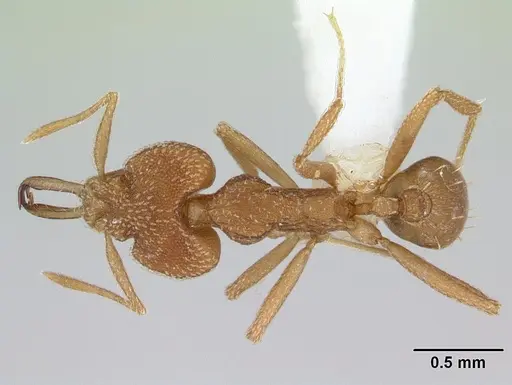
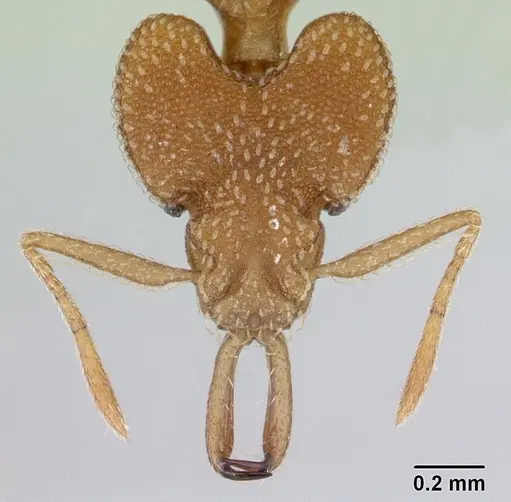
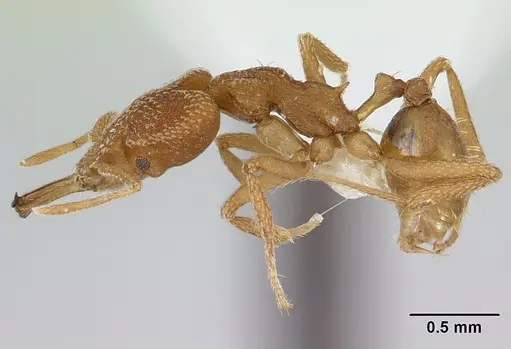
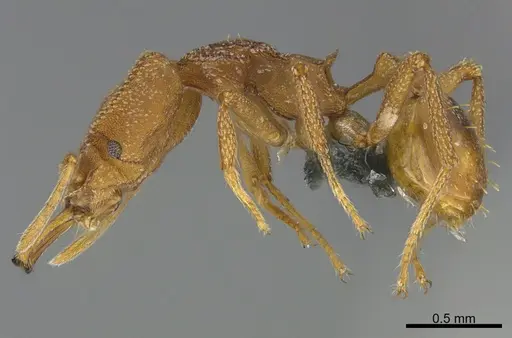
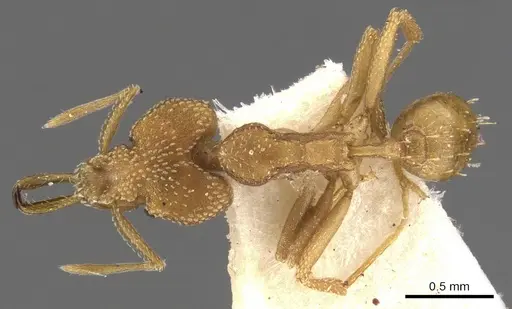
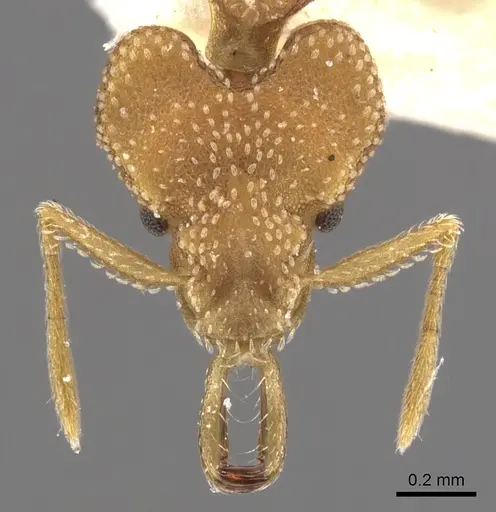
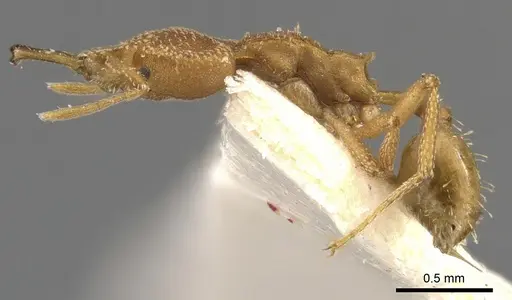
Strumigenys cacaoensis is a small predatory ant with workers measuring 2.7-3.3 mm in total length, colored dull yellow to light yellowish brown . It belongs to the Strumigenys rogeri group and stands out by its unique dentition and strongly excavated upper scrobe margins . Originally described from Nigeria, this arboreal species nests in rot holes in tree trunks and branches - the type specimens came from a rot hole in a cocoa tree . Its range covers West and Central Africa, including Ghana, Nigeria, Uganda, Kenya, Gabon, and the Central African Republic . Like other Strumigenys, these ants are specialized predators of small soil arthropods, using their trap-jaw mandibles to capture prey.
Quick Summary
- Difficulty: Medium
- Origin & Habitat: Arboreal ant from tropical West and Central Africa, found in rot holes in tree trunks and branches. The type locality is a cocoa plantation in Nigeria, and specimens have been collected from leaf litter at around 640 m elevation in Gabon [1][2].
- Colony Type: Colony structure is unconfirmed. Strumigenys species typically form small colonies, but specific data for Strumigenys cacaoensis is lacking.
- Size & Growth:
- Antkeeping:
- Temperature: Keep at 24-28°C, these are tropical ants needing warmth. A gentle gradient allowing warmer and cooler areas is recommended.
- Humidity: High humidity is essential, as they come from tropical forest environments. Keep the nest substrate consistently moist but not waterlogged, with some drier areas available.
- Diapause: Unlikely, as an Afrotropical species, they probably do not require a true diapause. They may show reduced activity during cooler periods.
- Nesting: Arboreal nester in nature, they prefer rot holes in wood. In captivity, use a naturalistic setup with wood pieces or a well-humidified plaster or Ytong nest with tight chambers and narrow passages scaled to their tiny size.
- Behavior: These are tiny, slow-moving ants that rely on stealth to capture prey. They are not aggressive and possess a mild sting that poses no threat to keepers. Their small size (under 4 mm) means escape prevention must be excellent, they can squeeze through very small gaps. They are predatory and will hunt small live prey.
- Common Issues: escape prevention is critical due to their very small size, use fine mesh and tight-fitting lids, slow growth can frustrate beginners, colonies develop slowly, requires live prey, they are obligate predators and won't accept dead food easily, high humidity needs can lead to mold if ventilation is poor, wild-caught colonies may have parasites that can devastate captive populations, quarantine is advisable
Housing and Nest Preferences
Strumigenys cacaoensis is an arboreal species that naturally nests in rot holes and hollow branches in trees [1]. In captivity, replicate these conditions as closely as possible. A naturalistic setup with damp wood pieces or cork works well, as does a humidified plaster or Ytong nest with tight chambers scaled to their tiny 2.7-3.3 mm worker size. These ants need high humidity, think tropical forest conditions. The nest substrate should remain consistently moist but never waterlogged. Because they are arboreal, providing some vertical structure or climbing surfaces helps them feel at home. Escape prevention is critical: their small size means they can squeeze through gaps that seem impossible, so use fine mesh on all openings and ensure lids fit tightly [1].
Feeding and Diet
Strumigenys cacaoensis is a specialized predator. In the wild, these ants hunt small arthropods, primarily springtails (Collembola) and other tiny soil-dwelling invertebrates. Their unique dentition and mandible structure are adapted for capturing and holding small, soft-bodied prey [1]. In captivity, you must provide live prey, they are unlikely to accept dead food. Small springtails are the ideal food source and should be the primary diet. Other small live prey like fruit flies, pinhead crickets, and tiny mealworms may be accepted, but springtails should form the bulk of their diet. You can culture your own springtail colony to ensure a constant supply. Sugar sources are typically not accepted by Strumigenys, they are obligate predators and get their nutrients from animal prey. Feed them every few days, removing any uneaten prey after 24-48 hours to prevent mold issues.
Temperature and Care
As a tropical Afrotropical species, Strumigenys cacaoensis requires warm temperatures. Keep the nest area in the range of 24-28°C. Temperatures below 22°C may slow their activity and potentially harm brood development. Use a heating cable or heating mat on one side of the enclosure to create a gentle thermal gradient, allowing the ants to choose their preferred temperature. Place the heating element on top of the nest rather than underneath to avoid evaporating moisture too quickly. Room temperature may be acceptable if your home stays consistently warm (above 24°C), but monitor colony activity, if workers seem sluggish, provide gentle warmth. These ants do not require hibernation or diapause, as they come from a tropical climate where temperatures remain relatively stable year-round. [2]
Behavior and Temperament
Strumigenys cacaoensis is a calm, non-aggressive species that poses no danger to keepers. They possess a mild sting (typical of Myrmicinae) but it is not medically significant. Workers are slow-moving and rely on stealth rather than aggression to capture prey. Their small size (under 4 mm) and docile nature make them fascinating to observe, but they require excellent escape prevention. Despite their small size, they are robust little ants with distinctive morphological features including strongly excavated upper scrobe margins and unique dentition [1]. They are primarily nocturnal or crepuscular, which aligns with their predatory lifestyle hunting springtails and other small prey that are most active during cooler hours. The colony will likely remain small, with workers focusing on caring for the queen and raising brood rather than maintaining large foraging parties.
Colony Establishment and Growth
Establishing a colony of Strumigenys cacaoensis can be challenging. Founding behavior is unconfirmed for this species, but if you obtain a founding queen, she will likely seal herself in a chamber (as many Strumigenys are thought to be claustral) and raise her first workers alone on stored fat reserves. The first workers (nanitics) will be smaller than mature workers and may take several weeks to develop. Growth rates are not well documented for this species, but Strumigenys colonies generally remain small, likely under a few hundred workers at maturity [1]. Patience is essential, as these ants grow slowly compared to many common ant species. If acquiring a colony from a keeper or dealer, ensure it is healthy and parasite-free. Wild-caught colonies can carry mites or other parasites that may devastate captive populations, so quarantine and careful observation are recommended before introducing them to your main setup.
Frequently Asked Questions
How long does it take for Strumigenys cacaoensis to produce first workers?
The exact timeline is unconfirmed for this species, but based on typical Myrmicinae development, expect 6-10 weeks from egg to first worker at optimal warm temperatures (around 26°C). Growth is slow, so patience is essential.
Can I keep Strumigenys cacaoensis in a test tube setup?
While test tubes are commonly used for ant founding, this arboreal species may do better in a naturalistic setup with wood or a humidified nest. However, a well-humidified test tube setup with a water reservoir can work for founding colonies if kept warm and humid.
What do Strumigenys cacaoensis ants eat?
They are obligate predators that require live prey. Small springtails are the ideal and most natural food source. They will likely reject dead food and do not typically accept sugar sources. Other small live prey like fruit flies may be accepted occasionally.
Are Strumigenys cacaoensis good for beginners?
This species is rated as Medium difficulty. While they are docile and fascinating, they require specific conditions: high humidity, warm temperatures, and a constant supply of live prey (springtails). Beginners may struggle with the humidity and feeding requirements.
How big do Strumigenys cacaoensis colonies get?
Colony size is not well documented, but based on genus patterns, colonies likely remain small, probably under a few hundred workers at maturity. They are not large colony formers.
Do Strumigenys cacaoensis need hibernation?
No, they do not require hibernation. As an Afrotropical species from Central Africa, they are adapted to year-round warm conditions and will remain active throughout the year if kept warm.
Why are my Strumigenys cacaoensis dying?
Common causes include: low humidity (they need consistently moist conditions), temperatures below 22°C, lack of live prey (they will starve without springtails or similar small live food), and parasites from wild-caught colonies. Check your humidity levels, ensure warmth, and verify they have access to live prey.
When should I move Strumigenys cacaoensis to a formicarium?
Move them when the colony reaches several dozen workers and the test tube setup becomes cramped. However, they may do better in a naturalistic setup rather than a traditional formicarium due to their arboreal nature and humidity requirements.
Can I keep multiple Strumigenys cacaoensis queens together?
Combining unrelated queens has not been documented for this species. It is not recommended, as Strumigenys are typically single-queen species and introducing multiple queens may result in aggression.
What is the best nest type for Strumigenys cacaoensis?
A naturalistic setup with damp wood pieces or cork replicates their natural rot-hole nesting sites. A well-humidified plaster or Ytong nest with tight chambers also works. The key is maintaining high humidity while ensuring good ventilation to prevent mold.
How do I prevent Strumigenys cacaoensis from escaping?
Excellent escape prevention is essential due to their tiny 2.7 mm size. Use fine mesh (0.5 mm or smaller) on all openings, ensure lids fit tightly with no gaps, and consider using fluon or other barriers on smooth surfaces. Check all connections regularly.
Report an Issue
The current care sheet is based fully on literature. See inconsistencies, or something that's incorrect? Please , it will be resolved after review from an admin. Contributing to the blogs tab also helps providing information, to make us be able to further improve the caresheets. Thank you for your support!
References

This caresheet is licensed under CC BY-SA 4.0 .
Community Blogs
Literature
Loading distribution map...Loading products...