
Strumigenys bimarginata
- Sci. Name
- Strumigenys bimarginata
- Tribe
- Attini
- Subfamily
- Myrmicinae
- Author
- Wesson & Wesson, 1939
- Distribution
- Found in 1 countries
Introduction
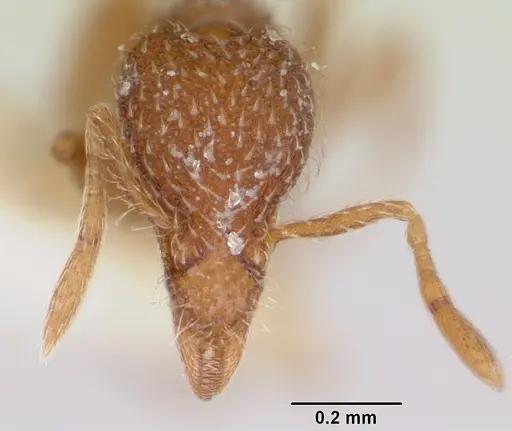
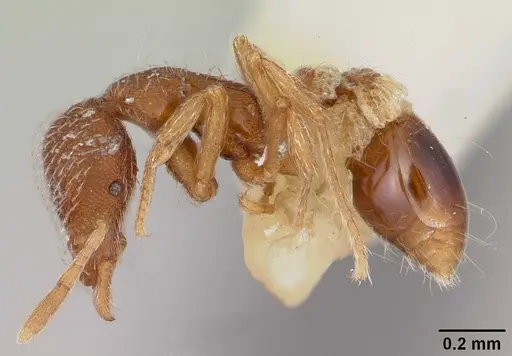
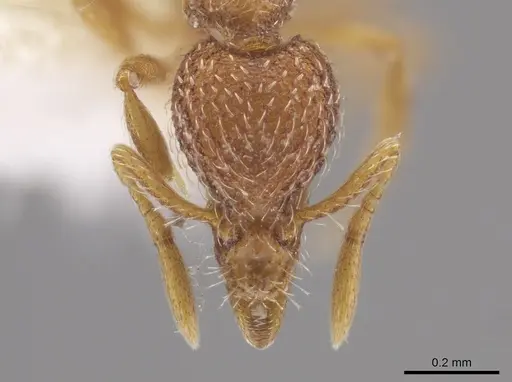
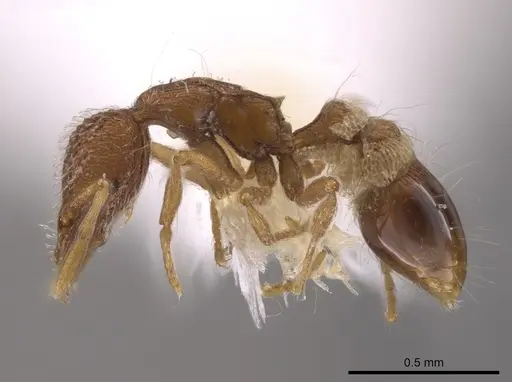
Strumigenys bimarginata is a tiny predatory ant native to the eastern United States, measuring just 2.2-2.4 mm in total length . Workers are a rusty ferruginous color with distinctive bicarinate clypeal margins – two visible ridges around the front of the head that distinguish this species from its close relative Strumigenys filirrhina . The genus Strumigenys belongs to the tribe Attini, and while many Attini are fungus farmers, Strumigenys are specialized predators that hunt tiny prey like springtails. This species has been documented in Ohio, Illinois, and Alabama, typically found in grassy areas, under bark in cut‑over woods, and in grass sod samples . They represent less than 1% of ant collections in Ozark forest studies, indicating they are uncommon and localized in their distribution . Their tiny size and specialized predatory diet make them a challenging species to keep, as they require live micro‑prey and excellent escape prevention.
Quick Summary
- Difficulty: Expert
- Origin & Habitat: Eastern United States (Ohio, Illinois, Alabama) – found in grassy areas, under bark in cut‑over woods, and in grass sod samples [1]
- Colony Type: Unknown – colony structure has not been studied. Most Strumigenys are thought to be single‑queen, but this is unconfirmed for Strumigenys bimarginata.
- Size & Growth:
- Queen: Unconfirmed – only a dealated female has been described but measurements are not given [1]
- Worker: 2.2-2.4 mm total length [1]
- Colony: Unknown – no data exists for this species
- Growth: Slow – typical for small predatory Strumigenys
- Development: Unknown – no direct data. Based on related Strumigenys, likely 8-12 weeks at warm temperatures (All development information is inferred from genus‑level patterns and is not species‑specific.)
- Antkeeping:
- Temperature: No specific data. Keep at typical room temperature (20-26°C). Avoid extremes.
- Humidity: No specific data. Keep nest substrate slightly moist but not waterlogged, mimicking a grassy soil environment.
- Diapause: Likely required – temperate North American distribution suggests a winter rest period. Duration and temperature are unconfirmed, providing 3-4 months at 5-10°C is a reasonable starting point.
- Nesting: Use small test tubes or narrow formicaria with tight chambers. Tiny workers require fine mesh (≤0.5 mm) for ventilation. Y‑tong or plaster nests work well.
- Behavior: Strumigenys are shy, specialized predators of tiny soil arthropods. They are not aggressive toward keepers and prefer to flee. The primary challenge is escape risk due to extremely small size – they can slip through gaps that other ants cannot. They do not form large, conspicuous colonies and require constant access to live micro‑prey.
- Common Issues: escape prevention is critical – their tiny size allows them to slip through standard barriers and mesh., live micro‑prey is essential – they are obligate predators and will starve without small live arthropods like springtails., slow growth tests keeper patience – colonies may take many months to show noticeable worker numbers., very rare in the hobby – few established care protocols exist, and wild colonies are difficult to locate., humidity must be balanced – too dry causes desiccation, too wet risks drowning in water reservoirs.
Housing and Escape Prevention
Strumigenys bimarginata requires meticulous escape prevention due to its extremely small worker size of only 2.2-2.4 mm [1]. Standard test tube setups work well, but you must apply fluon or similar barriers to all openings. Even tiny gaps around cotton plugs can allow escapes. Consider wrapping cotton plugs in plastic film or using rubber bands to create tighter seals. For formicaria, use only fine mesh (at least 0.5 mm or smaller) for any ventilation. Y‑tong or plaster nests with narrow chambers work better than large naturalistic setups because they help maintain humidity and allow the tiny workers to navigate easily. Keep the nest setup simple – these ants do not need elaborate structures.
Feeding and Diet
This species is presumed to be a predator of small soil arthropods, as typical for the genus and subfamily. Live micro‑prey like springtails (Folsomia candida or similar) are strongly recommended, though this advice is based on general ant knowledge and not on species‑specific studies. They may also accept other tiny live prey such as booklice (psocids), minute soil mites, and fruit fly larvae. Do not rely on sugar water or honey – their main nutritional needs are protein from prey. Feed small prey items every 2-3 days, removing any uneaten prey after 24 hours to prevent mold. A well‑established springtail culture is essentially required before attempting to keep this species.
Temperature and Seasonal Care
Maintain temperatures around 22-26°C for typical activity, specific requirements are unknown. Since this species is native to temperate North America (Ohio, Illinois), it likely benefits from a winter rest period. Provide about 3-4 months of cooler temperatures around 5-10°C during winter, reducing food offerings (or stopping entirely) during this time. This mimics their natural seasonal cycle and may support healthier long‑term colonies. Avoid sudden temperature fluctuations and keep the nest away from direct sunlight or heating elements that could cause overheating.
Colony Establishment
Establishing colonies of Strumigenys bimarginata is extremely challenging due to their rarity and lack of documented care. If you obtain a queen or colony, provide a small, humid founding setup – a test tube with a water reservoir works well. Founding behavior is unconfirmed, so do not assume claustral or semi‑claustral, simply provide a secure, undisturbed environment. First workers (nanitics) will be very small and should begin hunting for micro‑prey shortly after emergence. Expect very slow growth – do not disturb the colony frequently during the founding phase. Wild‑caught colonies may carry parasites, so quarantine and observe new colonies carefully before introducing them to established setups.
Frequently Asked Questions
Can I keep Strumigenys bimarginata in a test tube?
Yes, test tubes work well for this species. Use a small test tube with a water reservoir and ensure the cotton plug is tightly secured – these tiny ants can push through standard cotton. Consider wrapping the plug area with plastic film or using a rubber band to create a tighter seal. The narrow chamber dimensions also help maintain appropriate humidity.
What do Strumigenys bimarginata eat?
They are presumed to be obligate predators of tiny soil arthropods. Live micro‑prey such as springtails, booklice, and fruit fly larvae are recommended. Sugar water or honey is not sufficient. Always provide live prey, a springtail culture is essentially required.
How long does it take for Strumigenys bimarginata to produce first workers?
The exact timeline is unknown for this species. Based on related Strumigenys, expect 8-12 weeks from egg to worker at warm temperatures (24-26°C). Growth is slow, and colonies remain small for many months. Patience is essential.
Are Strumigenys bimarginata good for beginners?
No – this species is not recommended for beginners. Their extremely small size creates significant escape prevention challenges, they require live micro‑prey (springtail cultures), and they are rare in the antkeeping hobby with few established protocols. They are considered an expert‑level species.
Do Strumigenys bimarginata need hibernation?
Based on their temperate North American distribution, a winter rest period is likely beneficial. Provide about 3-4 months at 5-10°C during winter, reducing feeding frequency. This mimics their natural seasonal cycle. Do not feed during the hibernation period, but ensure the nest substrate does not dry out completely.
Why are my Strumigenys bimarginata escaping?
Their tiny 2.2 mm size allows them to slip through gaps that other ants cannot. Review all barrier applications – fluon must be fresh and reapplied regularly. Check cotton plugs for gaps, use fine mesh for any ventilation, and ensure all connections between nest and outworld are sealed. Even the space between a lid and rim can be an escape route.
How big do Strumigenys bimarginata colonies get?
Colony size is unknown for this species. Based on related Strumigenys, colonies likely remain small – probably under 100 workers at maturity. They are not large colony builders.
Can I keep multiple Strumigenys bimarginata queens together?
This has not been documented. Colony structure is unconfirmed, assuming single‑queen (monogyne) is safest. Combining unrelated queens is not recommended as it could result in aggression.
What temperature range is best for Strumigenys bimarginata?
No specific data exists. Keep them at 22-26°C for general activity. Avoid temperatures below 20°C for extended periods as this reduces activity. A gentle temperature gradient is acceptable, but avoid direct heat that could dry out the nest.
Report an Issue
The current care sheet is based fully on literature. See inconsistencies, or something that's incorrect? Please , it will be resolved after review from an admin. Contributing to the blogs tab also helps providing information, to make us be able to further improve the caresheets. Thank you for your support!
References

This caresheet is licensed under CC BY-SA 4.0 .
Community Blogs
CASENT0103122
View on AntWeb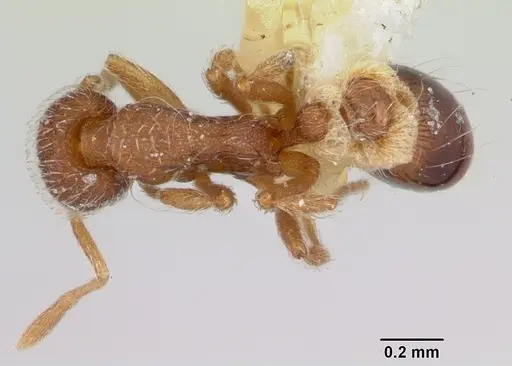
CASENT0648374
View on AntWeb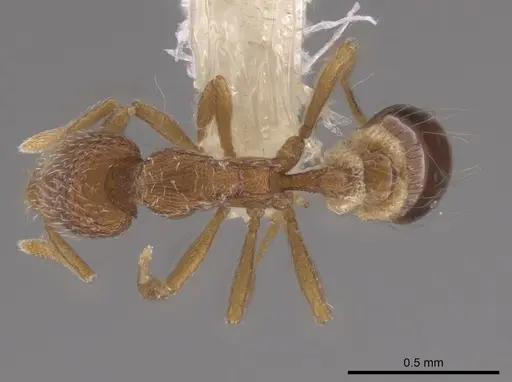
Literature
Loading distribution map...Loading products...