
Strumigenys archboldi
- Sci. Name
- Strumigenys archboldi
- Tribe
- Attini
- Subfamily
- Myrmicinae
- Author
- Deyrup & Cover, 1998
- Distribution
- Found in 1 countries
Introduction
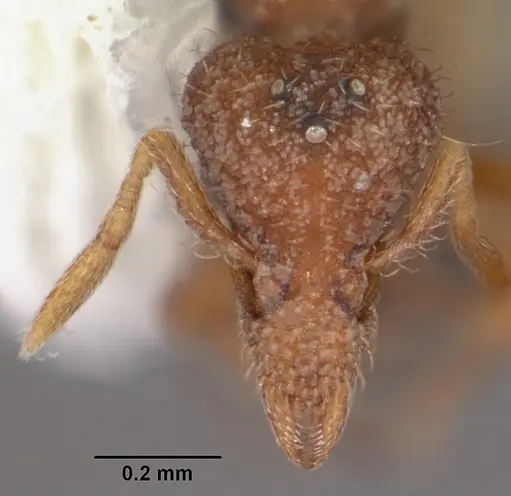
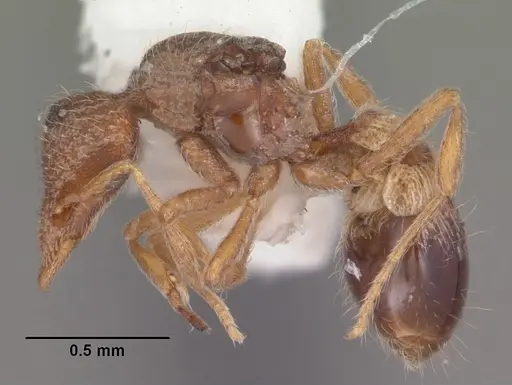
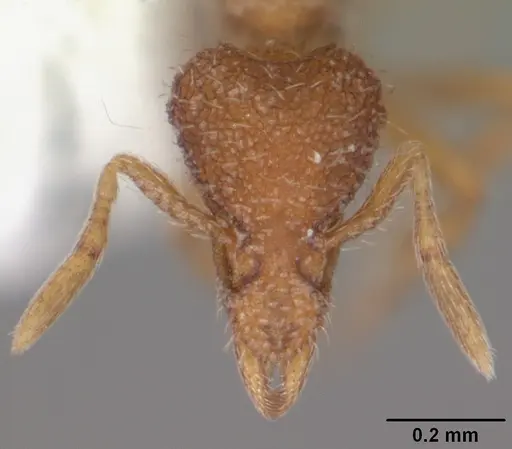
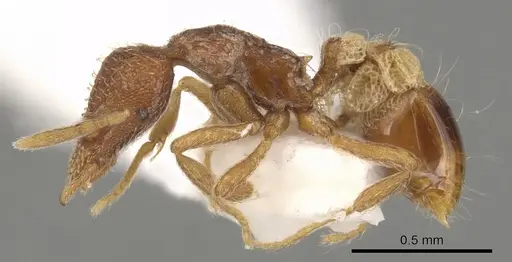
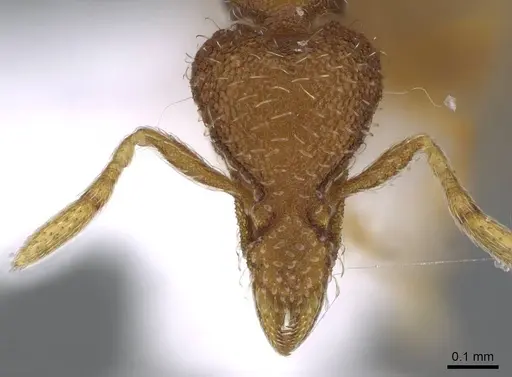
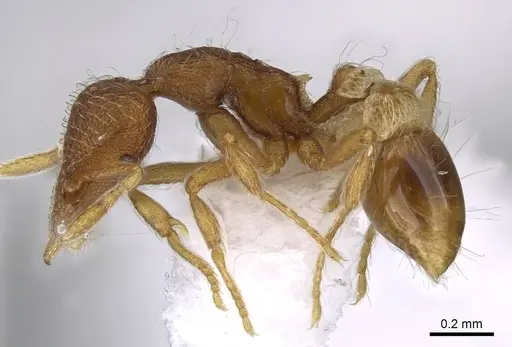
Strumigenys archboldi is a tiny predatory ant native to the southeastern United States. Workers measure about 2-3mm and have the genus' characteristic trap-jaw mandibles used to snap shut on springtails and other small soil-dwelling arthropods . Their body is generally pale to medium brown, and they move with short, jerky bursts rather than sustained walking. This species is part of the Nearctic ant fauna , meaning it is adapted to temperate conditions. These ants are specialized predators that hunt almost exclusively on tiny soil invertebrates, particularly springtails. They require stable, humid conditions and specialized live prey, making them a challenging species for advanced antkeepers. Colonies remain relatively small even when mature, typically a few hundred workers at most.
Quick Summary
- Difficulty: Expert
- Origin & Habitat: Southeastern United States, documented in Blount County, Alabama. They inhabit forest floor environments with rich, moist soil and leaf litter that provides hunting grounds for micro-prey [1].
- Colony Type: Likely monogyne (single queen) based on typical Strumigenys patterns, but unconfirmed. Founding behavior is unconfirmed, some Strumigenys species have claustral founding, others semi-claustral.
- Size & Growth:
- Queen: Approximately 3-4mm (inferred from genus patterns for small Strumigenys species)
- Worker: 2-3mm [1]
- Colony: Up to a few hundred workers (estimated from genus patterns)
- Growth: Slow
- Development: 8-12 weeks (estimated based on related Strumigenys species, specific data not available) (Development is temperature-dependent. First workers (nanitics) are smaller than normal workers.)
- Antkeeping:
- Temperature: Keep around 20-24°C. Stable temperatures are more important than exact numbers. Avoid extremes below 18°C or above 28°C. A gentle heat gradient allows the colony to self-regulate.
- Humidity: High humidity is essential. The nest substrate should remain consistently moist but never waterlogged. Provide a water reservoir in the nest setup. Ambient humidity around 70-80% is ideal.
- Diapause: Yes, as a Nearctic species, this ant requires a winter dormancy period. Reduce temperature to 10-15°C for 3-4 months, mimicking natural seasonal cycles. Do not feed during diapause [2].
- Nesting: Y-tong (AAC) or plaster nests work well because they hold humidity. Chambers should be appropriately scaled to their tiny size. A naturalistic setup with moist soil and leaf litter also works for the outworld.
- Behavior: These ants are docile and rarely aggressive toward keepers. They possess a functional stinger but it is not medically significant to humans. Their primary defense is fleeing. Escape prevention is critical due to their tiny size. Workers hunt individually using trap-jaw mandibles to capture springtails. They are generally slow-moving but make quick bursts when hunting. Colonies are peaceful and not territorial.
- Common Issues: escape prevention is critical, their tiny size means they can squeeze through standard barrier gaps, specialized diet makes feeding challenging, they require live springtails or other micro-prey, slow growth tests keeper patience, colonies may take a year or more to establish, high humidity needs can lead to mold problems if ventilation is poor, wild-caught colonies may carry parasites that cause colony collapse
Housing and Nest Setup
Strumigenys archboldi requires careful nest design due to their tiny size. Y-tong (AAC) or plaster nests work well because they maintain humidity. The chambers should be appropriately scaled, overly large spaces can stress these tiny ants. Avoid acrylic nests, they do not hold humidity well.
The outworld should include a moist soil area or leaf litter where you can add live springtails for hunting. Ensure all connections between nest and outworld are smooth and appropriately sized, even small gaps can allow escapes. Use fluon or another barrier on the rim of the formicarium to prevent escape.
These ants prefer dim conditions and will be most active in shaded areas. Avoid direct sunlight on the setup.
Feeding and Diet
This is the most challenging aspect of keeping Strumigenys archboldi. They are obligate predators on tiny soil arthropods, primarily springtails. Unlike many ants that accept various protein sources, these specialists typically reject larger prey and require live, appropriately sized food.
Your primary food should be live springtails cultured for ant feeding. Establish a springtail culture in a separate container with moist charcoal or soil, then transfer small numbers to the colony's outworld. Other acceptable prey includes tiny isopods, booklice, and very small fruit fly larvae. Do not offer standard ant foods like mealworms or crickets, these are too large and will be ignored.
Sugar sources are generally not accepted. These ants get all nutrition from protein prey. Some keepers report limited success with tiny amounts of honey or sugar water, but this is experimental only.
Temperature and Seasonal Care
Maintain temperatures around 20-24°C for optimal colony health. Strumigenys are not heat-tolerant and should be kept away from direct heat sources. Room temperature within this range is ideal. A small heat cable on one side can create a gradient, but ensure the colony can move away from warmth.
As a Nearctic species, this ant requires an annual diapause (winter rest) period. In late autumn, gradually reduce temperature to 10-15°C and maintain for 3-4 months during winter [2]. During diapause, the colony will be largely inactive and should not be fed. Resume normal temperatures in early spring to trigger renewed activity.
Avoid temperature fluctuations and drafts. Stable, consistent conditions mimic the buffered environment of the forest floor.
Colony Establishment and Growth
Starting a colony from a single queen requires patience. Founding behavior is not confirmed for this species, so avoid disturbing the queen during early stages. If founding is claustral, the queen will seal herself in and use stored fat reserves. Do not check on her frequently, interference can cause colony failure.
First workers (nanitics) will be smaller than normal workers, and the colony grows very slowly. It may take 6-12 months before you see significant population increase. A healthy mature colony likely maxes out at a few hundred workers.
Growth rate depends heavily on consistent feeding with appropriate prey. Slow growth is normal for the genus.
Behavior and Observation
Strumigenys archboldi workers exhibit specialized hunting behavior. They move slowly through leaf litter, using antennae to detect vibrations from prey. When a springtail is detected, the trap-jaw mandibles snap shut extremely quickly, one of the fastest movements in the animal kingdom.
These ants can sting but do so only when provoked, and the sting is not medically significant to humans. Their primary defense is fleeing. They pose no danger.
Activity levels peak during evening and night hours when springtails are most active. You may observe more hunting if you feed springtails in the evening.
Frequently Asked Questions
Can I keep Strumigenys archboldi in a test tube?
Test tubes are not ideal for established colonies due to high humidity needs and small chamber requirements. A Y-tong or plaster nest works better. However, test tubes can work for temporary housing or during founding if you add a water reservoir and maintain high humidity.
What do Strumigenys archboldi eat?
They are specialized predators that require live springtails as their primary food. Other tiny soil arthropods like tiny isopods and booklice may be accepted. Standard ant foods like mealworms and commercial diets are generally rejected. Sugar is not typically accepted.
How long does it take for first workers to emerge?
Based on related Strumigenys species, expect 8-12 weeks from egg to first worker at optimal temperature (around 22°C). This is an estimate, specific data for this species is not available. Founding can be slow, patience is essential.
Are Strumigenys archboldi good for beginners?
No. This species is considered expert-level due to its specialized diet (requiring live springtail cultures), high humidity needs, slow growth, and escape prevention requirements. Beginners should start with more forgiving species like Lasius or Tetramorium.
How big do Strumigenys archboldi colonies get?
Colonies remain relatively small. Based on genus patterns, a mature colony likely reaches up to a few hundred workers at maximum, far smaller than many common ant species. This is normal for the genus.
Do Strumigenys archboldi need hibernation?
Yes. As a Nearctic species native to Alabama, they require an annual diapause. Reduce temperature to 10-15°C for 3-4 months during winter [2]. This mimics natural seasonal cycles and is essential for long-term colony health.
Why are my Strumigenys archboldi dying?
Common causes include: incorrect diet (offering prey that is too large or not live), low humidity (needs consistently moist conditions), temperature stress (too hot or too cold), escape-related mortality, and parasite infection from wild-caught colonies. Review each parameter and ensure you are providing appropriate springtail prey.
When should I move to a formicarium?
Wait until the colony has at least 20-30 workers and the test tube becomes crowded. Strumigenys prefer tight spaces, so avoid moving to overly large setups. A small Y-tong or plaster nest with appropriately sized chambers is ideal.
Can I keep multiple queens together?
Strumigenys archboldi is likely monogyne (single queen per colony), but this is unconfirmed. Combining unrelated queens is not recommended for this species. Unlike some ants that can form multi-queen colonies, these ants typically function with one queen.
Report an Issue
The current care sheet is based fully on literature. See inconsistencies, or something that's incorrect? Please , it will be resolved after review from an admin. Contributing to the blogs tab also helps providing information, to make us be able to further improve the caresheets. Thank you for your support!
References

This caresheet is licensed under CC BY-SA 4.0 .
Community Blogs
CASENT0104338
View on AntWeb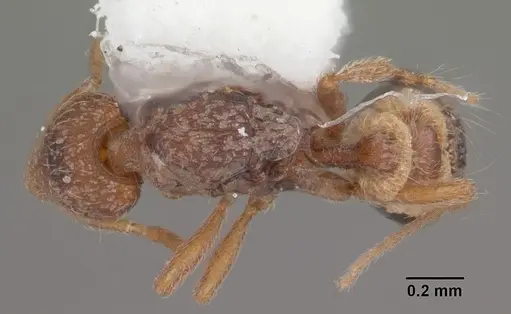
CASENT0104339
View on AntWeb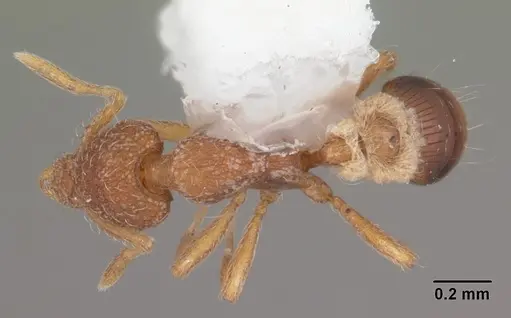
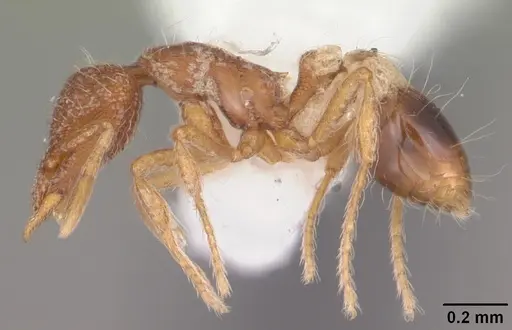
CASENT0900175
View on AntWeb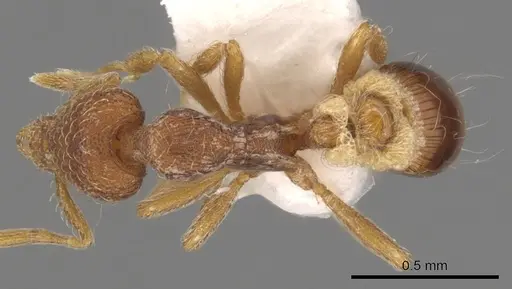
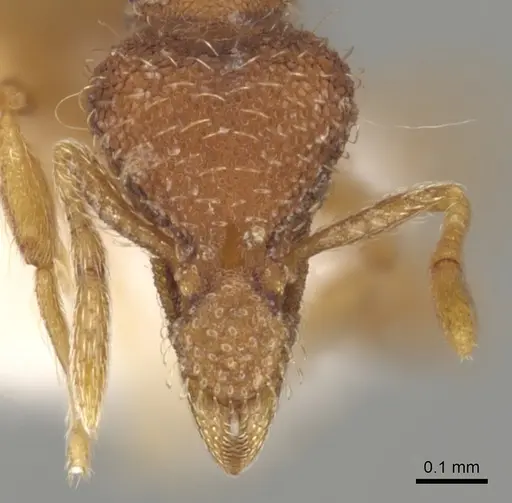
CASENT0914679
View on AntWeb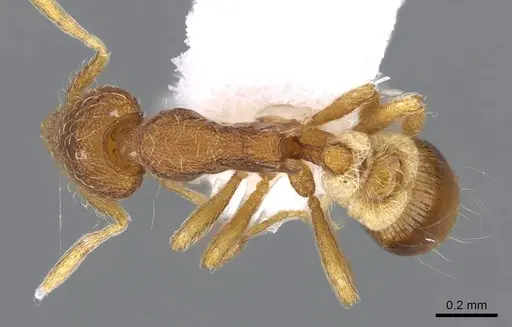
Literature
Loading distribution map...Loading products...