
Strumigenys anthocera
- Sci. Name
- Strumigenys anthocera
- Tribe
- Attini
- Subfamily
- Myrmicinae
- Author
- Lattke & Goitía, 1997
- Distribution
- Found in 1 countries
Introduction
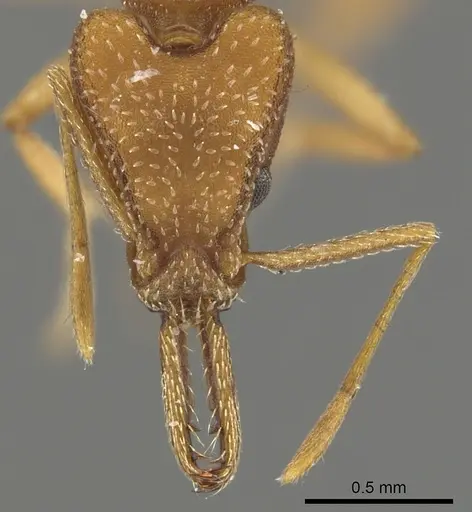
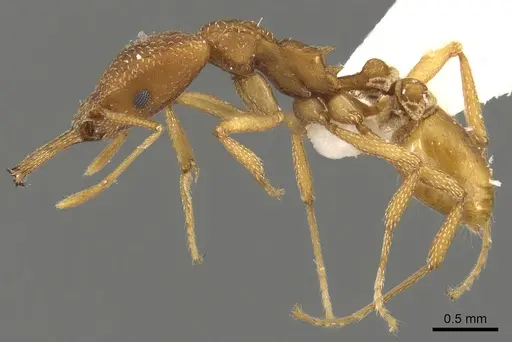
Strumigenys anthocera is a tiny predatory ant from the subfamily Myrmicinae. Workers are about 4.2 mm long, making it the largest species in the *Strumigenys tocacae* group . They are native to the Neotropical region, with confirmed records from Venezuela (Amazonas state) and Peru . The species was first described in 1997 . This ant stands out from close relatives by having a simple hair near the antenna base (apicoscrobal hair), a pair of standing hairs on the middle part of the back (mesonotum), and thick, coarse spongy tissue on the waist segments . The front part of the abdomen (first gastral tergite) is finely lined with ridges all over. Like other *Strumigenys*, they have fast‑snapping mandibles used to catch small prey.
Quick Summary
- Difficulty: Medium
- Origin & Habitat: Neotropical region, specifically Venezuela (Amazonas state, Alto Rio Siapa at about 495 m elevation) and Peru [1][2]. Found in tropical forest environments.
- Colony Type: Unknown, colony structure has not been documented for this species. Most *Strumigenys* form small colonies.
- Size & Growth:
- Queen: Undescribed, queen measurements not available in literature
- Worker: About 4.2 mm total length [1]
- Colony: Unknown, no colony size data available. Likely small (maybe under 500 workers) based on genus patterns.
- Growth: Slow, inferred from typical *Strumigenys* patterns
- Development: Unknown, no direct data. Based on related *Strumigenys* and tropical Myrmicinae, possibly 6-10 weeks at optimal temperature. (Development timeline is unconfirmed for this species.)
- Antkeeping:
- Temperature: Unknown for this species. Based on Neotropical distribution, aim for warm, stable conditions around 24-28°C. More research needed.
- Humidity: Likely requires high humidity, *Strumigenys* usually live in damp forest floor microhabitats. Keep the nest substrate consistently moist but not waterlogged.
- Diapause: Unknown, but Neotropical origin suggests no true hibernation is needed. A slight winter cooldown may reduce activity, but year‑round warm care is likely fine.
- Nesting: Natural nesting preferences unconfirmed. Most *Strumigenys* nest in soil, rotting wood, or leaf litter in humid shaded areas. In captivity, a naturalistic setup with moist substrate and flat stones or a Y‑tong/plaster nest works well.
- Behavior: Temperament is not documented, but *Strumigenys* are generally slow‑moving and non‑aggressive. They have a functional sting (subfamily Myrmicinae), but it is not medically significant to humans. Workers are about 4.2 mm, so escape prevention needs to be adequate but not extreme. They hunt live micro‑arthropods using their trap‑jaw mandibles.
- Common Issues: Biology is almost entirely unconfirmed, very limited scientific data exists for this species., No established care protocols, keepers must adapt from genus‑level knowledge., Growth rate is likely slow, beginners may lose patience with slow colony development., Humidity requirements are inferred, not confirmed, monitor colony response and adjust., Obtaining a mated queen is difficult because nuptial flight details are unknown.
Identification and Distinguishing Features
Strumigenys anthocera belongs to the Strumigenys tocacae group and is the largest member, with workers about 4.2 mm total length [1]. You can identify it by: a simple apicoscrobal hair (a single projecting hair near the antenna base), a pair of standing hairs on the mesonotum, and well‑developed, thick spongy tissue on the waist segments. The front part of the abdomen (first gastral tergite) has fine, dense longitudinal ridges all over [1]. These features let you tell it apart from close relatives S. usbensis and S. fairchildi, which lack the standing hairs and have thinner spongy tissue. A microscope or strong magnifier is needed to see these details.
Distribution and Habitat
Strumigenys anthocera is known from the Neotropical region, with confirmed records in Venezuela's Amazonas state (near Alto Rio Siapa at about 495 m elevation) [1] and in Peru [2]. The type locality sits in the Amazon basin, suggesting a warm, humid tropical forest habitat. Specific nest sites are unknown, but other Strumigenys are often found in soil, rotting wood, or leaf litter in shaded, moist areas.
Feeding and Diet
The diet of this species hasn't been studied, but the entire genus Strumigenys are specialized predators of small soil arthropods, especially springtails (Collembola) [1]. They use their fast‑snapping mandibles to capture tiny, quick prey. In captivity, offer live springtails, fruit flies, and other micro‑arthropods. They are obligate predators, sugar water or other carbohydrates are usually not accepted. Feed small prey every 2-3 days, remove leftovers to prevent mold.
Temperature and Care
Exact temperature needs are unknown for this species. Based on its Neotropical origin (Venezuela and Peru), target a warm, stable range of 24-28°C. This matches what most Strumigenys prefer. Avoid big swings in temperature. A heating cable on top of the nest (not underneath, to keep moisture even) can help if your room is cooler. Watch your ants, if they become sluggish, try raising the temperature slightly.
Humidity and Nesting
Humidity targets are unconfirmed, but Strumigenys generally need high humidity similar to the forest floor. Keep the nest substrate moist to the touch but without standing water. Give the colony a gradient, one part wetter, one part drier, so they can choose. For nesting, a naturalistic setup with moist soil, flat stones, or a Y‑tong/plaster nest with good water retention works well. Make sure there's some air exchange to prevent mold, but not so much that the nest dries out quickly.
Behavior and Temperament
No detailed behavior studies exist for this species, but Strumigenys are known to be slow‑moving and not aggressive. They have a functional sting (as members of Myrmicinae), but it's tiny and not dangerous to humans. Workers are about 4.2 mm, so escape prevention doesn't have to be as extreme as for smaller ants like Pheidole. They are dedicated predators that hunt live micro‑arthropods. Colonies are probably small, and growth is slow, so patience is a must. [1]
Frequently Asked Questions
How long does it take for Strumigenys anthocera to produce first workers?
The egg‑to‑worker timeline is unconfirmed for this species. Based on typical Strumigenys and tropical Myrmicinae development, expect roughly 6-10 weeks at 24-28°C. This is an estimate, actual time may vary.
What do Strumigenys anthocera ants eat?
Like other Strumigenys, they are specialized predators that hunt small arthropods. Offer live springtails, fruit flies, and other micro‑arthropods. Sugar sources are typically not accepted, they are obligate predators.
Can I keep Strumigenys anthocera in a test tube?
A test tube setup can work for starting a colony, but you will need to provide a hunting area with live prey. Watch humidity, test tubes can dry out or flood quickly. Once the colony is established, a naturalistic setup with moist substrate often works better.
Are Strumigenys anthocera good for beginners?
This species is not ideal for beginners because very little is known about its care, and they require live prey, which is more demanding than standard ant food. The slow growth also needs patience. If you have experience with predatory ants, this could be an interesting species to try.
How big do Strumigenys anthocera colonies get?
Colony size is unconfirmed for this species. Based on typical Strumigenys patterns, colonies probably stay small, likely under 500 workers. They don't reach the huge sizes of some other ants.
Do Strumigenys anthocera need hibernation?
Diapause requirements are unknown. As a Neotropical species, they probably do not need a true cold hibernation. You can likely keep them warm year‑round, but they may have a natural slowdown during cooler or drier months.
What temperature should I keep Strumigenys anthocera at?
Specific numbers are unconfirmed, but aim for 24-28°C based on their tropical origin. Keep it stable without big fluctuations.
Why is so little known about Strumigenys anthocera care?
This species was described in 1997 and has only a handful of recorded locations. No dedicated biological studies have been done on it. Most care advice comes from general Strumigenys knowledge, not species‑specific research.
Can I keep multiple queens together?
Colony structure (monogyne vs polygyne) is unconfirmed for this species. Combining unrelated queens is not recommended because it hasn't been studied and could lead to fighting. If you start a colony, begin with a single queen.
Report an Issue
The current care sheet is based fully on literature. See inconsistencies, or something that's incorrect? Please , it will be resolved after review from an admin. Contributing to the blogs tab also helps providing information, to make us be able to further improve the caresheets. Thank you for your support!
References

This caresheet is licensed under CC BY-SA 4.0 .
Community Blogs
CASENT0900436
View on AntWeb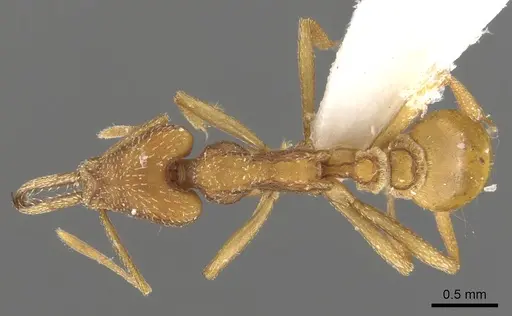
Literature
Loading distribution map...Loading products...