
Strumigenys ananeotes
- Sci. Name
- Strumigenys ananeotes
- Tribe
- Attini
- Subfamily
- Myrmicinae
- Author
- Longino & Booher, 2019
- Distribution
- Found in 1 countries
Introduction
Strumigenys ananeotes is a tiny ant discovered in 2018 in an urban backyard garden in Salt Lake City, Utah - the only known location for this species worldwide . Workers are very small (estimated total length about 2-3 mm, typical for the genus). Their most distinctive feature is the mandible teeth: the first seven teeth alternate between large and small pointed teeth, making them the only North American Strumigenys with this pattern . The name 'ananeotes' means 'newly emerged' - a reference both to its recent discovery and its emergence after summer rains . These ants are specialist hunters that feed on springtails (Collembola) in soil and leaf litter . Scientists think this is a relict species that survived in moist underground spots through Utah's dry climate, and now thrives thanks to urban irrigation that creates damp garden conditions .
Quick Summary
- Difficulty: Expert
- Origin & Habitat: Known only from an urban garden in Salt Lake City, Utah, USA, far outside the normal range of this mostly tropical genus. Found in a raised-bed garden with potting soil about 20 cm deep, living in soil to about 10 cm depth [1][3]. The area has a continental climate with cold winters and hot, dry summers, but summer irrigation makes moist, warm conditions similar to eastern deciduous forests [1].
- Colony Type: The only collected colony had 66 workers and 6 winged queens [1]. Colony structure is not confirmed. Most Strumigenys species have a single queen, but this has not been studied for Strumigenys ananeotes.
- Size & Growth:
- Queen: Estimated total length about 4-5 mm (based on head width of 0.423 mm and typical Strumigenys proportions) [2]. Exact body length not available.
- Worker: Estimated total length about 2-3 mm (based on typical Strumigenys size). Exact body length not available [2].
- Colony: At least 66 workers in the wild [1]. Likely under 200 based on genus patterns.
- Growth: Unknown, no captive data exists for this newly described species
- Development: Unconfirmed. Based on related Strumigenys species, expect 2-4 months at optimal temperature. (This is a newly described species with no captive breeding studies. All timeline estimates are guesses.)
- Antkeeping:
- Temperature: Keep at room temperature (20-24°C). They come from temperate Utah with strong seasonal swings, so they likely tolerate 15-28°C. Avoid extreme heat. Stable temperatures are better than fluctuating ones. [1]
- Humidity: High humidity is critical. In the wild they live in moist soil under irrigated gardens. Keep the nest substrate consistently damp but not waterlogged, aim for a humidity gradient with one moist area and one drier area. These are subterranean ants that need stable moisture. [1][3]
- Diapause: Likely yes, Utah has cold winters. Expect a rest period at cool temperatures (10-15°C) for 2-3 months to simulate winter. [1]
- Nesting: Soil-dwelling species. In captivity, use a naturalistic setup with moist soil or a plaster or Y-tong nest with a water reservoir to keep humidity high. They nest in soil to about 10 cm depth. Never use acrylic nests, they don't hold humidity well for this species. [1][3]
- Behavior: Extremely shy and non-aggressive. They are specialist hunters that feed on springtails using their mandibles. They forage mostly at night. Workers are tiny and can easily escape through standard barriers, you need very fine mesh and tight seals. They have a functional stinger but it's tiny and not medically significant to humans. [1][3]
- Common Issues: escape prevention is critical, workers are tiny (2-3 mm) and can get through standard ant barriers, specialized diet requirement, they only eat live springtails and will starve on typical ant food, high humidity needs, dry conditions kill them quickly, no captive breeding data exists, this species was only discovered in 2018 and has zero husbandry history, extremely rare in the hobby, you likely cannot obtain this species because it's only known from one wild location
Discovery and Rarity
Strumigenys ananeotes is one of the most recently discovered and rarest ants in North America. It was found by myrmecologist Jack Longino in his own backyard in Salt Lake City, Utah, on August 13-14,2018 [1]. The species was formally described in 2019,and 'ananeotes' means 'newly emerged', a reference both to its recent discovery and its emergence from the soil after summer rains or irrigation created favorable conditions [1]. This is the ONLY known population of this species anywhere in the world. The ants were found in a raised-bed garden with potting soil about 20 cm deep, with 66 workers and 6 winged queens collected from soil excavated to about 10 cm depth [1][3]. This find is surprising because Strumigenys is mostly a tropical and subtropical genus, and Utah is far from any other known Strumigenys record [1]. Scientists think this is a relict species that survived in moist underground spots during Utah's dry periods, and now spreads because urban irrigation creates damp garden conditions [1][3].
Identification and Distinguishing Features
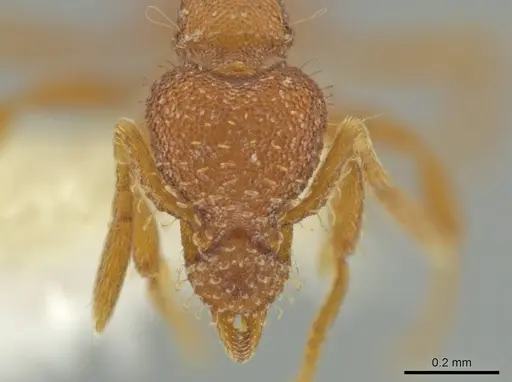
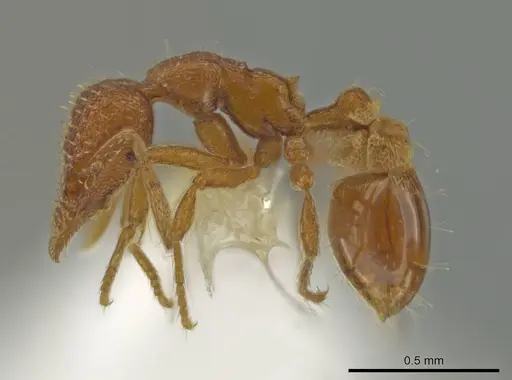
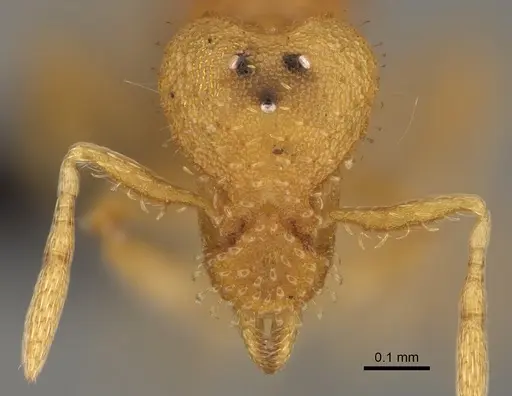
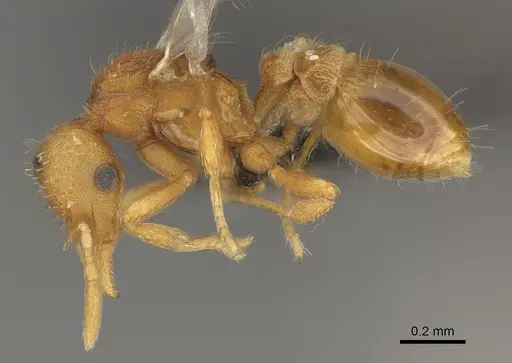
Strumigenys ananeotes can be identified by its unique tooth pattern, it is the ONLY North American Strumigenys where the first 7 teeth alternate between large and small pointed teeth [1]. The basal-most tooth is small or missing, giving a count of 8 or 7 teeth of alternating sizes [1]. Workers have well-developed eyes with 7-10 ommatidia, and queens have 45-50 pigmented ommatidia [2]. The setae on the clypeus (front margin of the head) are distinctive: they are spoon-shaped, translucent, and have irregularly scalloped edges, different from all similar species [2]. This species is most similar to western Strumigenys chiricahua, eastern Strumigenys hyalina, and Mexican Strumigenys dispalata, but differs in tooth size patterns and clypeal setae shape [1]. Exact body length is not provided in the research, total length estimated at about 2-3 mm for workers and 4-5 mm for queens, based on typical Strumigenys proportions [2].
Feeding and Diet - Critical
This is the most challenging part of keeping Strumigenys ananeotes: they are specialist hunters that feed almost exclusively on springtails (Collembola) [3]. In the wild, they hunt springtails in leaf litter, rotting wood, and soil [3]. This means they will NOT survive on typical ant foods like sugar water, honey, or protein mixes. In captivity, you MUST provide live springtails as their main food source. Other tiny arthropods like small isopods might be accepted, but springtails should be the staple. This specialized diet makes them one of the hardest ants to keep, they are not for beginners. You will need to culture your own springtail colony to ensure a steady food supply. Do not try to keep this species unless you are ready to maintain both the ants and a springtail culture long-term. [3]
Housing and Nest Setup
Strumigenys ananeotes is a soil-dwelling species that nests in moist soil to about 10 cm depth [1]. For captivity, use a naturalistic setup with moist soil, a shallow container with damp soil, leaf litter, and small pieces of rotting wood mimics their natural habitat. Alternatively, use a plaster or Y-tong nest with a water reservoir to keep humidity high, but make sure the chambers are small enough for their tiny size (2-3 mm workers). The nest must hold moisture consistently, these ants cannot handle dry conditions. Use a hydration system that keeps the substrate damp without flooding. Because they are tiny and can escape through normal barriers, use very fine mesh and tight-fitting lids. Provide a foraging area with leaf litter where you can introduce springtails so they can hunt naturally. [1][3]
Temperature and Seasonal Care
Based on their Utah origin, Strumigenys ananeotes experiences wide temperature swings in the wild, cold winters and hot, dry summers. In captivity, keep them at room temperature (20-24°C) as a baseline. They likely tolerate a range from cool (15°C) to warm (28°C), but avoid extremes. The key is stability, sudden changes stress them. For winter, expect a diapause period at cool temperatures (10-15°C) for 2-3 months, simulating Utah's cold winters [1]. During the active season, they were seen foraging at night in August when temperatures had cooled [1]. This suggests they are more active during cooler periods and may avoid heat. Watch your colony, if workers seem sluggish, try slightly cooler temperatures, if they are very active, your temperature is probably right. [1][3]
Behavior and Temperament
Strumigenys ananeotes is extremely shy and non-aggressive. Workers are tiny and likely spend most of their time underground hunting springtails. They are specialist predators that use their mandibles to catch tiny prey, they have a functional stinger but it's tiny and not medically significant to humans [3]. Foraging has been seen at night on the soil surface, so they are likely nocturnal or crepuscular hunters [1]. They are not defensive and will not attack, their survival strategy is hiding, not fighting. However, their tiny size (2-3 mm workers) means they are excellent escape artists. Standard barrier systems will not stop them, you must use very fine mesh, tight lids, and possibly liquid barriers like fluon. Their colony size is probably small (the wild colony had 66 workers) and they likely grow slowly. [1][3]
Frequently Asked Questions
Can I keep Strumigenys ananeotes as a beginner antkeeper?
No, this species is not suitable for beginners. It is expert-level only because of its specialized diet (needs live springtails), very high humidity needs, and the fact that no one has bred them in captivity. Also, this species is only known from one wild location and is basically not available to hobbyists. [3]
What do Strumigenys ananeotes eat?
They are obligate predators of springtails (Collembola). In the wild, they hunt them in soil and leaf litter. In captivity, you must give them live springtails as their main food, they will not survive on sugar water, honey, or typical ant protein. You will need to culture your own springtail colony to feed them. [3]
How big do Strumigenys ananeotes colonies get?
The only known wild colony had 66 workers. Based on related Strumigenys species, colonies likely max out at under 200 workers. They are not large-colony ants. [1]
Can I find Strumigenys ananeotes in the wild?
Extremely unlikely. This species is only known from a single location in Salt Lake City, Utah, the discoverer's backyard. It has never been found anywhere else. Even if you went to that location, collecting would be ethically questionable because it's the only known population. [1]
What temperature should I keep Strumigenys ananeotes at?
Keep them at room temperature (20-24°C). They are from temperate Utah and likely tolerate 15-28°C. Avoid overheating. They were found in an irrigated garden where temperatures would be moderate. Provide stable temperatures without major fluctuations. [1][3]
Do Strumigenys ananeotes need hibernation?
Likely yes. Utah has cold winters, and the species probably survives underground during that time. Provide a winter rest period at 10-15°C for 2-3 months. This mimics their natural seasonal cycle. [1]
How do I set up a nest for Strumigenys ananeotes?
Use a naturalistic setup with moist soil, they nest in soil to about 10 cm depth. A shallow container with damp soil, leaf litter, and rotting wood works well. Alternatively, use a plaster or Y-tong nest with a water reservoir to keep humidity up. The key is keeping the substrate consistently damp, they cannot handle dry conditions. Scale chambers to their tiny 2-3 mm size. Use very fine mesh to prevent escapes. [1][3]
Why is this species so special?
Strumigenys ananeotes is one of the rarest ants in North America, discovered in 2019 and only known from one backyard in Salt Lake City. It is a relict species that survived Utah's dry periods in underground microhabitats, now thriving because of urban irrigation. It is the only North American Strumigenys with alternating large and small teeth on its mandibles. [1][3]
How long does it take for Strumigenys ananeotes to develop from egg to worker?
This is not known, no one has bred this species in captivity. Based on related Strumigenys species, it might take 2-4 months at the right temperature, but that's just a guess. [2]
Are Strumigenys ananeotes aggressive?
No, they are very shy, non-aggressive specialist hunters. They pose no threat to humans or other ants. Their strategy is to hide underground, not fight. They will not defend their colony aggressively. [3]
Where is Strumigenys ananeotes found naturally?
Only in Salt Lake City, Utah, USA, specifically in 'The Avenues' neighborhood near the University of Utah campus, in an urban backyard garden. This is the only known spot for this species anywhere in the world. [1][3]
Report an Issue
The current care sheet is based fully on literature. See inconsistencies, or something that's incorrect? Please , it will be resolved after review from an admin. Contributing to the blogs tab also helps providing information, to make us be able to further improve the caresheets. Thank you for your support!
References

This caresheet is licensed under CC BY-SA 4.0 .
Community Blogs
CASENT0645954
View on AntWeb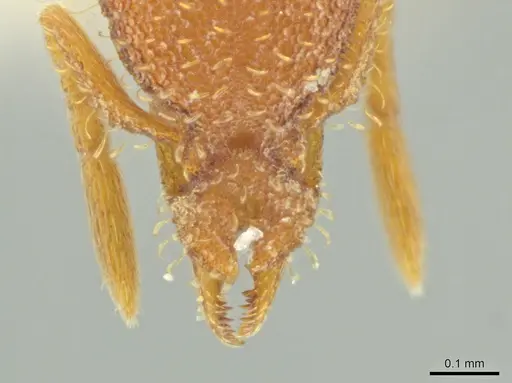
CASENT0645955
View on AntWeb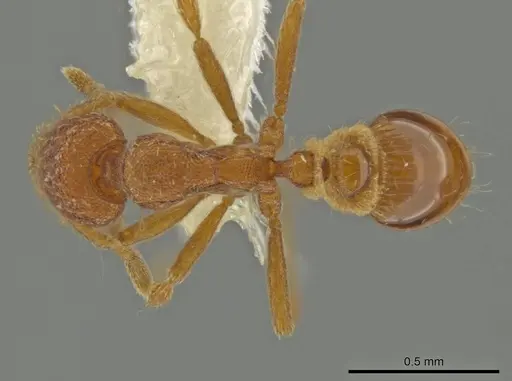
CASENT0645965
View on AntWeb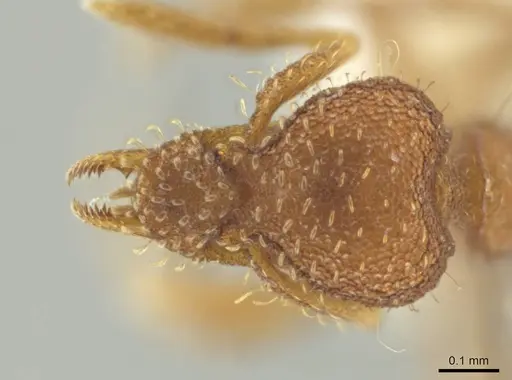
CASENT0799941
View on AntWeb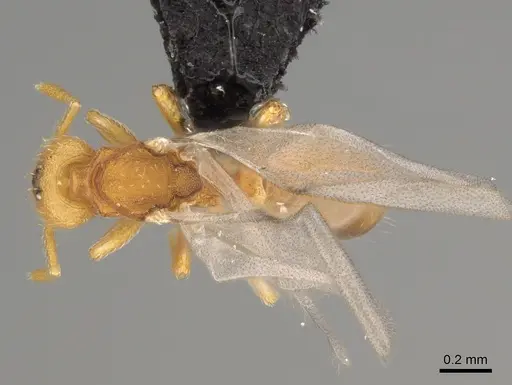
Literature
Loading distribution map...Loading products...