
Strumigenys ailaoshana
- Sci. Name
- Strumigenys ailaoshana
- Tribe
- Attini
- Subfamily
- Myrmicinae
- Author
- Xu & Zhou, 2004
- Distribution
- Found in 1 countries
Introduction
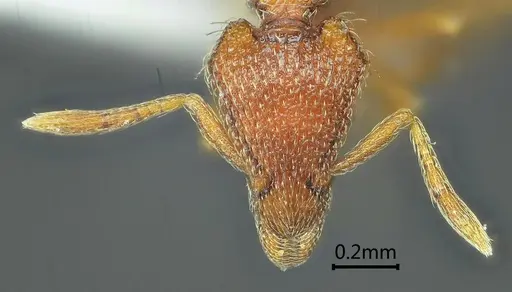
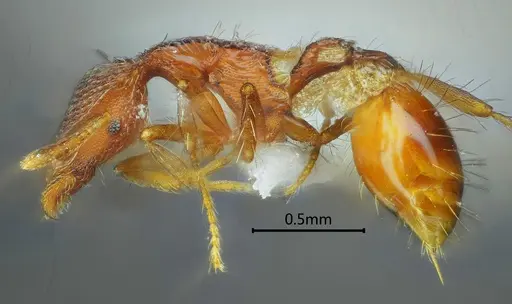
Strumigenys ailaoshana is a tiny predatory ant native to Yunnan Province, China. Workers are about 2.6 mm long, queens about 3.1 mm . They belong to the leptothrix species group within the elegantula complex, with triangular mandibles bearing about 10 spine‑like teeth and elaborate spongiform lobes on the petiole and postpetiole . The body is brown with black eyes and dark lateral margins on the alitrunk. This species is a habitat specialist: in Xishuangbanna it was collected exclusively from rubber plantations, not from primary or secondary forests .
Quick Summary
- Difficulty: Hard
- Origin & Habitat: Yunnan Province, China, type locality is Ailaoshan Mountain,1250 m, in Pinus kesiya forest. Elsewhere it is found in rubber plantations, but not in natural forests [1][2].
- Colony Type: Single‑queen colonies are most likely based on typical Strumigenys patterns, but this has not been confirmed by direct study of this species.
- Size & Growth:
- Queen: ~3.1 mm [1]
- Worker: ~2.5-2.7 mm [1]
- Colony: Unknown for this species, related Strumigenys can reach several hundred workers, so inferred to be similar.
- Growth: Slow, these ants invest heavily in each individual and colonies grow gradually.
- Development: Estimated 8-12 weeks under good conditions, based on related Strumigenys species. (Slow development, queen raises first brood alone. Patience is essential.)
- Antkeeping:
- Temperature: Keep around 22-26 °C, comes from a subtropical montane region in Yunnan with moderate temperatures. Avoid prolonged heat above 28 °C.
- Humidity: High humidity is needed, aim for a damp but not waterlogged substrate. A moisture gradient lets ants choose their preferred zone.
- Diapause: Probably not a true hibernation. This subtropical species may slow down in winter if temperatures drop naturally, but deliberate cold treatment is not recommended.
- Nesting: Small Y‑tong (AAC) or plaster nests work well. Keep chambers small and tight, with access to a tiny hunting area. Fine ventilation mesh (≤0.5 mm) is essential to prevent escape.
- Behavior: Slow‑moving ambush predators. Workers sit still with mandibles open and snap shut on prey that wanders close. They are not aggressive toward people, but they do have a functional sting, it is very mild and not medically significant. Because they are under 3 mm, escape prevention is critical: use mesh fine enough to block them. Activity is low, you will see the most action during feeding.
- Common Issues: colonies grow very slowly and beginners may lose patience or overfeed, causing mold., tiny size makes escape likely without fine mesh (use mesh smaller than 0.5 mm)., requires live small prey, cannot survive on sugar or protein powder alone., high humidity needs can lead to mold if ventilation is poor., wild‑caught colonies may carry parasites that cause collapse, quarantine new colonies if possible.
Housing and Nest Setup
Strumigenys ailaoshana needs a small, humid enclosure. Y‑tong (AAC) blocks work well because you can carve tiny chambers that match their size. Plaster nests also hold moisture well. For the outworld, a small container is enough, these ants do not roam widely. Escape prevention is critical: workers are under 3 mm and can slip through standard ant mesh. Use mesh with openings 0.5 mm or smaller on all ventilation holes. Keep part of the nest covered to create humid microclimates while still allowing some airflow. A water tube or moisture reservoir connected to the nest helps maintain high humidity [1].
Feeding and Diet
These ants are obligate predators that hunt tiny arthropods. The ideal prey is live springtails (Collembola), they are the right size and Strumigenys readily take them. Other small live prey like minute soil mites or tiny fruit fly larvae may also be accepted. They are ambush hunters: they sit still with mandibles open and snap shut when prey touches them. They do NOT need sugar or honey, their diet is purely protein. Offer prey every 2-3 days and remove any uneaten food after 24 hours to prevent mold. Always provide a constant water source, such as a small test tube with cotton [1].
Temperature and Humidity
Keep the nest at 22-26 °C. This species comes from Yunnan at about 1250 m elevation, a subtropical montane area with moderate temperatures and high humidity. Avoid temperatures above 28 °C for long periods. The substrate should be consistently damp but not waterlogged. Aim for a relative humidity of 70-80 % in the nest. A moisture gradient (wet side and dry side) lets the ants choose what they prefer. Room temperature within 22-26 °C is fine, if your home runs cooler, use a heating cable on the top or side of the nest (not underneath, as that dries out the soil too fast) [1].
Colony Founding and Growth
How founding works for this species is not known in detail. Based on typical Strumigenys behaviour, the queen may seal herself in a small chamber and raise the first workers alone, but this is unconfirmed. Expect the first tiny workers to appear about 8-12 weeks after the queen starts laying, given good conditions. Colonies grow slowly. In the first year you might see only 10-20 workers. A mature colony might reach several dozen to a few hundred workers after a few years. Do not rush to enlarge the nest, these ants like small, cramped spaces. Overfeeding leads to mold, so stick to small prey quantities. Queens are about 3.1 mm and workers 2.5-2.7 mm [1].
Behavior and Temperament
Strumigenys ailaoshana is a calm, non‑aggressive ant. Workers spend most of their time motionless, waiting to ambush small prey. They do not chase food, they rely on prey blundering into them. The mandibles, with about 10 sharp teeth, can give a tiny pinch, and they do possess a functional sting (typical of Myrmicinae), but it is extremely mild and not medically significant to people. These ants are not defensive and will not attack. Their foraging activity is low compared to many common pet species, so you will appreciate the moments when they catch prey. They do not form supercolonies or show strong territorial behaviour [1].
Frequently Asked Questions
How long does it take for Strumigenys ailaoshana to produce first workers?
Expect about 8-12 weeks from egg to first worker when kept at 22-26 °C. This species is slow, so be patient during founding. The queen raises the first brood alone [1].
What do Strumigenys ailaoshana ants eat?
They are strict predators that need live small prey. Springtails (Collembola) are ideal. Other tiny live arthropods like minute mites or fruit fly larvae may also work. They do NOT eat sugar, honey, or other carbohydrates, their diet is entirely protein‑based.
Can I keep Strumigenys ailaoshana in a test tube?
Test tubes work for founding and for small colonies, but they are not ideal long‑term. These ants need high humidity (which a test tube provides) plus a tiny hunting area. A small Y‑tong or plaster nest gives them the tight chambers they prefer. If you use test tubes, make sure the mesh on the tube opening is fine enough (
Are Strumigenys ailaoshana good for beginners?
No, this is a difficult species. They need live prey, constant high humidity, very slow growth, and meticulous escape prevention. Beginners should start with a more forgiving species.
How big do Strumigenys ailaoshana colonies get?
The maximum colony size is not known for this species. Related Strumigenys can reach several hundred workers, so that is the best guess. Growth is slow and takes years.
Do Strumigenys ailaoshana need hibernation?
Probably not a true cold hibernation. They come from subtropical Yunnan and likely only slow down slightly in winter. Do not put them in a fridge. If your room gets cooler in winter (around 18-20 °C), that natural drop is fine.
Why are my Strumigenys ailaoshana dying?
Common causes: wrong food (they need live prey, not sugar), humidity too low, escape (check all seams and mesh), mold from overfeeding, or parasites from wild‑caught colonies. Review each factor, and keep temperatures in the 22-26 °C range.
When should I move my colony to a formicarium?
Wait until you have at least 20-30 workers. The founding stage in a test tube is low‑risk. Once the colony is clearly growing and eating regularly, move them to a small Y‑tong or plaster nest with a tiny outworld.
Can I keep multiple queens together?
It is not recommended. Strumigenys ailaoshana is likely single‑queen. Keeping multiple queens together has not been tested and would probably lead to fighting. Start with one queen.
Report an Issue
The current care sheet is based fully on literature. See inconsistencies, or something that's incorrect? Please , it will be resolved after review from an admin. Contributing to the blogs tab also helps providing information, to make us be able to further improve the caresheets. Thank you for your support!
References

This caresheet is licensed under CC BY-SA 4.0 .
Community Blogs
ANTWEB1060570
View on AntWeb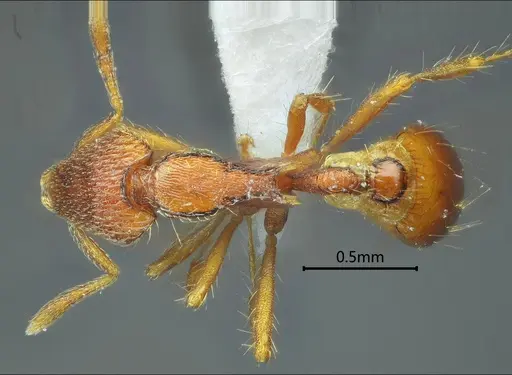
Literature
Loading distribution map...Loading products...