
Strumigenys abditivata
- Sci. Name
- Strumigenys abditivata
- Tribe
- Attini
- Subfamily
- Myrmicinae
- Author
- Bolton, 2000
- Distribution
- Found in 1 countries
Introduction
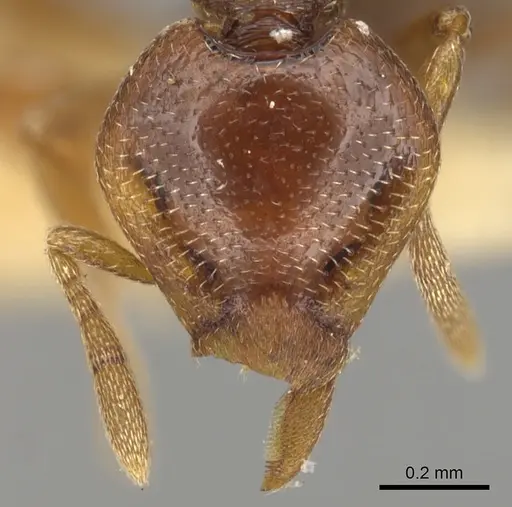
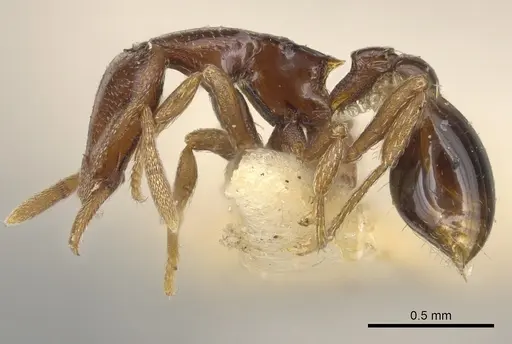
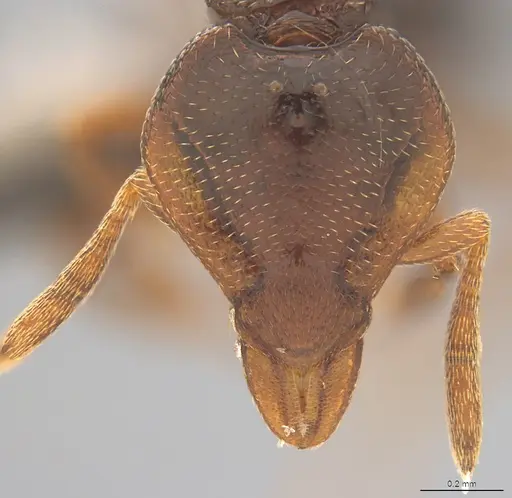
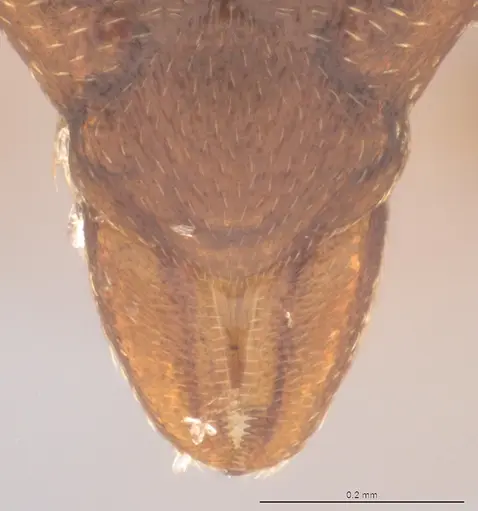
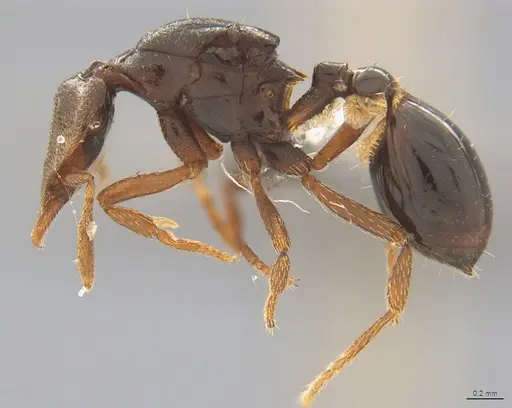
Strumigenys abditivata is a tiny ant from the Atlantic Forest of southern Brazil, known from Paraná and Santa Catarina at elevations around 1000 m . Workers measure 2.7-2.8 mm and have extremely long mandibular basal lamella and sculptured mandibles, distinguishing them from related species in the splendens group . They live in forest leaf litter and were collected using Winkler extractors . The species belongs to the tribe Attini (traditionally Dacetini) and is a member of the Strumigenys splendens group .
Quick Summary
- Difficulty: Expert
- Origin & Habitat: Brazil: Paraná, Santa Catarina. Atlantic Forest, elevation around 1000 m. Collected from sifted leaf mould in forest habitat [3][1].
- Colony Type: Unconfirmed. Like most Strumigenys, likely single‑queen, but no documentation exists. Colony size is unknown but typical Strumigenys species have small colonies.
- Size & Growth:
- Queen: Unknown. Based on related species, possibly 3-4 mm.
- Worker: 2.7-2.8 mm [2]
- Colony: Unknown. Strumigenys species generally have colonies under 200 workers.
- Growth: Likely slow
- Development: Unknown. Inferred from related specialist species: likely 8-12 weeks under warm humid conditions. (Specific development data for this species is lacking.)
- Antkeeping:
- Temperature: Not documented. Based on leaf litter habitat, keep warm (24-26 °C is a reasonable starting point). Avoid temperatures below 20 °C.
- Humidity: High humidity is critical. Keep the nest substrate consistently moist but not waterlogged. A humidity gradient may be helpful.
- Diapause: Probably not required. The species is from a subtropical/tropical region, so year‑round warmth is likely fine.
- Nesting: Likely requires humid leaf litter substrate. Y‑tong (AAC) or soil nests that hold moisture may work, but this is speculative.
- Behavior: Shy, slow‑moving, and non‑aggressive. They are specialist hunters of tiny arthropods. Due to their tiny size (2.7 mm), escape prevention is mandatory, use fine mesh (≤0.5 mm) and barrier solutions on all openings.
- Common Issues: escape prevention: workers are 2.7-2.8 mm and can squeeze through standard barriers., specialized diet: they likely need live springtails, starvation is a real risk without a steady supply., humidity sensitivity: colonies dry out quickly in dry air, monitor and adjust frequently., slow growth: be patient, this species may take months to produce first workers., limited care data: most advice is based on related species, not this exact ant.
Housing and Setup
Because Strumigenys abditivata comes from humid forest leaf litter, a naturalistic setup with a shallow layer of moist soil and leaf litter is a good starting point. Y‑tong (AAC) nests can hold humidity well, but there is no published data on which nest type works best for this species. The outworld should be small to keep prey easy to find. Use fine mesh (≤0.5 mm) on ventilation holes and apply Fluon or similar barriers to all openings, these ants are tiny and will escape through the smallest gaps [2].
Feeding and Diet
Like many dacetine (now Attini) ants, Strumigenys abditivata is likely a specialized predator of springtails (Collembola). Keepers should maintain a culture of live springtails and offer them several times a week. There is no confirmed record of them accepting other prey, so springtails should be the core diet. Sugar water is almost certainly not accepted. If your colony does not have a steady springtail supply, it will starve quickly.
Temperature and Humidity
Specific temperature and humidity requirements are not documented for this species. Given its forest floor origin, it is safest to keep the nest warm (24-26 °C) and very humid. The substrate should feel damp to the touch, but avoid standing water. Mist the outworld occasionally. Because the ants are minute, they lose moisture fast, if you see workers looking sluggish, humidity is probably too low. A water tube connected to the nest helps maintain evaporation [3].
Colony Development
No literature describes the colony development of this species. Based on related Strumigenys, growth is expected to be slow. A newly settled queen may take weeks to produce her first tiny workers. The number of springtails available directly limits growth, each larva needs many prey items. Do not disturb the queen during founding. A healthy colony could reach 30-50 workers after a year if fed well, but this is speculation. Patience is essential.
Behavior and Temperament
Strumigenys abditivata workers are shy and slow‑moving. They do not defend the nest aggressively and will retreat from disturbance. Their trap‑jaw mandibles are for catching springtails, not for biting humans, they are harmless. The main behavioral challenge is their tiny size, which makes them excellent escape artists. Check all barriers regularly. They are fascinating to watch hunting, but the colony’s activity is often hidden in the substrate. No reports of alate production in captivity have been documented [2].
Frequently Asked Questions
How long does it take for Strumigenys abditivata to produce first workers?
Unknown. Based on related Strumigenys species, likely 8-12 weeks at warm temperature (24-26 °C). Do not disturb the queen during this time.
What do Strumigenys abditivata ants eat?
They are specialist predators, live springtails (Collembola) are the only confirmed suitable prey. They do not accept sugar water or typical ant foods. A steady springtail culture is essential for captive survival.
Can I keep Strumigenys abditivata in a test tube?
A test tube can house a founding queen if kept dark and humid, but it must be sealed with a fine barrier. For established colonies, a Y‑tong or naturalistic nest that holds humidity is better. Escape prevention is mandatory at all stages due to the ant’s tiny size.
Are Strumigenys abditivata ants dangerous?
No, they are completely harmless to humans. Their mandibles are designed for tiny prey and they are too small to bite effectively. They are shy and will flee rather than attack.
Do Strumigenys abditivata ants need hibernation?
No literature addresses this. Because the species comes from a subtropical/tropical region, they likely do not require a cold diapause. Keeping them at room temperature year‑round is probably fine, but avoid prolonged temperatures below 18 °C.
Why are my Strumigenys abditivata dying?
Common causes in captivity include: (1) desiccation from low humidity, (2) starvation due to lack of springtails, (3) escape (check barriers), and (4) parasites from wild‑caught colonies. Ensure high humidity, a constant springtail supply, and escape‑proof enclosures.
How big do Strumigenys abditivata colonies get?
Unknown. Related Strumigenys species rarely exceed 100-200 workers. Colony growth is slow and the maximum size for this species has not been recorded.
Is Strumigenys abditivata good for beginners?
No, this is an expert‑only species. The need for live springtail cultures, constant high humidity, and extreme patience make it unsuitable for beginners. Start with easier species like Lasius or Tetramorium.
When should I move my colony to a formicarium?
There are no guidelines for this species. Wait until the colony has at least 20-30 workers and is actively foraging. Move the colony using a gradual introduction (e.g., connecting the test tube to the new nest). Ensure the new setup has high humidity.
Can I keep multiple queens together?
Unknown. There is no record of polygyny in this species. Attempting to combine queens is risky, they are likely aggressive toward unrelated queens.
Report an Issue
The current care sheet is based fully on literature. See inconsistencies, or something that's incorrect? Please , it will be resolved after review from an admin. Contributing to the blogs tab also helps providing information, to make us be able to further improve the caresheets. Thank you for your support!
References

This caresheet is licensed under CC BY-SA 4.0 .
Community Blogs
CASENT0900192
View on AntWeb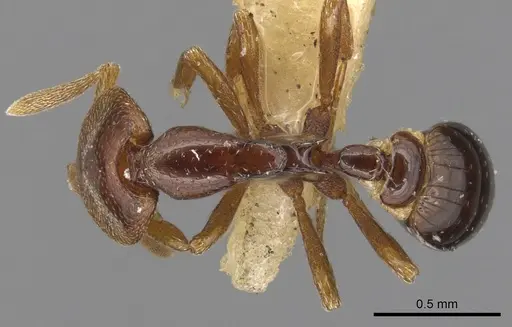
CASENT4036188
View on AntWeb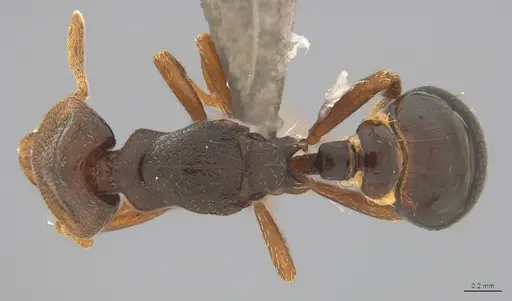
Literature
Loading distribution map...Loading products...