
Strongylognathus kratochvili
- Sci. Name
- Strongylognathus kratochvili
- Tribe
- Crematogastrini
- Subfamily
- Myrmicinae
- Author
- Šilhavý, 1937
- Distribution
- Found in 3 countries
Introduction
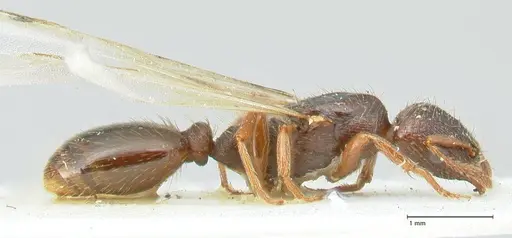
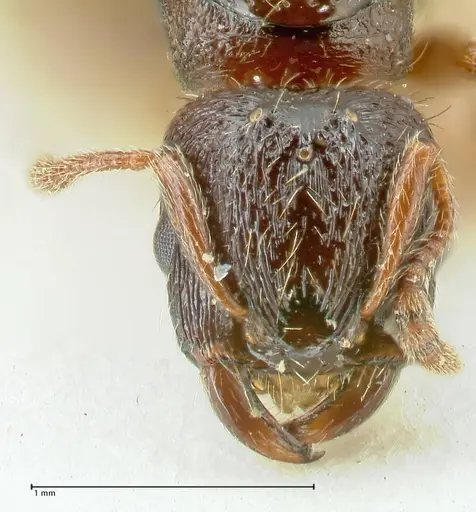
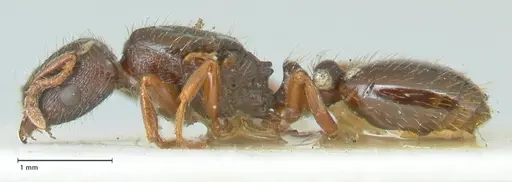
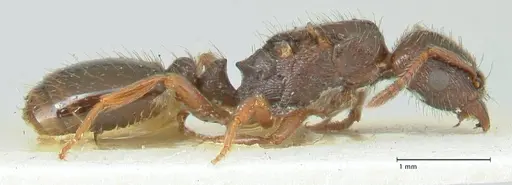
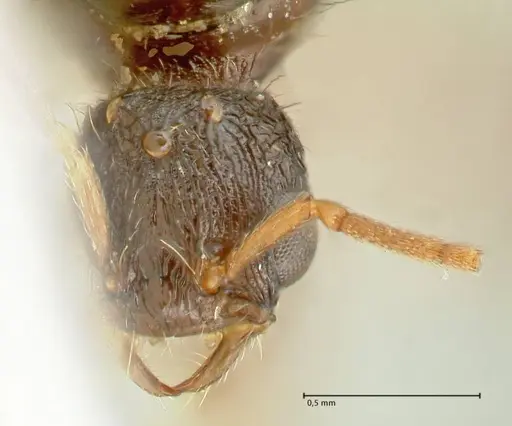
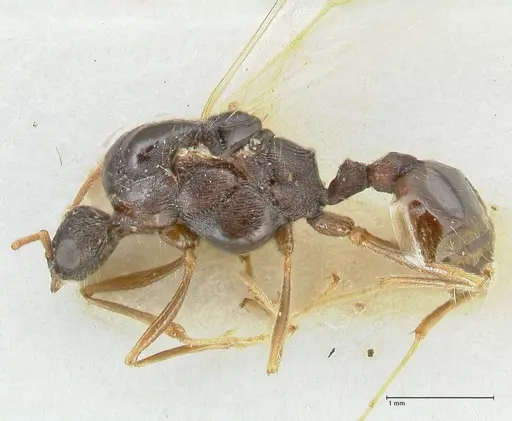
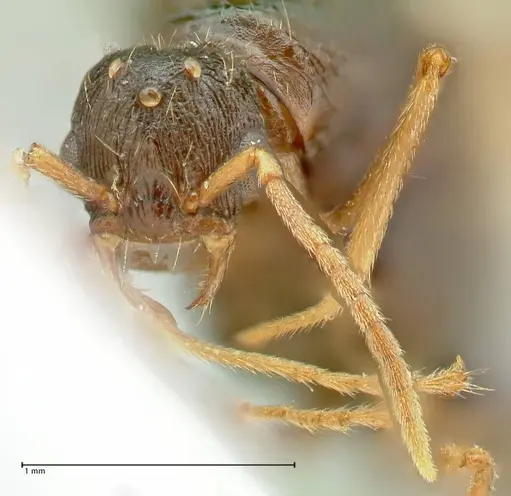
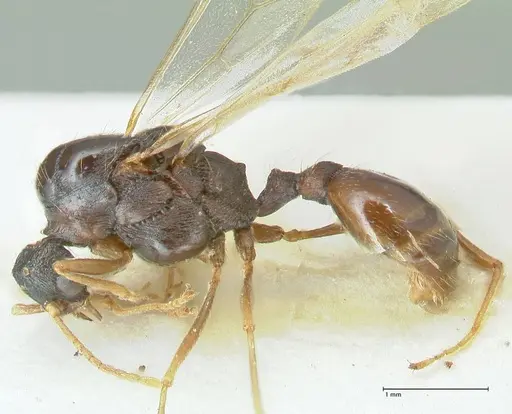
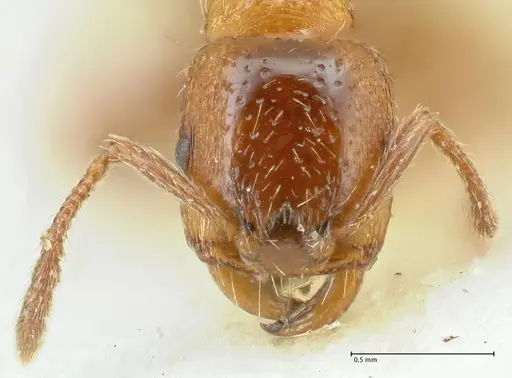
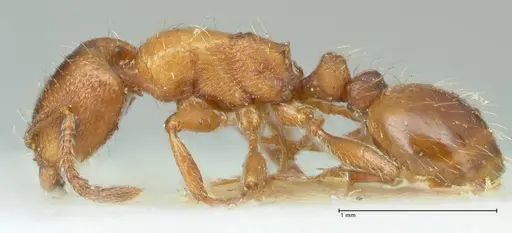
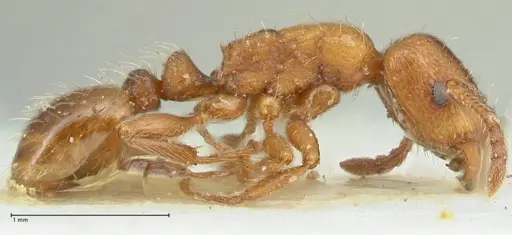
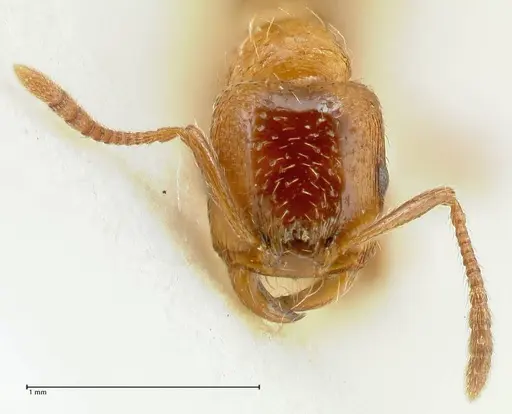
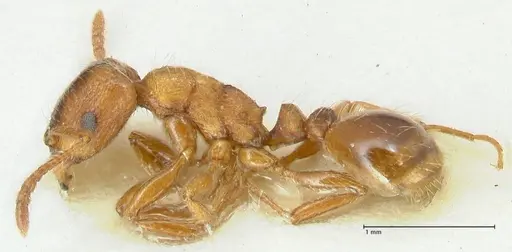
Strongylognathus kratochvili is a tiny ant from the subfamily Myrmicinae and tribe Crematogastrini. It is a specialized social parasite that invades colonies of Tetramorium ants, specifically Tetramorium moravicum and Tetramorium caespitum, using their workers to tend to its brood . This species belongs to the Strongylognathus huberi group and shows very low genetic differentiation from other group members . Originally described from Mohelno in the Czech Republic in 1937,it is now considered rare with a highly restricted distribution in Central Europe . The type locality is a serpentine steppe nature reserve in Moravia . Body size data is not available from published sources.
Quick Summary
- Difficulty: Expert
- Origin & Habitat: This species is restricted to Czechia and Slovakia, with related populations in Bulgaria now recognized as Strongylognathus bulgaricus [5][6]. It inhabits south-facing steppe slopes with sparse vegetation and soil mixed with fine rubble, avoiding areas with dense grass or bare ground [7]. The type locality at Mohelno is a serpentine steppe national nature reserve in Moravia [4]. Some evidence suggests the species may already be extinct in the Czech Republic [8], though it is still listed as outdoor in that country [9].
- Colony Type: Social parasite, this is a slave-making (dulotic) species that invades Tetramorium colonies. It may represent either degenerate dulosis or queen-tolerant inquilinism, meaning the parasite queen might coexist with the host queen rather than killing her outright [1]. Indirect evidence suggests it could be a true slave-maker [8]. The colony structure depends entirely on host colony adoption.
- Size & Growth:
- Queen: Size data unavailable, estimated approximately 3-4 mm based on related species
- Worker: Size data unavailable
- Colony: Small, dependent on host colony size
- Growth: Slow
- Development: Unknown, development is tied to host colony dynamics (As a social parasite, this species does not found colonies independently. A newly mated queen invades an established Tetramorium host colony and relies on host workers to raise her brood.)
- Antkeeping:
- Temperature: Warm conditions matching its steppe habitat: aim for 22-26 °C, based on habitat inference [7]
- Humidity: Low to moderate, dry, steppe conditions. Avoid damp conditions.
- Diapause: Likely requires winter rest (diapause) as a temperate species, but this is unconfirmed. If keeping the host Tetramorium colony, provide 2-3 months at 5-10 °C, as typical for temperate Tetramorium.
- Nesting: This species cannot establish independent nests. You need a pre-established host colony of Tetramorium moravicum or Tetramorium caespitum. The parasite queen integrates into the host nest.
- Behavior: This is a specialized social parasite that cannot survive without a host colony. The parasite queen enters a Tetramorium nest and uses host workers to raise her offspring. Unlike some slave-makers that kill the host queen, S. kratochvili may tolerate the host queen's presence. Workers are tiny and depend on host workers for food and care. As a member of the Myrmicinae subfamily, it has a modified stinger adapted for smearing venom rather than piercing, but this is unlikely to affect human keepers. Escape risk is moderate, the ant's small size means it can slip through tiny gaps, so you need a tight seal on the nest.
- Common Issues: This species cannot survive without a host Tetramorium colony, you must establish both species., Host colony health directly determines parasite colony success., Finding legitimate host species (Tetramorium moravicum, Tetramorium caespitum) may be difficult., Very small size makes escape prevention important, use fine mesh and seal all gaps., Conservation concern: listed as Vulnerable D2 (IUCN) and possibly extinct in parts of its range, do not collect from the wild [5][8].
Understanding Strongylognathus kratochvili
Strongylognathus kratochvili is one of the most specialized ants you could consider keeping. Unlike most ant species that build their own colonies, this is an obligate social parasite, it cannot survive without a host colony of Tetramorium ants [1]. The species was originally described from Moravia in the Czech Republic in 1937 and is now recognized as occurring in Czechia, Slovakia, and Bulgaria (where it is classified as Strongylognathus bulgaricus) [5][2]. However, there is evidence suggesting it may already be extinct in the Czech Republic [8]. This species is listed as Vulnerable (D2) according to IUCN criteria, meaning it has a very restricted distribution and could become threatened if its limited habitats are disturbed [5]. This conservation status should make you pause before considering keeping this species, wild colonies should not be disturbed.
The Parasitic Lifestyle
S. kratochvili represents an unusual case in the ant world, it may be a 'degenerate' slave-maker or a 'queen-tolerant inquiline' [1]. Most slave-making ants (like Formica sanguinea) raid other colonies and kill the host queen, then the host workers raise the slave-maker's brood without a queen of their own. In contrast, S. kratochvili might coexist peacefully with the host queen, sharing the nest [1]. However, indirect evidence suggests it could be a true slave-maker, similar to other Strongylognathus species [8]. The host species are Tetramorium moravicum and Tetramorium caespitum, these are the only species this parasite can associate with [1]. The parasite queen enters the host nest, and the host workers unknowingly raise her larvae as if they were their own. This is a remarkable example of social parasitism where the parasite manipulates the host's behavior.
Housing and Care Requirements
Keeping S. kratochvili is extremely challenging and not recommended for most antkeepers. You cannot keep this species alone, you must first establish a healthy colony of either Tetramorium moravicum or Tetramorium caespitum, then introduce the parasite queen. This requires advanced knowledge of both species' needs. The Tetramorium host colony should be kept in warm, dry conditions (22-26 °C, low to moderate humidity) matching the steppe habitat [7]. Once established, introducing the parasite queen is risky, host workers may attack and kill her. Some keepers report success by introducing the parasite queen during nuptial flight season when host colonies are more receptive. Because this is a social parasite, you cannot establish a self-sustaining colony in the typical sense. The parasite population will always be dependent on the host population, and if the host colony declines, the parasite colony will follow. Note the defense mechanism: like other Crematogastrini, this species uses a modified stinger to smear venom, but it is negligible for human interaction.
Legal and Ethical Considerations
Before considering this species, you must understand the legal and ethical implications. Strongylognathus kratochvili is listed as Vulnerable due to its extremely restricted range [5]. Collecting from the wild is not only ecologically harmful but may also be illegal depending on local protections. The species occurs only in specific protected areas in Czechia and Slovakia, with the type locality being Mohelenská hadcová step, a national nature reserve [4]. There is also a real possibility the species is already extinct in the Czech Republic [8]. Even if you could obtain a colony ethically, the specialized requirements (host colony, specific temperature/humidity, inability to establish independently) make this species suitable only for highly experienced antkeepers with specific research goals. For most antkeepers, observing this species in its natural habitat or studying it through scientific literature is the most appropriate approach.
Frequently Asked Questions
Can I keep Strongylognathus kratochvili as a pet?
This species is not suitable for typical antkeeping. As an obligate social parasite, it cannot survive without a host Tetramorium colony (T. moravicum or T. caespitum). Additionally, it is listed as Vulnerable due to its restricted distribution, and wild collection is neither ethical nor recommended. This species is best left to scientific study rather than captive keeping.
What do Strongylognathus kratochvili ants eat?
As a social parasite, S. kratochvili does not forage for food itself. Instead, it relies entirely on host workers to feed it and tend to its brood. The host Tetramorium workers collect food (typically small insects, honeydew, and seeds) and share it with all colony members including the parasite queen and her brood.
How do I establish a Strongylognathus kratochvili colony?
You cannot establish an independent S. kratochvili colony. You must first establish a Tetramorium moravicum or T. caespitum colony, then attempt to introduce a parasite queen. This is extremely difficult and rarely successful. The parasite queen must be accepted by the host colony, in most cases, host workers will attack and kill her. This process is not well-documented in captivity and is not recommended.
Do Strongylognathus kratochvili ants sting?
Strongylognathus belongs to the subfamily Myrmicinae, which includes species with a modified stinger. The tribe Crematogastrini uses a unique mechanism: a flattened, spatulate stinger for smearing venom rather than piercing. However, these ants are tiny and their stinger would be negligible even if functional. The primary defense mechanism of this species is its parasitic lifestyle, it avoids conflict by living within host colonies.
What is the distribution of Strongylognathus kratochvili?
This species has an extremely limited distribution, found only in Czechia and Slovakia [5]. The type locality is Mohelno in Moravia, Czech Republic. Related populations in Bulgaria have been reclassified as a separate species, Strongylognathus bulgaricus [5]. There is some evidence it may already be extinct in the Czech Republic [8]. This restricted range is why the species is listed as Vulnerable.
Are Strongylognathus kratochvili good for beginners?
Absolutely not. This species is considered Expert-level due to its obligate parasitic lifestyle requiring a host colony, its vulnerable conservation status, and the complete lack of established captive breeding protocols. Even experienced antkeepers should think carefully before attempting to keep this species.
Does Strongylognathus kratochvili need hibernation?
As a species from the temperate climate of Central Europe, it likely requires a winter diapause period. However, as a parasite living within a host colony, the parasite's dormancy is tied to the host colony's seasonal cycle. If keeping the host Tetramorium colony, provide a 2-3 month winter period at 5-10 °C, matching typical temperate Tetramorium needs.
Why is Strongylognathus kratochvili called a slave-maker?
Strongylognathus kratochvili is classified as a dulotic (slave-making) species, though it may be a 'degenerate' form [1]. Like other slave-makers, it invades host ant colonies and uses host workers to raise its offspring. However, unlike aggressive slave-makers that raid colonies and steal brood, S. kratochvili may peacefully coexist with the host queen, a more inquiline-like strategy [1]. The exact nature of this relationship is still being studied.
Report an Issue
The current care sheet is based fully on literature. See inconsistencies, or something that's incorrect? Please , it will be resolved after review from an admin. Contributing to the blogs tab also helps providing information, to make us be able to further improve the caresheets. Thank you for your support!
References

This caresheet is licensed under CC BY-SA 4.0 .
Community Blogs
ANTWEB1041373
View on AntWeb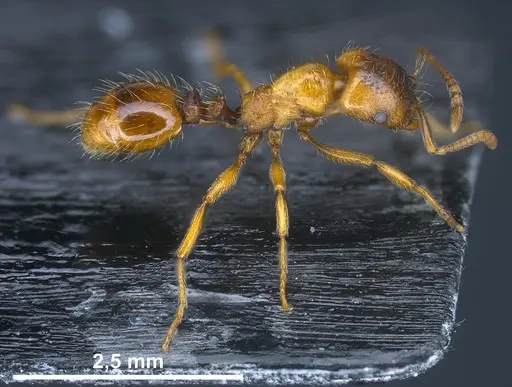
FOCOL2113-1
View on AntWeb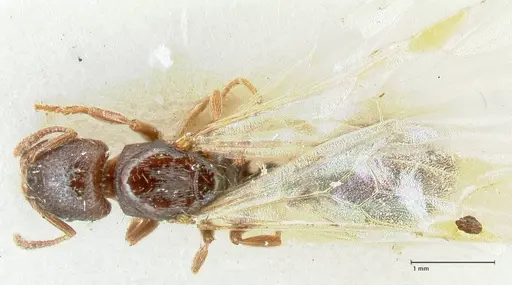
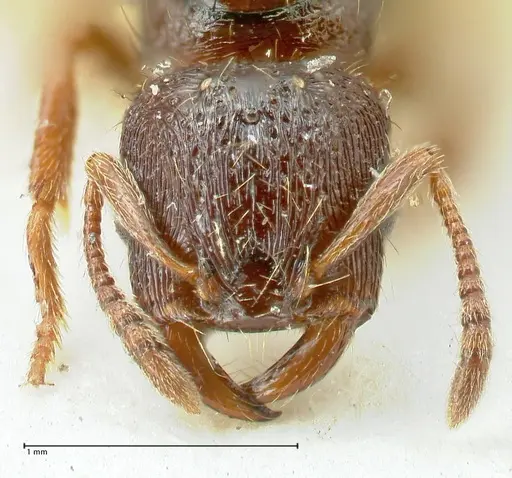
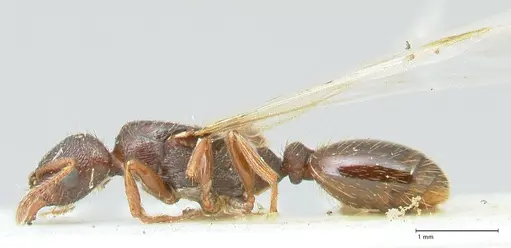
FOCOL2113-2
View on AntWeb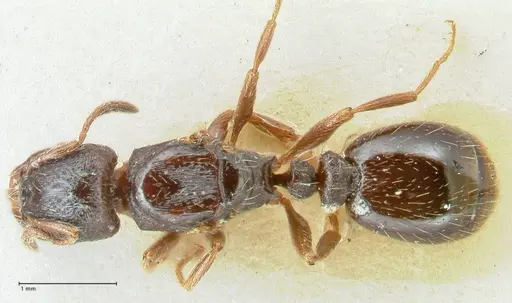
FOCOL2114-1
View on AntWeb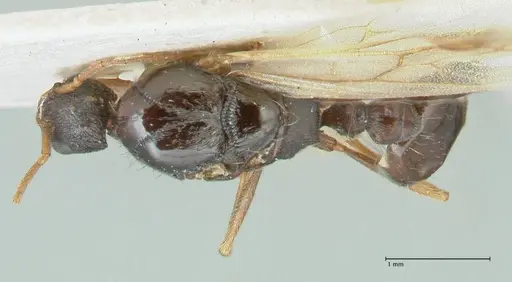
FOCOL2114-2
View on AntWeb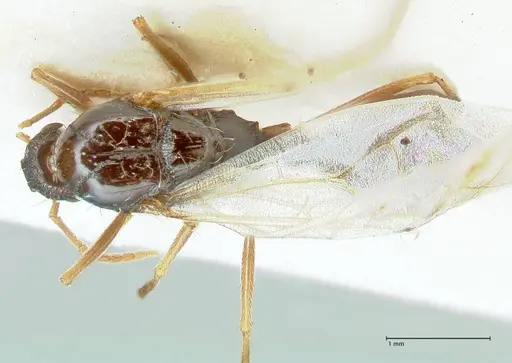
FOCOL2115-1
View on AntWeb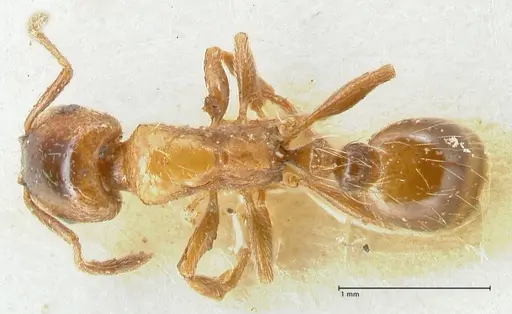
FOCOL2115-2
View on AntWeb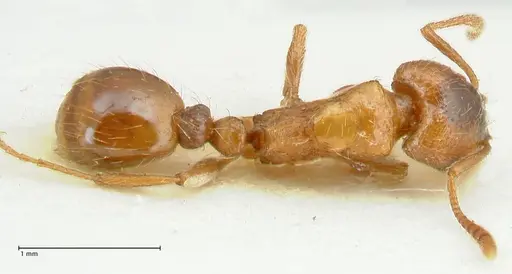
Literature
Loading distribution map...Loading products...