
Strongylognathus huberi
- Sci. Name
- Strongylognathus huberi
- Tribe
- Crematogastrini
- Subfamily
- Myrmicinae
- Author
- Forel, 1874
- Distribution
- Found in 4 countries
Introduction
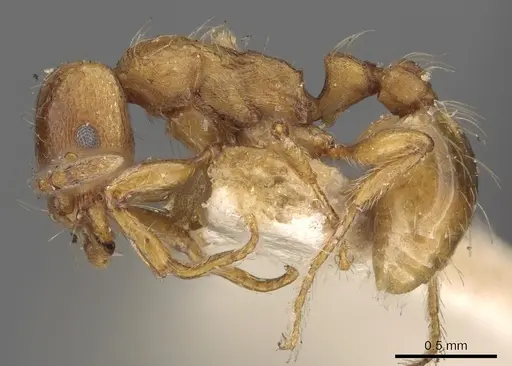
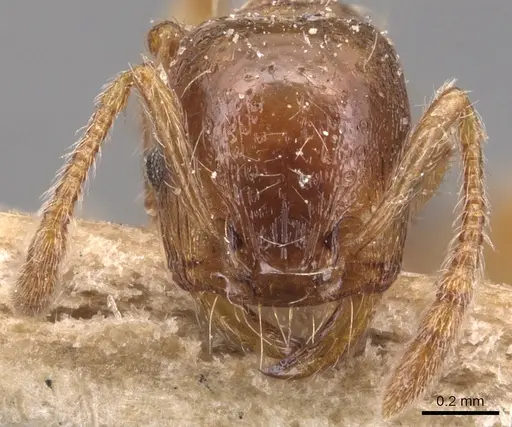
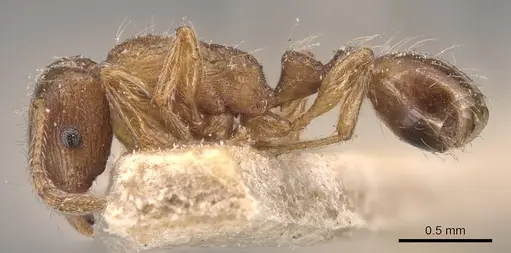
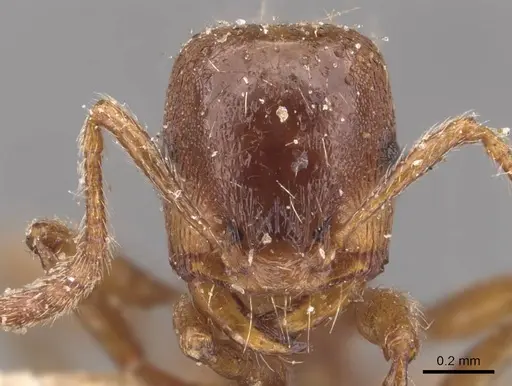
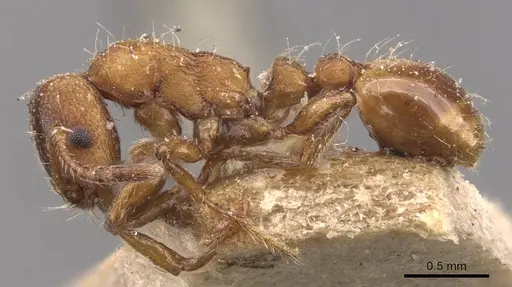
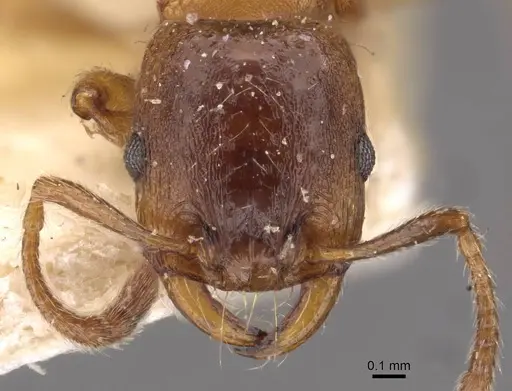
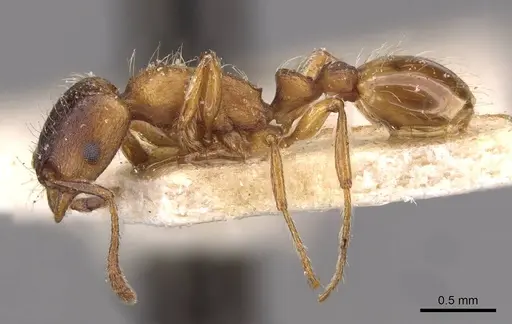
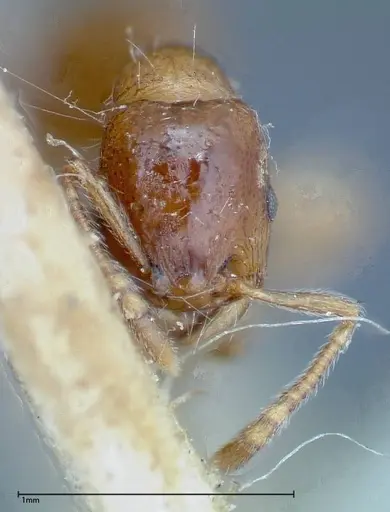
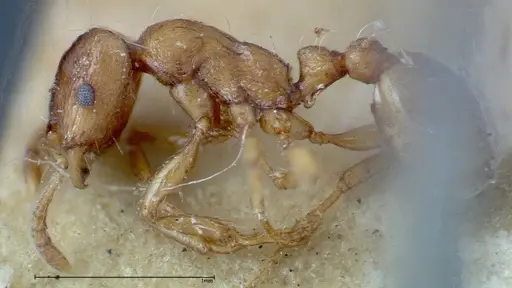
Strongylognathus huberi is a small slave-making ant native to Mediterranean Europe. Workers measure 2-3 mm, with distinctive sword-shaped mandibles and a straight rear edge on the head . Young workers are pale yellow and darken to brown as they age . This species is a permanent social parasite - it cannot start a colony on its own. Instead, the queen must invade a nest of a Tetramorium host (like Tetramorium caespitum, T. impurum, or T. semilaeve), kill the resident queen, and trick the host workers into raising her brood . Host species also include Tetramorium hungaricum in Bulgaria . The resulting colony is mixed: both S. huberi workers and the enslaved Tetramorium workers live together . What makes S. huberi especially interesting is its raiding behavior. Organized groups of parasite workers leave the nest to attack other Tetramorium colonies. They steal larvae and pupae, which are then raised as additional slaves . This dulotic (slave-making) lifestyle is rare among European ants. However, it also means keeping them in captivity is extremely challenging - they cannot survive without a healthy host colony.
Quick Summary
- Difficulty: Expert
- Origin & Habitat: Mediterranean Europe, found in France, Switzerland, Italy, Spain, Portugal, Greece (including Crete), Turkey, and Bulgaria. Inhabits sun-exposed stony pastures and open habitats, nesting under stones. Also recorded in coastal dunes and juniper forests, from sea level up to 1500 m [6][1][7].
- Colony Type: Permanent social parasite, cannot live without a host Tetramorium colony. The parasite queen invades a host nest, kills the host queen, and enslaves its workers. Mixed colonies contain both S. huberi workers and enslaved Tetramorium workers that do all foraging and nest maintenance [2][3].
- Size & Growth:
- Queen: Size data unavailable, queens have an alitrunk (mesosoma) length over 1.6 mm based on species group patterns [8], but total length has not been measured.
- Worker: 2-3 mm [1]
- Colony: Up to 126 S. huberi workers plus up to 80 enslaved Tetramorium workers have been documented in a single mixed colony [5]
- Growth: Slow, entirely dependent on the host colony's resources
- Development: Unknown, development is tied to host workers and has not been measured (The parasite's brood is raised exclusively by enslaved Tetramorium workers. Development speed likely mirrors that of the host species.)
- Antkeeping:
- Temperature: Keep at room temperature (20-24°C). This Mediterranean species tolerates warmth but does not need extra heating. Avoid sudden temperature swings [6].
- Humidity: Moderate, they nest under stones in well-drained soil, so the nest should be dry on top with a slightly moist substrate below. Avoid waterlogging [6].
- Diapause: Likely required, as a temperate species, it probably needs a winter rest period of 3-4 months at 10-15°C, matching the cycle of its Tetramorium hosts.
- Nesting: A naturalistic setup with soil and flat stones works well. Test tubes can also house established mixed colonies. Provide dark, quiet conditions. The host colony needs enough space to thrive [6].
- Behavior: Peaceful inside the colony, but aggressive toward other Tetramorium colonies during slave raids. Workers are small and not aggressive toward humans. They lack a functional stinger, like other Myrmicinae, they bite and may use chemical secretions (smear venom). Escape risk is low given their size (2-3 mm).
- Common Issues: host colony death is the most common cause of failure, the parasite cannot survive without enslaved Tetramorium workers., founding a colony is extremely difficult, you must obtain a mixed colony (parasite + host) from the wild., the parasite queen may be rejected by the host colony if the host queen is still alive or if the host workers detect the intruder., because parasite workers cannot forage, any disruption to host workers (e.g., starvation, stress) kills the whole colony., this species is listed as Vulnerable (IUCN) [4], collecting wild queens may be restricted in some countries. Check local laws before seeking them.
Understanding Their Parasitic Lifestyle
Strongylognathus huberi is a permanent social parasite, it cannot survive without a host colony. Unlike temporary parasites that only use hosts during founding, S. huberi queens must invade an existing Tetramorium nest. The queen enters, kills the resident host queen, and then uses the host workers to raise her own offspring [2]. This means you cannot start a colony from a single queen as you would with most ants. The founding queen needs host workers immediately, she cannot raise her first brood alone.
In an established colony, the parasite workers live alongside the enslaved Tetramorium workers. Both species cooperate inside the nest. The S. huberi workers also participate in raids, attacking other Tetramorium colonies to steal brood and add more slaves [3][1]. For antkeepers, this fundamentally changes the approach: you need to obtain and maintain both species together, and the parasite colony will die if the host colony fails.
Housing the Colony
Housing S. huberi means housing two species together, the parasite and its host. The simplest setup is a standard test tube nest for the colony, but you must also keep a healthy population of Tetramorium to serve as hosts.
In the wild, they nest under stones in sunny, open areas with stony soil. A naturalistic setup works well: a container with a layer of soil and flat stones on top allows the colony to create natural tunnels. Keep the nest at room temperature in a low-light area, as they prefer dark, quiet conditions [6].
Because both species are small (2-3 mm), escape prevention is easy, standard barriers (fluon, oil) work. However, the host colony needs enough space and resources to thrive, since the parasite depends entirely on it. Provide a separate foraging area for the host workers.
Feeding and Nutrition
Feeding is complicated by the dual-species colony. The enslaved Tetramorium workers will forage and feed both themselves and the S. huberi workers through trophallaxis (mouth-to-mouth sharing). You should feed the colony as you would a Tetramorium colony: small insects (fruit flies, small crickets), sugar water, and honey [6].
The host workers will also raid other Tetramorium colonies in the setup to capture larvae and nymphs, which become additional enslaved workers. If you want to observe this behavior, you may need to maintain separate Tetramorium colonies as 'raid targets'.
Do not overfeed, leftover food molds quickly and harms small colonies. Remove uneaten prey after 24-48 hours.
Obtaining a Colony
The only practical way to start keeping S. huberi is to collect mixed colonies from the wild. Look in sunny, stony pastures in Mediterranean Europe where Tetramorium colonies are present. The nests are typically under stones, and mixed colonies contain both the pale yellow S. huberi workers (2-3 mm, sword-shaped mandibles) and the darker Tetramorium workers [5][1].
When you collect a colony, you must get both species, the parasite cannot survive without its host. Gently lift stones and look for colonies where both worker types are active. Transport them carefully in soil from the original nest site to minimize stress.
Note that Strongylognathus huberi is listed as Vulnerable (D2) on the IUCN Red List [4]. Collecting wild colonies may be illegal or restricted in some countries. Always check local laws before collecting. If you obtain a colony from another keeper, ensure it comes with a healthy host population.
Behavior and Slave Raids
The most fascinating behavior of S. huberi is their slave-raiding raids. Organized groups of workers (sometimes dozens) leave the nest and march to a nearby Tetramorium colony. They target brood, larvae and pupae, and carry them back to their own nest. The captured brood are raised by enslaved host workers and become additional slave workers [1][2].
This raiding behavior is similar to that of Polyergus, the American slave-maker, but on a smaller scale. The raids are coordinated, and workers return carrying stolen brood. In a captive setup, you may observe this if you provide access to a separate 'target' Tetramorium colony.
Outside of raids, the colony appears peaceful. The S. huberi workers do not typically fight with their hosts. The enslaved Tetramorium workers perform all the foraging and nest maintenance while the parasite workers may help inside the nest or in raids [5].
Frequently Asked Questions
Can I keep Strongylognathus huberi in a test tube?
Yes, test tubes work for housing established mixed colonies. However, you must also maintain a separate Tetramorium colony as a food source for raids. Keep the test tube dark and quiet at room temperature [6].
How do I get a Strongylognathus huberi colony?
You must collect them from the wild, they cannot be started from a single queen because of their parasitic founding. Look under stones in sunny, stony pastures in Mediterranean Europe where Tetramorium is present. You need to collect both the parasite and host workers together [5][1]. Be aware that this species is listed as Vulnerable (IUCN), so collecting may be restricted in some countries.
Do Strongylognathus huberi ants sting?
Like most Myrmicinae, they do not have a piercing stinger. Instead, they smear venom onto enemies using a modified, flattened stinger. This is a chemical defense, not a typical sting.
What do Strongylognathus huberi eat?
They eat whatever the host Tetramorium workers forage for them. Feed the colony small insects, sugar water, and honey. The enslaved workers will feed both species through trophallaxis [6].
Are Strongylognathus huberi good for beginners?
No, this is an expert-level species. Their parasitic lifestyle means they cannot survive without a host colony, making them extremely difficult to keep. They are only suitable for experienced antkeepers who understand social parasitism and can maintain two species together.
How big do Strongylognathus huberi colonies get?
Colonies are relatively small. A documented mixed colony contained 126 S. huberi workers and 80 Tetramorium workers [5]. So the total number of ants is typically under 250,with parasite workers always fewer than host workers.
Do Strongylognathus huberi need hibernation?
Likely yes, as a temperate Mediterranean species, they probably require a winter rest period of 3-4 months at 10-15°C. This matches the natural cycle of their Tetramorium hosts. However, no specific studies have confirmed this.
Why is my Strongylognathus huberi colony dying?
The most likely cause is the death of the host Tetramorium colony. The parasite cannot survive without host workers, if your Tetramorium die, the S. huberi will also die. Ensure your host colony is healthy, well-fed, and has proper conditions.
Can I keep multiple Strongylognathus huberi queens together?
No, this species is monogyne (one queen per colony). Multiple parasite queens would fight. The key to keeping them is maintaining the parasite-host pair, not multiple parasite queens.
When will my Strongylognathus huberi colony have nuptial flights?
Nuptial flight timing is not well documented. In the Mediterranean, they likely fly in summer. However, captive breeding is extremely difficult due to their parasitic nature, you would need a mature, established mixed colony, and even then flights are rarely observed.
Report an Issue
The current care sheet is based fully on literature. See inconsistencies, or something that's incorrect? Please , it will be resolved after review from an admin. Contributing to the blogs tab also helps providing information, to make us be able to further improve the caresheets. Thank you for your support!
References

This caresheet is licensed under CC BY-SA 4.0 .
Community Blogs
ANTWEB1041372
View on AntWeb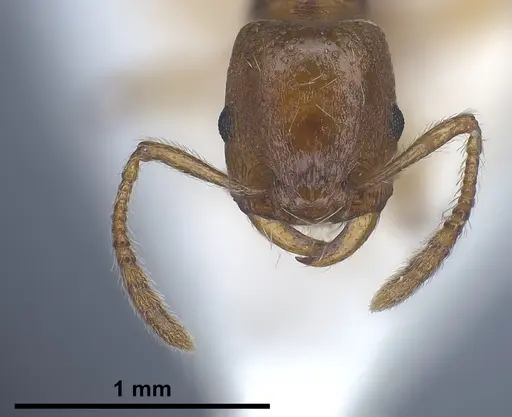
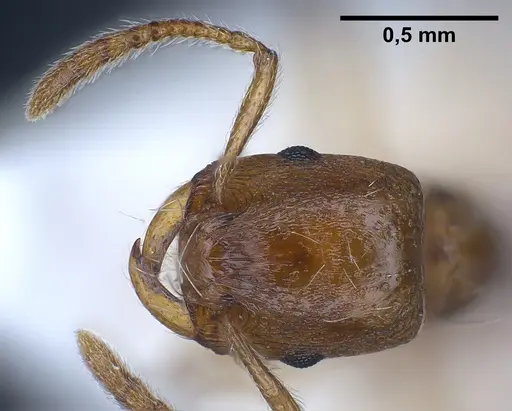
CASENT0901022
View on AntWeb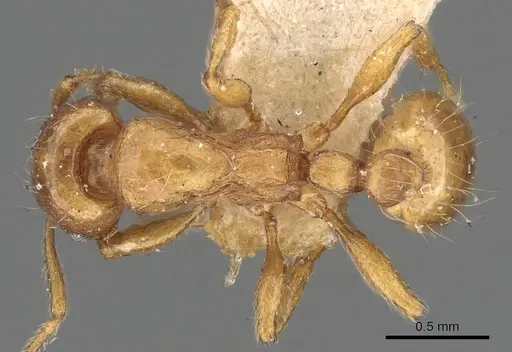
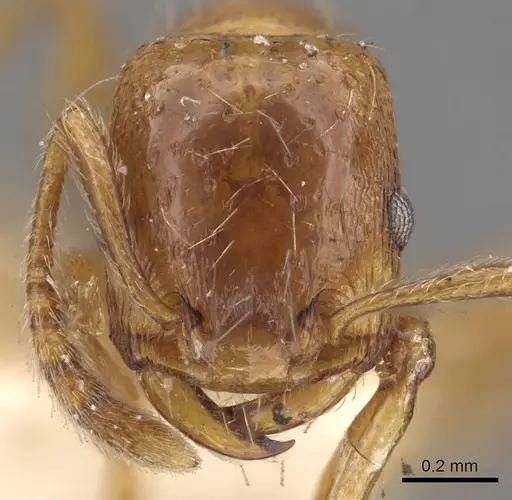
CASENT0904864
View on AntWeb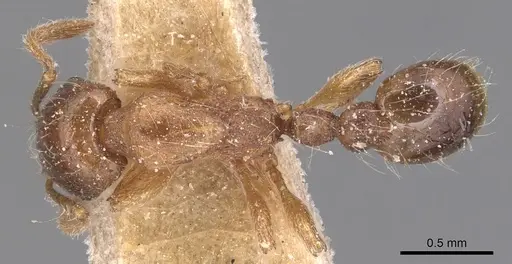
CASENT0905776
View on AntWeb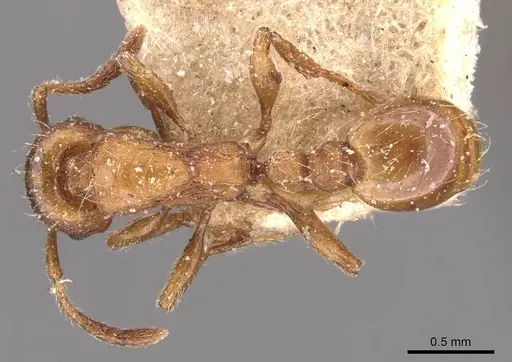
CASENT0909177
View on AntWeb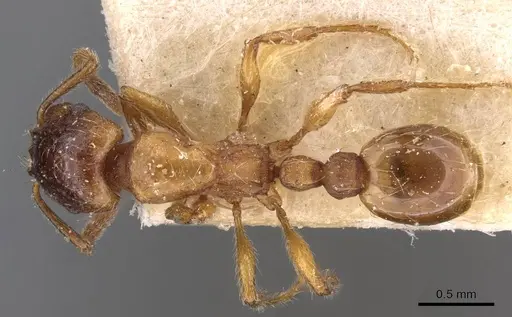
FOCOL0199
View on AntWeb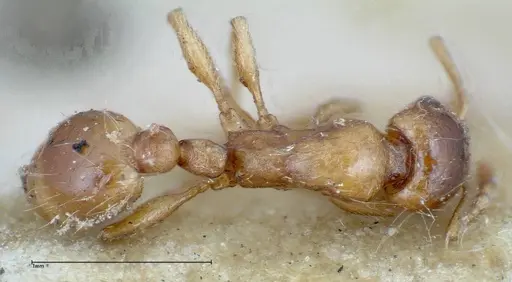
Literature
Loading distribution map...Loading products...