
Strongylognathus alboini
- Sci. Name
- Strongylognathus alboini
- Tribe
- Crematogastrini
- Subfamily
- Myrmicinae
- Author
- Finzi, 1924
- Distribution
- Found in 1 countries
Introduction
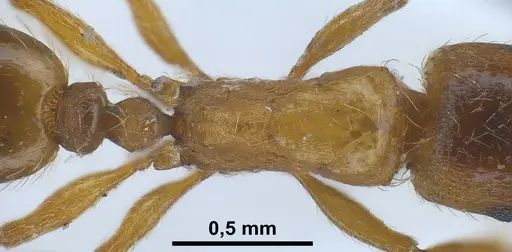
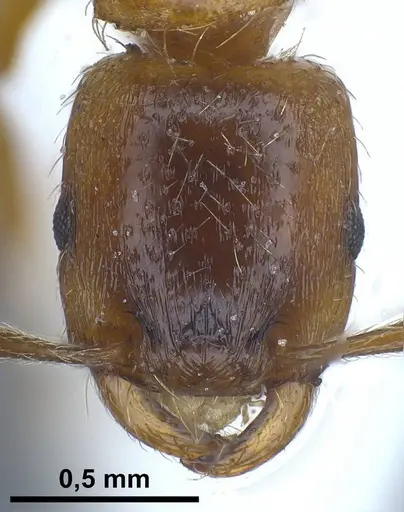
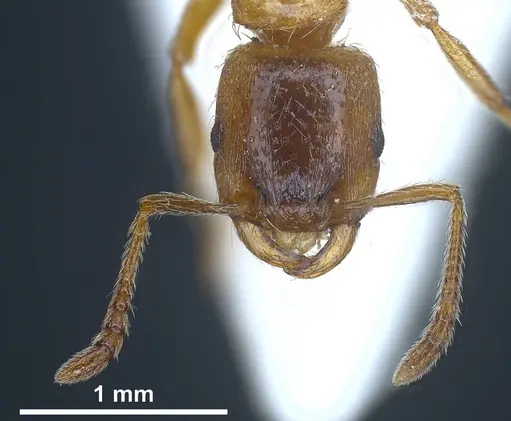
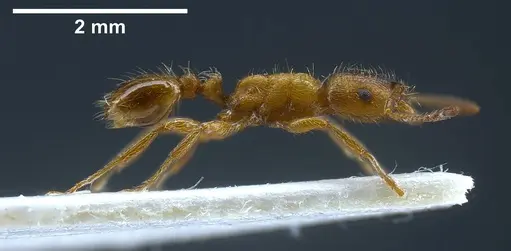
Strongylognathus alboini is a small parasitic ant from the huberi group, found across the Mediterranean and Dinaric regions of southern Europe, including Italy, Slovenia, and Switzerland . Workers are tiny; precise size measurements are not published. Like other Strongylognathus, they are social parasites that invade nests of Tetramorium species and use the host's workers to raise their own brood . This species is listed as vulnerable on the IUCN Red List, making it a rare and specialized ant that should only be kept by experienced keepers .
Quick Summary
- Difficulty: Expert
- Origin & Habitat: Native to the western Balkan Peninsula and surrounding Mediterranean zones: specifically Italy, Slovenia, and Switzerland [2][1]. Recorded from the Dinaric region in Slovenia [3]. Inhabits rocky, warm areas.
- Colony Type: Obligate social parasite – requires a living Tetramorium host colony. The Strongylognathus alboini queen invades a host nest, displaces or kills the host queen, and relies on host workers to feed her and raise her brood [1]. The colony cannot survive without host workers.
- Size & Growth:
- Queen: Size data unavailable (no published measurements).
- Worker: Size data unavailable (no published measurements).
- Colony: Unknown, but likely small (under a few hundred workers). Parasitic colonies rarely reach large sizes.
- Growth: Slow
- Development: Unknown – not directly studied. Host colony health and acceptance strongly influence development speed. (Development depends entirely on host Tetramorium workers raising the brood.)
- Antkeeping:
- Temperature: Unknown – based on Mediterranean origin, keep at room temperature (roughly 20-26°C) with a slight gradient. Avoid extremes.
- Humidity: Provide a dry nesting area with moderate moisture in a small zone (e.g., one damp cotton ball). Avoid waterlogging. The natural habitat is warm and relatively dry.
- Diapause: Unknown but likely beneficial – many Mediterranean ants have a mild winter rest. If attempted, provide a cool period (8-12°C) for 2-3 months in winter, but this has not been confirmed for this species.
- Nesting: Cannot be housed independently. Must be kept with a healthy Tetramorium colony in a soil or Y-tong nest that mimics the host's natural preferences (soil under stones, moderate humidity).
- Behavior: Strongylognathus alboini workers are docile and unable to forage or feed themselves – they rely entirely on host workers. The queen uses chemical mimicry to integrate into the host colony. Escape risk is low because they cannot survive outside a host nest, but the tiny size (if known) would make them easy to lose. Due to their vulnerability, extreme care must be taken to prevent escapes and ensure host acceptance.
- Common Issues: This species cannot survive without a healthy Tetramorium host colony – the host must be accepted first., Introduction of the parasite queen to a host colony frequently fails, host workers often kill the intruder., Finding a compatible host colony is difficult and expensive, wild collection of S. alboini is discouraged due to its vulnerable status., Parasitic ants are notoriously hard to establish in captivity – success rates are low even for experts., Once established, the colony remains small and growth is slow, which can discourage keepers expecting visible activity.
Understanding Social Parasitism in Strongylognathus
Strongylognathus alboini is an obligate social parasite: it cannot start or maintain a colony without a host Tetramorium species [1]. The queen infiltrates a host nest, uses chemical mimicry to avoid detection, and then eliminates the host queen. Once accepted, she lays eggs that the host workers raise as their own. Over time, the host colony gradually declines while the parasite's workforce grows. This is not slave-making – the host workers are not forced but tricked into caring for the parasite. Understanding this relationship is crucial – you must provide a robust, healthy Tetramorium colony from the start.
Housing and Host Colony Requirements
To keep S. alboini, you first need an established Tetramorium colony. The recommended approach is to introduce the parasite queen to a small, young host colony (fewer than 50 workers) where the host queen is still present. Some keepers use a gradual introduction: connect the parasite's container to the host nest with a tube so they can exchange scents before full contact. A soil or Y-tong nest works well for both species – keep the host's preferred conditions. Temperature should be around 22-26°C (room temperature). Monitor closely for the first few weeks, if the host workers attack and kill the parasite queen, that colony cannot be used again. Success rates are low, but a compatible host is the only way to keep this species.
Feeding and Nutrition
You do not feed S. alboini directly. Instead, you feed the host Tetramorium colony a standard diet: protein sources like small insects (fruit flies, crickets, mealworms) and carbohydrates (honey water, sugar water). The host workers will regurgitate food to the parasite workers and queen. Do not expect to see parasite workers foraging – they remain in the nest and receive food from their hosts. A healthy host colony is essential, if the host starves, the parasite starves too.
Temperature and Seasonal Care
Based on its Mediterranean distribution, S. alboini likely thrives in warm conditions (20-26°C) [1]. A slight temperature gradient helps the colony thermoregulate. Winter dormancy is not well documented, but many Mediterranean ants reduce activity in cooler months. If you attempt a winter rest, drop temperatures to 10-15°C for 8-12 weeks and reduce feeding. However, this is speculative – observe your colony and adjust based on behavior.
Legal and Ethical Considerations
Strongylognathus alboini is listed as vulnerable on the IUCN Red List [1]. Wild collection is strongly discouraged and may be illegal in some range countries. Only purchase specimens from ethical captive breeders. If you manage to establish a colony, consider participating in conservation breeding programs. Never release this species into the wild – it could disrupt local ant communities and is illegal without permits.
Frequently Asked Questions
Can I keep Strongylognathus alboini in a test tube like other ants?
No – this species cannot survive without a host Tetramorium colony. A test tube setup has no way to provide the constant care from host workers that S. alboini needs. You must keep the parasite with its host from the start.
How do I introduce Strongylognathus alboini to a host colony?
Introduction is challenging. The most common method is to present the parasite queen to a small, young host colony (fewer than 50 workers) that still has its own queen. Gradual scent exchange via a connecting tube may help, but success rates are low. No standardized method has been published for this species.
What do Strongylognathus alboini ants eat?
They do not feed themselves. Feed the host Tetramorium colony a varied diet of protein and sugar. The host workers then share food with the parasite workers and queen. Without a healthy host, the parasites starve.
Are Strongylognathus alboini good for beginners?
Absolutely not – this is an expert-only species. The need for a compatible host, the difficulty of introduction, and the vulnerable conservation status make it unsuitable for any keeper without prior experience with social parasites.
Do Strongylognathus alboini ants sting?
As a member of Myrmicinae (tribe Crematogastrini), this species likely has a reduced stinger used to smear venom rather than pierce. However, specific studies on S. alboini are lacking. They are not considered a stinging risk to humans.
How long does it take for Strongylognathus alboini to produce workers?
Development time has not been studied. If the queen is accepted by the host, she will start laying eggs immediately. The first parasite workers could appear within 6-10 weeks assuming the host colony raises the brood, but this is an estimate based on related ants.
Can I keep multiple Strongylognathus alboini queens together?
This species is likely monogyne (single queen per colony). Introducing multiple parasite queens into one host nest would likely lead to conflict. Stick to one queen per host colony.
Do Strongylognathus alboini need hibernation?
It is not known for certain. Given its Mediterranean origins, a mild winter rest (8-12 weeks at 10-15°C) may be beneficial, but this is speculative. Observe the colony: if activity drops naturally in winter, provide a cool rest period.
Why are my Strongylognathus alboini dying?
The most common cause is host rejection – the Tetramorium workers killed the parasite queen. Other possibilities include an unhealthy host colony, incorrect temperature/humidity, or stress during introduction. Without a functional host relationship, the parasite cannot survive.
Report an Issue
The current care sheet is based fully on literature. See inconsistencies, or something that's incorrect? Please , it will be resolved after review from an admin. Contributing to the blogs tab also helps providing information, to make us be able to further improve the caresheets. Thank you for your support!
References

This caresheet is licensed under CC BY-SA 4.0 .
Community Blogs
ANTWEB1038031
View on AntWeb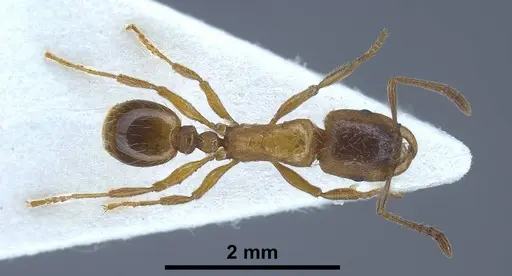
Literature
Loading distribution map...Loading products...