
Stigmacros flava
- Sci. Name
- Stigmacros flava
- Tribe
- Melophorini
- Subfamily
- Formicinae
- Author
- McAreavey, 1957
- Distribution
- Found in 1 countries
Introduction
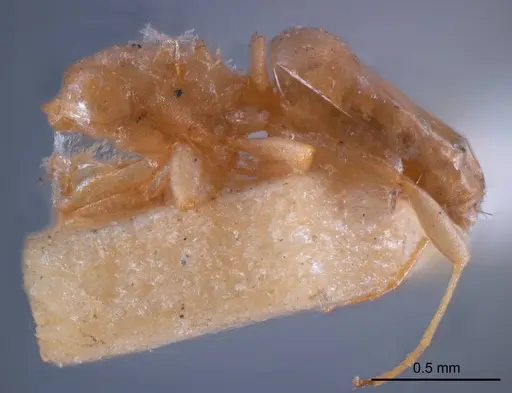
Stigmacros flava is a tiny, very pale ant species known only from near Perth, Western Australia . Workers are small and delicate, typical of the endemic Australian genus Stigmacros (subfamily Formicinae, tribe Melophorini). Their pale coloration distinguishes them from darker relatives. They likely nest in soil or under stones in their native Mediterranean climate . Because so little is known about this ant, most care advice is inferred from broader genus patterns. They are not aggressive, and like other Formicinae, they spray formic acid for defense rather than stinging. Their diet probably includes small insects and sugary liquids.
Quick Summary
- Difficulty: Medium
- Origin & Habitat: Western Australia near Perth, Mediterranean climate with mild, wet winters and warm, dry summers. They inhabit arid to semi-arid regions and are thought to nest in soil or under stones [1][2].
- Colony Type: Colony structure is unconfirmed for this species. Based on typical Formicinae patterns, they are likely monogyne (single queen), but this is speculative.
- Size & Growth:
- Queen: Not directly measured, inferred from related Stigmacros species, roughly 5-7 mm.
- Worker: Not directly measured, inferred from genus patterns, roughly 2-3 mm [1] (based on typical Stigmacros worker size).
- Colony: Unknown from research, based on other Stigmacros, likely under 100 workers at maturity.
- Growth: Moderate (inferred from related Melophorini).
- Development: No species-specific data, estimated 6-10 weeks at warm temperatures based on related ants. (Development timeline is speculative. Direct studies are lacking.)
- Antkeeping:
- Temperature: No exact research exists. Mimic Mediterranean conditions: keep at 22-26°C during active season. Provide a slight gradient. Avoid overheating.
- Humidity: Moderate humidity (nest substrate slightly moist but not wet). These ants come from relatively dry habitats, so avoid soggy conditions. A moisture gradient (one damp section, one dry) is ideal.
- Diapause: Likely needed based on Perth's Mediterranean climate. Provide a winter rest of 2-3 months at 10-15°C. This is inferred from geography, not direct study.
- Nesting: Y‑tong (AAC) nests, test tubes, or naturalistic setups with stones over moist soil work well. Because these ants are tiny, ensure nest openings and passages are small to prevent them from escaping.
- Behavior: Workers are small, active, and peaceful. They are likely diurnal foragers. As Formicinae they spray formic acid but are harmless to keepers. Their tiny size means escape prevention is critical, use fine mesh and tight seals.
- Common Issues: escape prevention is critical due to their very small size, use fine mesh and tight-fitting lids., limited data means care requirements are estimated from genus patterns rather than species-specific research., slow colony growth can frustrate beginners, these are not fast-growing ants., overheating risk, avoid direct heat sources and strong lighting., wild‑caught colonies may have parasites or diseases that can cause colony failure.
Housing and Nest Setup
For such tiny ants, you need a nest with appropriately scaled chambers. Y‑tong (AAC) nests work well because they provide tight, humid chambers that these small ants can manage. A well‑humidified test tube setup is fine for founding colonies. Key points: keep passages narrow, and ensure excellent escape prevention, these ants slip through the smallest gaps. A naturalistic setup with flat stones over moist soil also mimics their likely environment [2].
Feeding and Diet
No specific dietary studies exist for Stigmacros flava. Based on general Melophorini habits, offer a varied diet: small insects (fruit flies, pinhead crickets, tiny mealworms) for protein, and sugar sources (diluted honey water, sugar water, or small drops of honey) for energy. Feed protein twice a week, remove leftovers after 24 hours to prevent mold.
Temperature and Seasonal Care
During the active season, maintain temperatures around 22-26°C. This matches the mild conditions of their Perth habitat [2]. A heating cable on one side of the nest creates a gradient. For winter, reduce temperature to 10-15°C for 2-3 months to simulate their natural seasonal cycle. This diapause is recommended but not confirmed by research.
Behavior and Temperament
Workers are small, active, and generally peaceful. They are likely diurnal foragers, most active in warmer hours. As Formicinae, they use formic acid for defense but are not aggressive toward keepers. Their tiny size makes them expert escape artists: always use fine mesh on ventilation and tight lid seals. Foraging behavior probably involves searching for small prey and sugar sources, using chemical trails.
Frequently Asked Questions
How long does it take for Stigmacros flava to raise first workers?
No species‑specific data exists. Based on related ants, expect roughly 6-10 weeks from egg to first worker at about 24°C. This is an estimate, not a confirmed timeline.
Can I keep Stigmacros flava in a test tube?
Yes, test tubes work for founding colonies. Use a small tube with a water reservoir separated by a cotton plug. Keep it humid but not flooded. Move to a larger nest when the colony outgrows the tube (typically after several dozen workers).
What do Stigmacros flava eat?
They likely eat small insects (fruit flies, pinhead crickets) for protein and sugary materials (honeydew, nectar) for energy. This is inferred from related Melophorini ants.
Do Stigmacros flava need hibernation?
A winter diapause of 2-3 months at 10-15°C is recommended, based on the Mediterranean climate of their native Perth region. No direct research confirms this need, but it is standard for temperate Australian ants.
How big do Stigmacros flava colonies get?
Based on related Stigmacros species, colonies likely stay under 100 workers. They are not large colony formers.
Are Stigmacros flava good for beginners?
They are moderate difficulty. The main challenges are escape prevention due to their tiny size and providing proper seasonal care (hibernation). Beginners with experience keeping small ants should manage them.
When should I move my colony to a formicarium?
Move to a proper nest (Y‑tong, plaster, or naturalistic) once the colony outgrows the test tube, usually when you see 20-30 workers or more. This is a general rule, not species‑specific.
Why are my Stigmacros flava dying?
Common possible causes: escape through tiny gaps, improper humidity (too wet or too dry), temperature stress (too hot or cold), or poor nutrition. Check escape prevention and maintain 22-26°C. Without research, these are best guesses.
Can I keep multiple queens together?
Not recommended. Colony structure is unconfirmed, but Stigmacros are typically monogyne. Unrelated queens will likely fight. If you try, be prepared to separate them.
Report an Issue
The current care sheet is based fully on literature. See inconsistencies, or something that's incorrect? Please , it will be resolved after review from an admin. Contributing to the blogs tab also helps providing information, to make us be able to further improve the caresheets. Thank you for your support!
References

This caresheet is licensed under CC BY-SA 4.0 .
Community Blogs
ANTWEB1008337
View on AntWeb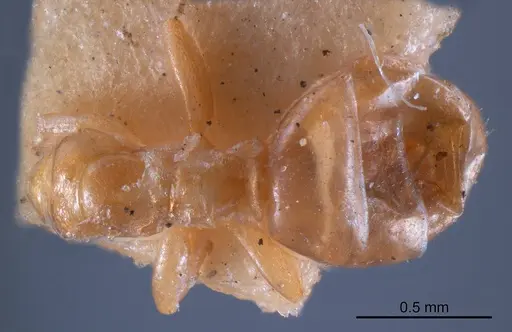
Literature
Loading distribution map...Loading products...