
Stigmacros barretti
- Sci. Name
- Stigmacros barretti
- Tribe
- Melophorini
- Subfamily
- Formicinae
- Author
- Santschi, 1928
- Distribution
- Found in 1 countries
Introduction
Stigmacros barretti is a small Australian ant first described in 1928 by Santschi from workers . Queens and males were later described by McAreavey in 1957 . It belongs to the subfamily Formicinae and tribe Melophorini, a group endemic to Australia . These ants have an acidopore for spraying formic acid instead of a stinger, typical of Formicinae. They have been recorded in sclerophyll forest communities in north-eastern Tasmania .
Quick Summary
- Difficulty: Unknown, likely Easy to Medium based on genus patterns, but limited data makes care experimental
- Origin & Habitat: Australia, specifically recorded in Tasmania at Old Chum Dam and surrounding areas in north-eastern Tasmania [2]. The species appears to inhabit sclerophyll forest communities.
- Colony Type: Unconfirmed, based on typical Melophorini patterns, likely single-queen (monogyne) colonies, but not studied directly.
- Size & Growth:
- Queen: Size data unavailable, no body measurements have been reported for this species.
- Worker: Size data unavailable, no body measurements have been reported for this species.
- Colony: Unknown, possibly up to several hundred workers based on genus patterns.
- Growth: Unknown, estimated moderate based on genus patterns.
- Development: Not documented. Based on Formicinae patterns, roughly 6-10 weeks at optimal temperature, but this is an estimate from related species. (Development time is inferred from related species, specific data for Stigmacros barretti is unavailable.)
- Antkeeping:
- Temperature: Keep at room temperature around 20-24°C. Australian temperate ants generally tolerate a range from 18-28°C. A gentle temperature gradient can be provided using a heating cable placed on top of the nest to avoid drying out the substrate.
- Humidity: Moderate humidity. Keep the nest substrate slightly moist but not waterlogged. Allow for some drier areas within the setup so ants can self-regulate.
- Diapause: Likely required, the species is found in Tasmania, which has cool winters [2]. Provide a winter rest period of about 2-3 months at 10-15°C. Gradually return to normal temperatures in spring.
- Nesting: In the wild, Stigmacros species typically nest in soil or under stones in forest environments [2]. For captivity, start with a test tube setup for founding colonies. Once the colony grows to over 20 workers, you can transition to a Y-tong (AAC) or plaster nest with a connected foraging area.
- Behavior: Behavior is not specifically documented for this species. Based on genus patterns, these ants are likely docile and not aggressive. As Formicinae, they spray formic acid when threatened instead of stinging. Escape risk is moderate, standard barrier methods like fluon on container rims should work.
- Common Issues: limited species-specific data means everything is based on inferred needs, be ready to adjust care based on your colony, colony development may be slow, patience is required during founding, winter diapause timing and exact temperature needs are uncertain, monitor colony closely during dormancy, wild-caught colonies may carry parasites or pathogens that can cause problems in captivity, dietary preferences are unknown, offer a variety of sugars and small insects to see what they accept
Temperature and Care
Stigmacros barretti is adapted to temperate to subtropical conditions. Keep the colony at room temperature, ideally between 20-24°C. This range supports normal activity and brood development. You can use a heating cable on one side of the nest to create a gentle gradient if your room runs cool, place the cable on top rather than underneath to prevent drying out the substrate. During summer, normal room temperature is usually fine. The species has been recorded in Tasmania [2], so it can handle cooler conditions than many Australian ants. Watch your colony: if workers consistently cluster in the warmer area, bump the temperature up slightly, if they avoid the heated zone, reduce heat.
Feeding and Diet
No specific dietary data exists for Stigmacros barretti. Based on typical Melophorini and Formicinae feeding habits, the ants are likely omnivorous, accepting both sugars and protein. Offer sugar water or diluted honey as a carbohydrate source, and small insects such as fruit flies, small mealworms, or cricket pieces as protein. Observe your colony to discover their preferences, some colonies within the genus may show strong preferences for certain foods. Remove uneaten food after 24-48 hours to prevent mold. Fresh water should always be available.
Nesting and Habitat
In the wild, Stigmacros species typically nest in soil or under stones in forest environments. The species has been found in sclerophyll forest communities in Tasmania [2]. For captive care, start with a simple test tube setup for the founding stage, the queen can seal herself into a humid chamber and raise her first workers there. As the colony grows to 20+ workers, move them into a Y-tong or plaster nest. Keep the nest substrate slightly moist but not saturated. Provide a separate foraging area connected to the nest where you can offer food. Ensure proper ventilation to prevent mold while maintaining appropriate humidity.
Winter Care and Diapause
Based on the Tasmania distribution [2], Stigmacros barretti likely requires a winter dormancy period. Provide a diapause of about 2-3 months during winter, keeping the colony at 10-15°C. This can be done by moving the colony to an unheated garage or basement. Reduce feeding during this time, the colony will be less active and consume less food. Do not feed during deep dormancy. Gradually reintroduce normal temperatures in spring. This rest period appears important for colony health and may trigger reproductive behavior. If your colony shows signs of stress during diapause (unusual activity, workers dying), check that temperatures are not too warm or too cold.
Behavior and Defense
As a Formicinae ant, Stigmacros barretti has an acidopore instead of a stinger. When threatened, it can spray formic acid, this is generally not harmful to humans but may cause minor skin irritation. The species is likely not aggressive and will usually flee rather than attack. Observe your colony's temperament, some colonies may be more defensive than others. Handle with care and avoid disturbing the nest unnecessarily. Escape prevention is important, standard barrier methods like fluon on container rims work well.
Frequently Asked Questions
How long does it take for Stigmacros barretti to produce first workers?
The exact timeline is unknown. Based on typical Formicinae development, expect first workers (nanitics) to appear within 6-10 weeks after the queen lays eggs if kept at optimal temperature (22-24°C). Cooler conditions will slow development. This estimate comes from related species, not from S. barretti itself.
What do Stigmacros barretti ants eat?
Diet is undocumented for this species. Based on related ants, they likely accept sugar water, honey, and small insects like fruit flies or mealworms. Offer a variety of foods to find out what your colony prefers.
Can I keep multiple Stigmacros barretti queens together?
Colony structure has not been studied. There is no evidence of pleometrosis (multiple queens founding together) in this species, so it is not recommended to combine unrelated queens. Start with a single queen colony for best results.
Do Stigmacros barretti need hibernation?
Based on their Tasmania distribution, yes, a winter dormancy period is likely required. Provide 2-3 months at 10-15°C during winter. This rest is probably necessary for colony health and spring reproduction [2].
Are Stigmacros barretti good for beginners?
Difficulty is not clearly known due to limited data. Based on genus patterns and likely claustral founding, they might be suitable for intermediate keepers. The main challenge is the lack of species-specific information, you will need to experiment and adapt care.
How big do Stigmacros barretti colonies get?
Maximum colony size is unknown. Based on typical Stigmacros and Melophorini patterns, colonies likely reach several hundred workers. This is an estimate, there are no published records.
When should I move Stigmacros barretti to a formicarium?
Keep them in a test tube setup during founding. Once the colony has at least 20 workers and shows consistent activity, you can move them to a larger nest. Make sure the new nest has good humidity and a connected foraging area.
Why are my Stigmacros barretti dying?
Without species-specific research, it is hard to diagnose. Common issues include improper humidity (too dry or too wet), temperature stress, lack of food, or parasites from wild-caught colonies. Check your setup against the general guidelines and adjust slowly.
Report an Issue
The current care sheet is based fully on literature. See inconsistencies, or something that's incorrect? Please , it will be resolved after review from an admin. Contributing to the blogs tab also helps providing information, to make us be able to further improve the caresheets. Thank you for your support!
References

This caresheet is licensed under CC BY-SA 4.0 .
Community Blogs
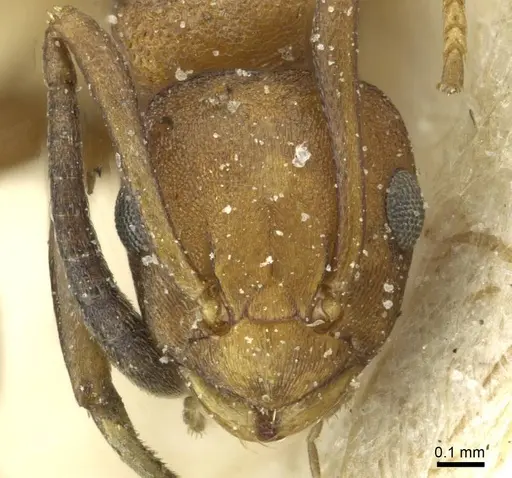
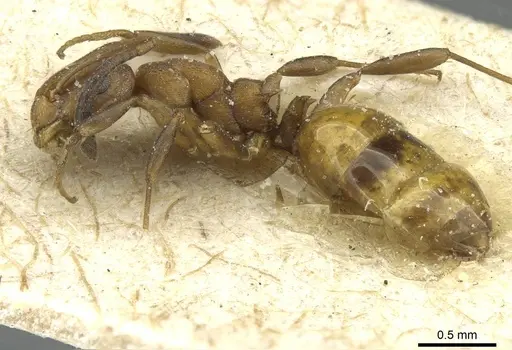
CASENT0912434
View on AntWeb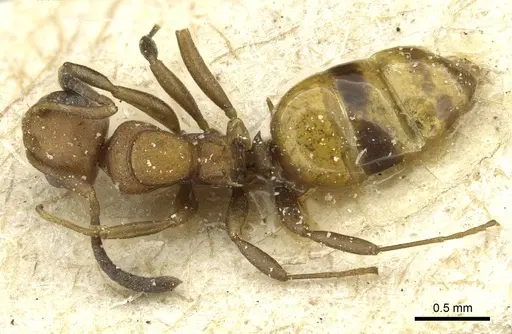
Literature
Loading distribution map...Loading products...