
Stigmacros anthracina
- Sci. Name
- Stigmacros anthracina
- Tribe
- Melophorini
- Subfamily
- Formicinae
- Author
- McAreavey, 1957
- Distribution
- Found in 1 countries
Introduction
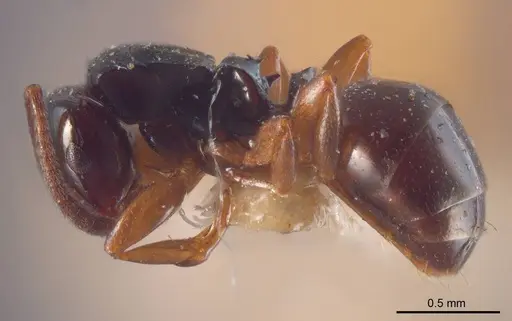
Stigmacros anthracina is a small Australian ant in the subfamily Formicinae and tribe Melophorini . It is recognized by its punctate-microreticulate sculpture of the mesonotum, which distinguishes it from related species like *Stigmacros brachytera* and *Stigmacros elegans* . This ant is uncommon in its range, collected only in the Darling Range south of Perth in Western Australia, though originally described from Mt Lofty near Adelaide, South Australia . As a formicine ant, it defends itself by spraying formic acid rather than using a functional stinger.
Quick Summary
- Difficulty: Unknown
- Origin & Habitat: Australia, originally described from Mt Lofty near Adelaide, SA, in southwestern Australia found only in the Darling Range south of Perth [2]. Inhabits the South Western Botanical Province (SWBP) region.
- Colony Type: Unknown, no published data on queen number or social structure for this species.
- Size & Growth:
- Queen: Size data unavailable, no published measurements.
- Worker: Size data unavailable, no published measurements.
- Colony: Unknown, no published data on colony size.
- Growth: Unknown
- Development: Unknown, no published data. (Timing likely dependent on temperature, but nothing is confirmed for this species.)
- Antkeeping:
- Temperature: Unknown, no published data. For temperate Australian ants, a range of 22-26°C during the active season is a reasonable starting point, but actual needs are unconfirmed.
- Humidity: Unknown, no published data. Based on typical Melophorini habitat (likely relatively dry soils), keep substrate lightly moist but allow some drying between waterings. Adjust based on colony behavior.
- Diapause: Likely required given temperate origin, but duration and temperature are unconfirmed. A 2-3 month rest at 10-15°C is typical for many Australian temperate ants, but this is speculative.
- Nesting: Unknown, no published nest site data. Based on genus patterns, likely nests in soil or under stones. A test tube setup works for founding, established colonies can be moved to Y-tong or naturalistic setups with soil substrate.
- Behavior: Behavior is unconfirmed. As a formicine ant, it does not sting but sprays formic acid. Workers are small, so escape prevention requires fine mesh. Activity likely increases with warmth.
- Common Issues: limited distribution in the wild makes wild colonies hard to find, check with specialized ant suppliers., specific temperature, humidity, and diapause needs are unconfirmed, closely observe colony health and adjust gradually., as a small ant, escape prevention requires very fine mesh or barriers., this species is rarely kept in captivity, so there is no established keeper experience to rely on.
Housing and Nest Setup
Because specific nesting habits are unknown, a flexible approach is best. A standard test tube setup provides a secure founding environment: fill the tube one-third with water, plug with cotton, and place the queen in the dark. Once a colony has 30-50+ workers, you can move it to a Y-tong or naturalistic nest with soil substrate. Since workers are small, ensure chambers and passages are appropriately sized. Use very fine mesh on all openings to prevent escapes.
Feeding and Diet
No published diet data exists for Stigmacros anthracina. Based on typical Formicinae feeding habits, offer sugar water or honey water as a constant energy source and provide small insects (e.g., fruit flies, small mealworms) for protein 2-3 times per week. Remove uneaten prey after 24-48 hours to prevent mold. Adjust based on colony acceptance.
Temperature and Seasonal Care
Temperature needs are unconfirmed. As a temperate Australian species, it likely experiences seasonal changes. During the active season, try 22-26°C with a gradient so workers can choose. A winter diapause is probably necessary, typical guidelines for temperate ants (2-3 months at 10-15°C) may apply, but this is speculative. Reduce feeding during diapause and keep the colony cool but above freezing. [2]
Behavior and Temperament
No specific behavioral data is available. As a formicine ant, it sprays formic acid for defense and does not sting. Workers are likely timid and avoid confrontation due to their small size. Foraging probably occurs individually or in small groups, seeking nectar and small prey. Observe your colony to learn its habits.
Frequently Asked Questions
How long does it take for Stigmacros anthracina to produce first workers?
The timeline is unknown. No published data exists for this species or closely related ones.
Can I keep multiple Stigmacros anthracina queens together?
This is unconfirmed. Combining unrelated foundress queens is risky, it's safer to house them separately unless you can confirm tolerance.
What do Stigmacros anthracina eat?
No specific diet data is available. Based on typical formicine habits, offer sugar water and small insects for protein.
Do Stigmacros anthracina need hibernation?
Likely yes, given their temperate origin, but specifics are unknown. A 2-3 month cool rest (10-15°C) is commonly used for similar Australian species, but this is not confirmed.
Are Stigmacros anthracina good for beginners?
Difficulty is unknown due to lack of data. The main challenges are obtaining colonies (rare in captivity) and figuring out their specific needs.
How big do Stigmacros anthracina colonies get?
Colony size is unknown, no published data exists.
When should I move Stigmacros anthracina from a test tube to a formicarium?
Move the colony when the test tube becomes crowded or the water is depleted, typically with 30-50+ workers. Use a setup with appropriately sized chambers.
What temperature is best for Stigmacros anthracina?
No confirmed data. A starting range of 22-26°C is reasonable, with a cooler diapause period in winter.
Why is my Stigmacros anthracina colony declining?
Potential causes are speculative: incorrect temperature, humidity, or food, stress, or parasites from wild colonies. Review conditions and adjust gradually.
Report an Issue
The current care sheet is based fully on literature. See inconsistencies, or something that's incorrect? Please , it will be resolved after review from an admin. Contributing to the blogs tab also helps providing information, to make us be able to further improve the caresheets. Thank you for your support!
References

This caresheet is licensed under CC BY-SA 4.0 .
Community Blogs
ANTWEB1008327
View on AntWeb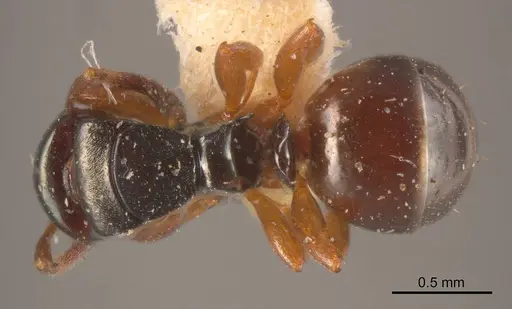
Literature
Loading distribution map...Loading products...