
Stictoponera meghalaya
- Sci. Name
- Stictoponera meghalaya
- Tribe
- Ectatommini
- Subfamily
- Ectatomminae
- Author
- Lattke, 2004
- Distribution
- Found in 1 countries
Introduction
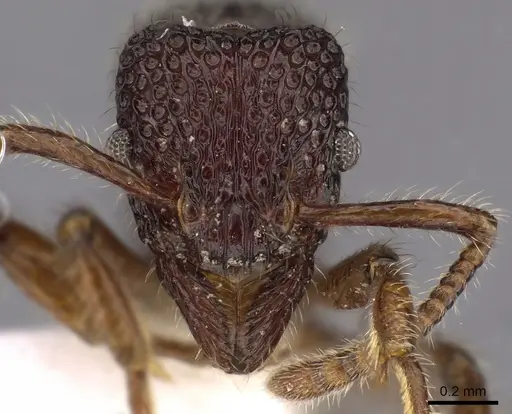
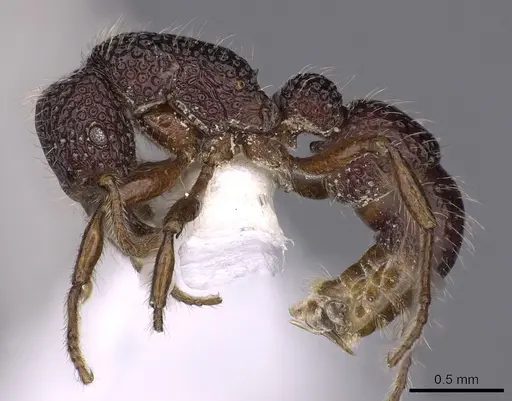
Stictoponera meghalaya is a small ant native to the Himalayan region of northeastern India. Exact body length is not recorded in the literature; however, the species is dark brown with reddish-brown mandibles, antennae, and legs . The head lacks occipital lobes (rounded projections at the back of the head found in some related species), and the eyes are small . It was originally described as Gnamptogenys meghalaya in 2004 and later transferred to Stictoponera in 2022 . The species name comes from Meghalaya, the Indian state where it was first discovered. Males of this species have never been collected . This ant lives in forest floor litter in the Himalayas at elevations between 700 and 1000 meters above sea level . It is endemic to India, found in the states of Meghalaya and Arunachal Pradesh . As a member of the subfamily Ectatomminae, Stictoponera meghalaya has a functional stinger and is a predator of small invertebrates in its natural habitat. The similar species Stictoponera binghamii overlaps with S. meghalaya in the Garo Hills of Meghalaya, but S. meghalaya is slightly smaller on average and lacks the distinct occipital lobes of S. binghamii .
Quick Summary
- Difficulty: Medium
- Origin & Habitat: Himalayan region of northeastern India, specifically Meghalaya and Arunachal Pradesh states. Found in forest floor litter at elevations of 700-1000 meters above sea level [3][4].
- Colony Type: Colony structure is unconfirmed. Only dealate queens (queens that have shed their wings) have been collected, and males remain unknown [1]. Whether colonies have one or multiple queens is not documented.
- Size & Growth:
- Queen: size data unavailable, total body length not recorded in available literature. Morphometrics from the original description include head and mesosoma measurements, but not total length.
- Worker: size data unavailable, total body length not recorded in available literature. Morphometrics from the original description include head and mesosoma measurements, but not total length.
- Colony: unknown, no colony size data available from field studies or collections.
- Growth: unknown, no data on colony growth rate exists.
- Development: unknown, not documented for this species. (No data on development time exists. Any estimates would be purely speculative.)
- Antkeeping:
- Temperature: Based on its Himalayan elevation range (700-1000m), this species likely prefers cool to moderate temperatures. Unconfirmed, but aim for 18-24°C, with 20-22°C as a starting point [3].
- Humidity: Presumably high, as it inhabits forest floor litter in a humid environment. Unconfirmed, but keep nest substrate consistently moist but not waterlogged. Monitor for mold.
- Diapause: unknown, given the Himalayan distribution, a cool winter period may occur naturally, but specific requirements are not studied. Observe colony behavior and provide a cool period (10-15°C) only if the colony shows reduced activity in winter.
- Nesting: This species nests in forest floor litter [1]. In captivity, a naturalistic setup with moist soil (5-7cm deep) or a Y-tong/plaster nest with high humidity may work. Provide enclosed, dark chambers. Specific preferences are unconfirmed.
- Behavior: As an Ectatomminae, this ant has a functional stinger and is predatory. Workers are likely secretive and hunt small invertebrates in the substrate. They are not aggressive toward humans but can sting if handled. Escape risk is unknown but workers are small, so fine mesh and tight seals are recommended.
- Common Issues: high humidity can cause mold if ventilation is poor, predatory diet requires a steady supply of live small prey, cool temperature needs may be hard to maintain in warm climates without active cooling, lack of species-specific care knowledge means keepers must observe and adapt carefully
Housing and Nest Setup
Stictoponera meghalaya is a forest floor species [1], so a naturalistic terrarium with moist soil (at least 5-7cm deep) may be ideal. Alternatively, a Y-tong (AAC) or plaster nest with a built-in water reservoir can maintain the needed humidity. Provide tight, enclosed chambers, these ants prefer confined spaces. Use a shallow water dish or test tube with cotton as a hydration source. Because no specific nest preferences are documented, observe the colony and adjust accordingly. Avoid overheating, room temperature (18-22°C) is a reasonable starting point [3].
Feeding and Diet
As a predatory ant in the subfamily Ectatomminae, S. meghalaya likely needs live protein prey. Offer small live insects such as fruit flies, pinhead crickets, or springtails. Feed small prey items 2-3 times per week and remove uneaten prey after 24 hours to prevent mold. Some Ectatomminae may accept sugar water as a supplement, but protein should be the primary food. Specific dietary preferences are unconfirmed, so offer variety and observe.
Temperature and Seasonal Care
This species comes from cool Himalayan foothills at 700-1000m elevation [3]. Keep the nest area at 18-24°C, with 20-22°C as a target. Avoid temperatures above 26°C, as heat stress could be fatal. In winter, if the colony shows reduced activity, you can try a cool period around 10-15°C for 2-3 months, but this is not confirmed to be necessary. Observe the colony and adjust accordingly.
Handling and Defense
Stictoponera meghalaya belongs to Ectatomminae, which have functional stingers. While not considered aggressive, they will sting if threatened or handled roughly. The sting is likely mild for humans (similar to a bee sting). Move slowly when working with the colony and avoid disturbing the nest. Workers are small, so use fine mesh and check for gaps to prevent escape.
Colony Founding
Only dealate queens have been collected [1], but founding behavior is unconfirmed. It is not known whether queens found claustrally (sealed in a chamber without foraging) or semi-claustrally. If you obtain a newly caught queen, provide a small, humid test tube or founding chamber with moist cotton or soil. Keep her in darkness at around 20°C and disturb her as little as possible. How long it takes for first workers to appear is unknown.
Frequently Asked Questions
How long does it take for Stictoponera meghalaya to raise first workers?
This is unknown. No data exists on development time for this species. Any estimate would be purely speculative.
Can I keep Stictoponera meghalaya in a test tube setup?
It is possible, but not confirmed. Test tubes work well for many small ants during founding. Keep the cotton moist and provide a dark, quiet location. Once the colony grows (if it does), you may need to move to a larger setup. No specific population thresholds are known.
Do Stictoponera meghalaya ants sting?
Yes, as a member of Ectatomminae, they have a functional stinger. However, they are not aggressive and will only sting if directly threatened. The sting causes mild local pain for most people.
What do Stictoponera meghalaya eat?
They are predators and likely need live small invertebrates. Offer fruit flies, springtails, pinhead crickets, or similar small prey 2-3 times per week. It is not known if they accept sugar water or honey, but you can try as a supplement.
Are Stictoponera meghalaya good for beginners?
Rated medium difficulty because very little is known about their captive care. The need for cool temperatures, high humidity, and live prey, combined with the lack of species-specific guidance, makes them better suited for experienced keepers willing to experiment and observe.
How big do Stictoponera meghalaya colonies get?
Colony size is undocumented. No estimates can be made from available data.
Do Stictoponera meghalaya need hibernation?
Hibernation requirements are unknown. Given their Himalayan distribution at 700-1000m, they may experience cool winters. If your colony shows reduced activity in winter, you can provide a cool period around 10-15°C for 2-3 months, but this is not confirmed necessary. Observe and adjust.
When should I move my colony to a formicarium?
There are no guidelines for this species. In general, move from a test tube to a larger nest when the colony seems crowded or the test tube needs frequent rehydration. Use your judgment based on colony size and behavior.
Why are my Stictoponera meghalaya dying?
Common potential causes include overheating (above 26°C), low humidity causing desiccation, mold from poor ventilation, lack of live prey, or unknown diseases. Review temperature, humidity, feeding, and ventilation. Because so little is known, you may need to experiment with conditions.
Can I keep multiple queens together?
This is not recommended. Only dealate queens collected singly suggest colonies might be monogyne (single-queen), but this is unconfirmed. Attempting to house multiple queens together could result in aggression. It is best to keep queens separate unless documented otherwise.
Report an Issue
The current care sheet is based fully on literature. See inconsistencies, or something that's incorrect? Please , it will be resolved after review from an admin. Contributing to the blogs tab also helps providing information, to make us be able to further improve the caresheets. Thank you for your support!
References

This caresheet is licensed under CC BY-SA 4.0 .
Community Blogs
CASENT0900563
View on AntWeb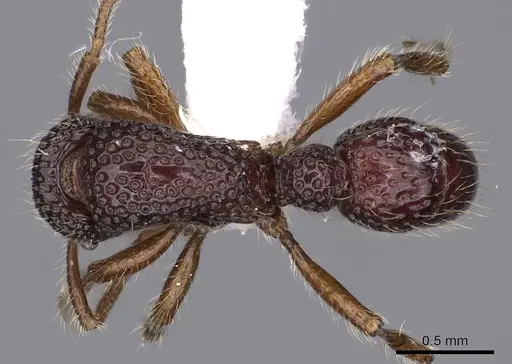
Literature
Loading distribution map...Loading products...