
Stictoponera macretes
- Sci. Name
- Stictoponera macretes
- Tribe
- Ectatommini
- Subfamily
- Ectatomminae
- Author
- Brown, 1958
- Distribution
- Found in 1 countries
Introduction
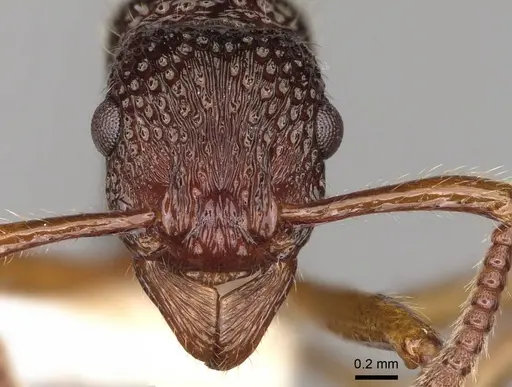
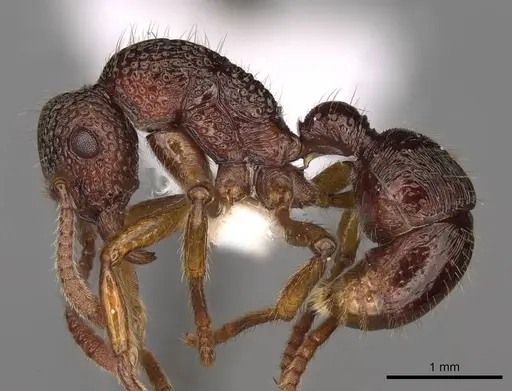
Stictoponera macretes is a medium-sized ant species from Papua New Guinea. Originally described as Gnamptogenys macretes, it was moved to Stictoponera in 2022 . They are brown with rust-colored legs and mandibles, and have a functional sting . These ants nest in rotten logs in rainforest at around 500 meters elevation . Their bodies have a distinctive pitted and striated texture, and they lack an occipital lobe, which sets them apart from related species . As members of the Ectatomminae subfamily, they are predatory and use their sting to hunt small invertebrates. Their natural history is still poorly known, but they likely play a role as predators in leaf litter and decaying wood.
Quick Summary
- Difficulty: Expert
- Origin & Habitat: Papua New Guinea, found in rotten logs in rainforest environments at approximately 500 meters elevation [1][2]
- Colony Type: Unconfirmed, colony structure has not been documented. Related Ectatomminae typically have single-queen colonies, but this has not been verified for this species.
- Size & Growth:
- Queen: Size data unavailable.
- Worker: Size data unavailable. (Workers are medium-sized for the group.)
- Colony: Unknown, no colony size data available.
- Growth: Unknown, no development timing data available for this species.
- Development: Unknown, no direct measurements available. Based on related Ectatomminae species, estimate 6-10 weeks at optimal temperature. (Development timeline is unconfirmed for this species. Related Ectatomminae typically show moderate development speeds.)
- Antkeeping:
- Temperature: Keep at 24-28°C, tropical rainforest species requires warm, stable conditions. A gentle thermal gradient allows ants to regulate temperature.
- Humidity: High humidity required, these ants naturally live in damp, rotting wood. Keep nest substrate consistently moist but not waterlogged. A moisture gradient helps them choose.
- Diapause: No, as a tropical species, it likely does not require hibernation or diapause. Maintain warm temperatures year-round.
- Nesting: Natural nesting in rotten logs. In captivity, use Y-tong, plaster, or soil-based nests with high humidity. Add small pieces of rotting wood or bark to encourage natural behaviors.
- Behavior: Predatory ants with a functional sting. Workers are moderately active and forage through leaf litter and rotting wood. They may be defensive when disturbed. Escape prevention is important, use standard barriers, as they are not tiny but can still squeeze through gaps.
- Common Issues: limited availability, this species is rarely available in the antkeeping hobby., no established care protocols, keepers must develop husbandry through experimentation., humidity control is critical, improper moisture leads to colony failure., predatory feeding requirements, need live small prey items., tropical temperature needs, room temperature may be insufficient, use heating.
Natural History and Distribution
Stictoponera macretes is endemic to Papua New Guinea, known from the Bisianumu area near Sogeri at about 500 meters elevation [1][2]. They nest in rotten logs in tropical rainforest [1]. The species was originally described by William L. Brown Jr. in 1958 as Stictoponera macretes and transferred to Stictoponera in 2022 following phylogenetic analysis [1].
Specimens have been collected in March, but detailed seasonal activity is unknown. As a predator in rainforest leaf litter, it likely helps control small arthropod populations.
Identification and Morphology
Workers and queens have a combination of pits (foveolae) and grooves (strigae) on the head and body. The head lacks an occipital lobe, and the occipital lamella (a ridge at the back of the head) is prominent and convex [1]. The postpetiole has transverse striations on the front that curve and become longitudinal toward the back [1]. The body is brown with rust-colored mouthparts, antennae, and legs.
Queens are similar but have flight muscles and larger eyes. Males are smaller and have different sculpturing. Exact body lengths have not been published, but workers are medium-sized for the group.
Housing and Nesting Preferences
In the wild, Stictoponera macretes nests in rotten logs in rainforest [1]. For captivity, use a nest that holds high humidity: Y-tong, plaster, or soil-based nests work well. Add small pieces of moist, rotting wood or bark to encourage natural behaviors. The nest substrate should feel damp but not waterlogged.
Provide a moisture gradient so ants can choose their preferred zone. The outworld needs escape-proof barriers, while not tiny, they can squeeze through small gaps. Avoid acrylic nests, as they don't hold humidity well.
Feeding and Diet
These ants are predators and need live prey. Offer small invertebrates like fruit flies, pinhead crickets, small mealworms, or other tiny arthropods. Prey should be small enough that workers can subdue it. Feed 2-3 times per week, adjusting based on colony size.
They may also accept sugar water or honey as a supplement, but protein from live prey is the main food. Remove uneaten prey after 24 hours to prevent mold. A well-fed colony has workers with visibly full gasters.
Temperature and Care
Stictoponera macretes is tropical and needs warm temperatures. Keep the nest at 24-28°C. Use a heating cable or mat on one side to create a thermal gradient, allowing ants to regulate. Avoid drafts and sudden temperature swings.
Humidity must be high, mist the nest or use a water reservoir in the nest design. Ventilation is important to prevent mold. As a tropical species, they do not need hibernation, maintain consistent warmth year-round.
Behavior and Temperament
Like other Ectatomminae, these ants have a functional sting used for hunting and defense. Workers are moderately aggressive when disturbed or when capturing prey. Avoid handling directly, use gentle transfer methods. The sting can cause mild pain but is not dangerous to most people.
Foraging workers explore the leaf litter and rotting wood, likely using chemical trails. Provide a naturalistic outworld with hiding spots and leaf litter to encourage natural behavior.
Frequently Asked Questions
How long does it take for Stictoponera macretes to develop from egg to worker?
The exact timeline hasn't been documented. Based on related Ectatomminae, estimate 6-10 weeks from egg to first worker at 24-28°C. This is an educated guess, not confirmed.
What do Stictoponera macretes eat?
They are predators and need live prey: fruit flies, pinhead crickets, small mealworms, and other tiny arthropods. They may also take sugar water or honey as a supplement.
Can I keep Stictoponera macretes in a test tube?
Test tubes can work for founding if kept dark and humid, but a naturalistic setup with damp rotting wood or a plaster nest is better for long-term health. They prefer high humidity.
Do Stictoponera macretes ants sting?
Yes, they have a functional sting. It can cause mild pain but is not dangerous to healthy individuals.
Are Stictoponera macretes good for beginners?
No. Rated Expert because of limited availability, high humidity/temperature needs, predatory diet, and lack of established care protocols. Only experienced keepers should attempt.
How big do Stictoponera macretes colonies get?
Colony size is unknown. Based on related Ectatomminae, they might reach several hundred workers over time, but this is an estimate.
Do Stictoponera macretes need hibernation?
No, as a tropical species they don't require hibernation. Keep temperatures consistent year-round.
What temperature do Stictoponera macretes need?
24-28°C. A thermal gradient is ideal.
Why is my Stictoponera macretes colony dying?
Common causes: incorrect humidity (too dry or too wet), low temperature, lack of live prey, or stress from handling. Check conditions and adjust.
Where can I get Stictoponera macretes ants?
This species is rarely available. Check specialized ant forums and vendors dealing with rare Australasian species.
Report an Issue
The current care sheet is based fully on literature. See inconsistencies, or something that's incorrect? Please , it will be resolved after review from an admin. Contributing to the blogs tab also helps providing information, to make us be able to further improve the caresheets. Thank you for your support!
References

This caresheet is licensed under CC BY-SA 4.0 .
Community Blogs
CASENT0281529
View on AntWeb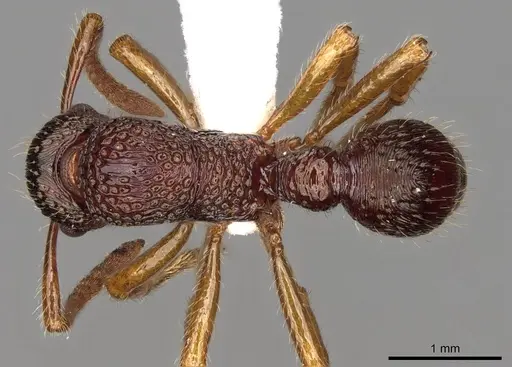
Literature
Loading distribution map...Loading products...