
Stenamma tiburon
- Sci. Name
- Stenamma tiburon
- Tribe
- Stenammini
- Subfamily
- Myrmicinae
- Author
- Branstetter, 2013
- Distribution
- Found in 1 countries
Introduction
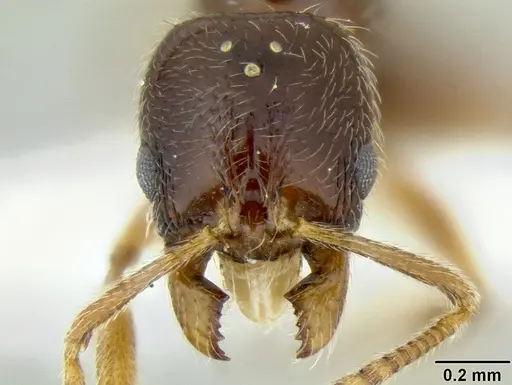
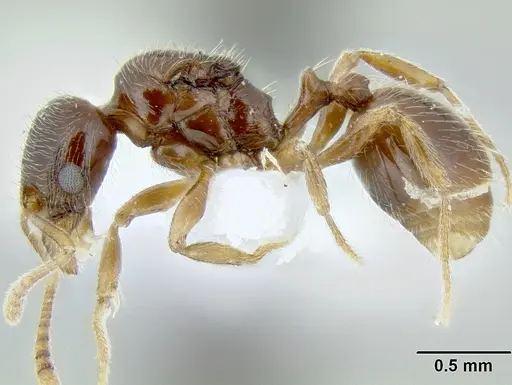
Stenamma tiburon is a small ant native to northern Mexico, known only from a single collection in 1969 near Monterrey at 1650m elevation in montane forest . Workers are about 3–4mm long (estimated from related Stenamma), with a brown to light brown integument that likely appears darker in freshly collected specimens. The head and body are mostly smooth and shining, but the most distinctive feature is the median lobe of the clypeus: it has two parallel ridges (bicarinate) that project forward and form a triangular, shark-tooth shape – hence the name 'tiburon', Spanish for shark . Other unique characters include the postpetiole with mesolateral angles and a pinched appearance, and propodeal spines that are essentially absent . What makes this species extraordinary for antkeeping is its extreme rarity: all scientific knowledge comes from just 8 museum specimens (1 queen,7 workers) extracted from a single leaf litter sample . No living colonies have ever been studied, meaning any keeper who obtains this species will be pioneering its captive husbandry from scratch. This is an expert-level challenge, suitable only for experienced antkeepers who enjoy working with poorly-documented species.
Quick Summary
- Difficulty: Expert
- Origin & Habitat: Northern Mexico (Nuevo León) near Monterrey, Mesa de Chipinque at 1650m elevation – montane forest habitat [1][2][3]
- Colony Type: Unknown – colony structure has never been documented [3]
- Size & Growth:
- Queen: Size data unavailable – the single known queen was not measured for total length [3]
- Worker: ~3–4mm – estimated from related Stenamma species, no total length measurements exist [3]
- Colony: Unknown – only 8 specimens ever collected [3]
- Growth: Unknown
- Development: Unknown – no development data exists for this species (Development timeline unconfirmed due to extreme rarity in scientific collections)
- Antkeeping:
- Temperature: Based on the montane forest habitat at 1650m in northern Mexico, aim for cool to moderate temperatures – roughly 18–22°C. This species likely experiences cooler conditions than tropical ants, avoid high heat [1].
- Humidity: Keep the nest substrate consistently moist but not waterlogged, and provide a few drier areas so the ants can regulate their own humidity. Good ventilation is essential. Montane forest leaf litter is typically humid but not saturated.
- Diapause: Likely yes – northern Mexico at this elevation experiences seasonal temperature changes. A cool period around 10–15°C for 2–3 months during winter is probably appropriate, inferred from similar Stenamma species and the extratropical distribution [1].
- Nesting: In nature they were collected from leaf litter, suggesting they nest in soil or decaying organic matter. A naturalistic setup with a deep layer of soil or a plaster/Y-tong nest with moisture control would be the best starting point. Avoid completely dry conditions.
- Behavior: Behavior is completely unstudied in captivity. Based on related Stenamma species, they are likely ground-nesting, foraging silently in leaf litter, and relatively non-aggressive – they have no propodeal spines and probably rely on hiding rather than fighting. Their small size (~3–4mm) means escape prevention must be very good, they can slip through tiny gaps.
- Common Issues: No captive husbandry information exists – you are essentially pioneering care for an unstudied species, Only ever collected once (1969), so wild colonies may have specific requirements we cannot guess, Extremely limited genetic diversity in any captive stock could cause inbreeding problems, Temperature and humidity needs are inferred from geography, not confirmed – expect trial and error, No data on acceptable foods – may have specialized dietary needs or only accept certain live prey
Discovery and Rarity
Stenamma tiburon was collected only once, in June 1969,by S. and J. Peck near Monterrey, Mexico [3]. The entire type series consists of just 8 specimens (1 queen and 7 workers) extracted from a single Berlese sample of forest leaf litter [3]. The species was formally described in 2013 by Michael Branstetter as part of a revision of Middle American Stenamma [2]. For antkeepers, this means you are working with one of the rarest species in the hobby – possibly the only captive population in existence. Every aspect of its husbandry must be discovered from scratch.
Identification and Distinguishing Features
S. tiburon has several unique features that separate it from other Stenamma. The most obvious is the clypeus: the median lobe is bicarinate (two ridges) and projects forward with a broad, deep notch at the front, forming a triangular shark-tooth shape [3]. The postpetiole has distinct mesolateral angles and a longitudinal lobe, making the front half look pinched in dorsal view [3]. The promesonotum is asymmetrical in profile, with a long sloping front, flat top, and short steep back [3]. Propodeal spines are almost absent – just shallow angles where the top and back faces meet [3]. Workers are small, roughly 3–4mm total length (estimated from related species), with brown to light brown color that likely darkens in fresh specimens [3].
Natural Habitat and Distribution
This species is known only from one location: Mesa de Chipinque near Monterrey in Nuevo León, Mexico, at approximately 1650m elevation (25.61°N,100.36°W) [3][1]. This is montane forest in the Sierra Madre Oriental, where the climate is cooler and moister than the surrounding lowlands. The region has distinct seasons with cool winters and warm summers [1]. S. tiburon is an extratropical species at the northern limit of the Stenamma genus range [1]. The extreme rarity – only one collection ever – may reflect genuine scarcity or undersampling of this microhabitat.
Housing and Nesting
Since nothing is known about this species' nesting preferences, start with naturalistic setups based on the leaf-litter habitat. A deep layer of clean soil or a plaster/Y-tong nest with built-in moisture control is recommended. Provide a moisture gradient: keep part of the nest substrate consistently damp but not waterlogged, while leaving some areas dry so the ants can choose. Avoid acrylic nests – they do not maintain stable humidity for this species. Always use a secure lid with very small ventilation holes, workers are small enough to escape through typical ant-proof gaps. Consider setting up multiple colonies or founding attempts to increase success, and document every observation – you may be the first person to see their nesting behavior. [3][1]
Feeding and Diet
The diet of S. tiburon is completely unstudied. Related Stenamma species are generalist omnivores, hunting small arthropods in leaf litter and tending aphids for honeydew [2]. For captive feeding, offer a variety of tiny live prey: fruit flies (Drosophila), springtails, or pinhead crickets, along with sugar water or diluted honey. Remove uneaten prey after 24 hours to avoid mold. Because no feeding observations exist for this species, you are essentially writing the care manual. Log which foods are accepted and which are rejected – your data could be the first published record.
Temperature and Seasonal Care
The montane forest origin at 1650m suggests cool to moderate temperatures year-round. Aim for 18–22°C during the active season, with slight nighttime drops [1]. Avoid temperatures above 25°C, as this species is not heat-adapted. For winter, a diapause period is likely: reduce temperature to 10–15°C for 2–3 months, simulating the cool season of northern Mexico [1]. Do not skip diapause, without it, queens may fail to lay eggs the following spring. Monitor the colony closely during the first diapause attempt, as no protocol exists for this species.
Frequently Asked Questions
How rare is Stenamma tiburon in the ant-keeping hobby?
Extremely rare – this species has been collected only once (in 1969) and is known from just 8 museum specimens worldwide. Any colony in captivity likely represents the entire captive population [3].
What does Stenamma tiburon look like?
Workers are small, roughly 3–4mm total length (estimated from related species), with brown to light brown coloration. The most distinctive features are the clypeus – which has two ridges forming a triangular shark-tooth shape – and the postpetiole, which has a pinched appearance in dorsal view. Propodeal spines are essentially absent. The species name 'tiburon' means 'shark' in Spanish [3].
Where does Stenamma tiburon live in the wild?
Only known from a single location in northern Mexico: Mesa de Chipinque near Monterrey in Nuevo León, at 1650m elevation in montane forest. The latitude is approximately 25.61°N. This is an extratropical species at the northern edge of the Stenamma genus range [1][3].
What temperature should I keep Stenamma tiburon at?
Keep them cool to moderate – roughly 18–22°C based on their montane forest habitat at 1650m elevation in northern Mexico. This is cooler than typical tropical ant keeping temperatures. Avoid high heat [1].
Does Stenamma tiburon need hibernation?
Likely yes – northern Mexico at 1650m elevation experiences seasonal temperature changes. A cool period around 10–15°C for 2–3 months during winter is probably appropriate, though this is inferred from similar species rather than directly studied [1].
What do Stenamma tiburon ants eat?
Diet is unstudied. Based on related species, they likely accept small live prey (fruit flies, springtails), sugar sources (honey water), and possibly seeds. Start with tiny prey appropriate to their small size and sugar water. Document what they accept – this species has never been fed in captivity [2][3].
How big do Stenamma tiburon colonies get?
Unknown – only 8 specimens have ever been collected. There is no data on colony size in the wild or in captivity. Related Stenamma species typically form colonies of several hundred workers, but this is just an estimate [3].
Can beginners keep Stenamma tiburon?
No – this is an expert-level species due to the complete lack of captive husbandry information. You will be essentially pioneering their care with no established protocols. Only experienced keepers who enjoy working with poorly-documented species should attempt this [3].
What nest type is best for Stenamma tiburon?
A naturalistic setup with soil substrate is the most appropriate starting point, as they were collected from leaf litter. This allows for moisture gradients. A plaster or Y-tong nest with moisture control could also work if you maintain the substrate consistently moist but not waterlogged, with good ventilation [3].
Do Stenamma tiburon ants sting?
Stenamma are in the subfamily Myrmicinae, which includes many species with functional stingers. However, this species is small and lacks propodeal spines, suggesting they rely on hiding rather than active defense. Sting risk is likely low, but specific pain data doesn't exist for this species [3].
Report an Issue
The current care sheet is based fully on literature. See inconsistencies, or something that's incorrect? Please , it will be resolved after review from an admin. Contributing to the blogs tab also helps providing information, to make us be able to further improve the caresheets. Thank you for your support!
References

This caresheet is licensed under CC BY-SA 4.0 .
Community Blogs
CASENT0622423
View on AntWeb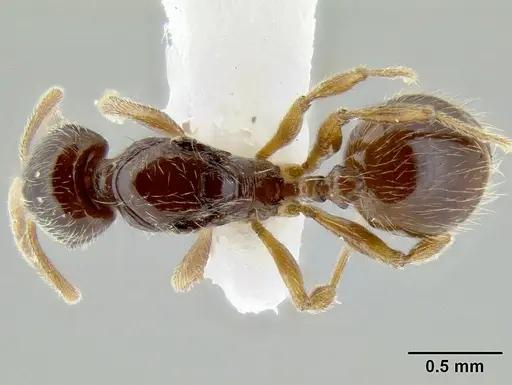
Literature
Loading distribution map...Loading products...