
Stenamma expolitum
- Sci. Name
- Stenamma expolitum
- Tribe
- Stenammini
- Subfamily
- Myrmicinae
- Author
- Smith, 1962
- Distribution
- Found in 2 countries
Introduction
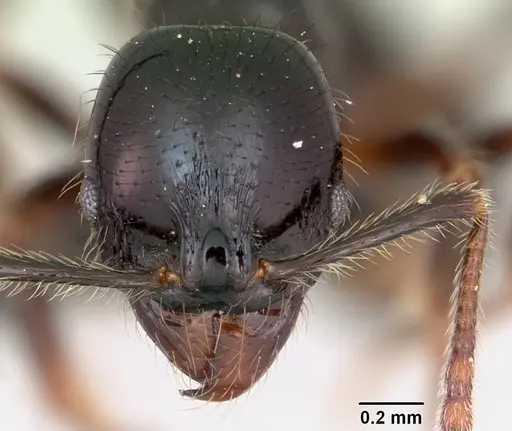
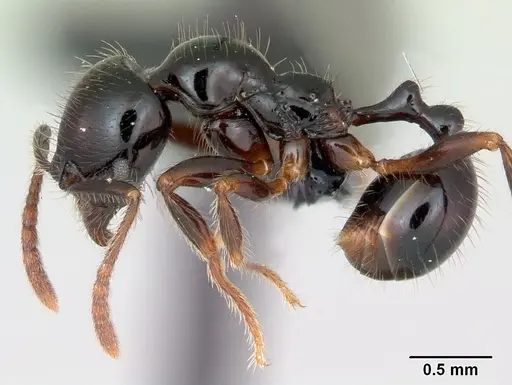
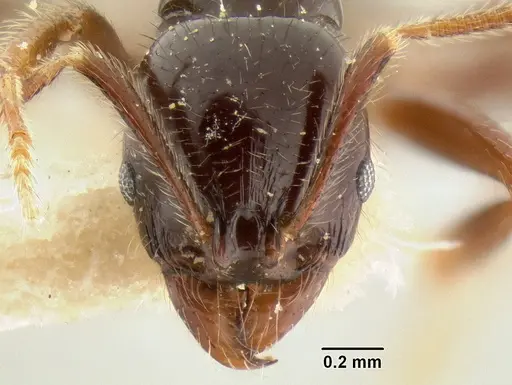
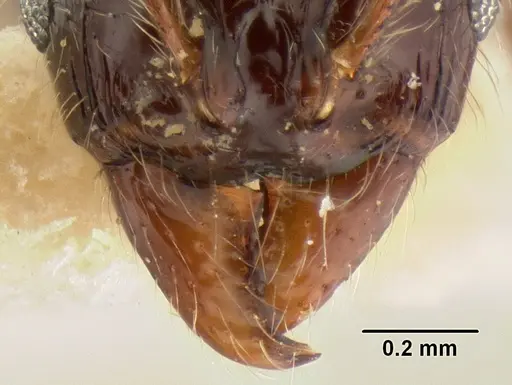
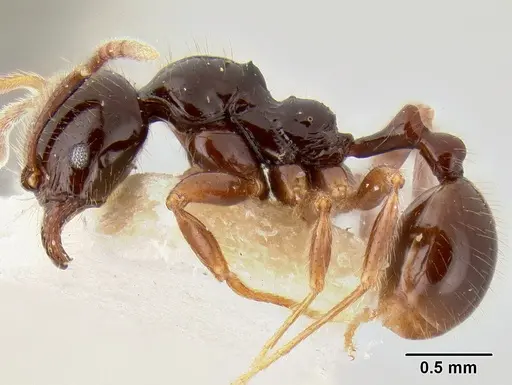
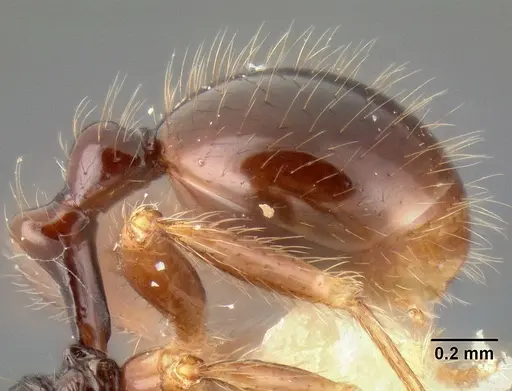
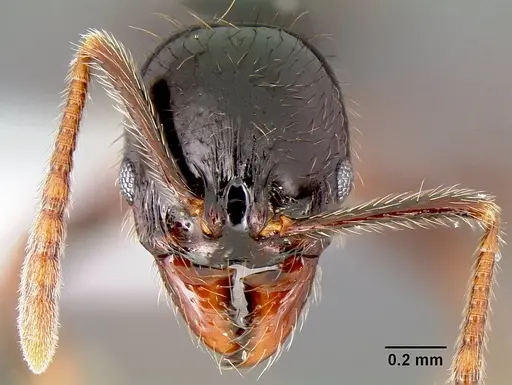
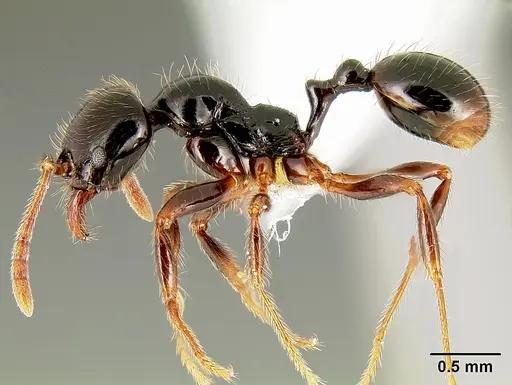
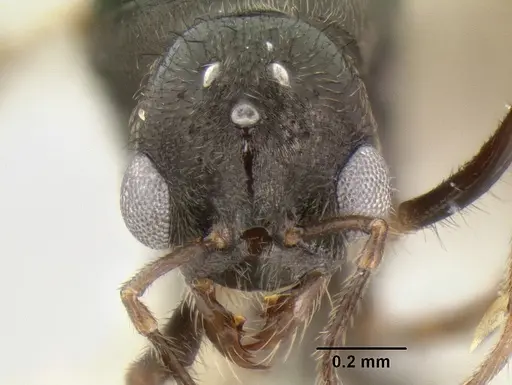
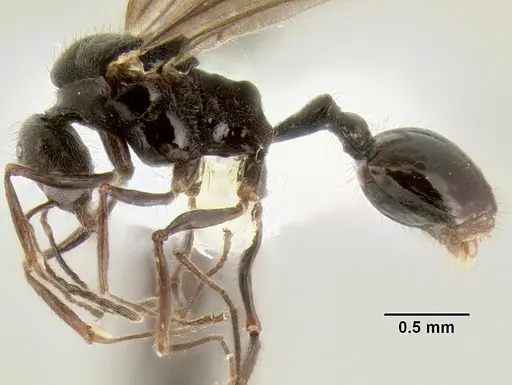
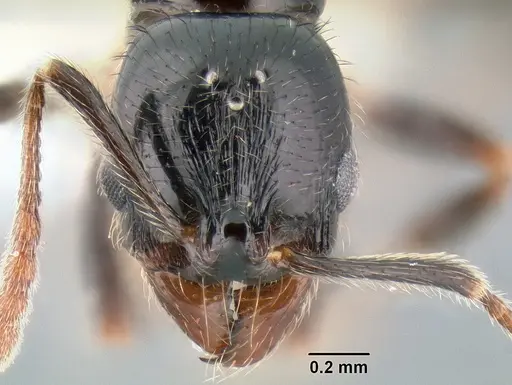
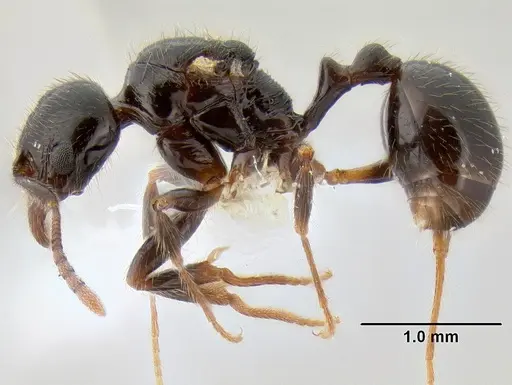
Stenamma expolitum is a small ant native to Central America, found only in Nicaragua and Costa Rica . Workers are about 3-4mm (inferred from the Stenamma genus) with a distinctive black body that is almost completely smooth and shiny, dark brown legs that fade to orange-brown at the joints, and a bulging postpetiole that looks larger than the petiolar node . This species is a specialist of clay banks, building nests exclusively in vertical clay banks along streams and trail cuts in mature wet forests from 50-1300m elevation . What sets it apart is its complex nesting behavior: colonies maintain multiple nests in close proximity but only occupy one at a time, and workers use a pebble to block the entrance when army ants approach .
Quick Summary
- Difficulty: Medium
- Origin & Habitat: Nicaragua to Costa Rica, Atlantic slope regions. Found in mature wet forests, nesting in vertical clay banks along streams and trail cuts at 50-1300m elevation [1][3][2].
- Colony Type: Single-queen colonies (monogyne). Colonies have around 100 workers with one queen and brood in the main nest chamber [3][1].
- Size & Growth:
- Queen: ~4-5mm (inferred from Stenamma genus) [1][2]
- Worker: ~3-4mm (inferred from Stenamma genus) [1][2]
- Colony: Up to 200 workers, typically around 100 [3][1]
- Growth: Moderate, based on typical Stenamma development patterns
- Development: Estimated 6-10 weeks based on genus-level data for related Stenamma species [1] (Specific development data for S. expolitum is not available, this is inferred from similar tropical Myrmicinae.)
- Antkeeping:
- Temperature: Keep at 22-26°C. This tropical species comes from warm, stable wet forests, so avoid temperatures below 20°C or above 30°C [1].
- Humidity: High humidity is essential, keep the nest substrate consistently moist but not waterlogged. Provide a humidity gradient so the ants can choose their preferred moisture level [1][3].
- Diapause: No, as a tropical species, they do not require hibernation. Maintain consistent warm conditions year-round [1].
- Nesting: In the wild, they nest in vertical clay banks with a turret entrance made of pebbles. In captivity, use a naturalistic setup with compacted clay or soil that allows chamber excavation. A Y-tong (AAC) or plaster nest with small, tight chambers also works. The key is providing dark, enclosed spaces with high humidity [3].
- Behavior: This species is docile and not aggressive. Workers are active foragers but their small size makes them escape risks, use fine mesh barriers. The most notable behavior is their defensive nest closure: when army ants (Eciton) approach, workers grab a pebble and pull it into the entrance, sealing the nest [3]. They are serial monodomous, maintaining 2-3 nests close together (average 18.9cm apart) but only occupying one at a time as a predator-avoidance strategy [3][4][5].
- Common Issues: escape prevention is critical, their tiny size lets them squeeze through standard barriers, colonies are sensitive to disturbance, avoid frequent nest inspections that can cause stress, dry conditions kill them quickly, consistently moist substrate is a must, slow colony growth compared to common hobby species may test beginner patience, wild-caught colonies may have parasites or be stressed from collection
Nest Preferences and Setup
In the wild, Stenamma expolitum nests exclusively in vertical clay banks, constructing a distinctive turret of spherical pebbles recessed into an alcove. The entrance tunnel goes down vertically through the turret then curves back into the bank. Most colonies have two chambers: a main chamber (about 8cm deep,2cm wide,5mm high) that holds the queen and brood, and a smaller secondary chamber above and behind the turret [3]. To replicate this in captivity, use a naturalistic setup with compacted clay or soil that allows the ants to dig their own chambers. A plaster or Y-tong nest with small, tight chambers can also work, but add some digging medium on one side to encourage natural behaviors. The important thing is providing dark, enclosed, humid spaces, these ants won't thrive in open, exposed nests [3].
Feeding and Diet
Stenamma expolitum is predatory, hunting small invertebrates on the forest floor. In captivity, offer small live prey like fruit flies, pinhead crickets, and tiny mealworms. They likely also collect honeydew and will accept sugar water or honey as an energy supplement. Feed protein 2-3 times per week and keep sugar water available constantly. Remove any uneaten prey after 24-48 hours to prevent mold. Because colony sizes are small (up to 100 workers), avoid overfeeding, a few tiny prey items every few days is plenty [1][3].
Temperature and Seasonal Care
As a tropical species from Costa Rica and Nicaragua, Stenamma expolitum needs warm, stable temperatures all year. Keep the nest area at 22-26°C, avoiding cold drafts and excessive heat. You can use a heating cable on one side of the nest to create a gentle gradient, but don't let the whole enclosure overheat. Room temperature in the low-to-mid 20s°C is ideal. Unlike temperate ants, they don't need a winter diapause, keep conditions consistent year-round. Avoid temperature swings of more than 5°C between day and night, as this can stress the colony [1][3].
Behavior and Defense
The most remarkable behavior of S. expolitum is its defensive nest closure. Workers keep a spherical pebble near the entrance. When army ants (Eciton) approach, workers quickly grab the pebble and pull it into the entrance, effectively sealing the nest. This response is specific to army ants, in 11 of 13 trials, workers only closed the nest when army ants were presented, not for other disturbances [3]. Colonies also practice serial monodomy: they maintain 2-3 nests close together (average 18.9cm apart) but only occupy one at a time. This seems to be a predator-avoidance strategy that lets them move quickly if the active nest is discovered [3][4][5]. In captivity, respect this need for security by providing dark, enclosed nesting spaces and keeping disturbance to a minimum.
Colony Growth and Development
Mature colonies typically have around 100 workers, with documented colonies reaching up to 200 individuals [3][1]. This is smaller than many common hobby ants, reflecting their specialized nesting in clay banks. Colonies observed in the wild had a single dealate queen and brood in various stages [3]. Growth rate is moderate, expect 6-10 months to reach 50+ workers under good conditions. Queens are slightly larger than workers (estimated ~4-5mm), workers ~3-4mm. The egg-to-worker timeline isn't documented, but based on similar tropical Myrmicinae, expect 6-10 weeks from egg to first worker at optimal temperature [1].
Frequently Asked Questions
Can I keep Stenamma expolitum in a test tube?
Test tubes work for founding colonies, but this species prefers enclosed spaces that mimic their natural clay bank nests. Keep the test tube dark and put it in a humid environment. For established colonies, use a naturalistic setup with soil or a Y-tong nest with small chambers [3].
How long does it take for Stenamma expolitum to produce first workers?
Based on similar tropical Myrmicinae, expect 6-10 weeks from egg to first worker at optimal temperature (24-26°C). Specific data for this species isn't available, so this is an estimate [1].
How big do Stenamma expolitum colonies get?
Colonies typically reach around 100 workers, with documented maximums at approximately 200 workers. This is smaller than many common ant species [3][1].
Do Stenamma expolitum ants sting?
Stenamma belongs to the subfamily Myrmicinae, which includes species with functional stingers. However, this species isn't known for aggressive behavior and is considered docile. They rely on their pebble-closing defense rather than stinging [3][1].
Are Stenamma expolitum good for beginners?
This species is rated medium difficulty. While not extremely challenging, they have specific needs (high humidity, warm temps, sensitivity to disturbance). Their small colony size and slow growth may test beginners. Better for keepers with some experience who can provide stable, humid conditions [1].
Do Stenamma expolitum need hibernation?
No, as a tropical species from Costa Rica and Nicaragua, they don't need hibernation. Keep consistent warm temperatures (22-26°C) year-round. They stay active all year and don't enter diapause [1].
What do Stenamma expolitum eat?
They are predatory, hunting small invertebrates. Feed small live prey like fruit flies, pinhead crickets, and tiny mealworms. They likely also take honeydew and will accept sugar water. Offer protein 2-3 times per week and keep sugar water available [1][3].
Why are my Stenamma expolitum dying?
Common causes: dry conditions (need consistently moist substrate), temperature stress (below 20°C or above 30°C), too much disturbance from nest inspections, and escape due to small size. Also check for parasites if wild-caught. Ensure high humidity, stable warmth, and minimal disturbance [3][1].
When should I move Stenamma expolitum to a formicarium?
Wait until the colony has at least 30-50 workers. This species is sensitive to relocation, so only move when the test tube is clearly too small or the colony is actively foraging in the outworld. Use a naturalistic setup with soil or a Y-tong nest with small chambers [3].
Can I keep multiple Stenamma expolitum queens together?
No, this species is monogyne, with single queen colonies. Multiple queens would likely fight. Wild colonies have only one dealate queen [3].
How do I create the right nest for Stenamma expolitum?
They naturally nest in vertical clay banks with a turret of pebbles. In captivity, use compacted soil or clay that allows digging, or a Y-tong/plaster nest with small, tight chambers. The key is dark, enclosed spaces with high humidity, they won't do well in open nests [3].
What makes Stenamma expolitum special compared to other ants?
This species has a sophisticated defensive behavior: workers block their nest entrance with a pebble when army ants attack. They also practice serial monodomy, maintaining multiple nests and moving to avoid predators. Their nearly smooth, shiny body makes them visually distinctive among Stenamma [3][1].
Report an Issue
The current care sheet is based fully on literature. See inconsistencies, or something that's incorrect? Please , it will be resolved after review from an admin. Contributing to the blogs tab also helps providing information, to make us be able to further improve the caresheets. Thank you for your support!
References

This caresheet is licensed under CC BY-SA 4.0 .
Community Blogs
CASENT0052774
View on AntWeb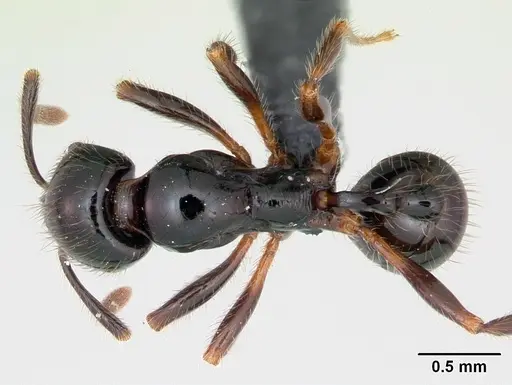
CASENT0126347
View on AntWeb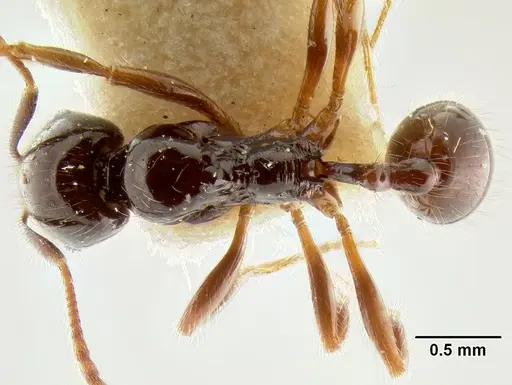
CASENT0600043
View on AntWeb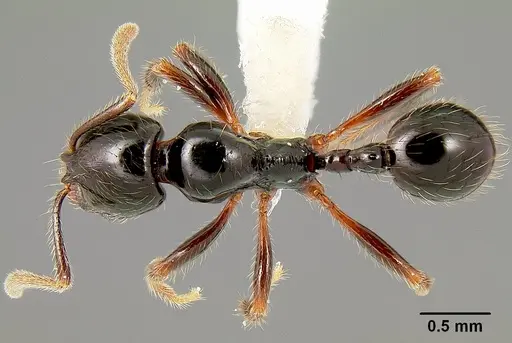
CASENT0622564
View on AntWeb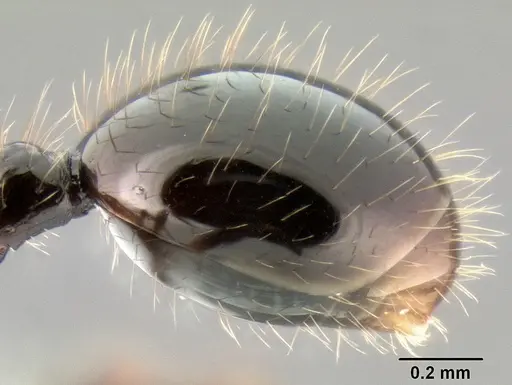
JTLC000003501
View on AntWeb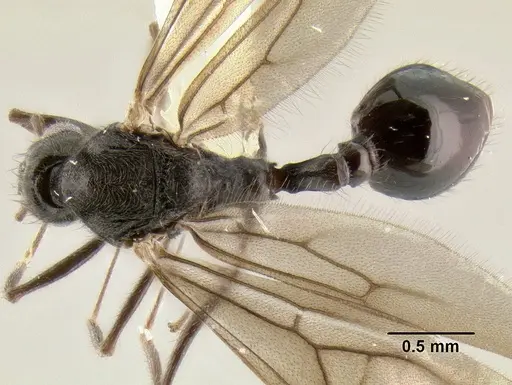
JTLC000005582
View on AntWeb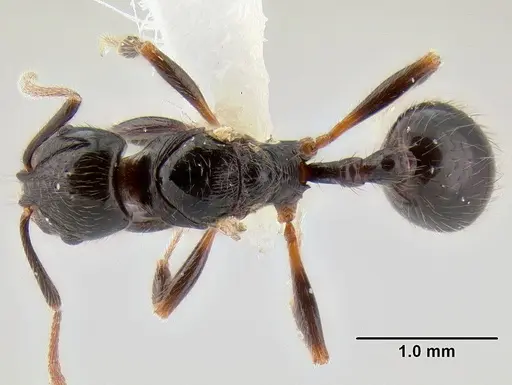
Literature
Loading distribution map...Loading products...