
Stenamma cusuco
- Sci. Name
- Stenamma cusuco
- Tribe
- Stenammini
- Subfamily
- Myrmicinae
- Author
- Branstetter, 2013
- Distribution
- Found in 1 countries
Introduction
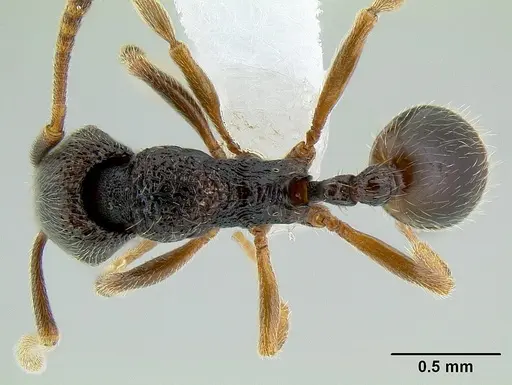
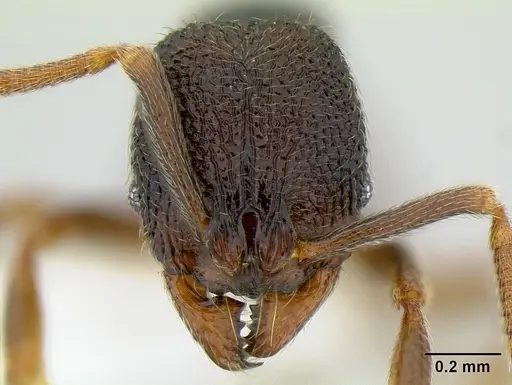
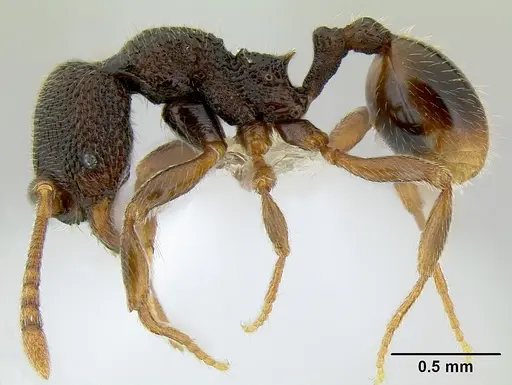
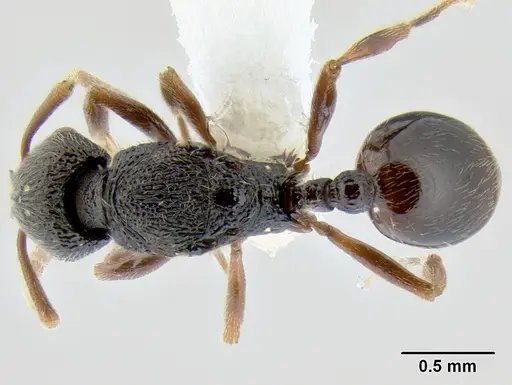
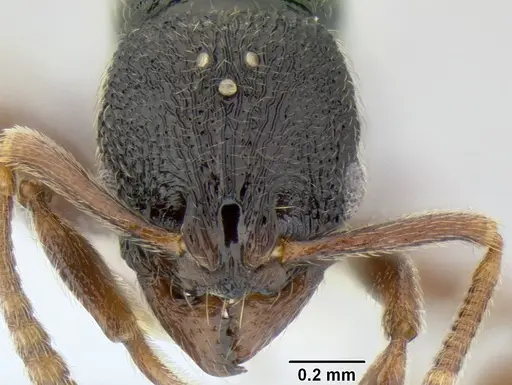
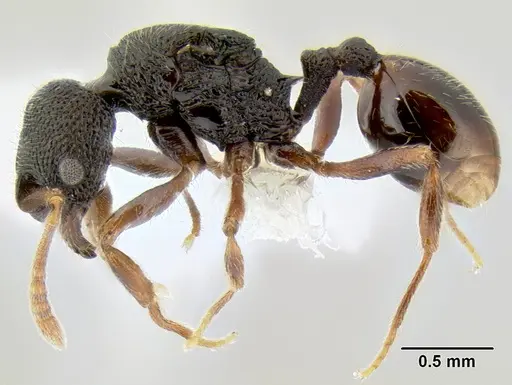
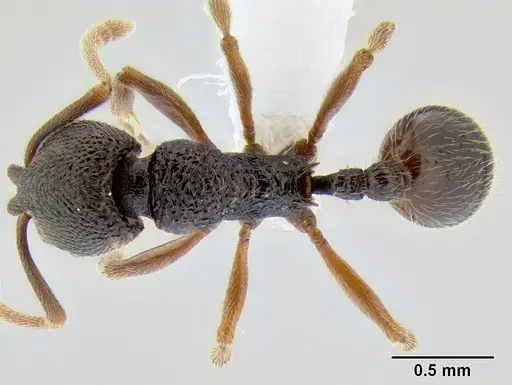
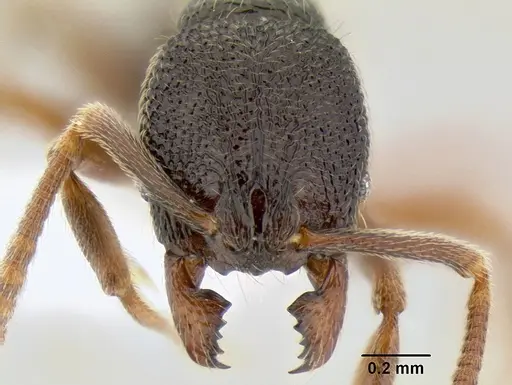
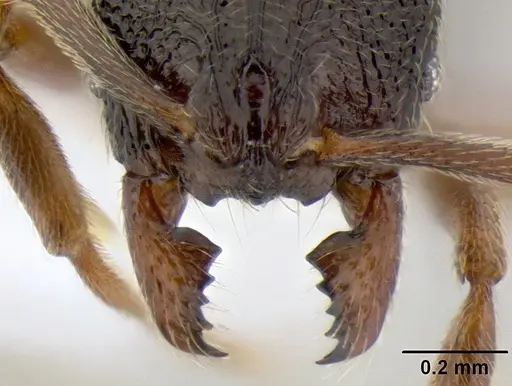
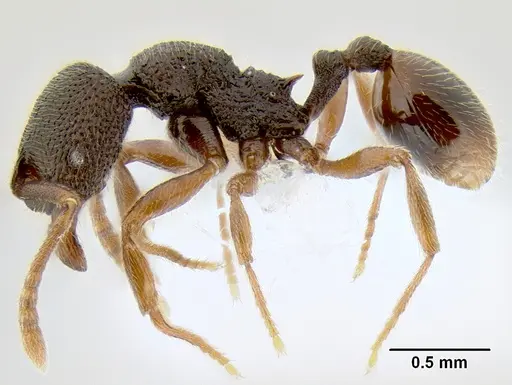
Stenamma cusuco is a small, cryptic ant known only from Parque Nacional Cusuco in Honduras, where it lives in montane wet forest between 1200 and 1400 meters elevation . Workers have a red-black body with brown patches on the abdomen . This species stands out for its unique clypeus (the facial plate above the mouthparts), which has three distinct teeth: two sharp outer teeth and a blunt central tooth formed by a projecting lobe . No other Stenamma species has this facial structure, suggesting it may eat a very specific type of prey, though nothing is known about its diet . The frontal lobes are so wide they cover the antennal sockets when you look at the ant from the front . This species was described only in 2013 (Branstetter) and is still very poorly known - even the males have never been collected .
Quick Summary
- Difficulty: Expert
- Origin & Habitat: Parque Nacional Cusuco, Cortés, Honduras, montane wet forest (mesophyll forest) at 1200-1400 m elevation, collected from sifted leaf litter [1][2]
- Colony Type: Unconfirmed colony structure, known only from a handful of worker and queen specimens collected in leaf litter [1]
- Size & Growth:
- Queen: Size data unavailable, only head length measurements have been published (0.78 mm head length) [2]
- Worker: Size data unavailable, only head length measurements have been published (0.74-0.80 mm head length) [2]
- Colony: Unknown [1]
- Growth: Unknown [1]
- Development: Unknown, no development data exists for this species [1] (All aspects of development are unstudied. Estimates from other Stenamma species are speculative and not reliable.)
- Antkeeping:
- Temperature: Cool conditions expected, its montane cloud forest habitat suggests 18-22°C [1][2]. Start at room temperature without heating and adjust based on colony activity.
- Humidity: High humidity required, think damp cloud forest floor. Keep the nest substrate consistently moist but not waterlogged [1][2].
- Diapause: Unknown, as a tropical montane species, it may experience seasonal cool periods with reduced activity, but true hibernation has not been documented [1].
- Nesting: Naturalistic setup with deep, moist substrate (soil/coco fiber mix) or a plaster nest kept damp. Provide plenty of leaf litter and hiding spaces to mimic the forest floor [1][2].
- Behavior: Behavior is completely unstudied in captivity. Based on the collection method (sifted leaf litter), these ants are likely cryptic foragers that stay in deep litter. Their small size (head length ~0.75 mm) means they are small enough to escape through tiny gaps, use fine mesh and seal all cracks. Temperament is unknown but stenamma species are typically non-aggressive and secretive.
- Common Issues: extremely limited availability, this species is known from only a single location and almost never appears in the hobby, no captive care information exists, every aspect of keeping is experimental and may fail, wild-caught colonies or queens may carry parasites that are impossible to treat in such poorly-studied species, the unique clypeal structure suggests specialized dietary needs that we cannot yet identify, starvation from incorrect prey is a real risk, likely slow growth and very small colony sizes make it high-risk, any setback may crash the colony
Discovery and Taxonomy
Stenamma cusuco was described in 2013 by Michael Branstetter during a comprehensive revision of Middle American Stenamma [1]. It is known only from the type locality: Parque Nacional Cusuco, a protected cloud forest in northern Honduras. The species name 'cusuco' comes directly from this park [3]. The type series, including workers and queens, was collected by sifting leaf litter during the LLAMA (Leaf Litter Ant Morphospecies and Molecular Analysis) project [2]. Its three-toothed clypeus is unique among Stenamma, which originally placed it in the 'cusuco complex' alongside S. catracho, S. hojarasca, and S. ochrocnemis [1].
Natural Habitat
This species occupies montane wet forest (mesophyll forest) at elevations of 1200–1400 meters in Honduras [1][2]. All known specimens were obtained by sifting leaf litter from the forest floor, suggesting the ants live deep in the moist, decomposing leaf layer. At this altitude, the climate is cool year-round with high humidity and frequent cloud cover. Daylight temperature swings are small, and the soil rarely dries out. These conditions are key to replicating in captivity: constant moisture, stable cool temps, and plenty of leaf litter structure [1][2].
Unique Physical Features
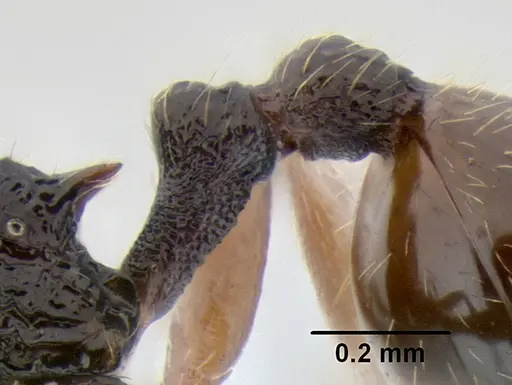
Stenamma cusuco has several distinctive traits that make identification unambiguous. The most striking is the clypeus: in full-face view it shows three projecting teeth, two sharp outer teeth and a blunt central tooth formed by a strongly projecting median lobe [1][2]. Underneath the median lobe, hidden from normal view, there are two more blunt teeth [2]. The frontal lobes are so enlarged (width 0.24–0.26 mm) that they completely hide the antennal socket openings when viewed from the front, a rare trait [1]. Workers have moderate-length propodeal spines (about 0.16–0.19 mm) and short bilayered hairs on the gaster [1][2]. The overall body color is red-black, with brown patches on the gaster and lighter appendages [2]. Queens are similar but larger (head length ~0.78 mm vs worker 0.74–0.80 mm) and have the standard wing-related changes [2].
Housing and Setup
Since Stenamma cusuco has never been kept in captivity, all housing advice is experimental and based on its natural habitat. The best starting setup is a plastic container with a deep layer of moist substrate (a mix of soil, coco fiber, and leaf litter). The substrate should be kept damp throughout but without standing water. A plaster nest kept moist is also an option. The temperature should be cool, around 18–22°C, do not use a heating cable unless the colony shows clear signs of being too cold. Provide plenty of hiding places: flat pieces of cork bark, oak leaves, and moss. The outworld can be smaller but should have a lid with fine mesh because workers are small (head length 0.74–0.80 mm) and can squeeze through tiny cracks. For founding, a test tube setup with a moist cotton plug at the bottom is worth trying, but the queen will likely need substrate to feel secure. Monitor humidity closely, if the substrate dries out, the colony may die quickly. [1][2]
Feeding and Diet
The natural diet of Stenamma cusuco is completely unknown. The unique three-toothed clypeus suggests possible specialization on specific prey types, but no field observations have been made [1][2]. Most Stenamma species are generalist predators that hunt small arthropods in leaf litter. For captive care, offer a variety of tiny live prey: springtails, fruit flies (Drosophila melanogaster), and pinhead crickets. Sugar sources (honey water or sugar water diluted 1:10) may be accepted but have not been tested. It is essential to observe whether the ants actually consume the offered food, if they ignore it, try different prey sizes or types. Because the diet is unknown, providing a wide range of small invertebrates is the safest approach. Avoid any pesticides or wild-caught prey that may carry parasites.
Challenges and Considerations
Stenamma cusuco is one of the most challenging species to keep because nothing is known about its captive care. This is not a species for beginners or even intermediate keepers, it is suitable only for experienced specialists willing to experiment and document results. The species is extremely rare in the wild (only a few specimens have ever been collected) and almost never appears in the hobby. Any colony or queen you obtain will likely be wild-caught, which carries risks of parasites or pathogen introduction. Growth rates are expected to be slow, and colonies may remain very small. There is a real risk that the specialized diet hinted at by the clypeal structure cannot be replicated in captivity. Anyone attempting to keep this species should be prepared for failure and should record everything to help future keepers. [1][2]
Frequently Asked Questions
Is Stenamma cusuco available for purchase?
Almost never. This species is known only from a single protected forest in Honduras and has never been collected in numbers large enough for the hobby. Even scientific specimens are extremely limited.
What does Stenamma cusuco look like?
Workers are small (head length 0.74–0.80 mm) with a red-black body and brown patches on the abdomen. The most distinctive feature is the three-toothed clypeus on the face: two sharp outer teeth and a blunt central tooth. The frontal lobes are so wide they cover the antennal sockets when viewed from above.
Where does Stenamma cusuco live?
This ant is known only from Parque Nacional Cusuco in Honduras, at elevations of 1200–1400 meters in montane wet cloud forest. It has never been found anywhere else in the world.
What do Stenamma cusuco eat?
Unknown. The unique clypeal structure suggests possible diet specialization, but no prey items have ever been documented. Based on the genus, they likely hunt small invertebrates in leaf litter. For captive care, offer springtails, fruit flies, and similar tiny prey.
How big do Stenamma cusuco colonies get?
Unknown. No field observations of colony sizes exist. Based on leaf-litter habits, colonies may remain small (possibly under a few hundred workers), but this is speculation.
Do Stenamma cusuco ants sting?
Stenamma is in the subfamily Myrmicinae, which includes many species with functional stingers. However, Stenamma species are generally non-aggressive and secretive, and no sting reports exist for this species.
Is Stenamma cusuco good for beginners?
No. This is an expert-level species due to the complete lack of care information, extreme rarity, and likely specialized requirements. Do not attempt unless you are an experienced keeper willing to experiment.
Does Stenamma cusuco need hibernation?
Unclear. As a tropical montane species, it may experience a cooler season with reduced activity, but true hibernation has not been studied. If you try keeping them, monitor activity throughout the year and adjust care accordingly.
How long does it take for Stenamma cusuco to develop from egg to worker?
No development data exists for this species. Estimates from other Stenamma (6–10 weeks) are speculative and unreliable. Without observations, we simply do not know.
How do I keep Stenamma cusuco?
No established care protocols exist. Based on its montane forest habitat, provide cool temperatures (18–22°C), high humidity, and a deep, moist substrate with leaf litter. Offer small live prey. Expect a steep learning curve and be prepared for failure. Document everything.
Report an Issue
The current care sheet is based fully on literature. See inconsistencies, or something that's incorrect? Please , it will be resolved after review from an admin. Contributing to the blogs tab also helps providing information, to make us be able to further improve the caresheets. Thank you for your support!
References

This caresheet is licensed under CC BY-SA 4.0 .
Community Blogs
Literature
Loading distribution map...Loading products...