
Stenamma brevicorne
- Sci. Name
- Stenamma brevicorne
- Tribe
- Stenammini
- Subfamily
- Myrmicinae
- Author
- Mayr, 1886
- Distribution
- Found in 2 countries
Introduction
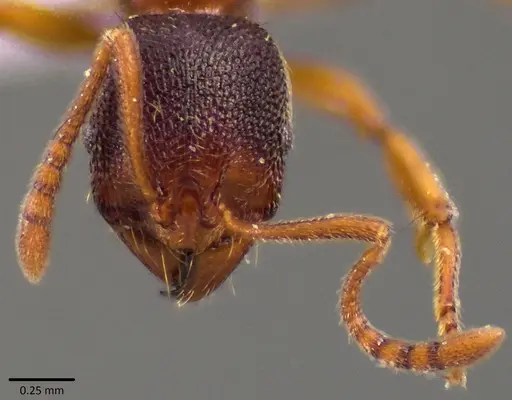
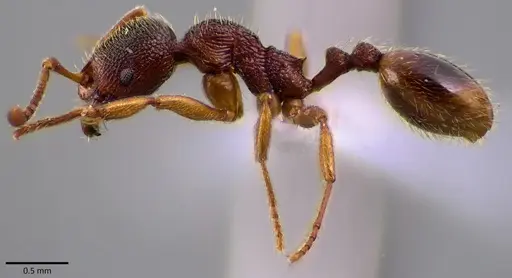
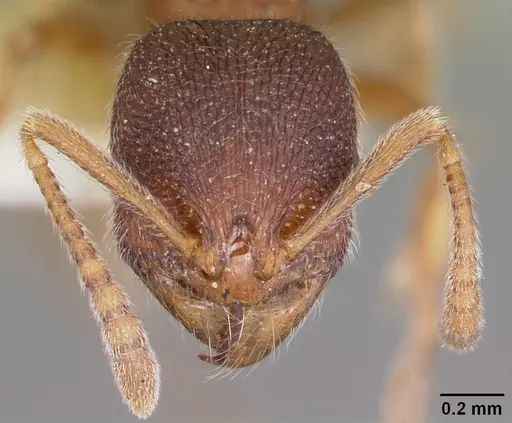
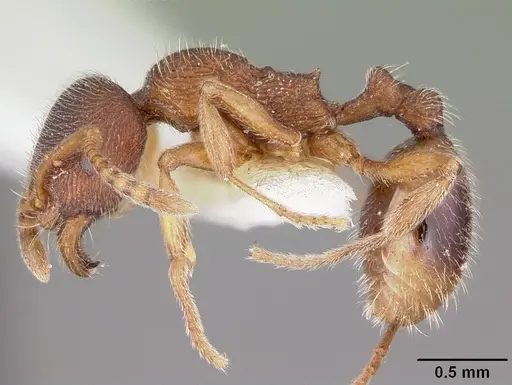
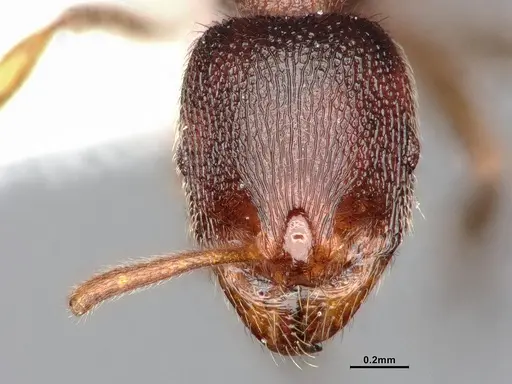
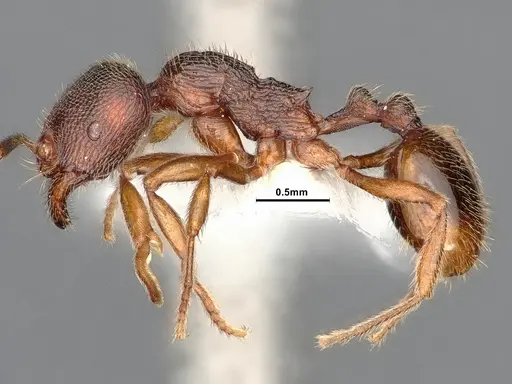
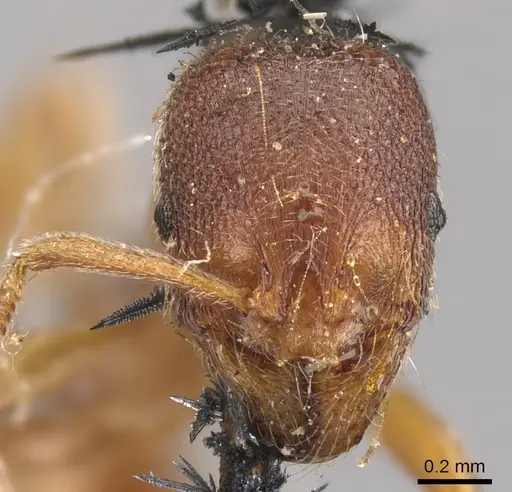
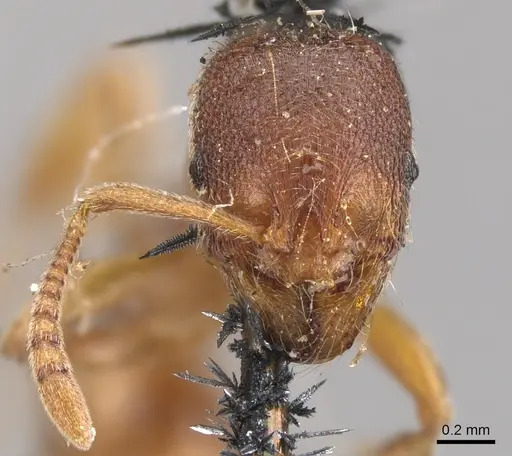
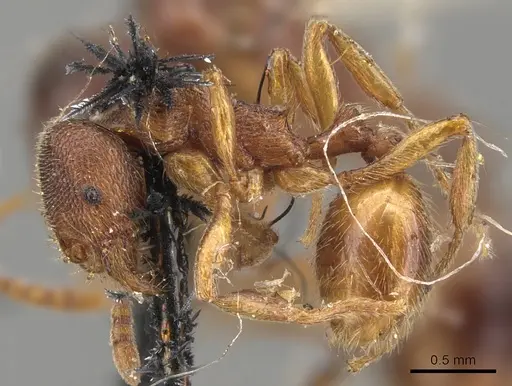
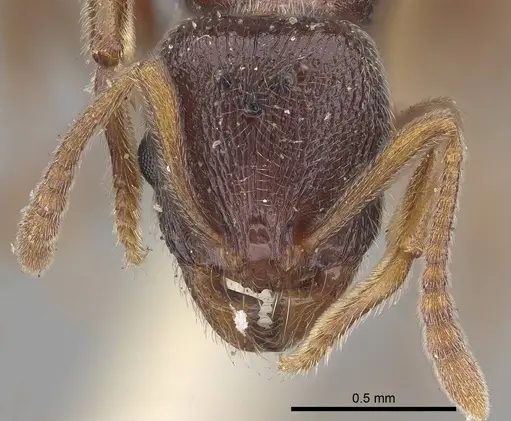
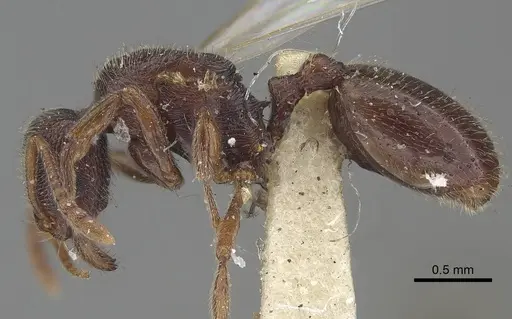
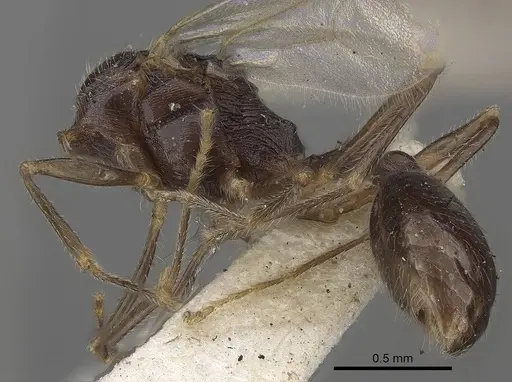
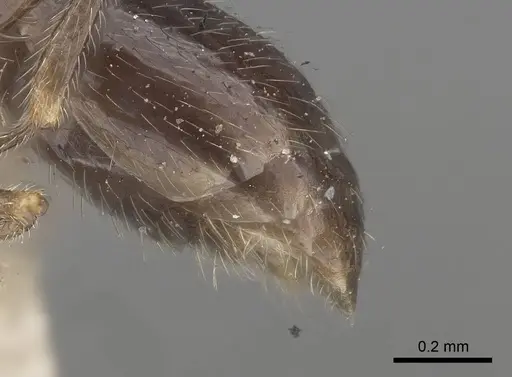
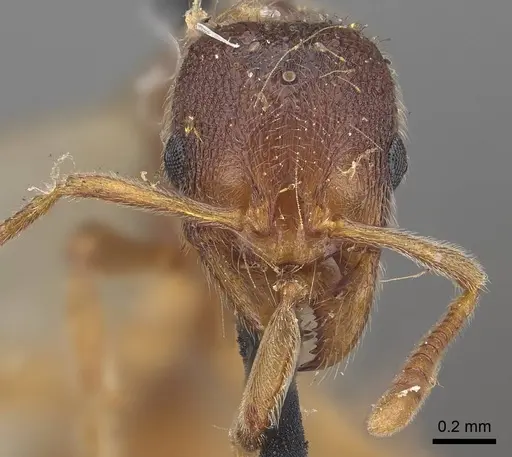
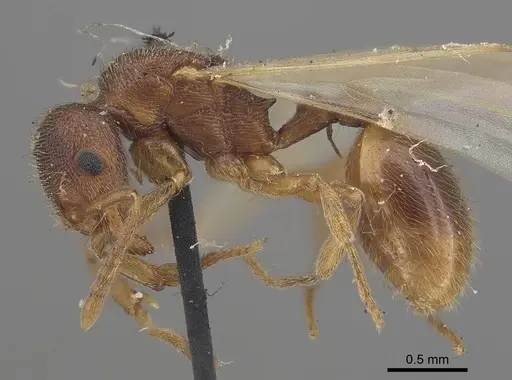
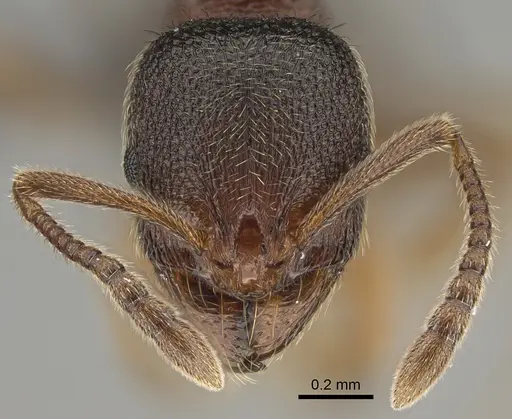
Stenamma brevicorne is a small, cryptic ant native to eastern North America. Workers measure 2.7-3.8 mm and are dark brown with a lighter band across the gaster, giving a banded look . Queens are slightly larger at 3.4-4.2 mm . This is one of the most widespread Stenamma species, found from Nova Scotia and Quebec south to Virginia and west to Nebraska and Minnesota . They prefer moist woodlands, forest edges, and old fields, nesting in soil under stones, logs, moss, or rotting wood . Colonies are small, typically a few dozen to around 100 workers, and the ants are timid, sluggish, and spend most of their time underground .
Quick Summary
- Difficulty: Medium
- Origin & Habitat: Eastern North America from Nova Scotia, Quebec, and Ontario south to Tennessee and west to Nebraska and Minnesota [1][2]. Inhabits moist woodlands (maple, oak, beech), forest edges, low grassy fields, and occasionally open areas near water [1][3]. Also found in cedar fens, peat bogs, and dry-mesic woodlands [4][5].
- Colony Type: Monogyne, single queen per colony [6]. Colonies are small, rarely exceeding 200 workers, the largest documented colony had 105 workers plus alates [1][3].
- Size & Growth:
- Queen: 3.4-4.2 mm [1]
- Worker: 2.7-3.8 mm [1]
- Colony: Up to ~200 workers in mature colonies [3]
- Growth: Slow, colonies remain small
- Development: Estimated 8-12 weeks based on typical temperate ant development at 18-22 °C (No direct data for this species. Expect 2-3 months from egg to first worker at optimal temperatures.)
- Antkeeping:
- Temperature: Keep at 18-22 °C (room temperature). This temperate species tolerates cooler conditions better than heat, avoid sustained temperatures above 25 °C. Provide a slight gradient if possible.
- Humidity: Moist nest substrate, keep the nesting area damp but not waterlogged. Use a water tube or test tube setup with a cotton plug. A small area of drier substrate can be allowed in the outworld.
- Diapause: Yes, requires winter hibernation. Reduce to 5-10 °C for 3-4 months (roughly November-February) to mimic natural overwintering. Alates overwinter in the nest [1].
- Nesting: Test tubes work for founding colonies. For established colonies, use naturalistic setups with moist soil, plaster, or Y-tong (no acrylic). They need dark, humid chambers and a foraging area with moist leaf litter or soil. Avoid dry, exposed nests.
- Behavior: Timid and sluggish, workers are carnivorous and prefer small live prey like springtails and fruit flies [1][7]. They are hypogaeic (ground‑dwelling) and forage over the soil surface only in cool, damp weather [3]. Escape risk is low because they are not strong climbers, but their small size (under 4 mm) means they can slip through tiny gaps, ensure tight seals around the nest.
- Common Issues: slow growth, colonies stay small and grow slowly, which may frustrate beginners, sensitive to disturbance, timid ants may abandon brood if the nest is jarred or over‑lit, difficulty finding queens, wild queens are rarely seen, collecting a colony is more reliable but still hard, sensitive to drying, require consistently moist substrate, drying can kill the colony, improper hibernation, failing to provide 3-4 months of cold (5-10 °C) may disrupt reproduction and cause die‑offs
Housing and Nest Setup
Start colonies in a test tube setup with a water reservoir and cotton plug. Keep the tube dark by wrapping it in aluminum foil. Once the colony outgrows the tube (usually after a year or more), move them to a nest with moist soil or a plaster/Y‑tong block with built‑in hydration. These ants are not climbers, so a low outworld with a thin layer of moist substrate works well. Provide ample leaf litter or bark for cover, they feel secure under debris. Avoid any ventilation gaps smaller than 1 mm, as workers can squeeze through [1].
Feeding and Diet
Workers are carnivorous and likely predaceous on small invertebrates [1][7]. Offer live prey such as springtails, fruit flies, pinhead crickets, or small mealworms. Protein feeding 2-3 times per week is sufficient. Sugar sources like diluted honey or sugar water are accepted occasionally but are not a primary need, these ants do not rely on honeydew. Remove uneaten prey after 2 days to prevent mold in the humid environment [1][2].
Temperature and Seasonal Care
Keep colonies at room temperature (18-22 °C). They tolerate cool conditions better than heat, never exceed 25 °C for long. From November to February, provide a hibernation period at 5-10 °C. Transfer the colony to a dry nest (not a test tube with water) to avoid condensation drowning. Slow cooling over a few days helps the ants adjust. After hibernation, gradually warm them back to room temperature over 1-2 weeks. This cycle is essential for normal brood production and alate development [1][3].
Behavior and Observation
Stenamma brevicorne is one of the more cryptic ant species. Workers are timid, sluggish, and spend almost all their time underground or hidden under debris [1]. Foraging occurs mainly at dusk or on cool, damp days [3][8]. You will rarely see a long foraging trail, instead, workers emerge briefly to grab prey and retreat. Observing them requires patience and a dim red light. This species is best for keepers who enjoy subtle natural history rather than flashy activity [1].
Colony Growth and Reproduction
Colonies stay small, maxing out around 200 workers [3]. The largest recorded wild colony had 105 workers plus 8 alate females and 12 males [1]. Alate pupae appear from early July to mid‑August, and winged adults are present from August to September [3][2]. They overwinter inside the nest and mate in spring, usually in May [1]. Males form swarms at tree tops, and mated queens fly at dusk [8]. If your colony produces alates, you might observe a nuptial flight after the first warm days of spring following hibernation.
Acquisition and Collection
Stenamma brevicorne is rarely kept in the hobby. The best way to start a colony is to find a wild colony under a stone or log in moist woodland during spring or early summer. Searching after a rain when the soil is damp increases your chances. Alternatively, you can attempt to capture a mated queen during mating flights in May, look for queens near tree tops in open woodland edges at dusk. Because colonies are small and cryptic, this requires persistence [1][2].
Frequently Asked Questions
How long does it take for Stenamma brevicorne to produce first workers?
Based on typical temperate ant development at 18-22 °C, expect 8-12 weeks from egg to first worker. No specific data exists for this species, so be patient, growth is slow [1].
Can I keep Stenamma brevicorne in a test tube?
Yes, test tubes are ideal for founding and early colony growth. Keep the tube dark with foil and maintain the water reservoir. However, once the colony reaches 30-50 workers, consider moving them to a larger setup with moist soil or a plaster nest to provide more space and a natural humidity gradient [1].
Do Stenamma brevicorne ants sting?
They belong to the subfamily Myrmicinae, which includes many stinging species, but this ant is extremely timid and non‑aggressive. In the unlikely event of a sting (from rough handling), it would be very mild, less irritating than a mosquito bite, and no venom toxicity is documented. Simply wash the area with soap and water [1].
How big do Stenamma brevicorne colonies get?
Colonies rarely exceed 200 workers. Most contain only a few dozen to 100 adults. The largest reported colony had 105 workers plus alates [1][3]. This species will never produce massive colonies.
Do Stenamma brevicorne need hibernation?
Yes, a winter diapause at 5-10 °C for 3-4 months is essential. Without it, colonies may fail to produce alates and could decline over time. Alates naturally overwinter in the nest [1][3].
Are Stenamma brevicorne good for beginners?
This species is better suited for intermediate keepers. While not technically demanding, their extremely slow growth, small colony size, and secretive behavior can disappoint beginners expecting constant activity. They also require a proper hibernation. If you enjoy observing cryptic, naturalistic ant behavior, they can be rewarding [1].
What do Stenamma brevicorne eat?
They are carnivorous and accept small live prey such as springtails, fruit flies, and micro‑crickets. Offer protein 2-3 times per week. Sugar water or honey is sometimes taken but is not a staple. Feed small amounts to avoid mold [1][7][2].
Can I keep multiple Stenamma brevicorne queens together?
No, this species is strongly monogyne. Multiple unrelated queens will fight, and pleometrosis has not been documented. Only keep a single queen per colony [6][1].
Why are my Stenamma brevicorne dying?
Common causes: nest too dry (they need damp substrate), overheating above 25 °C, disturbance stress (they are very timid), or improper hibernation. Also check that protein is offered regularly. If the colony is in a test tube with a water reservoir, ensure the cotton plug does not become moldy and block the water [1].
When should I move my colony to a formicarium?
Move when the test tube becomes crowded (workers huddling near the entrance) or when the water chamber runs low before you can refill it easily. For this slow‑growing species, this can take 12-18 months. Choose a nest with integrated moisture, soil, plaster, or Y‑tong, and connect it to a small outworld with a light layer of dry leaf litter [1].
Report an Issue
The current care sheet is based fully on literature. See inconsistencies, or something that's incorrect? Please , it will be resolved after review from an admin. Contributing to the blogs tab also helps providing information, to make us be able to further improve the caresheets. Thank you for your support!
References

This caresheet is licensed under CC BY-SA 4.0 .
Community Blogs
ANTWEB1041589
View on AntWeb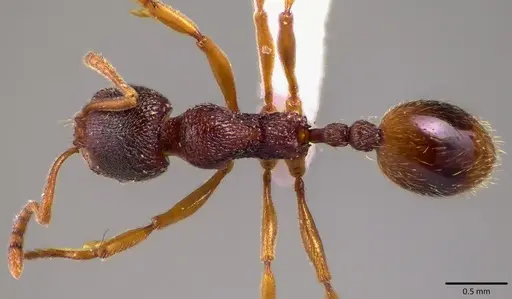
CASENT0104792
View on AntWeb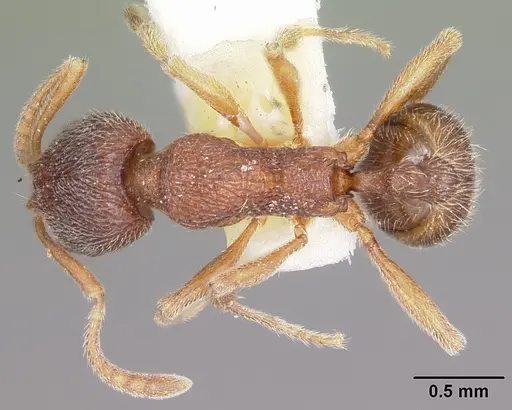
CASENT0885484
View on AntWeb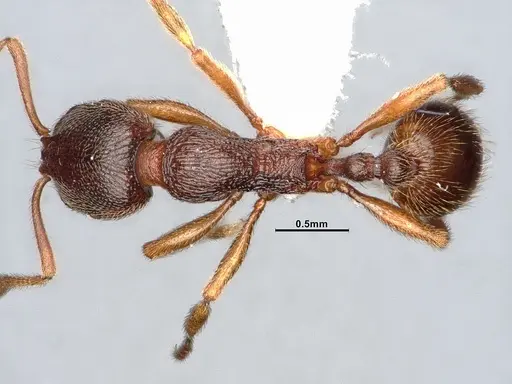
CASENT0900948
View on AntWeb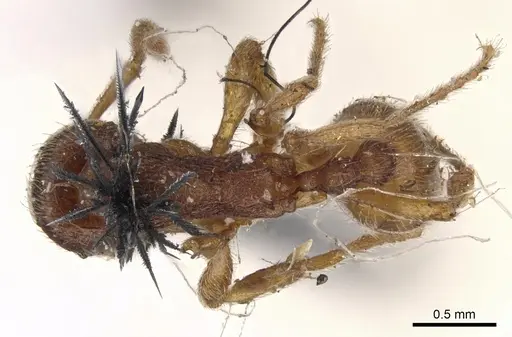
CASENT0919620
View on AntWeb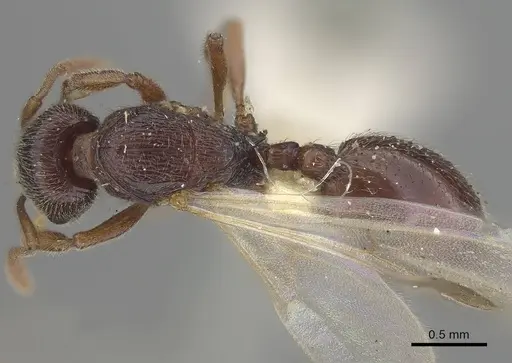
CASENT0919621
View on AntWeb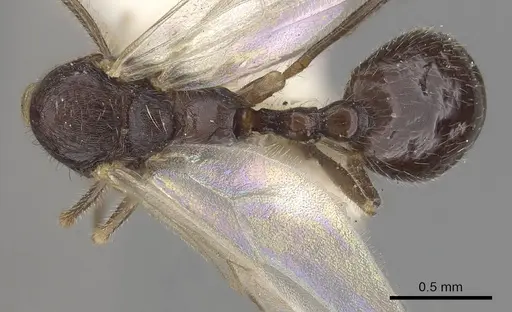
CASENT0919622
View on AntWeb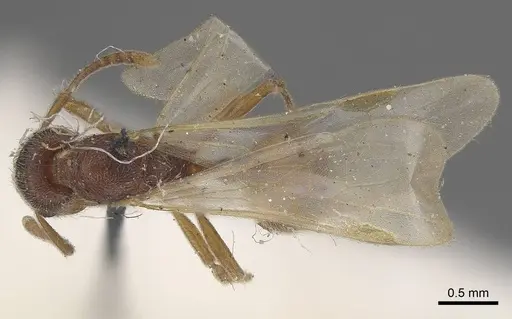
CASENT0923375
View on AntWeb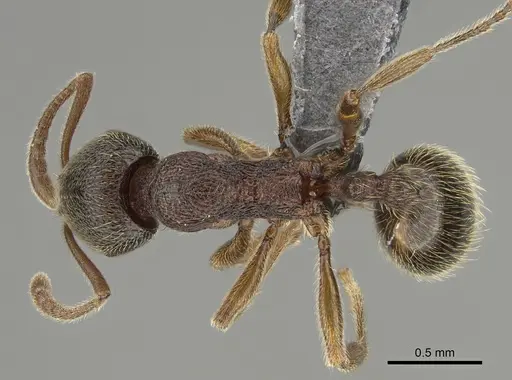

Literature
Loading distribution map...Loading products...